
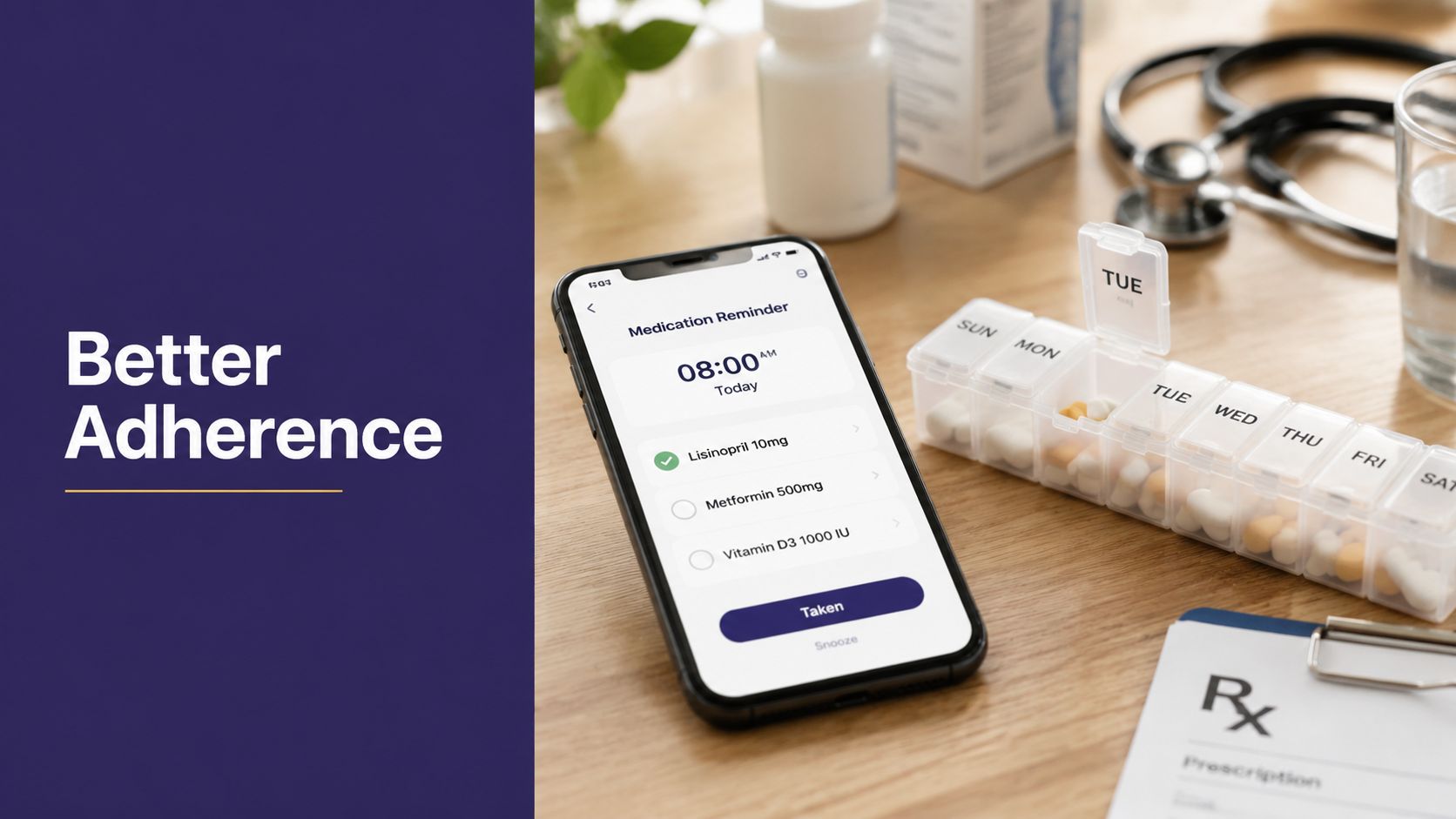
Independent clinics feel medication non-adherence long before they see it in a report. It shows up in refill queues, nurse call volume, repeat visits for symptoms that should be controlled, and clinicians trying to judge whether a treatment failed or was never followed long enough to work.
For practice owners and managers, adherence is a workflow problem with clinical consequences. The practices that improve it do not rely on generic reminders or extra manual outreach that staff cannot maintain. They build a repeatable process inside the EMR: identify risk early, make the regimen easier to follow, assign follow-up tasks clearly, and use automation for the routine touches that consume team time.
That is the difference between giving patients good advice and running an adherence system your staff can sustain. AI Medical Staff fits that model when it is tied to real clinic operations, not used as a stand-alone tech layer. It can prompt follow-up, support refill coordination, surface missed steps, and keep adherence work moving without adding another daily burden to the front desk or nursing team.
The Hidden Costs of Medication Non-Adherence
Medication non-adherence drains a practice twice. It worsens clinical outcomes for patients and creates avoidable work for staff.
Those national figures cited earlier show the size of the problem. What matters at the clinic level is how quickly that problem turns into operational drag. Patients who fall off a regimen still call, still message, still need refills sorted out, and often return with symptoms that are harder to interpret. The question is no longer just, "Is the medication appropriate?" It becomes, "Did the patient take it consistently enough to know?"
In an independent clinic, that uncertainty is expensive. Nurses spend time chasing refill history. Front-desk staff handle preventable scheduling requests. Providers repeat counseling that should have happened once, clearly, at the start. If the handoff between prescribing, education, and follow-up is loose, non-adherence fills the gap.
The hidden cost is misread clinical failure.
A medication may look ineffective when the issue is side effects, cost, confusion about timing, or a patient who stopped after the first missed refill. That leads to unnecessary regimen changes, extra visits, and more back-and-forth inside the EMR. Practices that improve adherence usually tighten communication first, especially with patient communication workflows that staff can actually maintain.
Practical rule: Treat adherence as a managed workflow with clinical consequences.
That framing changes what the team does next. Instead of relying on generic reminders or expecting clinicians to catch every gap during a short visit, the practice can assign follow-up ownership, standardize refill checks, and use EMR-linked automation for routine outreach. That approach reduces avoidable work and gives the clinical team a cleaner read on whether the treatment plan itself needs to change.
Start with a Shame-Free Conversation
Rushed medication counseling often leads to unseen failures. The chart shows "discussed," the prescription is sent, and the first clear signal of trouble shows up later as a refill gap, side effect call, or visit that suggests the treatment failed when the patient never had a fair chance to follow it.
A better starting point is a neutral, routine conversation that assumes barriers are common and fixable. That matters in independent clinics, where the first disclosure about cost, confusion, or side effects often happens with an MA, nurse, or front-desk staff member before it reaches the prescribing clinician. A judgmental question shuts that down. A structured, low-pressure question gives the team something usable.
The tone should sound like standard care, not a compliance check. A nursing analysis of medication adherence barriers in underserved populations notes that shame and stigma often keep patients from admitting why they stopped or delayed treatment, and that stigma-aware communication can improve follow-through compared with education alone, as discussed in this nursing analysis of medication adherence barriers.
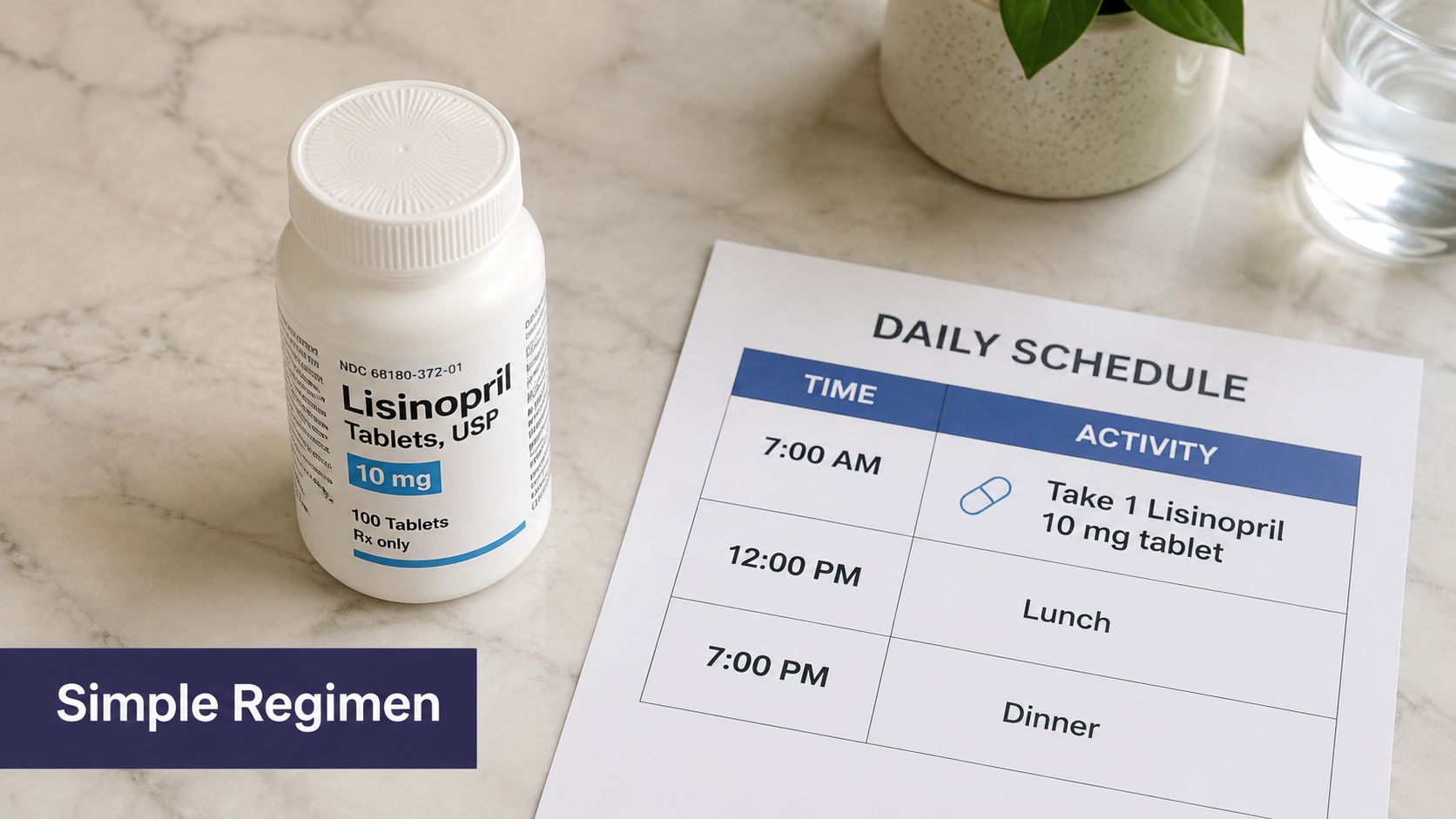
What clinicians and staff should say instead
Patients rarely say, unprompted, "I stopped because it made me nauseated," or "I never picked it up because the copay was too high." They say they're "fine," especially when the question sounds like a test.
Use language that normalizes problems and asks for the barrier directly:
- Normalize the difficulty: "A lot of patients run into problems with a new medication during the first few weeks."
- Ask for the obstacle: "What got in the way. Side effects, cost, timing, or something else?"
- Lower the pressure: "You're not in trouble. We need the underlying reason so we can adjust the plan."
That script works because it gives patients options. It also gives staff a cleaner note in the EMR, one the clinician can act on instead of revisiting the same question at the next appointment.
Use teach-back without sounding patronizing
Teach-back is useful when it checks understanding in plain language and fits the clinic's workflow. It is less useful when it sounds like a quiz or adds two extra minutes to every visit with no clear handoff.
A practical close is:
"Before you go, tell me how you'll take this at home, and what you'll do if it starts bothering your stomach."
That prompt can surface dosing confusion, fear about side effects, and basic misunderstandings before they turn into portal messages and refill delays. Teams that want a more consistent approach can adapt patient communication workflows that staff can actually maintain so the same questions are asked at prescribing, refill follow-up, and symptom calls.
What doesn't work
Repeating "stay compliant" is not counseling. It does not uncover fear, cost barriers, or misunderstanding. It creates a chart note that looks complete while the underlying barrier stays hidden.
In practice, the goal is not a better speech from the clinician. The goal is a repeatable intake and follow-up process that helps staff capture the reason for non-adherence, route it correctly in the EMR, and resolve simple issues before they become clinical setbacks. That is how clinics improve adherence without adding more manual work to an already stretched team.
Redesign the Regimen for Simplicity and Success
Once the conversation is honest, the next move is practical. Make the regimen easier to follow.
Many practices miss opportunities for improvement by spending time reminding patients to follow a plan that is too complicated in the first place. A systematic review of 82 studies found that simplifying dosing demands, including once-daily regimens and combination pills, along with pharmacy-based tools such as medication synchronization, can produce a 10-25% absolute increase in adherence rates according to JAMA Internal Medicine's review of adherence interventions.
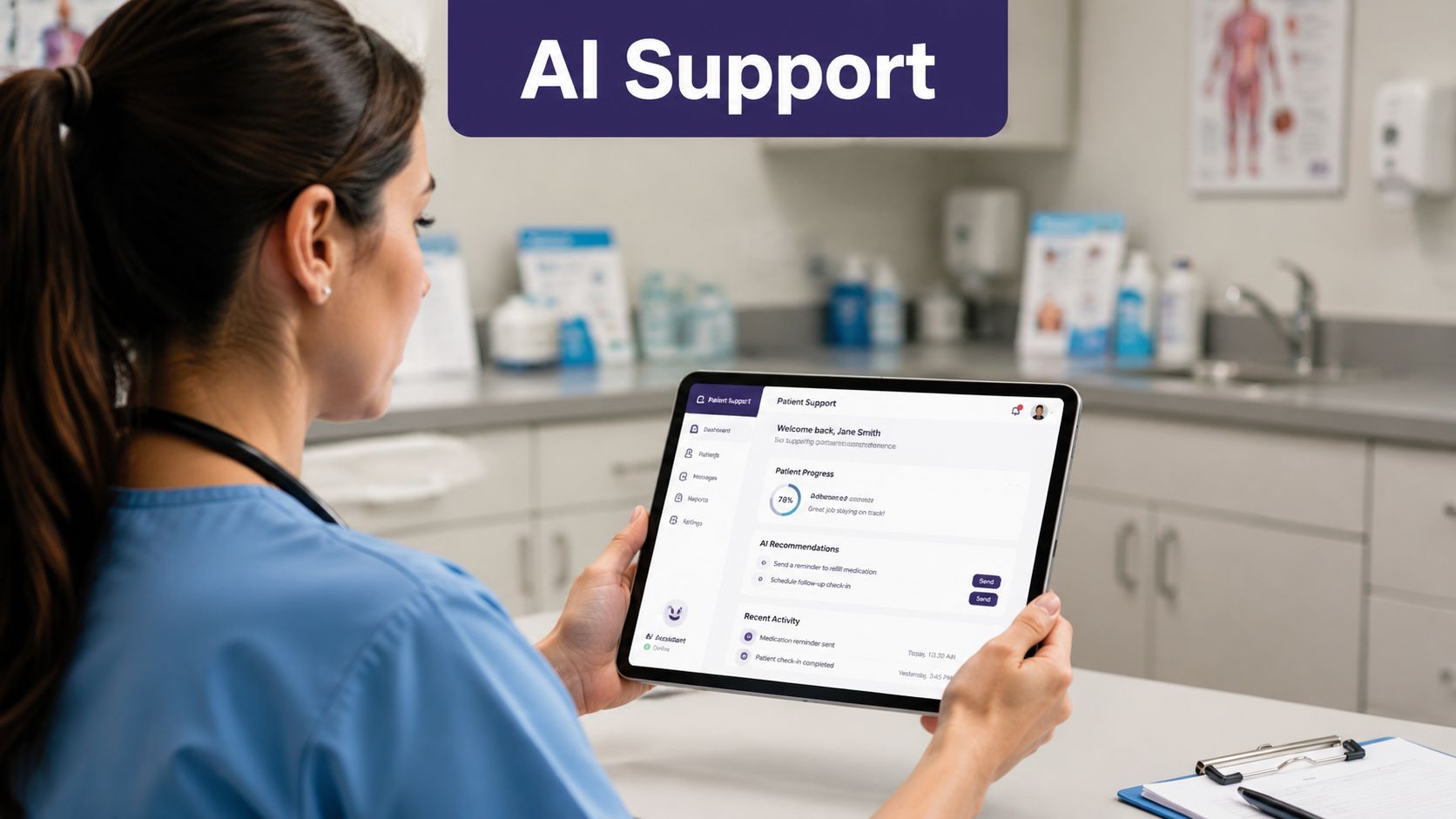
Simplify before you intensify
The fastest gains often come from prescription design, not more outreach.
Consider these adjustments:
- Move to once-daily dosing when clinically appropriate: Fewer decision points usually means fewer missed doses.
- Use combination pills when available: Reducing bottle count helps patients managing several conditions at once.
- Choose refill-friendly prescriptions: A regimen that creates monthly confusion will generate monthly calls.
The operational payoff is real. Simpler regimens are easier for staff to explain, easier for pharmacies to fill consistently, and easier for patients to fit into daily life.
Fix the refill calendar
Medication synchronization is not glamorous, but it works. If a patient has prescriptions due on four different dates, your front office becomes the traffic controller for an avoidable problem. Aligning refill dates to a single monthly cycle reduces confusion for the patient and lowers repetitive phone volume for the practice.
Another useful pharmacy tactic is extending prescription length when clinically appropriate. Research on pharmacy-based adherence tools found that synchronization, extended prescription lengths, and pre-packed unit doses can improve adherence, while patients often disengage when regimens become too complex in this implementation review in the Journal of General Internal Medicine.
A simple internal policy helps here:
| Workflow point | Better practice choice | Why it helps |
|---|---|---|
| New chronic medication | Check whether once-daily dosing is available | Reduces missed doses |
| Multiple maintenance meds | Ask pharmacy about synchronization | Cuts refill confusion |
| Long-term stable therapy | Consider longer supply when appropriate | Reduces refill friction |
Packaging matters more than many clinics think
Bottle labels are easy to write and easy to misunderstand. For some patients, especially those on multiple medications, time-specific packaging creates clarity that routine counseling does not.
Patients rarely say, "I need blister packs." They say, "I get mixed up."
Pre-packed unit doses, including blister packs and dose-dispensing packs, have shown better correct intake than standard bottle packaging in European Heart Journal findings on adherence packaging. In real clinic terms, that can mean fewer "I thought I already took it" calls and fewer medication reconciliation surprises at follow-up.
Automate Adherence Support with AI Medical Staff
Medication adherence programs usually break down for a simple reason. The follow-up work is repetitive, time-sensitive, and easy to postpone when phones are busy, prior auths stack up, and staff are covering two roles at once.
Digital adherence support can help, but only when it is tied to the chart, the refill workflow, and a clear escalation path. A text reminder by itself is easy to ignore. A staff-managed system that checks whether the prescription was filled, asks about side effects, routes problems into the EMR, and keeps routine outreach moving is far more useful in day-to-day practice.
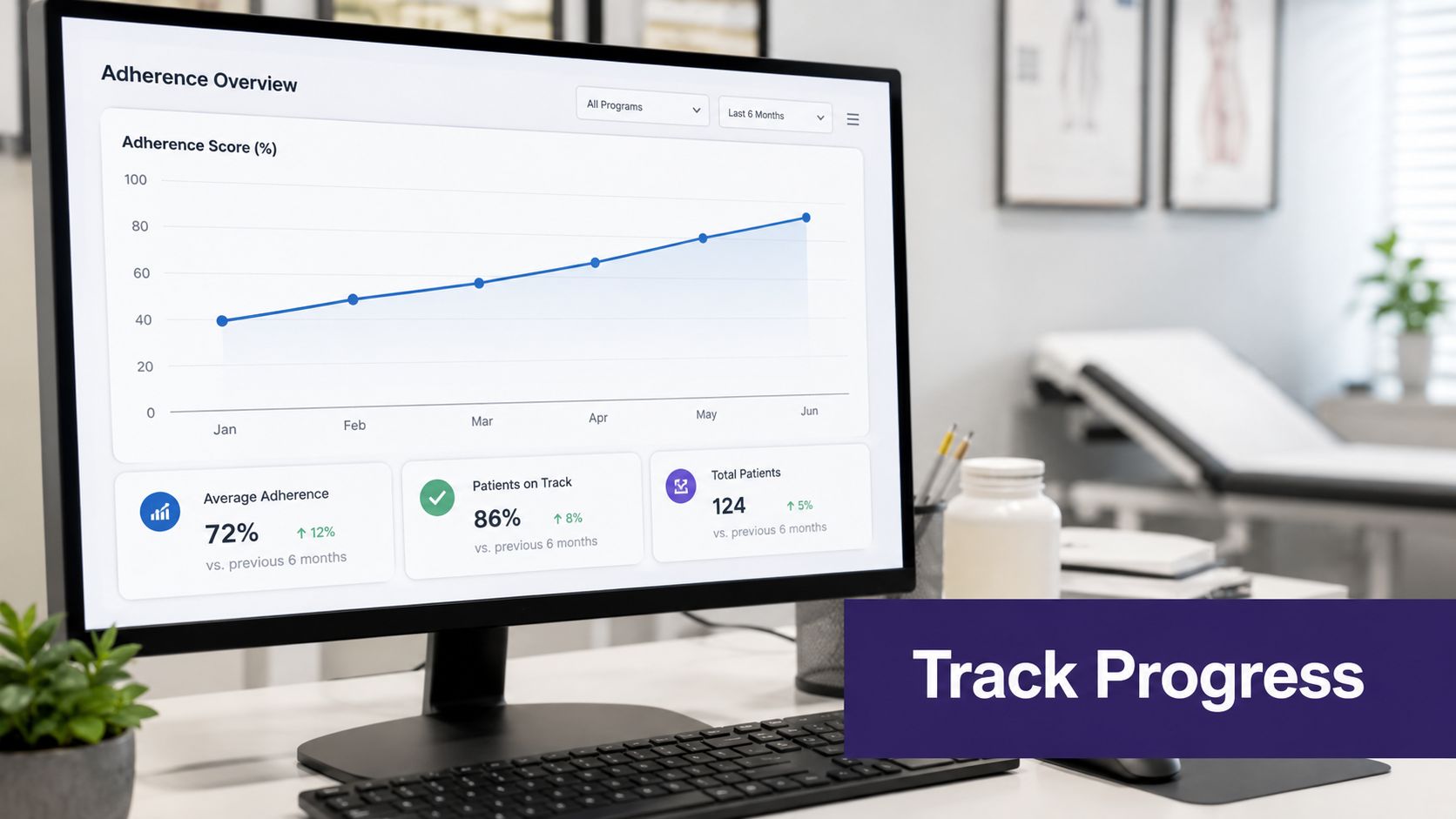
What automation should handle
Independent clinics do not need more software tabs. They need reliable execution on tasks that staff already know should happen.
The best candidates are repetitive workflows with clear rules:
- Refill intake and routing: capture refill requests after hours, collect missing details, and place the task in the right queue for clinical review.
- Post-start outreach: check in after a new medication begins to catch side effects, cost barriers, confusion, or failure to start.
- Education reinforcement: repeat instructions in plain language after the visit, when patients are home, looking at the bottle, and more likely to ask practical questions.
- Condition-specific campaigns: run recurring outreach for chronic medication reviews, overdue labs, or follow-up tied to a treatment plan.
One example is Simbie AI's medication reminder workflow. Used well, a tool like this works inside practice operations rather than as a disconnected call tool. It can support scheduling, refill coordination, education calls, and documentation across platforms such as eClinicalWorks, gGastro, EMA ModMed, Athenahealth, Epic, and DrChrono. For independent groups, that matters because adherence failures usually come from operational gaps, not from lack of clinical intent.
Where AI helps and where it should not lead
Automation should own the repeatable layer. Staff should own judgment.
That division keeps the system safe and efficient. If a patient says the medication is too expensive, never started it, or is not sure how to take it, automation can gather the basics and route the case correctly. If the patient reports a side effect, requests a dose change, or sounds unstable, the task should move to a nurse or prescribing clinician without delay.
This is the trade-off practices need to manage carefully. Push too little into automation and the team drowns in low-value calls. Push too much and important clinical nuance gets flattened into scripts. The right setup uses AI Medical Staff for outreach, intake, reminders, and documentation support, while keeping clinical decisions with licensed staff.
Patient education needs better delivery
Patients often leave the visit agreeing with the plan and still miss doses a week later because the instructions were forgotten, misunderstood, or buried in portal notes. Short follow-up videos and scripted call reinforcement can reduce that drop-off, especially for medications that require timing, titration, or monitoring.
Teams creating those materials can borrow from Trupeer's tips for healthcare L&D videos, which are useful for turning repeated staff explanations into content patients can revisit at home.
A reminder only helps when it reaches the patient in the right channel and gives a next step that is easy to follow.
That is the operational standard worth building for.
Measure Adherence to Manage It Effectively
Most practices do not need more data. They need cleaner use of the data already sitting in the chart, refill history, and claims feed.
Two common measures are Medication Possession Ratio and Proportion of Days Covered. The exact formula matters less than the purpose. Both help a practice determine whether a patient had medication available over a defined period. Used well, these measures show which patients need follow-up before the next flare, hospitalization, or frustrated call.

A practical measurement workflow
Do not build this around manual chart review unless your volume is tiny. In most clinics, the better path is:
- Pull a target cohort from eClinicalWorks, Athenahealth, Epic, DrChrono, ModMed, or gGastro. Start with one medication class or one chronic condition.
- Match refill activity against the active medication list and the prescribed fill interval.
- Flag outliers for outreach. Patients with repeated refill gaps usually need either regimen simplification, side-effect follow-up, or an access fix.
- Document the intervention in a standardized way so the team can see what happened on the next call.
A dashboard matters less than a reliable cadence. Review a manageable cohort every week. Keep the criteria stable. Let the MA, nurse, or office manager see the same list format each time.
Tie follow-up to reimbursable work
Adherence support often gets treated as unpaid cleanup. It does not have to be.
When medication follow-up is documented as part of structured chronic disease management, practices may be able to align that work with existing Chronic Care Management processes. The key is not squeezing every task into a billing box. The key is building a repeatable workflow where outreach, education, review, and documentation happen consistently enough to support both patient care and operational stability.
For teams trying to get more disciplined about this, a defined scorecard helps. Use a small set of metrics: refill gap rate, successful outreach rate, unresolved side-effect reports, and completion of documentation. A framework like medical practice metrics that actually matter can help administrators connect adherence work to staffing, access, and retention rather than treating it as a side project.
An Adherence Workflow in a GI Practice
A gastroenterology practice starting a patient on a biologic for Crohn's disease does not usually fail because the prescribing decision was wrong. It fails because follow-up becomes fragmented.
The better workflow is straightforward. After the initial infusion, an automated outreach sequence schedules a day-three check-in to ask about early side effects, symptom changes, and whether the patient received the next dose instructions. The conversation is documented directly into gGastro, and anything outside the protocol is routed to staff review.
A week later, the same workflow confirms the patient has the medication on hand and remembers the next dose timing. If the patient calls later about a refill, the intake is captured immediately, the request is verified, and the chart task is queued for the MA or clinician to approve. The office manager can review the call log, see where patients needed escalation, and spot patterns such as repeated confusion after specialty pharmacy handoffs.
That kind of structure protects the front desk from becoming the default refill call center. It also gives the clinical team cleaner information when they do need to step in.
Protecting Doctors' Time for Doctoring is not a slogan in this context. It is the result of building adherence support into the daily workflow instead of hoping staff can remember to chase every patient manually.
If you're evaluating AI for your practice, you can see Simbie AI in action at book a demo.