

Meta description: What conditions qualify for chronic care management depends on more than diagnosis lists. Learn how to document risk, enroll patients, and run CCM cleanly.
If you're trying to figure out what conditions qualify for chronic care management, you're probably already stuck in the same place most independent practices get stuck. The patient clearly has ongoing medical needs, your clinicians are doing coordination work between visits, but the billing and documentation standard feels much narrower than the clinical reality.
That's because CCM isn't built around a simple disease list. It's built around a standard you have to prove. For a small internal medicine, GI, or multispecialty practice, the hard part isn't naming diagnoses. It's documenting why this patient, with these conditions, meets Medicare's threshold and why your workflow can support the work without burying staff in calls, consent tracking, care plans, and time logs.
CCM Eligibility Is More Than a List of Diseases
Most articles answer the wrong question. They give you a list of common diagnoses and stop there. That may be helpful for quick screening, but it doesn't tell you whether a claim will hold up if anyone reviews the chart.

Under CMS Medicare rules, a patient qualifies for CCM only if they have at least two chronic conditions, those conditions are expected to last 12 months or longer or until death, and they place the patient at significant risk of death, acute exacerbation or decompensation, or functional decline. CMS also states that CCM is billed as non-face-to-face care coordination, with at least 20 minutes per month of clinical staff time typically required for billing, according to CMS chronic care management guidance.
The three-part rule that actually matters
This is the practical test practices should use before they ever think about billing:
Two or more chronic conditions
One serious condition alone does not qualify a patient for CCM under the Medicare standard described above.Expected duration of at least 12 months or until death
A temporary flare, a short recovery period, or an isolated episode doesn't fit the rule by itself.Documented significant risk Here, much of the critical assessment resides. The chart has to show why these conditions create meaningful ongoing risk, not just why they exist.
The diagnosis examples CMS commonly references include diabetes, hypertension, chronic kidney disease, heart failure, COPD, cancer, arthritis, and Alzheimer's disease, but that list is not exhaustive. Eligibility depends on whether the patient's conditions meet the severity and duration criteria, not whether the diagnosis appears on a favorite internet checklist.
What CCM is really paying for
CCM pays for the work your staff already sees every day, but often can't capture cleanly. Medication reconciliation. Coordination with specialists. Follow-up on symptoms that don't justify an office visit but still need action. Education and adherence support. Updating a care plan. Communicating changes back into the chart.
Practical rule: If you can't explain why the patient needs longitudinal coordination between visits, the patient may have chronic disease but may not be a strong CCM candidate.
That distinction matters operationally. A broad disease list pulls too many charts into review and wastes staff time. A structured eligibility screen keeps the program focused on patients who both qualify and benefit from monthly coordination.
For practice owners, this is also where finance and compliance meet. CCM can work well in a smaller group, but only when the enrollment criteria are tight enough that staff aren't chasing every patient with hypertension and back pain while still trying to keep the front desk afloat.
The Significant Risk Test for Common Chronic Conditions
A diagnosis is the starting point. It is not the justification.
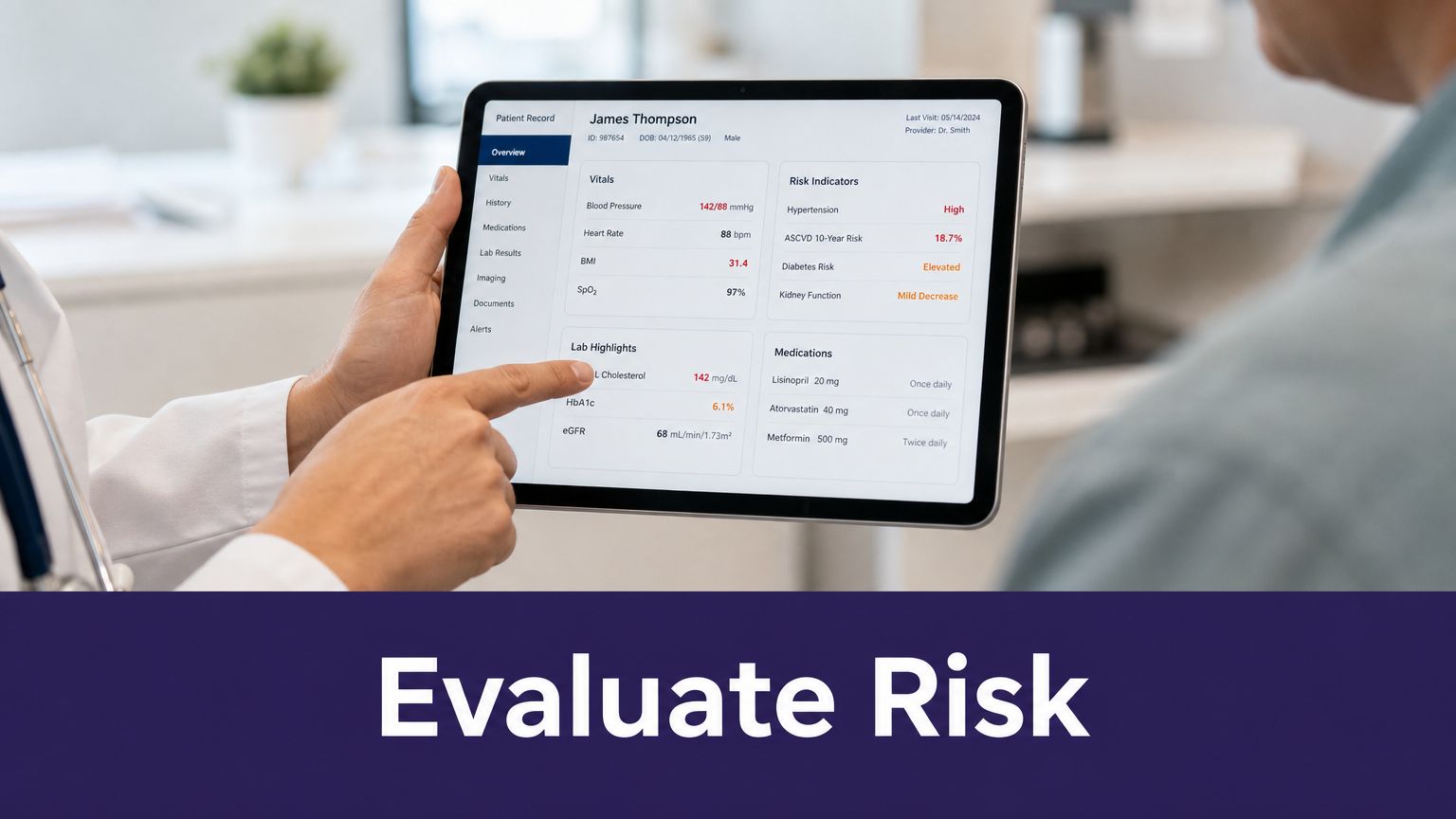
Practices often ask whether common combinations like hypertension plus arthritis, diabetes plus obesity, or COPD plus anxiety qualify. The honest answer is that they can, but only if the record shows how those conditions create significant risk for that specific patient.
A 2024 CMS Master Claim Analysis report indicated that over 30% of CCM denials were due to insufficient documentation of the significant risk rationale rather than the condition itself. That point is especially important for practices building workflows around pre-qualification and monthly outreach, because a diagnosis-only workflow leaves the most audit-sensitive part undocumented.
Common conditions are common for a reason
In real-world CCM programs, certain diagnoses show up repeatedly because they often create ongoing coordination needs. Think diabetes with medication changes, heart failure with symptom fluctuation, COPD with recurrent exacerbation risk, chronic kidney disease with medication and lab coordination, arthritis with mobility decline, or Alzheimer's disease with safety and caregiver communication needs.
The condition itself is not enough. The chart has to connect the condition to one of the risk elements CMS cares about.
A simple way to coach staff and clinicians is to stop asking, "Does this disease count?" and start asking:
- What could worsen without active monthly follow-up
- What recent instability suggests risk of exacerbation or decline
- What functional issue, medication issue, or coordination burden makes this patient clinically fragile
- What support is being provided between visits that would not otherwise be captured
What auditors look for in the note
A weak note says: diabetes, hypertension, enrolled in CCM.
A stronger note shows why the patient needs coordinated management:
| Documentation area | Weak example | Stronger direction |
|---|---|---|
| Condition statement | Lists diagnoses only | States chronic conditions and expected duration |
| Risk statement | No risk explanation | Ties conditions to exacerbation, decline, or complexity |
| Functional impact | Not mentioned | Notes medication burden, symptom instability, mobility or cognitive issues |
| Coordination need | Vague | Shows why monthly non-face-to-face management is medically necessary |
Clinical judgment plays a key role. Mild back pain by itself may not support the CCM standard. Back pain that contributes to reduced mobility, medication complexity, missed follow-up, and worsening function may be much easier to defend when paired with another long-term condition. The same logic applies to behavioral health and cognitive conditions. If cognitive impairment is part of the picture, a plain-language primer on understanding cognitive impairment and dementia can help staff communicate more clearly with families and document what daily decline looks like.
The safest CCM charts don't just name diseases. They show the patient's trajectory, the coordination burden, and the consequences of doing nothing.
A practical documentation frame
For each candidate patient, document four things in plain language:
Chronicity
Make it clear the conditions are expected to persist long term.Risk
State the specific risk. Hospitalization risk, recurrent flare risk, medication-related complications, progressive decline, or cognitive deterioration.Impact on function or self-management
Note where the patient struggles. Adherence, symptom monitoring, mobility, caregiver reliance, follow-through, or access.Reason for ongoing monthly management
Explain why care coordination between visits is medically necessary.
That framework is much more defensible than relying on a diagnosis list copied from a website.
Setting Up Your CCM Enrollment and Consent Workflow
Most CCM problems start before the first month is even billed. The patient may be eligible, the clinician may support enrollment, but the workflow breaks because consent wasn't captured cleanly, the care plan is thin, or no one knows who owns the process.
A reliable enrollment workflow needs to be boring. That's a good thing. The more predictable it is, the fewer claims you revisit later.
Start with consent and make it easy to find
Before your team logs monthly CCM time, patient consent has to be obtained and documented in the record. The exact method your practice uses should match your compliance process, but the operational rule is simple: if staff can't find the consent quickly, treat it as missing.
A workable process usually includes:
A single owner for enrollment
One role, not five people half-owning it. In small practices, that may be a care coordinator, biller, or nurse lead.A standard script
Staff should explain what CCM includes, that it's ongoing monthly care coordination, and that the patient is agreeing to participate.A fixed documentation location
Put consent in the same place every time, whether that is in Athenahealth, eClinicalWorks, Epic, DrChrono, or another system your team uses daily.
For practices trying to clean up intake before enrollment, structured digital workflows matter. A standardized process for demographics, medication review, and chart-ready details usually works better than scattered phone notes and sticky reminders, especially when tied to medical intake forms.
Build the care plan before the month gets busy
The care plan isn't a billing accessory. It's the document that makes the monthly work coherent.
Your team should be able to open the chart and answer basic questions fast:
- What are the chronic conditions being managed?
- What are the current treatment goals?
- Which medications or monitoring tasks are relevant?
- What barriers make follow-through harder?
- Which specialists are involved?
- What should trigger escalation?
A strong CCM care plan reads like a working document for the next call, not a form completed once and forgotten.
If the care plan is generic, the monthly outreach becomes generic too. Then staff spend time on low-value calls that are hard to defend and harder to sustain.
Documenting Time and Billing with the Right CCM Codes
CCM falls apart quickly when time tracking is sloppy. In such instances, many otherwise well-intentioned programs stall. Staff are doing the work, but they aren't recording it in a way that supports clean billing.
The base operational fact is straightforward. CMS describes CCM as non-face-to-face care coordination, with at least 20 minutes per month of clinical staff time typically required for billing, as noted earlier in the CMS guidance. The challenge is not understanding the rule. The challenge is proving it every month without creating another administrative job.
Think in workflows, not just codes
Most practices know the foundational CCM billing code is 99490 for the first 20 minutes of qualifying monthly service. What matters in day-to-day operations is whether your staff can connect activities to time in a consistent way.
Qualifying work often includes care coordination tasks such as medication-related follow-up, communication with other providers, patient calls tied to the care plan, and similar non-face-to-face management activities. What doesn't work is reconstructing time at month end from memory.
A simple operating model looks like this:
Capture activity at the point of work
Don't rely on batch cleanup later.Tie the activity to the care plan
A call with no clinical purpose is hard to defend.Use a monthly review queue
Someone should confirm threshold completion before billing goes out.
Practices that want a cleaner reference for code structure usually benefit from a focused billing guide like this overview of chronic care management CPT codes.
Why efficiency matters so much in CCM
Utilization of CCM has grown, but it remains low. In a study of Medicare beneficiaries with two or more chronic conditions, the share receiving CCM services rose from 1.1% in 2015 to 3.4% in 2019, according to research published in the Journal of the American Geriatrics Society.
That tells practice owners two things at once. First, the need is real. Second, many practices still aren't operationally set up to capture it.
If your team has to choose between answering phones, processing refill requests, rooming patients, and manually logging CCM minutes, CCM loses. Not because the service lacks value, but because the workflow is too fragile.
Automating CCM Workflows to Make Them Profitable
For most independent practices, CCM doesn't fail because clinicians disagree with the model. It fails because the workflow sits on top of an already overloaded phone system and already stretched staff.
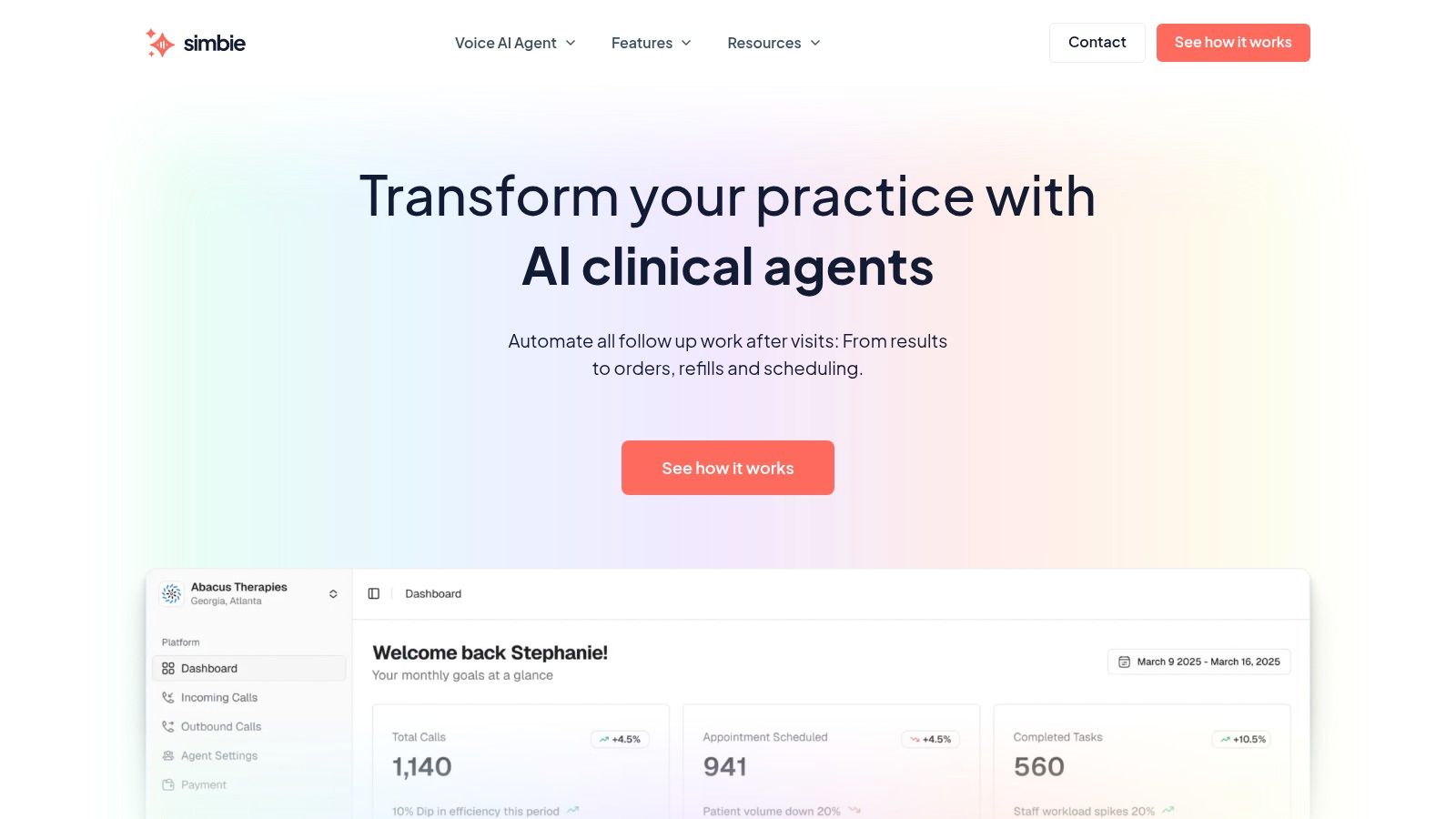
That is why automation changes the economics. Not because it makes the clinical standard looser. It doesn't. It makes the administrative pieces repeatable.
The parts of CCM that are easiest to automate
Small and midsize practices usually benefit most when they automate the steps that are high-frequency, structured, and easy to standardize:
| Workflow area | Manual version | Better automated version |
|---|---|---|
| Monthly outreach | Staff call lists and voicemail tag | Scheduled outbound outreach with structured prompts |
| Risk capture | Free-text notes after the call | Standardized intake questions tied to risk and functional status |
| Documentation | Call summary typed from memory | Drafted chart-ready note for staff review |
| Time logs | Manual tally at month end | Activity captured during the interaction |
| Escalation | Inbox clutter | Defined routing when symptoms or adherence issues surface |
An AI medical staff model can play a significant role. Simbie AI, for example, handles front-office workflows like scheduling, intake, refill coordination, and calls, while also supporting clinical workflows such as adherence check-ins, patient education, and chart documentation through integrations with systems like eClinicalWorks, gGastro, EMA ModMed, Athenahealth, Epic, and DrChrono. For practices evaluating this category, a closer look at chronic care management software is usually more useful than generic AI claims.
Why newer care categories matter
The traditional disease list view of CCM is already too narrow. Data from the 2025 Medicare Provider Annual Review shows a 45% increase in Chronic Pain Management billing compared to CCM, indicating that providers are shifting focus toward pain and behavioral health documentation. That shift matters because practices that only screen for diabetes, hypertension, and COPD may miss patients whose primary ongoing burden is pain, functional limitation, or behavioral health complexity.
That has practical implications. If your monthly outreach script doesn't ask about medication changes, worsening pain, sleep disruption, self-management barriers, mood symptoms, or reduced activity, you're likely missing clinically relevant risk signals. In cardiology-adjacent or internal medicine populations, the same is true for home monitoring patterns. A plain-language overview of continuous monitoring for irregular heartbeats is a helpful reminder that ongoing symptom and rhythm surveillance often feeds directly into the kind of coordination work CCM and adjacent programs depend on.
Automation works best when it captures structured clinical detail, routes exceptions to staff, and leaves the physician with decisions instead of phone tag.
What works and what doesn't
What works:
- Structured monthly outreach
- Chart-ready summaries staff can review
- Defined escalation pathways
- EMR integration instead of copy-paste workflows
- Coverage that doesn't stop when the front desk gets slammed
What doesn't:
- Generic reminder calls with no clinical logic
- Standalone tools that force double documentation
- Enrollment without a plan for month two
- Programs that depend on one staff member remembering every step
For many practices, profitability comes from removing friction, not pushing volume. If the workflow captures inbound demand, supports outbound check-ins, documents the interaction, and routes only the exceptions, clinicians keep oversight while staff stop drowning in repetitive coordination work. That's the operational side of Protecting Doctors' Time for Doctoring.
Common CCM Pitfalls and How to Avoid Them
Most CCM failures are predictable. The practice launches with good intentions, enrolls a few patients, bills a few months, then either stops because staff can't keep up or runs into denials because the documentation can't support what was billed.

The failure points to fix early
The most common problems usually look like this:
Loose eligibility screening
Staff enroll patients based on diagnosis names alone. Fix this by requiring a brief risk statement before enrollment.Consent that exists somewhere but can't be found
That is not a stable workflow. Put consent in one standard chart location and audit it routinely.Care plans that are too generic
If every plan says roughly the same thing, your monthly documentation will too. Use patient-specific goals, barriers, and escalation points.Time logged after the fact
Reconstructing minutes late is error-prone and hard to defend. Capture activity during the work.No distinction between routine contact and clinically meaningful management
A touchpoint alone is not the same as CCM-level coordination.
Build your pre-mortem before launch
Before you scale, test the program like an auditor would:
- Pull a small sample of enrolled charts.
- Check whether each one clearly supports chronicity, risk, consent, and care plan specificity.
- Review one month of time capture.
- Ask whether another staff member could follow the documentation without verbal explanation.
If the answer is no, the process is too dependent on memory.
The strongest CCM programs are not the most complicated. They're the most standardized.
For a community practice, that usually means fewer patients enrolled at first, tighter documentation, cleaner workflows, and a gradual expansion once the system holds. That's much better than enrolling broadly and discovering six months later that the notes don't support the claims.
If your practice is evaluating AI support for care management, phone workflows, intake, and chart documentation, Simbie AI is one option to review. You can see it in action at book a demo.