
Reducing hospital readmissions with follow up calls starts with one uncomfortable truth. Calls by themselves don't reliably lower readmissions in every setting, even though they can clearly improve transitions of care and reduce avoidable utilization. For independent and community-based practices, that distinction matters. If you're running internal medicine, gastroenterology, or dermatology with a lean team, you don't need more outbound activity. You need a follow-up system that identifies the right patients, asks the right questions, routes real issues fast, and documents everything without adding more burden to the staff you already can't spare.
Meta description: Reducing hospital readmissions with follow up calls works best when timing, scripting, escalation, and automation are built into one practical workflow.
Designing Your Follow Up Call Program
The biggest mistake practices make is treating every discharged patient the same. That burns time and spreads attention too thin. Risk stratification is the starting point, not an optional optimization.
In a small GI practice, the highest-yield cohort usually isn't "everyone discharged this week." It's the patient after a higher-risk procedure, the patient with multiple medications, the patient who has a history of ED use, or the patient whose family already sounded uncertain during discharge planning. Those are different patients with different failure points.
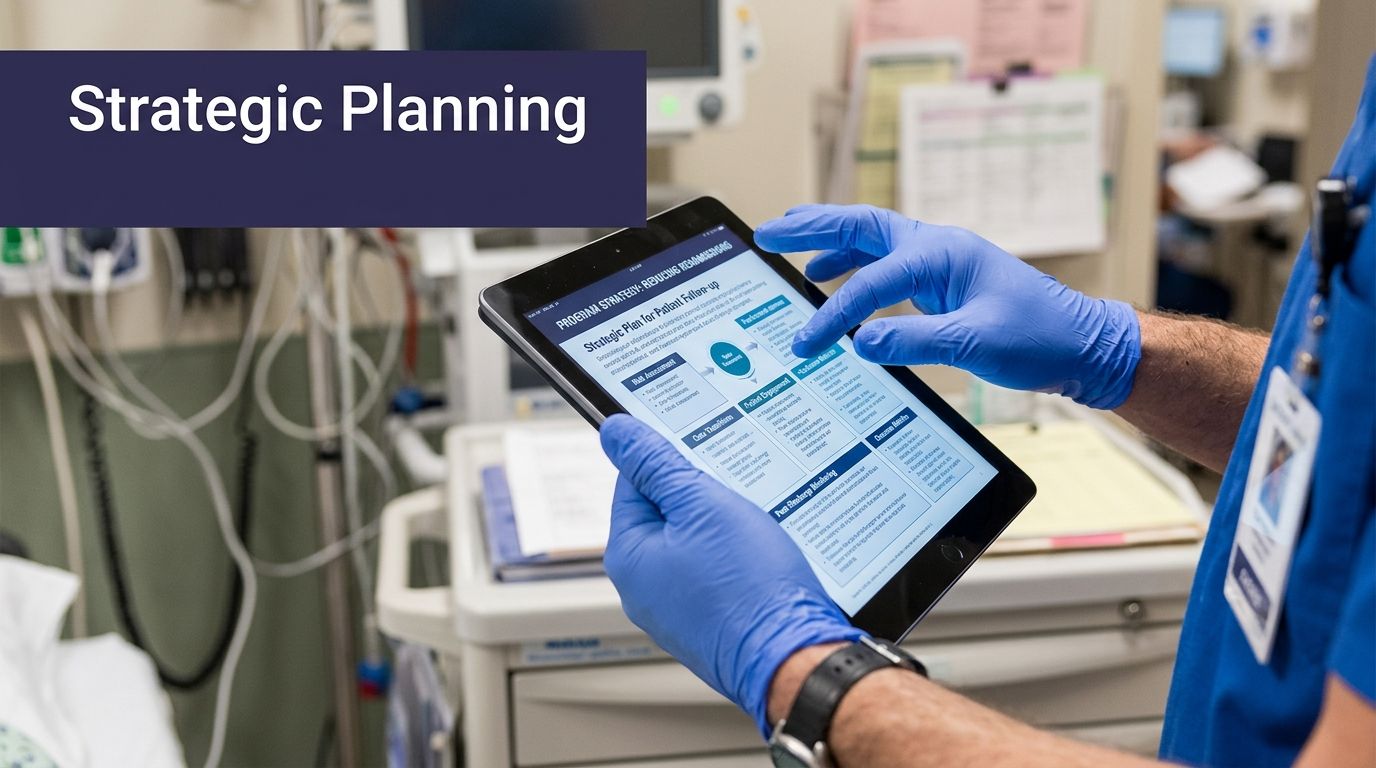
A structured program has support behind it. In this study on community nurse-initiated telephone follow-up, calls within 48 hours of discharge significantly reduced 30-day readmissions, and in some geriatric cohorts the reduction reached up to 50%.
Start with patient cohorts, not a master list
A practical way to set this up is to create three cohorts:
High-risk patients
These patients get a live clinical follow-up path first. Think recent hospitalization plus medication complexity, concerning symptoms at discharge, or known barriers to follow-up.Moderate-risk patients
These patients can start with standardized outreach and move to a nurse or clinician if the call uncovers a problem.Low-risk patients
These patients may only need appointment confirmation, a quick education check, or portal reinforcement, depending on specialty and staffing.
That structure helps a practice decide where nursing time belongs.
Define the operational goal before assigning staff
Too many programs launch with a vague goal like "reduce readmissions." That's not enough for a practice-level workflow. A real program needs a narrower operational target such as:
- Medication clarity: Confirm that the patient knows what to take, what changed, and what to stop.
- Follow-up certainty: Make sure the next appointment is booked, understood, and realistically reachable.
- Complication detection: Surface worsening symptoms early enough to intervene in clinic instead of after an ED visit.
Practical rule: If your call team can't name the exact action they are trying to trigger, the script is too loose.
For a GI practice, this can be very concrete. A post-op patient who reports increasing pain, poor oral intake, or confusion about bowel prep and medication restart should not sit in a generic callback queue. The workflow should already specify who gets alerted, where the note lands, and how same-day follow-up is handled.
A lot of practices also benefit from stepping back and reviewing broader workflow modernization before they build this kind of program. This guide to healthcare digital transformation is useful because it frames patient communication as an operating model issue, not just a phone task.
Keep the scope small enough to run well
The first version of the program should be narrow. Pick one discharge type, one specialty slice, or one risk group. Internal medicine might start with heart failure discharges. GI might start with post-procedure patients at higher risk of complications. Dermatology may reserve the workflow for complex medication starts or post-op follow-up after procedural care.
A focused program gets better faster. A broad one usually stalls.
Optimal Timing and Scripting for Follow Up Calls
Timing matters, but content matters just as much. A fast call with weak questions gives the practice a false sense of coverage. The patient answered the phone, but nothing clinically useful happened.
The strongest timing window described in the evidence is two to five days after discharge, with special attention to medication confusion and appointment clarity. In polypharmacy patients, follow-up calls that lasted about 15 minutes were associated with a 10% reduction in 30-day readmissions and a 15.2% reduction in 90-day readmissions in this post-discharge follow-up review.
The script should follow clinical risk, not front-desk habit
A useful script isn't a customer service script. It's a short clinical operations script with room for judgment. The order matters.
| Call segment | What the caller needs to confirm |
|---|---|
| Opening verification | Confirm identity, discharge date, and the reason for recent hospitalization or procedure |
| Medication review | Ask what the patient is actually taking now, what changed, and whether anything couldn't be filled |
| Care plan understanding | Check whether the patient understands diet, wound care, restrictions, symptom monitoring, or post-procedure instructions |
| Appointment status | Confirm the follow-up visit is scheduled and that the patient knows when and where to go |
| Escalation screen | Ask for red flag symptoms or barriers that require same-day review |
Medication reconciliation is the center of the call. Many preventable readmissions happen because the patient leaves with incomplete understanding, especially around changed medications and follow-up plans. A script that doesn't get specific here misses the point.
Use direct questions that force clarity
Some prompts work better than broad check-ins. "How are you feeling?" sounds polite, but it rarely surfaces what you need. Tighter questions do.
- Medication check: "Which medications did the hospital tell you to stop, and which ones are you taking today?"
- Fill barriers: "Were you able to pick up every prescription after discharge?"
- Instruction check: "What did they tell you to watch for that would mean you should call us right away?"
- Follow-up logistics: "Do you already have your follow-up appointment, and do you have transportation to get there?"
The strongest follow-up calls don't just confirm that instructions were given. They confirm that the patient can act on them.
Language matters too. If your patient population includes people who don't primarily use English, the call workflow should reflect that. When practices need to tighten multilingual discharge communication, this resource on translating hospital discharge documents is worth reviewing alongside the call script itself.
Specialty-specific scripting works better than generic scripting
A dermatology practice calling after a biologic start needs different prompts than an internal medicine clinic after a hospital discharge. A GI practice after a procedure needs direct questions about pain, intake, bleeding, bowel function, and whether discharge restrictions were understood.
That sounds obvious, but many practices still hand everyone the same script. The result is shallow documentation and missed escalation opportunities.
A script should be standardized enough to train reliably and specific enough to catch the problems your practice sees.
Staffing and Automating Your Call Workflow
Once the call design is clear, the next constraint shows up fast. Who is going to make these calls? In a small practice, the answer is usually "the same nurses and front-desk staff who are already overloaded."
That creates a trade-off. Manual outreach gives you clinical nuance, but it doesn't scale well. High-volume outreach scales better, but without escalation logic it becomes activity without outcome.
Manual nurse-led calls versus automated first-pass outreach
Here is the practical comparison most administrators eventually have to make:
| Model | Strength | Limitation |
|---|---|---|
| Nurse-led calls only | Better clinical judgment in complex conversations | Expensive time allocation, inconsistent coverage, hard to sustain |
| Front-office staff with script | Lower cost than nurse-only model | Limited ability to interpret red flags safely |
| Automated first-pass outreach with escalation | Consistent outreach, after-hours reach, better call volume handling | Needs careful workflow design and clear clinical handoff rules |
The operational lesson from recent evidence is important. This JMIR report found that nurse-led telephone calls significantly reduced 7-day emergency department utilization, but did not statistically lower readmissions on their own, which suggests the call is not enough unless it connects to clinical escalation and intervention.
That lines up with what practices see on the ground. A call that identifies a medication problem but doesn't trigger action is documentation, not care transition management.
Where AI medical staff fits
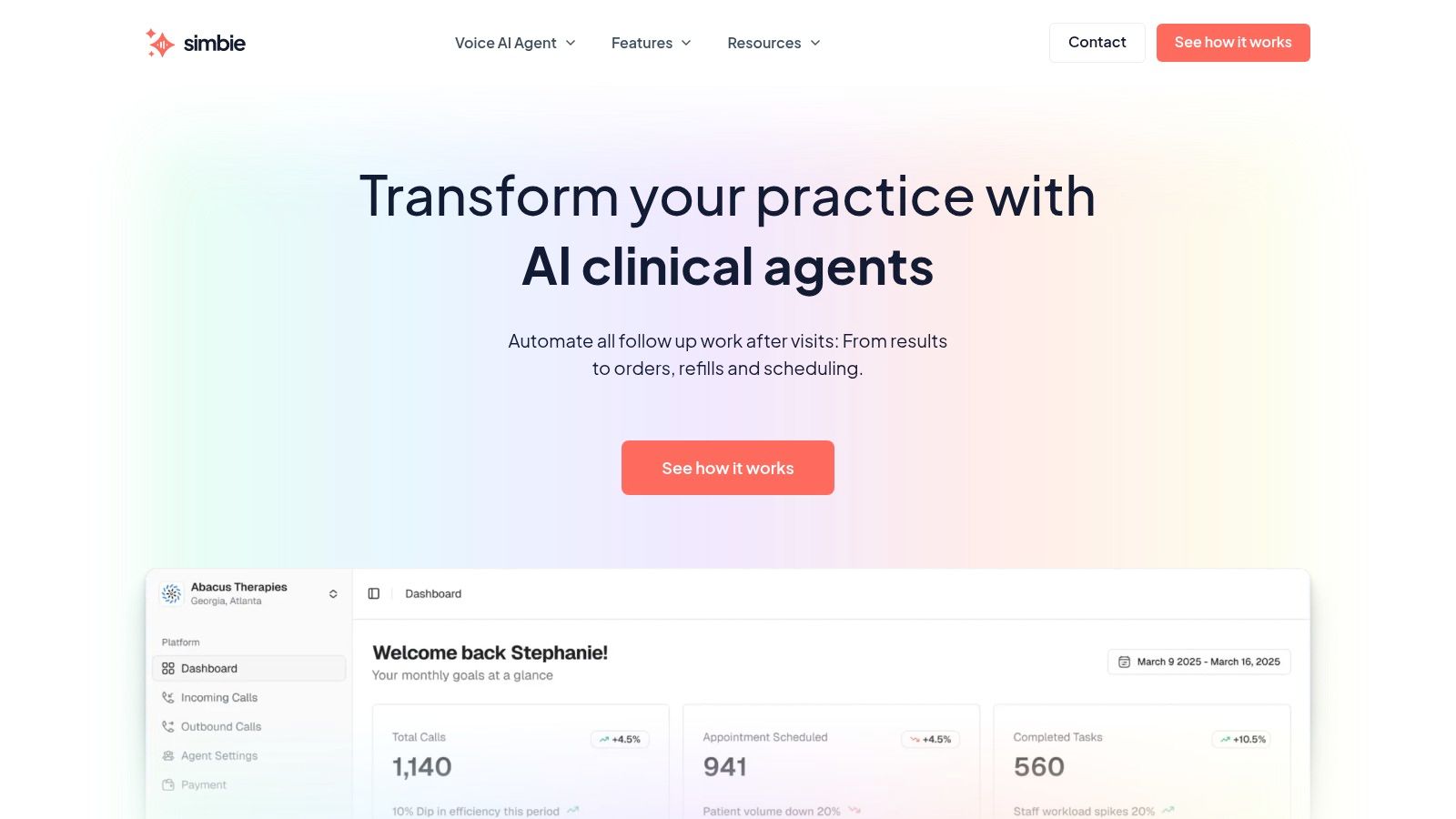
An AI medical staff model can help if it's implemented as part of the workflow, not bolted on as a call layer. One option is Simbie AI's outbound call automation for healthcare, which supports high-volume outreach, captures patient responses, and routes exceptions back to staff. In practices already using systems like eClinicalWorks, gGastro, EMA ModMed, Athenahealth, Epic, or DrChrono, that matters because outreach only works cleanly when the documentation and follow-up tasks land inside the systems the team already uses.
For small and mid-sized practices, the value isn't "AI made the call." The value is that the practice can keep nurses focused on true exceptions while administrative and routine outreach doesn't get dropped. Simbie AI was built by physicians from Stanford, Yale, Columbia, and Princeton, and the positioning that matters here is practical. It's AI Medical Staff, covering both front-office work and clinical support tasks such as scheduling, intake, refill coordination, education, adherence check-ins, and post-discharge outreach. It also offers 24/7 availability, zero hold times, 100% of inbound calls captured, HIPAA-compliant controls, SOC 2 Type 2 certification, and practices using this model can see up to 60% reduction in front-office staff costs.
Protecting Doctors' Time for Doctoring.
Automation should narrow the nurse queue, not create a second inbox
The wrong model is simple. The system calls everyone, collects generic answers, and then dumps a pile of notes on a nurse.
The better model looks different:
- Routine outreach is automated: identity verification, standardized questions, scheduling prompts, and basic education checks.
- Clinical exceptions are filtered: symptom concern, medication discrepancy, inability to obtain prescriptions, no transportation, no follow-up appointment.
- The handoff is immediate and documented: the assigned nurse or clinician sees the issue in context, with the call summary already in the chart.
That workflow supports the team. It doesn't replace it.
Building Safe and HIPAA Compliant Escalation Paths
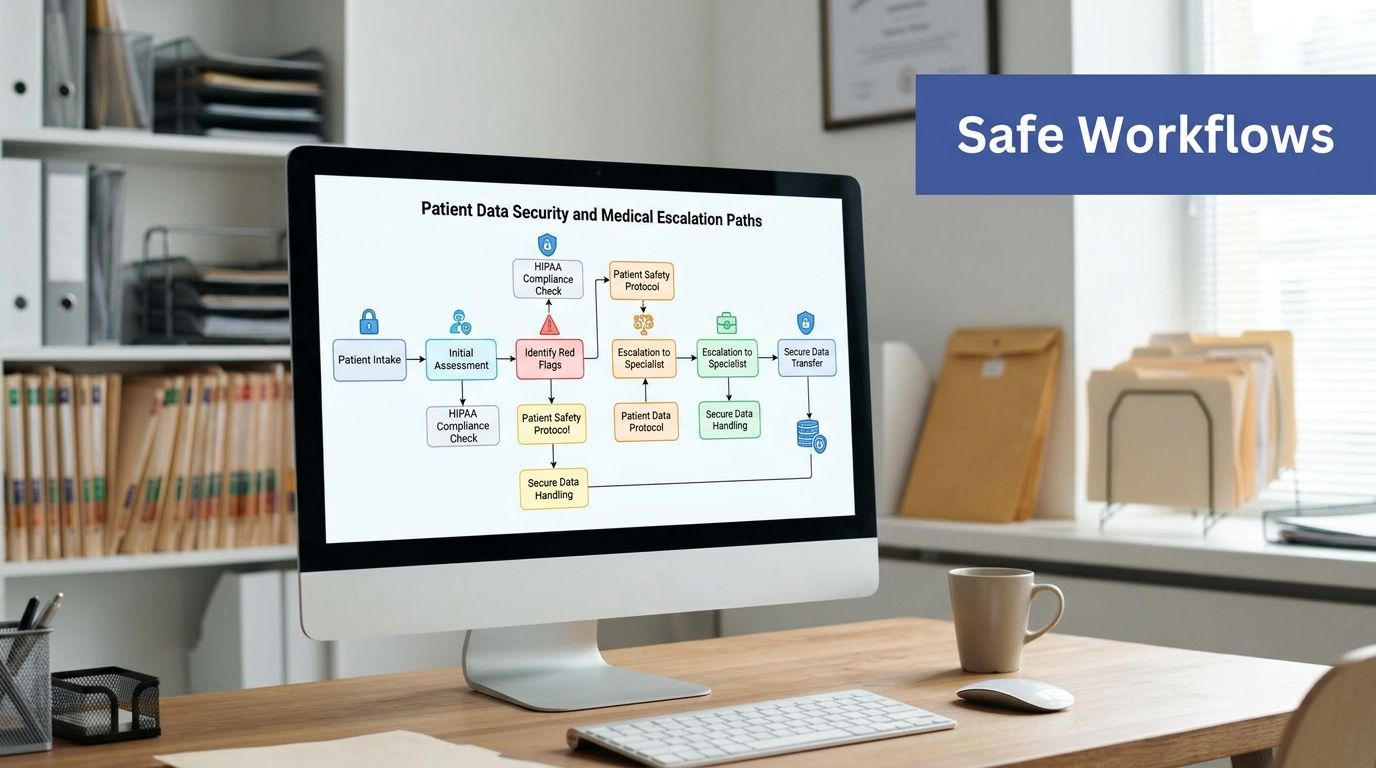
A follow-up program fails when it uncovers a real problem and nobody knows who owns the next step. Safety depends on a simple escalation tree that staff can follow during a busy clinic day.
Independent practices don't need a complicated command center. They need a short list of triggers, a named responder, a response window, and chart documentation that doesn't rely on memory.
Build the escalation tree around real failure points
For most practices, the escalation categories are predictable:
- Red flag symptoms: worsening pain, new bleeding, breathing issues, dehydration, fever, or any specialty-specific complication prompt
- Medication errors: duplicate therapy, failure to stop a discontinued drug, inability to obtain a new prescription, side effects after discharge
- Access barriers: no transportation, no appointment on the schedule, no pharmacy pickup, language barriers affecting comprehension
Each category needs a defined path. Some concerns should route to a nurse triage queue. Others may need same-day provider review. A few should trigger immediate direction to emergency care based on the practice's protocol.
Documentation and security can't be separate from the workflow
If staff members are taking notes on paper, texting one another, or copying call summaries manually into the chart hours later, the process is already too fragile. Safe follow-up depends on direct documentation into the EMR and an audit trail that shows who was contacted, what was reported, and what action followed.
That matters even more when automation is part of the workflow. Any platform used for outreach should support HIPAA-compliant handling of patient information and secure documentation practices. For teams reviewing their own controls, this HIPAA Pentesting overview is a useful reminder that technical safeguards need to be validated, not assumed.
A practical checklist helps here. Simbie's HIPAA compliance checklist is a useful reference for thinking through role-based access, secure handling of PHI, and documentation controls in day-to-day operations.
A follow-up call is only clinically meaningful if the right person can see the issue, act on it, and verify what happened next.
Keep handoffs short and explicit
The strongest escalation notes are brief. They answer four things:
- What the patient reported
- Why it matters
- Who received the escalation
- What happened next
That structure holds up whether the note lands in Athenahealth, Epic, eClinicalWorks, or another system. It also protects the practice when staff coverage changes during the day.
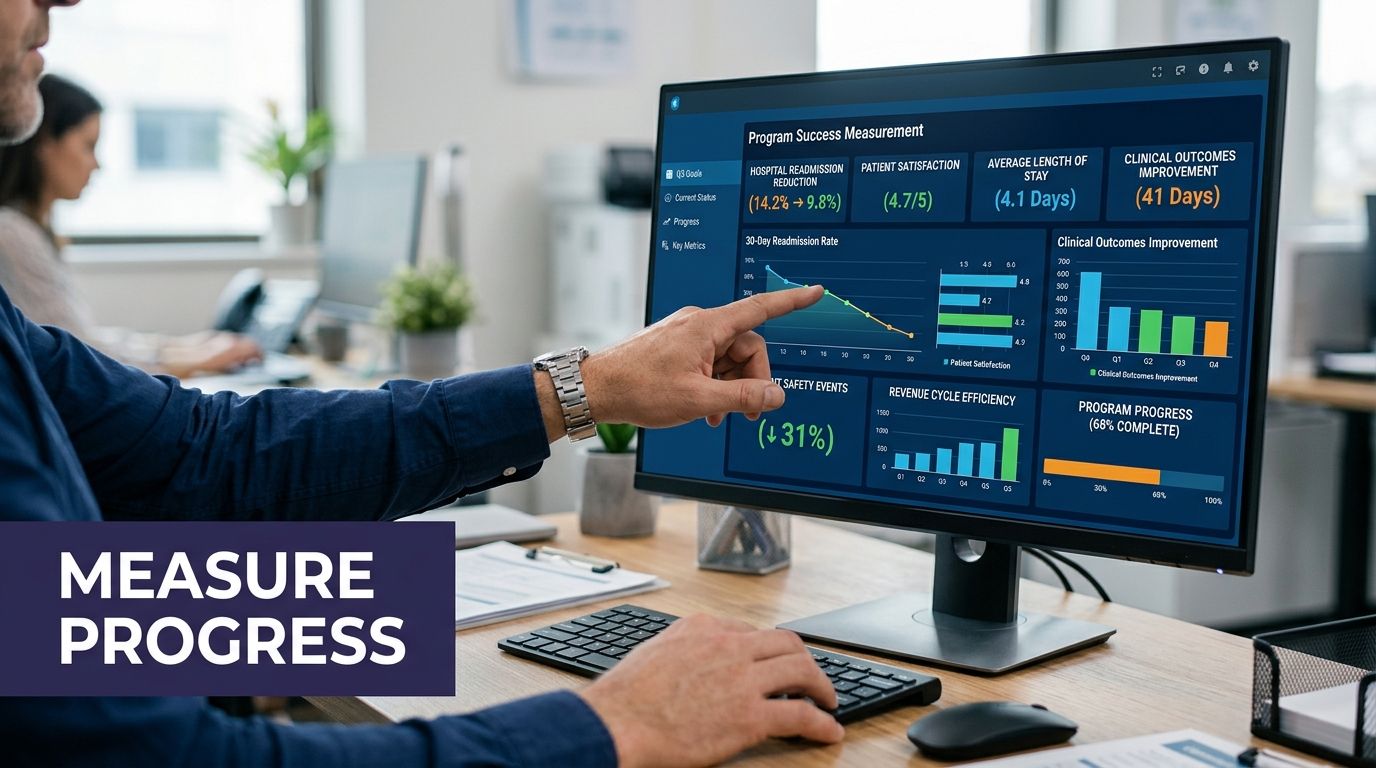
Measuring Program Success with the Right KPIs
A follow-up program shouldn't be judged by readmissions alone. That's too slow, too blunt, and often too influenced by factors outside a single practice workflow. If you only look at 30-day readmissions, you can miss meaningful progress or keep funding a process that feels busy but isn't helping.
The smarter approach is to measure both process reliability and clinical outcomes.
Track process metrics first
If the workflow is inconsistent, outcome data won't mean much. Start with a dashboard that answers simple operational questions:
- Call completion rate: How many targeted patients were reached
- Time to first contact: Whether the call happened inside the intended follow-up window
- Escalation rate: How often outreach identifies a clinical or access issue
- Appointment conversion: Whether the follow-up visit was booked and kept
- Documentation completion: Whether the call note made it into the chart in usable form
A practice can review these every week without waiting a month for lagging indicators.
Use outcome metrics with more nuance
Clinical outcomes still matter. They just shouldn't stand alone.
This vascular surgery study and related analysis showed that targeted postoperative discharge phone calls reduced 30-day readmission rates from 28% to 17% in that surgical population. The same source also noted that in other conditions, structured calls reduced short-term ED visits by 28% without a statistically significant drop in readmissions. That is exactly why a mature program tracks multiple endpoints.
Operational takeaway: If ED use drops, same-day issue resolution improves, and follow-up adherence rises, the program may be working even before readmission data moves.
For independent practices, a simple custom dashboard often works better than a complicated analytics project. This guide to medical practice metrics is useful because it focuses on the measures that change operations, not vanity reporting.
Review results by patient type, not just by total volume
One aggregate number can hide a lot. A GI practice may see stronger results in post-op cohorts than in routine discharges. Internal medicine may see more value in heart failure or stroke transitions than in lower-risk cases. Dermatology may use the same infrastructure more effectively for adherence and complication follow-up than for classic readmission reduction.
The key is to compare like with like. If one subgroup is clearly benefiting and another isn't, the answer usually isn't "call more patients." It's to tighten the workflow for the patients where the pathway is clinically relevant.
Putting It All Together A Case Example
A small internal medicine practice had the usual pattern. Patients left the hospital, the office intended to call, and the day got away from the staff. Some patients were reached late. Some weren't reached at all. Medication confusion lingered, follow-up visits slipped, and the nurse spent too much time chasing basic updates instead of handling clinical exceptions.
They rebuilt the process around a narrower workflow. Moderate-risk patients received standardized outreach shortly after discharge. The call focused on medication understanding, appointment status, symptom review, and barriers that could derail recovery. Patients with concerning responses were routed to the nurse for same-day review, while routine cases were documented and closed.
What changed in practice
The most important shift wasn't volume. It was structure.
- Outreach happened consistently: calls were no longer dependent on a single staff member finding extra time.
- Education was personalized: the patient heard the plan again in plain language, not just in discharge paperwork.
- Social barriers surfaced early: transportation problems and similar obstacles were identified before they caused a missed follow-up.
That broader approach matters. A 2024 review of readmission reduction strategies reported that coupling follow-up calls with personalized education and addressing social determinants of health such as transportation can reduce readmissions by 20%.
Why this model holds up for independent practices
The nurse's role changed from making every call to managing the calls that required judgment. That is a much better use of clinical labor. The chart held a complete record of what the patient reported, what support was given, and whether anything needed escalation.
This is what reducing hospital readmissions with follow up calls looks like when it works in practice. Not a call campaign. A care transition workflow.
If you're evaluating Simbie AI for your practice, you can see it in action at book a demo.