
Meta description: Inbound vs outbound calls affect revenue, access, and care. Learn which to automate first to improve efficiency in your medical practice.
Monday at 8:12 a.m., your phones light up. A new dermatology patient wants the first available visit. A GI follow-up needs prep instructions. An internal medicine patient is calling about a refill before work. At the same time, your staff still has to confirm tomorrow's schedule, document messages, and chase no-shows. That's where inbound vs outbound calls stops being a call-center topic and becomes a practice health issue.
For independent medical practices, inbound vs outbound calls is really a question of where patient access breaks down, where revenue leaks, and where clinical follow-through slips. The right answer usually isn't choosing one and ignoring the other. It's knowing what each call type is supposed to do, then automating the parts that are repetitive, time-sensitive, and expensive to miss.
The Two Halves of Patient Communication
In a private practice, phone traffic falls into two buckets.
Inbound calls start with the patient. They call because they need something now. Usually that means appointment scheduling, refill requests, insurance questions, prep instructions, directions, test result follow-up, or help after a visit. In dermatology, that may be a patient trying to book a suspicious lesion check. In gastroenterology, it may be colonoscopy prep confusion. In internal medicine, it's often refills, same-week access, and chronic care follow-up questions.
Outbound calls start with the practice. They exist because good care can't depend on patients remembering every next step. These calls include appointment reminders, pre-visit intake, refill reminders, pre-op and post-op follow-up, lab follow-up, adherence check-ins, and chronic disease outreach.
What inbound is really for
Inbound communication is about capturing existing patient intent. The patient has already decided to contact you. Your job is to answer, resolve, schedule, document, and move the issue forward without friction.
If that call goes unanswered, the problem is immediate. The patient may give up, try another practice, or delay care.
Practical rule: Inbound calls protect access first, and revenue second. If patients can't reach you, the rest of the workflow doesn't matter.
This is why front-desk pressure feels so constant. Inbound work arrives on the patient's timeline, not yours.
What outbound is really for
Outbound communication is about guiding care and protecting workflow. It reduces surprises. It closes loops. It keeps a patient from becoming a same-day crisis because nobody called them earlier.
A well-run outbound process helps practices fill schedules appropriately, reduce avoidable confusion, reinforce treatment plans, and keep clinicians from getting dragged into preventable administrative rework. That matters whether you're managing Mohs follow-ups, endoscopy prep calls, or hypertension check-ins.
For practices thinking about process design, the Leaping Lemur Media blog is one useful resource because it treats patient communication as part of operations, not just marketing.
Why both matter to a specialty practice
Inbound and outbound serve different moments in the patient journey. One catches demand. The other shapes it.
That's why a modern voice AI agent for healthcare workflows can't be limited to answering the phone. A practice needs coverage for the front office and for protocol-driven clinical support. Protecting Doctors' Time for Doctoring means handling both layers well.
A Direct Comparison of Healthcare Call Types
At 8:05 a.m., the phone queue is already full. One caller wants a same-week appointment for a changing lesion. Another needs prep instructions repeated because the portal message was missed. A third is calling back for the second time about a refill. Those are all “phone calls,” but they should not be judged the same way. In a private practice, inbound and outbound calls affect different parts of the business and different parts of care.
Inbound protects access. Outbound protects follow-through.
| Criterion | Inbound Calls | Outbound Calls |
|---|---|---|
| Who starts the interaction | Patient or caregiver | Practice staff or automated system |
| Primary purpose | Resolve an immediate need | Advance a care plan or operational task |
| Common examples | New patient scheduling, refill requests, directions, billing questions, test result follow-up | Appointment reminders, pre-visit intake, post-procedure check-ins, adherence outreach, chronic care campaigns |
| Urgency pattern | Unpredictable and patient-driven | Planned and workflow-driven |
| Staffing pressure | Spikes during lunch, opening hours, and peak clinic times | Can be scheduled around staff capacity |
| Risk if mishandled | Lost appointment, patient abandonment, repeated callbacks, frustrated staff | No-shows, poor prep compliance, delayed follow-up, weaker retention |
| Best automation fit | High-volume routine requests and triage to staff when needed | Repetitive outreach with clear rules and escalation paths |
| Human handoff need | Higher for emotionally sensitive or clinically complex issues | Higher when a patient raises a new concern or needs clinical judgment |
The metrics are not the same
Practices get into trouble when they use one scorecard for both call types.
For inbound calls, the useful questions are operational. Did the patient get an answer on the first contact? How long did staff stay tied up on the call? How often did the issue stay contained without creating more manual work? Rootle's breakdown of inbound and outbound AI agent metrics lays out common measures such as First Call Resolution, Average Handle Time, and Containment Rate. In practice, those metrics matter because they show whether your front desk is preserving access or creating more callbacks, voicemails, and task cleanup.
Outbound calls need a different standard. Success is usually measured by whether the practice reached the patient and whether the patient completed the intended action. Talkdesk's overview of outbound call center metrics covers measures such as contact rate and conversion rate, which translate well to healthcare outreach. In a medical practice, “conversion” usually means something practical. The patient confirms the appointment, completes pre-visit steps, responds to a refill reminder, or follows through on the next part of care.
Reminder calls should be judged by completion and compliance. Refill and scheduling calls should be judged by resolution and staff time.
What works in real workflows
Inbound works best when friction is low. Fewer transfers. Clear routing. Fast answers to routine questions. Accurate documentation. If a patient has to call twice to book, verify prep, or request a refill, the practice pays twice. First in staff time, then in avoidable delays.
Outbound works best when the message is tied to a specific clinical or financial objective. A dermatology practice may call after a biopsy to check symptoms that warrant escalation. A GI practice may contact patients before a procedure to reduce bad prep and empty room time. A primary care group may reach out to close gaps in chronic care follow-up. Those are not generic touches. They protect outcomes, schedule integrity, and reimbursement.
A simple way to separate the two:
- Inbound handles demand that already exists.
- Outbound reduces failures that are easy to predict.
- Both must land in the chart or task flow, or staff will repeat the work later.
That distinction matters more than the usual sales-style definition. In private practice, inbound problems show up first as blocked access and lost visits. Outbound problems show up as no-shows, poor preparation, late follow-up, and preventable clinical drift. Separate the workflows, measure them differently, and the phone system starts acting like an operating asset instead of a daily disruption.
The Real Cost of Your Practice's Phones
Most practices don't have a phone problem. They have a capacity problem disguised as a phone problem.
When calls come in faster than staff can answer them, the failure isn't always visible. It shows up as abandoned calls, voicemails that pile up, refill requests handled late, scheduling gaps, and front-desk staff who spend the day reacting instead of coordinating. For a private practice, that isn't just frustrating. It's expensive.
Missed inbound calls are lost access and lost revenue
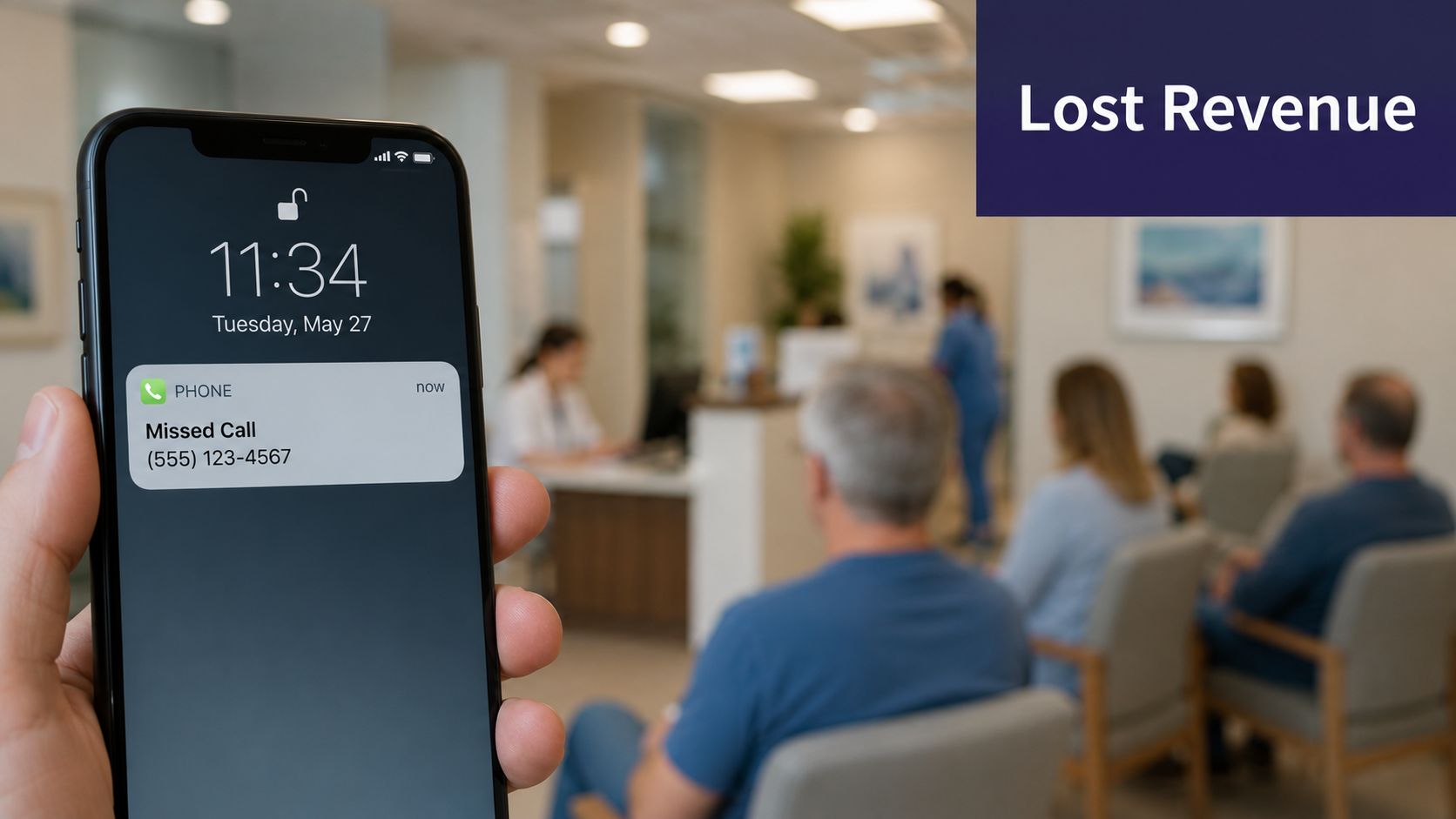
The strongest financial signal in inbound vs outbound calls is simple. Small and mid-sized enterprises miss between 25% and 60% of inbound calls, and for a medical practice, missing just 30 inbound calls per month can translate to over $25,000 in lost annual revenue, according to PCN's missed call revenue study.
That number gets attention, but the operational reality matters just as much. Those missed calls are often the easiest ones to help. A new patient trying to book. An established patient asking for a refill. Someone calling during lunch, after hours, or while all lines are tied up. They already want something from your practice. The opportunity is already there.
Inbound intent is stronger than outbound effort
Inbound calls also tend to convert better because the caller has already taken action. The NQZ analysis of inbound vs outbound sales and calls reports that qualified inbound leads typically convert at 20% to 40%, while outbound calls connect only 2% to 5% of the time. In insurance, which shares compliance and scheduling complexity with healthcare, inbound leads close at 25% to 30% and outbound leads convert at 2% to 5%.
Healthcare is not insurance sales, but the operating lesson carries over. A patient calling your practice has intent. A practice-initiated call still has value, but it starts from a lower-friction point only when the outreach is timely and relevant.
Every unanswered inbound call wastes demand your practice already earned through reputation, referrals, payer participation, SEO, and prior care.
Why the cost keeps climbing
Phone strain creates downstream rework that rarely appears on a P&L line by itself.
- Staff interruption: Front-desk employees bounce between check-in, authorization tasks, portal messages, and ringing phones.
- Patient leakage: People who can't get through often look elsewhere, especially for routine access.
- Clinical spillover: Providers and nurses end up handling avoidable message cleanup because basic communication wasn't resolved early.
Often, practice owners make the wrong move. They focus on adding more outbound reminders while still letting high-intent inbound demand go unanswered. Outbound matters, but not before the front door works.
Automating Inbound Calls to Capture Every Opportunity
The fix for inbound breakdown usually isn't “hire another person and hope the phones calm down.” Call volume doesn't behave that neatly. It spikes at open, at lunch, after clinic, and after patients receive lab notices or referral instructions. Human staffing alone rarely covers all of that cleanly.
A better approach is to let automation handle the routine first line of response, then route exceptions to staff.
What good inbound automation actually does
In healthcare, useful inbound automation is not a generic answering bot. It needs to manage real medical office work. That includes:
- Scheduling logic: New versus established patient visits, specialty-specific visit types, and the right slot length.
- Refill intake: Capturing the medication request, pharmacy details, and routing rules.
- FAQ resolution: Prep questions, office details, insurance basics, and form instructions.
- Documentation: Writing the interaction into the workflow instead of creating another manual note for staff.
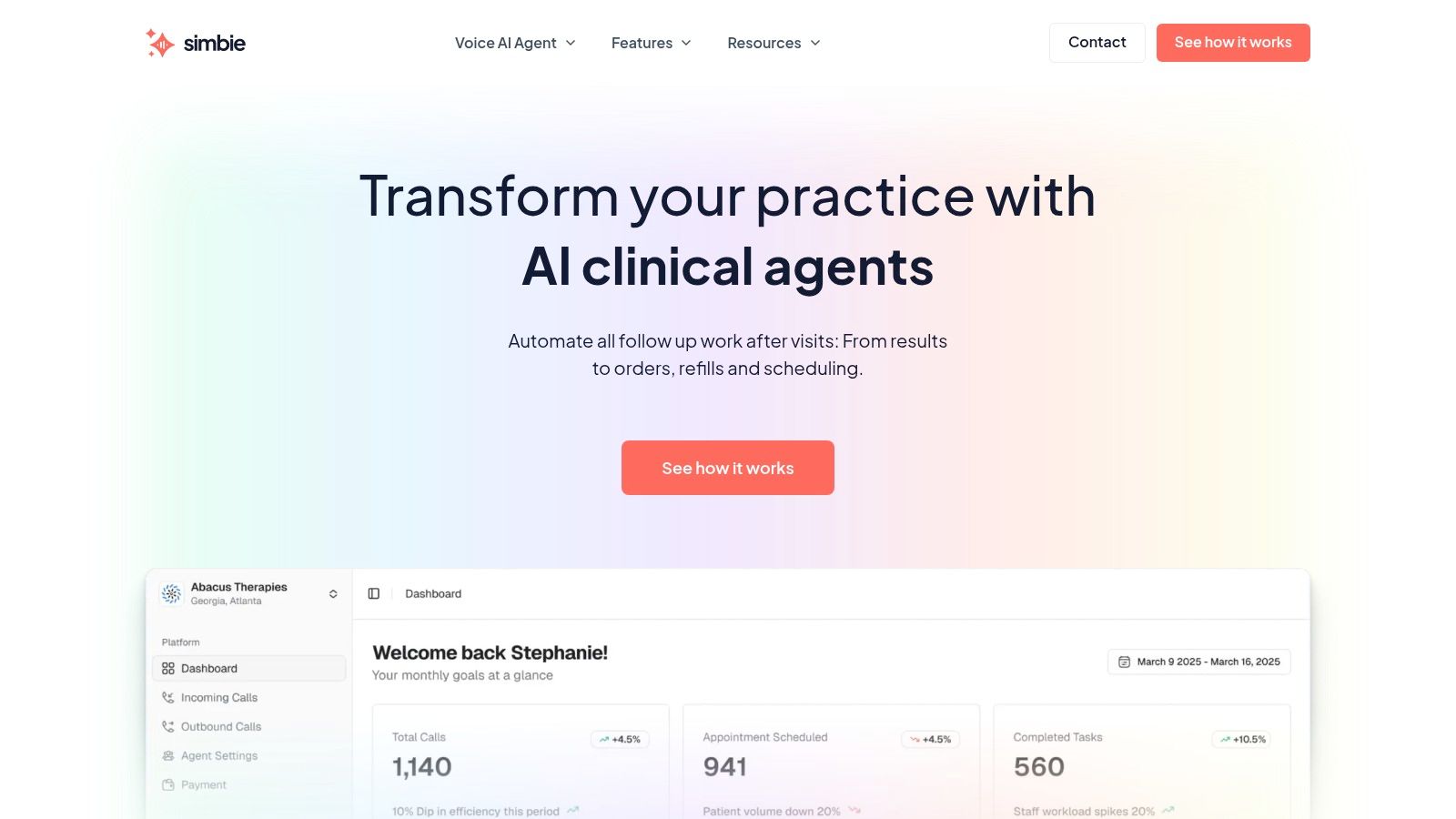
AI Medical Staff differs from a simple answering service. It covers the front-office layer and supports downstream clinical workflows. One example is Simbie's inbound call automation for healthcare, which is designed to handle routine patient requests while passing complex issues to staff.
Practices also benefit from reviewing how broader 24/7 appointment booking software is evolving, because the scheduling piece is often the fastest operational win.
What the numbers suggest about the handoff model
Healthcare organizations that are further along with voice automation show a consistent pattern. Automated systems reliably handle 60% to 80% of inbound call volume, while the remaining 20% to 40% needs human judgment for complex or sensitive cases, based on Linear Health's review of healthcare call center automation.
That split matches what most administrators already know from experience. A large share of calls are repetitive and rules-based. Others aren't. The point is not to force every interaction into automation. The point is to stop using your most expensive, interruptible human labor for work a system can complete safely and consistently.
If a call is routine, urgent only because of delay, and easy to document, it's a strong candidate for automation.
What this changes for staff and patients
For patients, the visible improvement is simple. 100% of inbound calls captured, 24/7 availability, and zero hold times matter because access feels immediate.
For the practice, the benefit is more structural. Front-desk staff can stop living in constant triage mode. They can focus on prior auths, exceptions, upset patients, and the situations that require empathy and judgment. Practices often also see up to 60% reduction in front-office staff costs when repetitive call work, intake, and documentation are offloaded appropriately.
This only works if the tool fits medical operations. It needs HIPAA-compliant workflows, SOC 2 Type 2 certification, and direct integration with systems like eClinicalWorks, gGastro, EMA ModMed, Athenahealth, Epic, and DrChrono. Otherwise, you've just moved the work around instead of removing it.
Why Proactive Outbound Calls Improve Patient Care
A patient finishes a procedure on Friday, has a question that feels too small to call about, and waits. By Monday, that small question can become a complication, a medication mistake, or an avoidable urgent visit. Practices that rely only on inbound calls leave too much of patient follow-through to chance.

Outbound is part of care, not just scheduling
In a private practice, outbound calls do more than fill the calendar. They close the gaps that lead to no-shows, poor prep, missed refills, and weak follow-up. Those gaps affect both revenue and outcomes.
A reactive communication model puts the burden on the patient. The patient has to realize something is wrong, remember to call, get through, and explain the issue clearly. That is a poor fit for GI prep compliance, dermatology medication follow-up, or chronic disease monitoring in internal medicine.
Proactive outbound calls create consistent touchpoints at the moments that matter most:
- Before the visit: intake completion, prep instructions, medication holds, insurance reminders
- After the visit: wound care reinforcement, symptom check-ins, follow-up scheduling
- Between visits: adherence prompts, refill follow-up, chronic disease outreach, patient education
The operational value is obvious. The clinical value is easy to miss until you track it. Better prep completion means fewer disrupted procedures. Better refill follow-up means fewer therapy gaps. Better post-visit outreach catches confusion before it turns into deterioration.
Patients usually respond well when the outreach is relevant
Staff often worry that outbound calling will feel intrusive. In practice, patients object to poorly timed, generic outreach. They respond much better to calls that solve a specific problem. AnswerConnect's discussion of inbound and outbound calls notes that recent projections suggest proactive outbound calls tied to medication adherence and pre-visit intake can improve patient satisfaction compared with inbound-only models.
That result makes sense. Patients do not want more calls. They want fewer loose ends.
A good outbound call prevents the inbound call that comes later from confusion, noncompliance, or a missed instruction.
Where outbound has the highest clinical and financial return
The strongest use cases are repetitive, protocol-based, and easy to escalate. Colonoscopy prep reminders in GI are a clear example. If prep fails, the schedule suffers, the procedure may need to be repeated, and the patient has a bad experience. The same pattern shows up in dermatology biologic follow-up, post-op checks, and chronic care outreach for hypertension or diabetes.
A structured workflow such as outbound call automation for healthcare helps practices handle that volume without turning MAs or front-desk staff into a calling team. It also improves documentation consistency, which matters when outreach connects to ongoing care plans, quality measures, or care management billing.
Clinician-informed systems tend to perform better here because they treat outbound calls as protocol work. The job is to reinforce instructions, confirm adherence, surface exceptions, and route the right cases to staff. That is how outbound communication improves patient care instead of adding more noise.
Making AI Your Most Reliable Medical Staff Member
At 8:05 a.m., the front desk is already behind. One staff member is checking in patients, another is trying to return voicemails, and the schedule is filling with small errors that turn into bigger ones by noon. In a medical practice, that is not a phone problem. It is a revenue problem, an access problem, and sometimes a care problem.
Practices get value from AI when they assign it a defined job, measure the result, and hold it to the same standards they use for staff. Scope matters. Escalation rules matter. Documentation matters.
Start with the bottleneck, not the trend
A useful way to set priorities is simple. Practice owners should prioritize inbound automation if they miss more than 20% of incoming calls during peak hours, and prioritize outbound automation if their no-show rate exceeds 15%, according to Bitontree's healthcare AI voice agent guidance.
That rule works because it ties the decision to the failure point inside the practice. If phones break down during morning rush and late afternoon call spikes, inbound comes first because every missed call can mean a lost new patient, delayed refill, or rescheduled visit. If the schedule looks full but too many patients arrive unprepared or do not arrive at all, outbound often has the higher return.
I have seen practices waste months debating features while the underlying issue was obvious in the daily workflow.
Integration and compliance determine whether AI stays in place
If the system sits outside the way the practice already works, staff will bypass it. That is why administrators need to review clinic voice agent integration workflows in plain operational terms. Where does the call note go. Who gets the task. Does the chart update automatically. What happens when the patient needs a human handoff.
Those details decide whether AI reduces labor or creates more cleanup work later.
The same standard applies to compliance. HIPAA compliance, SOC 2 Type 2 certification, audit trails, and clear escalation to staff are not procurement checkboxes. They protect the practice when a call moves from routine scheduling into protected health information, medication questions, or an upset patient who should not stay in automation.
For a broader look at system fit, the Simbie integrations page is the kind of resource administrators should check for actual EMR coverage rather than generic promises.
Give AI the repeatable work
The strongest deployments give AI work that is high-volume, rules-based, and expensive for trained staff to keep doing manually.
That usually includes routine scheduling, intake collection, refill capture, insurance or demographic updates, pre-visit reminders, and structured follow-up that must be documented the same way every time. Front-desk staff and MAs keep the work that needs judgment, reassurance, or exception handling. Providers get fewer preventable interruptions. Patients get faster answers and fewer dropped threads.
One healthcare-specific option in this category is Simbie AI, built by physicians from Stanford, Yale, Columbia, and Princeton, with coverage across administrative workflows and clinical support tasks. In practice, that model can lower front-office cost pressure while keeping communication aligned with how care is delivered.
Your Implementation Checklist for AI Voice Agents
A useful AI evaluation process should feel more like hiring a staff member than buying software. You're checking fit, reliability, judgment boundaries, and whether the system can do the work your practice needs done.
Use this checklist:
- Does it integrate with your actual systems? Ask about eClinicalWorks, gGastro, EMA ModMed, Athenahealth, Epic, or DrChrono by name.
- Can it cover both administrative and clinical workflows? Scheduling alone isn't enough. Look for intake, refills, documentation, education, and follow-up support.
- Is it secure for healthcare use? Confirm HIPAA compliance, SOC 2 Type 2 certification, and auditability.
- Can it handle specialty-specific logic? Dermatology, GI, and internal medicine all have different scheduling rules and patient communication patterns.
- How does escalation work? You need clean handoff to staff when a patient is upset, clinically complex, or outside protocol.
- Will it reduce burnout instead of adding oversight work? If your team has to babysit it constantly, you haven't solved the problem.
- Can it protect access after hours? Nights, lunch breaks, and peak-hour overflow are where many practices lose patients.
A final check matters most. Ask whether the vendor understands the difference between an answering tool and AI Medical Staff. The first takes messages. The second supports the practice.
If you're evaluating AI for your practice, you can see it in action at Simbie AI.