

Patient satisfaction is more than a metric; it's the cornerstone of a thriving, reputable healthcare practice. In a landscape where patients have more choices than ever, delivering a positive experience is crucial for retention, reputation, and even clinical outcomes. High satisfaction scores often correlate with better patient adherence to treatment plans and improved health results, making this a critical focus for any medical provider. This goes beyond simple courtesy; it is a strategic imperative that directly influences a practice's bottom line and its ability to attract and retain patients in a competitive market.
But improving satisfaction goes beyond simply shortening wait times or offering a friendly smile. It requires a deep, strategic commitment to understanding and addressing patient needs at every single touchpoint of their journey. The ultimate goal is to enhance the patient journey, mirroring strategies on how to improve guest satisfaction in other service-focused industries, but with the added weight of health and well-being. This shift in perspective transforms your practice from a basic service provider into a trusted, long-term healthcare partner, fostering loyalty that lasts a lifetime.
This guide provides 10 powerful, actionable ways to increase patient satisfaction. We will move past generic advice and dive into concrete strategies you can implement immediately. You will learn how to:
- Refine communication to be more patient-centered and empathetic, building stronger therapeutic alliances.
- Leverage technology, like AI assistants, to streamline administrative tasks and improve accessibility for all patients.
- Empower your staff to become proactive advocates for the patient experience, turning every team member into a satisfaction champion.
- Create a physically and emotionally comfortable environment that reduces patient anxiety and promotes healing.
Each item on this list is designed to be a practical building block for a more patient-centric practice. We'll explore what to do, why it matters, and how to measure your success, giving you the tools needed to make a tangible and lasting impact on every person who walks through your doors.
1. Patient-Centered Communication
Patient-centered communication is an approach that places the patient's perspective, values, and preferences at the core of every clinical encounter. Instead of a one-way flow of information from provider to patient, it fosters a partnership where healthcare professionals actively listen, show empathy, and use clear, understandable language. This strategy ensures patients feel heard, respected, and fully involved in decisions about their health, which is a foundational element in any effort to find effective ways to increase patient satisfaction. It's about moving from "what's the matter with you?" to "what matters to you?"

This method goes beyond simple courtesy; it's a clinical skill that improves health outcomes, enhances patient trust, and reduces the risk of misunderstandings and medical errors. By prioritizing the patient's voice, you transform a transactional appointment into a collaborative dialogue, empowering them to take a more active role in their own care. This collaborative spirit is essential for building long-term relationships and fostering loyalty.
Why It Works
Patient-centered communication directly impacts how patients perceive their care quality. When patients feel understood and involved, their trust in their provider grows, leading to higher adherence to treatment plans and better overall health outcomes. Research published in the Journal of the American Board of Family Medicine consistently shows a strong correlation between empathetic communication and higher patient satisfaction scores. Organizations like Cleveland Clinic have built their reputation on this principle with programs like "Every Interaction Matters," demonstrating that empathetic communication is as crucial as clinical expertise. When patients feel a genuine connection, they are more likely to forgive minor issues like longer-than-expected wait times.
How to Implement It
- Train Staff in Active Listening: Equip your team with skills like motivational interviewing to understand patient motivations and barriers. This involves reflecting on what the patient says and asking open-ended questions.
- Use the Teach-Back Method: After explaining a diagnosis or treatment, ask the patient to explain it back in their own words to confirm comprehension. This simple technique can dramatically reduce misunderstandings and improve adherence.
- Provide Accessible Materials: Offer written information in multiple languages and at various reading levels to accommodate your entire patient population. Ensure materials are also available in digital formats for easy access.
- Document Patient Preferences: Note communication preferences (e.g., email vs. phone call, preferred language, use of a family member as a translator) in the patient's chart for consistent, personalized interactions across all staff members.
Effective communication is a cornerstone of modern healthcare. To explore this topic further, you can find a deeper dive into effective communication strategies in healthcare. This approach is fundamental for any practice serious about improving the patient experience.
2. Reduced Wait Times and Accessibility
Reducing wait times and improving accessibility means creating systems that respect a patient's time and make it easier for them to receive care when they need it. This goes beyond simply shortening the time spent in the waiting room; it involves optimizing scheduling, streamlining administrative processes, and offering flexible care options like telehealth or extended hours. For patients, long waits can create anxiety and frustration, making it a critical area to address for anyone looking for effective ways to increase patient satisfaction. The perception of a long wait can overshadow even the highest quality of clinical care.

This approach demonstrates a commitment to operational efficiency and patient-centric care. By minimizing delays and removing barriers to access, you show patients that their time is valued, significantly improving their overall experience and perception of your practice. It communicates respect and professionalism from the very first interaction.
Why It Works
Long wait times are a consistent and major source of patient complaints, often cited as the number one reason for dissatisfaction in patient surveys. By tackling this issue head-on, practices can significantly boost satisfaction scores and patient loyalty. For example, Teladoc's virtual care platform has been shown to reduce care access wait times by as much as 80%, providing a powerful alternative to traditional in-office visits. When care is convenient and timely, patients are more likely to seek it out, adhere to follow-up appointments, and recommend your services to friends and family. Even small, incremental improvements in wait time can have a disproportionately positive impact on perception.
How to Implement It
- Offer Online Appointment Booking: Allow patients to schedule, reschedule, and cancel appointments 24/7 through a patient portal or website. This empowers patients and reduces the administrative burden on front-desk staff.
- Implement Appointment Reminder Systems: Use automated text, email, or voice messages to reduce no-shows and manage the schedule more effectively. This also allows for proactive backfilling of cancelled slots.
- Analyze Patient Flow Data: Use data analytics to identify bottlenecks in your workflow—from check-in to exam room to check-out—and predict peak demand periods to optimize staff scheduling and resource allocation.
- Provide Virtual Consultations: Offer telehealth appointments for follow-ups, medication reviews, and non-urgent issues to free up in-office slots for more complex cases and improve overall access.
Improving access is a key driver of a positive patient journey. To explore these strategies in more detail, you can read more about comprehensive patient access solutions. This focus on efficiency and convenience is essential for a modern, competitive healthcare practice.
3. Staff Training and Empowerment
Staff training and empowerment involves creating a culture where healthcare staff are not just clinically proficient but are also equipped with exceptional service skills and given the autonomy to solve patient issues directly. This strategy recognizes that every team member, from the front desk to clinical staff, plays a crucial role in the patient experience. Investing in their development is a direct investment in finding effective ways to increase patient satisfaction. They are the face and voice of your practice.

An empowered team feels valued, engaged, and motivated to go above and beyond for patients. This approach transforms staff from simply following protocols to actively owning and improving the patient journey, leading to more responsive and personalized care. When an employee can say, "Let me fix that for you," instead of "I need to ask my manager," the patient's experience is immediately elevated.
Why It Works
Empowered employees are more engaged and take greater ownership of patient outcomes, leading to a proactive rather than reactive approach to care. When frontline staff can resolve a scheduling conflict or address a concern without escalating it, patients feel heard and valued immediately. Healthcare systems like Johns Hopkins Medicine have implemented staff excellence programs that correlate directly with higher HCAHPS scores and improved patient loyalty. Furthermore, an engaged and satisfied workforce is less likely to experience burnout, ensuring a more consistent and compassionate level of care delivery.
How to Implement It
- Conduct Regular Service Training: Implement ongoing customer service training, including role-playing for difficult patient scenarios. Focus on empathy, conflict resolution, and de-escalation techniques.
- Empower Problem-Solving: Give frontline staff the authority to make decisions on the spot, such as offering a complimentary service for a long wait time or finding a creative solution to a patient's logistical challenge.
- Create Recognition Programs: Establish peer-to-peer recognition and incentive programs that reward staff members who receive positive patient feedback or demonstrate exemplary patient-centric behavior.
- Invest in Leadership: Develop strong leaders who can model patient-centric behaviors, provide consistent coaching, and foster a supportive, non-punitive work environment where staff feel safe to take initiative.
A well-trained, empowered, and supported workforce is less prone to burnout and more capable of delivering compassionate care. To learn more about building a resilient team, explore these key insights on nurse burnout prevention. This focus on your team is a powerful strategy for enhancing the patient experience.
4. Personalization and Individual Care Plans
Personalization and individual care plans involve tailoring healthcare delivery to each patient's unique needs, values, cultural background, and personal preferences. This approach moves beyond standardized treatments to create customized health journeys that respect a patient's individual circumstances. By co-creating care plans with the patient, you acknowledge that each person is different, which is one of the most impactful ways to increase patient satisfaction and build lasting trust. It's the difference between treating a disease and treating a person.
This strategy treats patients as partners rather than recipients of care. It means remembering small personal details, aligning treatments with patient goals (which may differ from clinical goals), and adapting communication styles to match their health literacy and preferences. All of these contribute to a feeling of being genuinely cared for as an individual, not just a case file.
Why It Works
When care is personalized, patients feel seen and valued, not just like another number. This deepens the patient-provider relationship, significantly boosts engagement, and improves adherence to treatment plans because the plan is "theirs." Renowned institutions like the Dana-Farber Cancer Institute exemplify this by developing highly personalized cancer treatments that consider genomic data, lifestyle, and patient preferences, leading to better outcomes and higher satisfaction. This level of individualized attention makes patients active participants in their own health journey, fostering a sense of control and collaboration.
How to Implement It
- Use EHR Systems to Track Preferences: Document non-clinical information like communication preferences, personal goals, family support systems, and cultural considerations directly in the patient's chart.
- Include Patient Goals in Care Planning: Begin care plan discussions by asking, "What is most important to you in managing your health?" and integrate their answers into the treatment strategy.
- Offer Multiple Treatment Options: When possible, present various evidence-based treatment options and discuss the pros and cons of each in the context of the patient's lifestyle, values, and financial situation.
- Follow Up on Personal Details: Remembering a detail from a previous conversation (e.g., a family event, a new job, or a work project) shows you are listening and helps build strong rapport, solidifying the relationship.
5. Complaint Resolution and Feedback Systems
A robust complaint resolution and feedback system is a structured approach for actively collecting, analyzing, and acting on patient input. This process transforms patient complaints from potential liabilities into invaluable opportunities for improvement. It involves creating accessible channels for feedback, establishing clear protocols for addressing concerns in a timely manner, and ensuring that insights lead to tangible changes in care delivery. This commitment is one of the most powerful ways to increase patient satisfaction because it demonstrates that an organization values its patients' voices and is dedicated to getting better.
This strategy moves beyond passively waiting for reviews; it actively seeks out patient perspectives to foster a culture of continuous improvement. By formalizing this process, you create a system of accountability and show patients that their concerns are taken seriously and lead to meaningful action, which can often turn a dissatisfied patient into a loyal advocate.
Why It Works
Implementing a structured feedback system directly impacts patient loyalty and trust. A study by the "Journal of Medical Practice Management" found that patients whose complaints were handled effectively were more likely to return to the practice than patients who never had a complaint at all. When patients see that their feedback results in positive changes, they feel valued and respected. This approach, championed by quality management pioneers like W. Edwards Deming, is built on the idea that continuous improvement is driven by data. Today, government initiatives like Medicare's Hospital Compare and industry standards like Press Ganey surveys institutionalize this practice, linking patient feedback directly to public reputation and reimbursement.
How to Implement It
- Offer Multiple Feedback Channels: Provide various ways for patients to share their thoughts, such as post-visit email or text surveys, in-office comment cards, a dedicated phone line, or a feedback form on your website.
- Establish a Timely Response Protocol: Train staff to acknowledge all complaints within a set timeframe, such as 24-48 hours, to show responsiveness. Empower a dedicated person or team to own the resolution process.
- Close the Feedback Loop: After resolving an issue, inform the patient (and a wider audience, if appropriate, through a newsletter or website update) about the specific actions taken based on their input.
- Analyze Feedback for Trends: Regularly review all feedback to identify recurring issues related to wait times, staff communication, billing confusion, or facility cleanliness, and address the systemic root causes.
6. Environmental Design and Comfort
Environmental design and comfort focus on creating a physical healthcare space that is welcoming, calming, and conducive to healing. This goes beyond basic cleanliness and involves thoughtfully designing facilities to reduce patient anxiety, improve navigation, and promote a sense of well-being. A therapeutic environment, with comfortable waiting areas, intuitive layouts, and calming aesthetics, is a powerful and often overlooked way to increase patient satisfaction from the moment someone walks through the door. The physical space sends a strong message about the quality of care within.
This approach acknowledges that the physical setting is an integral part of the patient experience. By intentionally curating a space that feels safe, supportive, and easy to navigate, healthcare providers can positively influence patient mood, stress levels, and overall perception of care quality before a clinical interaction even begins.
Why It Works
A well-designed environment can directly reduce the stress and fear often associated with medical visits. Research pioneered by figures like Roger Ulrich has shown that elements like natural light and views of nature can speed up recovery times and lower pain medication use. When patients feel physically comfortable and psychologically at ease, they are more receptive to care, can communicate more effectively, and leave with a much more positive impression of their visit. Organizations like Planetree International have built their models around creating these patient-centered healing environments, demonstrating a clear link between thoughtful design and improved patient outcomes.
How to Implement It
- Incorporate Natural Elements: Maximize natural light wherever possible and add plants or high-quality artwork depicting nature. If feasible, create access to healing gardens or outdoor spaces.
- Focus on Comfort and Cleanliness: Provide comfortable, well-spaced seating for patients and their families. Maintain impeccable cleanliness standards in all areas, paying special attention to restrooms and high-touch surfaces.
- Improve Wayfinding: Use clear, simple signage, color-coded pathways, or digital kiosks to help patients navigate your facility easily and reduce arrival stress. A confused patient is an anxious patient.
- Manage Sensory Inputs: Use a calming color palette, control noise levels by absorbing sound with appropriate flooring and ceiling tiles, and ensure a comfortable ambient temperature to create a serene atmosphere.
A thoughtfully designed space demonstrates a commitment to the patient's holistic well-being. To learn more about creating healing spaces, explore the resources at The Center for Health Design. This strategy is crucial for any facility aiming to elevate the complete patient journey.
7. Digital Health and Patient Engagement Tools
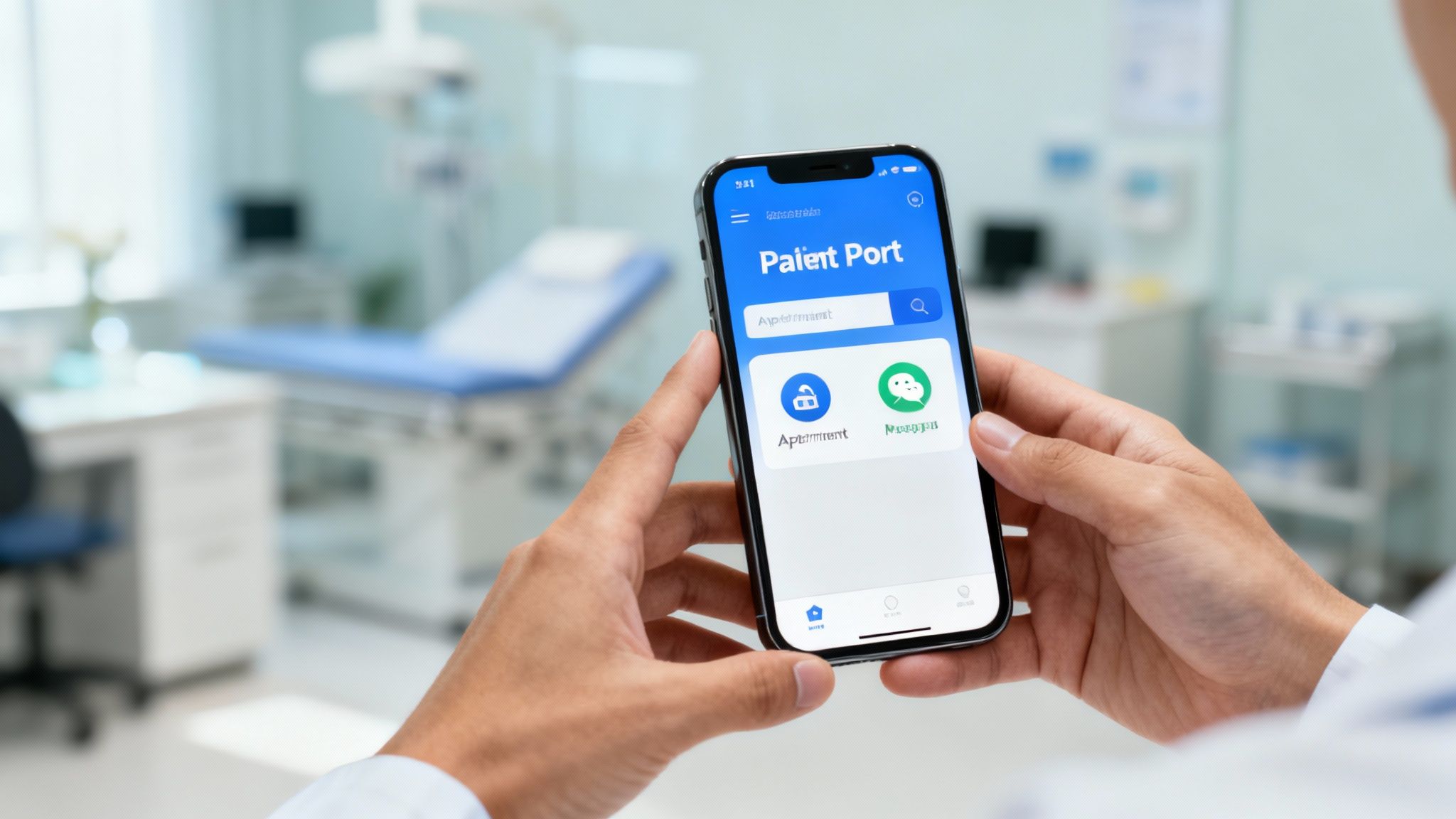
Digital health and patient engagement tools are technology platforms designed to give patients greater control over their healthcare journey. These tools, which include patient portals, mobile health apps, and telemedicine services, enhance access to information, streamline communication with providers, and support self-management of health conditions. By empowering patients with these resources, you can foster a more proactive and collaborative care environment, which is a powerful way to increase patient satisfaction in the digital age.
This approach meets the modern patient's expectation for convenience and immediate access. Instead of waiting for a phone call or a follow-up appointment, patients can view lab results, schedule visits, request prescription refills, or message their doctor securely online, transforming their experience from passive to engaged and putting them in the driver's seat of their own health management.
Why It Works
These tools directly address common patient frustrations like long wait times for information, difficulty communicating with their care team, and the inconvenience of in-person visits for minor issues. Platforms such as Epic's MyChart have become indispensable, allowing millions of patients to manage their health records, appointments, and prescriptions from any device. When patients feel more connected and informed, their sense of ownership over their health increases, leading to higher satisfaction, better preparation for appointments, and improved adherence to treatment plans.
How to Implement It
- Select User-Friendly Platforms: Choose tools with an intuitive interface that is easy for patients of all ages and tech-savviness levels to navigate. Ensure the platform is mobile-friendly and accessible.
- Provide Comprehensive Training: Offer tutorials, quick-start guides, and staff support to help patients get comfortable with new digital tools. Proactively enroll patients during check-in or check-out.
- Ensure Seamless EHR Integration: Your patient portal or app should integrate smoothly with your existing Electronic Health Record (EHR) system to provide accurate, real-time information and avoid data silos.
- Prioritize Data Security: Implement robust security measures, including strong encryption and clear HIPAA compliance policies, to protect sensitive patient data and build trust in your digital offerings.
8. Pain Management and Comfort Initiatives
Effective pain management and comfort initiatives are a critical component of patient-centered care, directly influencing how patients perceive their treatment and overall experience. This approach goes beyond simply prescribing medication; it involves a comprehensive strategy to assess, address, and alleviate physical, emotional, and spiritual discomfort. By proactively prioritizing a patient's comfort, healthcare providers demonstrate empathy and commitment, which is one of the most impactful ways to increase patient satisfaction, particularly in acute care and surgical settings.
This holistic view acknowledges that pain is a complex, subjective experience. A robust program integrates multiple treatment modalities and simple comfort measures (like offering a warm blanket or adjusting a pillow) to create a supportive and healing environment. This makes patients feel cared for as individuals, not just as a collection of symptoms.
Why It Works
Unmanaged pain is a primary driver of patient dissatisfaction and can negatively impact clinical outcomes by increasing stress, delaying recovery, and eroding trust. When patients feel their pain is taken seriously and managed effectively, their satisfaction and cooperation with treatment plans soar. Leading institutions like the Mayo Clinic and Memorial Sloan Kettering have demonstrated that comprehensive pain management programs, including integrated palliative care, lead to higher patient-reported outcomes, reduced anxiety, and a better quality of life. HCAHPS scores for pain management are a key metric for hospitals nationwide.
How to Implement It
- Adopt Multimodal Pain Protocols: Combine pharmacological treatments with non-pharmacological options like physical therapy, acupuncture, massage, hot/cold therapy, and mindfulness techniques to create personalized pain management plans.
- Use Validated Assessment Tools: Consistently use standardized pain scales (e.g., the Numeric Rating Scale) and conduct regular pain reassessments to accurately assess, document, and track a patient's pain levels over time.
- Train Staff in Compassionate Care: Educate all clinical staff on how to respond to patients in pain with empathy, validating their experience ("I can see you are uncomfortable") and reassuring them of your commitment to their comfort.
- Educate Patients on Their Options: Proactively discuss the various pain management options available, explaining the benefits and risks of each to empower patients to participate in their care decisions and set realistic expectations.
Prioritizing comfort is not just an ethical imperative; it's a strategic one. For a deeper understanding of best practices, resources from organizations like The Joint Commission provide valuable standards for pain assessment and management. This focus ensures your practice is seen as a place of healing and compassion.
9. Family-Centered Care and Support
Family-centered care is a holistic approach that recognizes the patient's family, however they define it, as essential partners in the healing process. Instead of treating the patient in isolation, this model actively involves family members in decision-making, care planning, and emotional support. It acknowledges that a patient's well-being is deeply connected to their family network, making family inclusion a powerful tool in finding effective ways to increase patient satisfaction and improve outcomes.
This philosophy transforms the clinical environment from a provider-centric space to a collaborative one where family presence and participation are encouraged and valued. It involves creating policies (like flexible visitation), physical spaces that accommodate families, and communication protocols that welcome and support the family's role, ultimately leading to better health outcomes and a more positive care experience for everyone involved.
Why It Works
Engaging families directly improves patient safety, reduces medical errors, and lowers readmission rates. When families are included, they become advocates and active participants, helping to ensure care plans align with the patient’s values and home environment. This partnership fosters a deep sense of trust and security, reducing anxiety for both the patient and their loved ones. For example, Duke Health's 24/7 visitation model and the establishment of Patient and Family Advisory Councils (PFACs) have demonstrated that open, inclusive policies lead to higher satisfaction scores and improved patient outcomes.
How to Implement It
- Involve Family in Care Planning: Invite family members (with the patient's permission) to participate in rounds, care plan meetings, and especially in discharge planning to ensure a smooth transition home.
- Create Welcoming Physical Spaces: Provide comfortable waiting areas, sleep chairs for overnight stays, access to amenities like Wi-Fi and charging stations, and clear signage to make the environment less intimidating.
- Establish Clear Communication Protocols: Designate a primary contact person for the family and schedule regular, proactive updates to keep them informed, reducing their need to repeatedly ask for information.
- Offer Educational Resources: Provide materials tailored to family caregivers, addressing topics like medication management, at-home care techniques, navigating insurance, and preventing caregiver burnout.
Adopting a family-centered model demonstrates a commitment to compassionate, comprehensive care. To learn more about the principles, visit the Institute for Patient- and Family-Centered Care, a leading advocate for this approach.
10. Transparency and Quality Metrics Sharing
Transparency and quality metrics sharing involve openly communicating organizational performance data, safety records, and outcomes to patients. Instead of keeping this information internal, this approach makes key indicators publicly available, empowering patients to make informed decisions about their care. This practice builds a foundation of trust and demonstrates a healthcare organization's commitment to accountability and continuous improvement, making it one of the most powerful ways to increase patient satisfaction in an era of empowered consumers.
This strategy moves beyond simply claiming to provide quality care; it provides the evidence. By sharing both successes and areas for improvement, you foster a culture of honesty that modern healthcare consumers value highly and expect. It shifts the dynamic from paternalistic ("trust us") to partnership-based ("here's how we're doing, and here's how we're working to get better").
Why It Works
Sharing quality and safety data directly addresses the patient's need for trust and confidence. When patients can see objective data on outcomes, infection rates, or patient satisfaction scores, they feel more secure in their choice of provider. Organizations like the Centers for Medicare & Medicaid Services (CMS) have championed this with tools like Hospital Compare, recognizing that transparency drives competition and encourages providers to elevate their standards. This accountability ultimately leads to better care, safer practices, and a more positive patient experience.
How to Implement It
- Create a Quality Dashboard: Develop a patient-friendly section on your website that displays key metrics like patient satisfaction scores, average wait times, infection control rates, and clinical outcomes for common procedures.
- Use Plain Language: Present complex data using simple charts, graphs, and clear explanations. Avoid clinical jargon to ensure the information is accessible to everyone, regardless of their health literacy.
- Provide Context and Benchmarks: Show how your performance compares to national or regional averages to help patients interpret the data meaningfully. This provides a clear point of reference.
- Share Improvement Plans: If a metric is below target, transparently acknowledge it and outline the specific steps you are taking to improve. This demonstrates accountability and a commitment to excellence, which builds more trust than pretending problems don't exist.
By being open about performance, you not only empower patients but also motivate your own team to strive for better results. For those looking to understand the national landscape of quality reporting, The Leapfrog Group offers excellent examples of hospital safety grades.
10-Point Comparison of Patient Satisfaction Strategies
| Initiative | Implementation complexity 🔄 | Resource requirements ⚡ | Expected outcomes ⭐📊 | Ideal use cases 💡 | Key advantages ⭐ |
|---|---|---|---|---|---|
| Patient-Centered Communication | Moderate–High 🔄 (training & workflow change) | Staff training, extra consultation time, translation services ⚡ | Better understanding, adherence, reduced errors 📊⭐ | Chronic care, shared decision-making, outpatient clinics 💡 | Builds trust, improves outcomes, reduces anxiety ⭐ |
| Reduced Wait Times and Accessibility | High 🔄 (scheduling redesign + tech) | Advanced scheduling systems, staffing, analytics ⚡ | Lower wait times, fewer no-shows, improved access 📊⭐ | High-volume clinics, urgent care, primary care access initiatives 💡 | Faster access, higher throughput, increased satisfaction ⭐ |
| Staff Training and Empowerment | High 🔄 (culture change & ongoing programs) | Continuous training, leadership support, incentives ⚡ | Improved morale, consistent patient experience, fewer complaints 📊⭐ | Organizations pursuing service excellence and retention programs 💡 | Empowered staff, faster issue resolution, better retention ⭐ |
| Personalization and Individual Care Plans | High 🔄 (data integration & clinician time) | Sophisticated EHRs, patient data, clinician time ⚡ | Higher engagement, adherence, improved clinical outcomes 📊⭐ | Complex/chronic disease management, oncology, precision care 💡 | Tailored care, reduced disparities, better adherence ⭐ |
| Complaint Resolution and Feedback Systems | Moderate 🔄 (process design & follow-up) | Feedback platforms, response teams, analytics ⚡ | Rapid gap identification, continuous improvement, trust-building 📊 | Quality improvement programs, organizations seeking patient input 💡 | Prevents escalation, drives actionable improvements ⭐ |
| Environmental Design and Comfort | High 🔄 (capital projects & design) | Capital investment, maintenance, renovation teams ⚡ | Reduced anxiety, improved perception of care, therapeutic benefits 📊 | New builds, major renovations, outpatient facility upgrades 💡 | Enhances comfort, supports healing, boosts patient perception ⭐ |
| Digital Health and Patient Engagement Tools | High 🔄 (integration, security, adoption) | IT infrastructure, cybersecurity, support, training ⚡ | Increased engagement, improved access, data-enabled care 📊⭐ | Telehealth, remote monitoring, population health management 💡 | Convenience, better access, enables personalization with data ⭐ |
| Pain Management and Comfort Initiatives | Moderate 🔄 (protocols & multidisciplinary care) | Pain specialists, training, non-pharmacologic resources ⚡ | Improved satisfaction, faster recovery, fewer readmissions 📊⭐ | Surgical services, oncology, palliative care, chronic pain clinics 💡 | Improves comfort, reduces opioid reliance, enhances recovery ⭐ |
| Family-Centered Care and Support | Moderate 🔄 (policy + space + education) | Visitor accommodations, education materials, staff time ⚡ | Better adherence, smoother discharge, higher family satisfaction 📊 | NICU/ICU, pediatrics, long-term care, discharge planning 💡 | Strengthens support networks, improves continuity of care ⭐ |
| Transparency and Quality Metrics Sharing | Moderate–High 🔄 (data collection & communication) | Data systems, analytics, communications team ⚡ | Greater trust, informed decisions, competitive improvement 📊⭐ | Organizations focused on public reporting, reputation, quality benchmarking 💡 | Builds accountability, attracts quality-conscious patients, drives improvement ⭐ |
Putting Patients First: The Path to Sustainable Growth
The journey to elevating the patient experience is not a destination but a continuous commitment. As we've explored, the strategies for increasing patient satisfaction are not isolated tactics but interconnected threads that weave together to form a robust, patient-centric culture. From the first phone call to the final follow-up, every interaction is an opportunity to build trust, demonstrate empathy, and deliver care that extends beyond the clinical diagnosis. This guide has detailed ten powerful avenues, moving from foundational communication to advanced digital engagement, each offering a unique way to put your patients first.
The core message is clear: exceptional patient care is a holistic endeavor. It's about recognizing that a patient's perception of their experience is shaped by a multitude of factors. Clear, empathetic communication sets the stage, while streamlined scheduling and minimized wait times show respect for their time. Empowering your staff to resolve issues and providing them with the right training transforms them from employees into patient advocates. These human-centric efforts are the bedrock of a successful practice.
Key Takeaways for Immediate Action
To truly master the art of increasing patient satisfaction, it's crucial to move from understanding to implementation. Let’s distill the most critical takeaways:
- Human Connection is Paramount: Technology and efficiency are vital, but they should serve to enhance, not replace, human interaction. Personalized care plans, active listening, and family-centered support are irreplaceable elements of compassionate care.
- Feedback is a Gift: A robust complaint resolution system isn't just about damage control; it's your most valuable source of insight. Actively soliciting, listening to, and acting upon patient feedback is the fastest way to identify friction points and drive meaningful improvement.
- The Environment Matters: A clean, comfortable, and well-designed physical space directly impacts a patient's sense of safety and well-being. Beyond direct care, ensuring the operational excellence of a practice through implementing essential facility management best practices contributes significantly to a positive overall experience.
- Embrace Smart Technology: Modern tools, especially in digital health and AI, are no longer a luxury. They are essential for meeting modern patient expectations for convenience, access, and engagement. Automating routine administrative tasks frees up your team for the high-value, patient-facing work that truly defines your practice.
Your Next Step: From Strategy to Reality
Transforming your practice doesn't happen overnight. The key is to start with a single, manageable step. Choose one strategy from this list that addresses your most pressing challenge. Is it wait times? Begin by analyzing your patient flow and implementing a digital check-in system. Is it communication? Start by training your front-desk staff on new communication protocols.
Commit to that one change. Measure its impact through patient surveys or key performance indicators. Share the results with your team to build momentum and celebrate the small wins. This iterative approach, built on a foundation of continuous learning and adaptation, is how leading healthcare organizations create lasting loyalty and achieve sustainable growth. Ultimately, the quest for increasing patient satisfaction is a direct investment in the health of your patients and the long-term success of your practice. Every step you take to improve their journey reinforces your reputation as a provider who truly cares.
Ready to automate routine tasks and free up your staff for what matters most? Discover how Simbie AI can handle patient calls, scheduling, and follow-ups with a compassionate, AI-powered voice, directly enhancing several of the patient satisfaction strategies discussed here. Visit Simbie AI to see how you can elevate your patient experience today.