

Most practices treat prior authorization denials like isolated mistakes. That's the wrong frame.
The better frame is operational. In 2023, Medicare Advantage plans received more than 50 million prior authorization requests and denied 3.2 million fully or partially, while only 11.7% of denials were appealed, even though 81.7% of appealed denials were later fully or partially overturned, based on AMA reporting on CMS data. If you manage denials every day, that pattern should change how you run your workflow.
I've seen practices burn a lot of energy trying to get to a fantasy version of zero denials. That's not where the fastest gains usually are. True gain comes from knowing which denials to fix fast, which ones to appeal, who owns the next step, and how to stop the same avoidable errors from coming back next week.
Your denial problem is not what you think it is
The core problem usually isn't that payers deny requests. It's that most practices still handle denials as interruptions instead of a repeatable workstream.
That sounds small, but it changes everything. If your team treats every denial as a one-off fire drill, cases sit in inboxes, appeal deadlines pass, and staff spend their time rereading the same chart notes instead of moving cases forward. If your team treats denials as a standard operating process, you get control back.
A lot of front-line confusion starts earlier than the denial itself. If newer staff need a plain-language refresher on the basics, this overview of what prior authorization means in healthcare is useful, especially for training. I also like sharing a patient-friendly resource such as this patient's guide to drug insurance because medication denials often turn into phone calls your staff has to untangle later.
What the numbers actually tell you
The national data points to a workflow failure, not just a payer problem. Denials happen at scale. Appeals happen far less often than they should. And once an appeal is filed, the odds of reversing the denial are strong.
That means a denial is often not the end of the process. It's the point where your system either works or breaks.
Most practices don't have a denial problem first. They have a follow-through problem.
How to run a root-cause review on your own denials
Don't start with broad labels like “medical necessity.” Those labels are too vague to help you fix anything. Pull a recent batch of denials and look for operational patterns:
- Payer pattern: Is one plan denying the same service over and over?
- Service pattern: Is a specific drug, imaging study, or procedure creating repeat trouble?
- Provider pattern: Are denials clustering around one clinician's documentation style?
- Workflow pattern: Is the issue happening before submission, during review, or after a request for more information?
- Staff pattern: Are certain team members catching payer rules correctly while others miss them?
Once you sort denials this way, the work gets easier. You stop saying “we have too many denials” and start saying “Plan A keeps denying this CPT unless we attach the step-therapy history” or “Dr. B's notes support the case clinically, but they don't answer the payer's rule directly.”
That's a fixable problem.
Diagnose your denial patterns before you do anything else
Most denial reports are messy. The payer gives a generic reason. The billing team adds a short note. Then everyone moves on to the next task. If you want fewer repeat denials, you need a cleaner audit than that.

I like a simple denial audit because it forces the team to stop guessing. Industry guidance collected in this review of common reasons for prior authorization denials points to recurring causes like lack of medical necessity, incomplete or incorrect information, no prior authorization request, duplicate requests, and non-formulary medications. The same source notes that up to 12% of hospital revenue can be at risk from denials overall.
Audit your last 50 denials
You do not need a fancy analytics platform to get started. A spreadsheet is enough if the fields are useful.
Track each denial by:
| Field | What to capture |
|---|---|
| Date received | When the denial landed |
| Payer | Exact plan name, not just insurer family |
| Service | Drug, CPT, imaging, DME, or other category |
| Denial reason | Payer wording plus your own plain-English label |
| Root cause | Missing document, wrong code pairing, no auth, rule mismatch, step edit, duplicate, other |
| Owner | Front desk, auth team, nurse, biller, physician |
| Next action | Correct and resubmit, appeal, peer-to-peer, patient follow-up, close out |
| Final result | Paid, upheld, withdrawn, still pending |
Build a 24-hour review habit
Every new denial should be reviewed within one business day. Not worked to completion. Reviewed, classified, and assigned.
Here's the part often overlooked. “Medical necessity” is rarely the true root cause by itself. Sometimes it means the chart didn't state prior treatment failure clearly. Sometimes the diagnosis and service didn't match the payer's rule. Sometimes the auth was submitted, but the attachment that mattered never made it into the packet.
Practical rule: If the denial reason is broad, your team must translate it into a specific operational cause before anyone works the account.
What your dashboard should show
Your dashboard doesn't need to impress anyone. It needs to answer four questions fast:
- Which payer is costing us the most rework
- Which services get denied most often
- Which denials can be fixed without physician time
- Where are we missing deadlines
Once you can see that, training gets easier. Staff accountability gets clearer. Provider feedback gets less emotional because you're talking about patterns, not blame.
The 24-hour denial triage and response plan
A denial should never sit in a shared inbox waiting for someone to “get to it.” If that's your current setup, you are training the practice to lose appeals by default.

The reason to build a fast triage process is simple. A KFF analysis cited by the AMA found that only about 1 in 10 denied prior authorization requests were appealed in 2022, yet 83.2% of those appeals were fully or partially overturned. That is why I treat appeals as a core revenue cycle function, not an optional extra.
Sort the denial before you touch the chart
Your first pass should answer one question. Is this an administrative denial or a clinical denial?
Administrative denials usually include things like missing identifiers, wrong plan selected, expired coverage, duplicate submission, no authorization on file, or absent attachments. These often belong with the auth or billing team first.
Clinical denials need a different path. They usually involve medical necessity, step therapy, site-of-care restrictions, non-formulary issues, or payer policy mismatch. These cases may need physician input, but not before your team assembles the basic record.
The triage path I use
- Fix and resubmit: Use this when the payer denied the request because your submission was incomplete or incorrect.
- Send for physician review: Use this when the record may support the request, but the denial cites clinical criteria.
- Escalate to appeal now: Use this when the documentation is already strong and the denial looks beatable.
- Close with documented reason: Use this only when the service is excluded, replaced, or no longer needed.
That decision should happen quickly, because delay creates more work. Staff have to reopen charts, recheck benefits, and revisit notes they already had in front of them once.
Make the packet easy to approve
A good appeal packet is not a rant. It is a clean file that lets the reviewer say yes without hunting.
That means your team should lead with the denial notice, the exact service requested, the payer rule you believe is met, and the chart material that proves it. If you bury the key fact on page 19 of the chart, the reviewer may never see it.
The easiest appeals to win are often the ones where you remove friction for the reviewer.
I've had better results with short, orderly packets than with bloated ones. More pages do not mean a stronger case. Clearer pages do.
How to build an appeal that actually gets approved
The gap between denied requests and appealed requests is still enormous. Many practices leave reversible denials untouched, even though appeal outcomes are often better than staff expect. That is why the goal is not to eliminate every denial. The goal is to build an appeal process your team can run quickly, consistently, and without starting from zero each time.
An approvable appeal makes the payer's job easier. It gives the reviewer the rule, the proof, and the request in a format they can process fast.
The best packets I see have the same basic shape. They are short, specific, and tied directly to the denial reason.
What belongs in the appeal packet
I want the packet to read like a documented case file, not a frustrated rebuttal.
Include:
- A physician cover note: Brief, patient-specific, and focused on the clinical reason this service is needed now
- The denial notice: Put it near the front so the reviewer sees the exact reason for the adverse decision
- The payer policy or criteria: Cite the relevant language from the plan's rule, then show how the chart meets it
- Targeted chart support: Send the exact note, lab, imaging report, or treatment history that proves your point
- Prior treatment history: Show failed alternatives, contraindications, intolerance, or step-therapy completion when those issues are in play
- A clear request: State the service, drug, level of care, units, and time period you want approved
Order matters. If the reviewer has to hunt through 40 pages to find one key fact, you have already made the appeal harder than it needs to be.
If your team needs a starting point, use a standard template instead of drafting every letter from scratch. A basic library of medical billing templates helps staff standardize cover letters, tracking sheets, and follow-up notes without turning every appeal into a custom project.
Write to the denial reason, not to the chart
Many appeals fall apart at this point. Staff send more records, but they do not answer the payer's stated objection.
If the denial says the request failed medical necessity criteria, the appeal should map the chart to those criteria point by point. If the denial says step therapy was not met, show the medication history and dates. If the denial says documentation was missing, identify the missing document and attach it in a labeled, easy-to-find way.
I have seen thin appeals win because they answered the right question. I have also seen thick packets fail because nobody connected the documentation to the policy language.
A simple structure works well:
| Appeal element | What it should do |
|---|---|
| Denial reason | Identify the exact issue the payer cited |
| Policy reference | Show the rule being applied |
| Record support | Match the chart to that rule |
| Clinical summary | Explain why the service is appropriate for this patient |
| Request | State the approval being sought |
Prepare the physician for peer-to-peer review
A peer-to-peer call should not start with the physician reading the denial for the first time.
Give the physician a one-page brief before the call. Keep it tight. Include the denial reason, the payer standard at issue, the two or three strongest chart facts, prior treatment history, and the exact approval request. That usually produces a better conversation than handing over a stack of notes and hoping the clinician pieces it together live.
I also tell teams to flag the weak spots. If the record has a gap, say so and decide whether the physician can address it credibly on the call or whether the appeal needs more documentation first. That judgment matters.
Track what wins and reuse it
Every successful appeal should feed the next one. Save effective language, common payer arguments, policy citations, and physician talking points by payer and denial type.
That is how an appeal operation gets faster over time. Staff stop reinventing the packet. Physicians stop getting vague last-minute questions. Denials still happen, but they become work your team knows how to handle.
A denial is often the start of an appeal workflow, not the end of the case.
Fortify your pre-submission process to prevent common errors
You will not appeal your way out of a weak front-end process. The denials may still be reversible, but your staff will drown in rework if the same errors keep getting fed into the system.
The biggest mistake I see is treating payer rules like they're interchangeable. They aren't. An HHS OIG report on Medicaid managed care found that denial rates ranged from 2% to 41%, and that one out of every eight prior authorization requests was denied. That kind of variation tells you a generic workflow won't hold up across payers.
Build a payer-specific checklist, not a generic one
A generic checklist sounds efficient. In practice, it often creates avoidable denials because it ignores the exact rule set in front of you.
Your checklist should answer the payer-specific basics every time:
- Does this plan require prior authorization for this service right now
- What diagnosis support does the plan expect
- Are there step-therapy or formulary requirements
- Does the payer require a specific form or portal
- What attachments must go with the request on day one
A front-end team can handle a lot of this if the playbook is kept current and easy to use. If it lives in an old binder or in one employee's memory, it won't stick.
Keep a living rule library
I prefer a simple shared document over a complicated knowledge base that nobody updates. Give each payer its own page. List common services, required notes, attachments, plan quirks, portal details, and common denial reasons your team has already seen.
That turns tribal knowledge into practice knowledge.
It also shortens training time for new staff because they don't have to ask the same question ten times. They can check the payer page first, then escalate only if the rule is unclear.
Use technology where repetition causes mistakes
Manual work causes a lot of these denials. Not because staff don't care, but because repetitive tasks invite skipped fields, wrong plan selections, missing attachments, and inconsistent follow-up.
Technology proves helpful when applied to the right tasks. EMR templates can force staff to capture required clinical facts in a consistent order. Practice management tools can route denials by reason code and owner. Rules-based work queues can keep simple corrections away from physicians.
The same idea applies to newer automation tools. Some systems can pull chart details, match them against payer requirements, and package a cleaner request before submission. That doesn't remove the need for staff judgment. It removes some of the repetitive work that causes preventable errors in the first place.
Use technology to automate tasks and reduce staff burnout
The common assumption is that denial management is mainly a staffing problem. Hire more people, make more calls, push harder. I don't think that's the right answer for most practices.
The better answer is to stop spending skilled staff time on repetitive work that software or automation can handle reliably. New reporting rules are part of why this matters. CMS now requires insurers to post annual prior authorization metrics, with first reports covering calendar year 2025 due by March 31, 2026, which creates a more standardized data set for comparing payer behavior, as explained in this review of public prior authorization denial reporting changes.
Where automation actually helps
Good automation should take the low-judgment, repeatable tasks off your team's plate.
That usually includes:
- Status checks: Repeated follow-up calls and portal checks
- Data gathering: Pulling required chart elements into a standard format
- Task routing: Sending denials to the right owner based on reason and payer
- Template use: Standardizing request packets, appeal letters, and follow-up notes
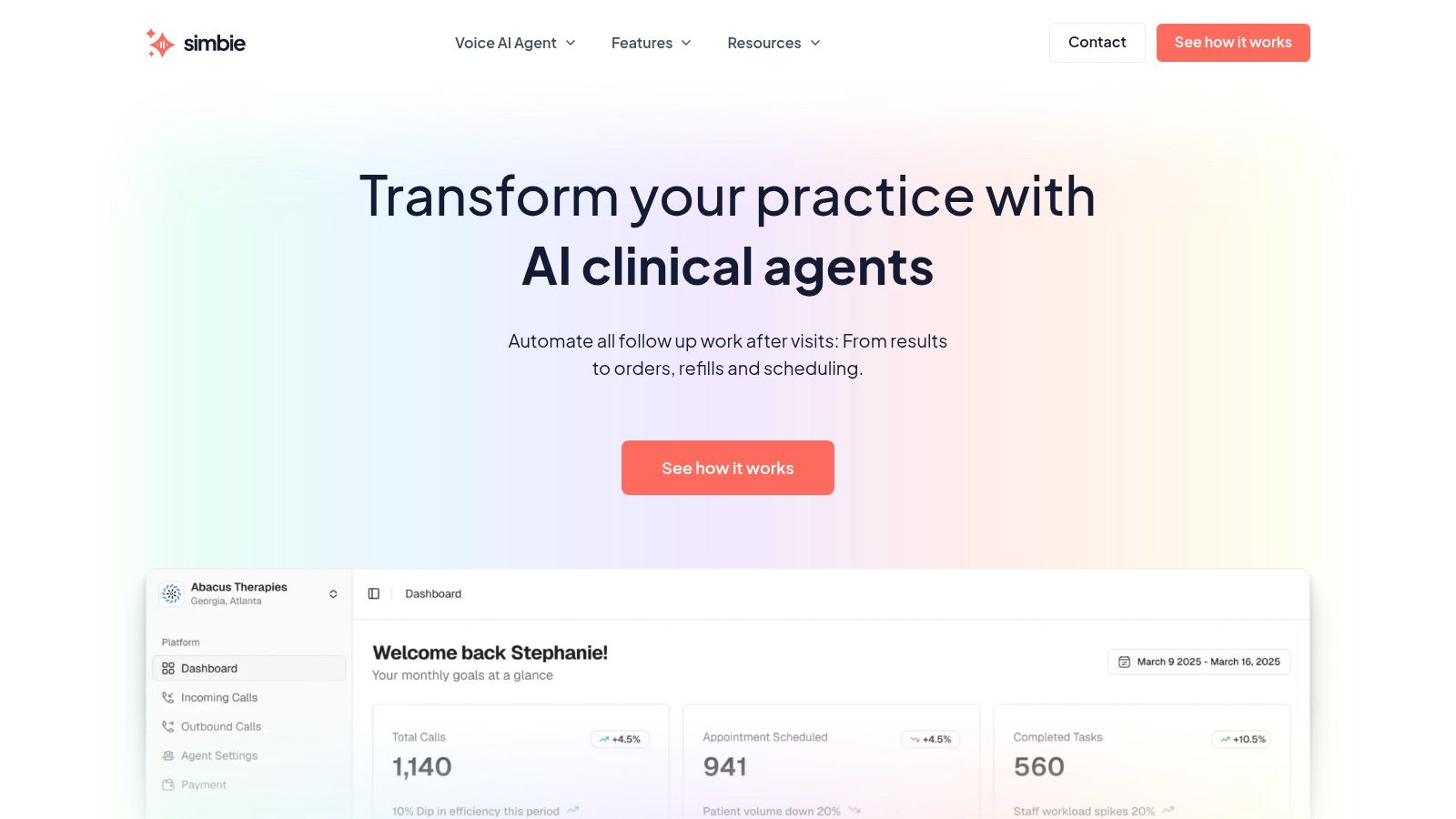
For example, some practices use automated prior authorization tools to gather chart information, check payer requirements, and start cleaner submissions. Simbie AI is one option in that category. Other practices get value first from EMR templates, payer rule libraries, and better work queues. The point isn't to buy the most software. The point is to remove avoidable manual friction.
What technology won't fix
Software will not repair weak ownership. It won't make a physician answer a peer-to-peer call if nobody briefed them. It won't save an appeal that lacks the right chart support.
That's why I'm skeptical when teams say they need a bigger denial team before they need a tighter process. If your routing is poor and your documentation habits are loose, more staff just means more people touching broken work.
Start by automating repetition, not judgment.
If you want to regain control fast, do three things tomorrow. Pull your last batch of denials and sort them by payer and service. Put one person in charge of same-day denial classification. Then remove one repetitive task from staff work, even if it's only status checks or attachment gathering.
Your action plan for taking back control
You do not need a six-month project plan to get better at prior authorization denials. You need a short list and clear ownership.
The most useful data point for practice leaders right now is this: a recent KFF-based analysis reported that only 11.5% of denials were appealed even though 80.7% of appealed denials were overturned, and the takeaway is straightforward in this analysis of overturned care denials. The bottleneck is often inside the practice.
Start with these two moves this week
- Review a small batch: Pull your last 20 denials and label each one by payer, service, root cause, and next action.
- Test a front-end checklist: Use your pre-submission checklist on five new requests and note what it catches.
- Choose one automation target: If you need ideas outside healthcare, this practical look at intelligent automation for businesses is a good reminder that repetitive administrative work is often the first place to start.
Don't aim for perfect. Aim for visible control. If your team can classify denials quickly, build better appeal packets, and stop a few repeat mistakes at the front end, you'll feel the difference fast.
If your practice wants help reducing manual prior authorization work, Simbie AI is built for healthcare teams that need support with repetitive admin tasks like prior auth workflows, patient calls, and chart-based data collection. The practical next step is simple. Look at your current denial queue, identify the work your staff repeats every day, and see which parts can be handed off to automation without losing oversight.