

Heart failure patient education has to do more than hand out a brochure. It has to help people notice trouble early, take the right action at home, and get back to care before congestion turns into a readmission. That matters because heart failure affects nearly 6.7 million U.S. adults age 20+ and was mentioned on 452,573 death certificates in 2023, accounting for 14.6% of all causes of death in the United States, while the CDC estimates the condition cost $30.7 billion in 2012 CDC heart failure overview. For independent and community practices, the practical question is simple, how do you teach well enough to change what happens after the visit, without adding another layer of staff burden?
Why Heart Failure Education Demands a Structured Approach
Heart failure does not respond well to rushed teaching. The condition is common, serious, and costly, which is why patient education for heart failure should sit inside the clinic workflow, not as a brochure handed out on the way out the door CDC heart failure overview. In independent and community practices, that matters because every missed follow-up, every medication gap, and every delayed symptom call becomes work the team has to absorb later.
A structured program has evidence behind it. A randomized discharge program published in Circulation found that targeted education led to a 35% lower combined risk of rehospitalization or death over 180 days, driven largely by a 51% reduction in heart-failure rehospitalization. Another randomized trial found that an individualized educational intervention reduced all-cause unplanned readmissions by 30% at 12 months with a relative risk of 0.703 and a 95% CI of 0.548–0.903 AHA journal trial summary. The financial burden is also longstanding. The CDC estimated the condition cost $30.7 billion in 2012, and the economic strain has only become harder for practices and patients to ignore CDC heart failure overview.
Why ad hoc teaching falls short
One-time teaching usually misses the point. Heart failure asks patients to manage several home routines at once, then notice when those routines stop working. If the patient does not understand daily weights, swelling, breathlessness, or medication timing, the clinic loses the early warning system that keeps congestion from worsening NCBI heart-failure education review.
Practical rule: if the patient cannot explain what they will do when weight, edema, or dyspnea changes, the education is not finished.
Structured programs work because they repeat the same instructions in a consistent order and make the next step clear. They do not try to cover everything in one visit. They focus on the actions that change home behavior, then reinforce them after the appointment, where the real barriers usually show up. Practices that want a consistent teaching library can also route staff to a single source of approved material, such as patient education resources, so the same guidance is used across visits and clinicians. For patients who need a supplemental plain-language reference, some teams also share the patient's guide to congestive heart disease, while keeping the clinic's own plan aligned with the care team's instructions.
The Core Curriculum Every Heart Failure Patient Needs
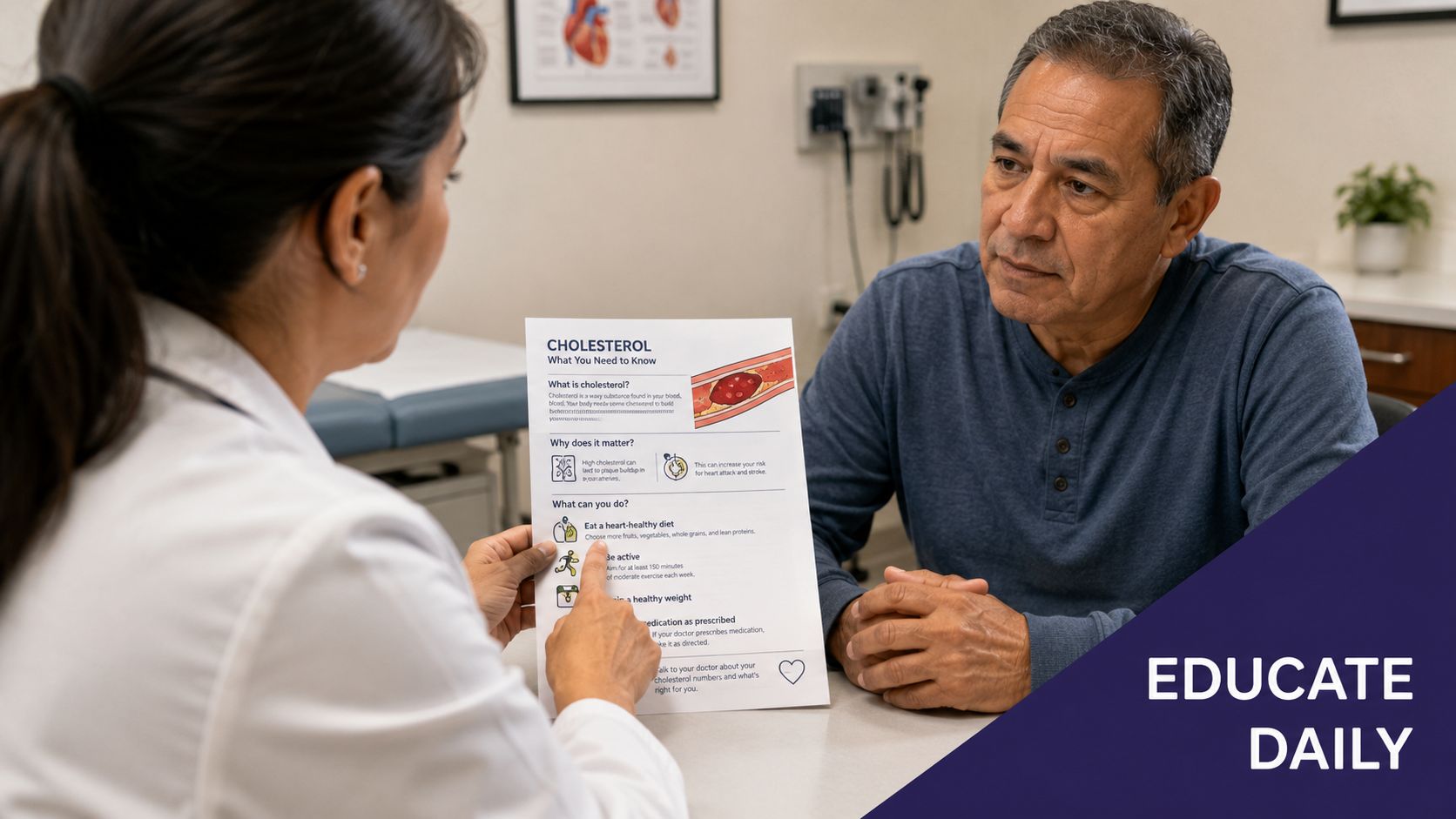
The core curriculum should be narrow enough to remember and complete, but complete enough to prevent avoidable lapses. A useful starting point is the patient's daily self-management routine, because that's where most avoidable deterioration starts. For a practical consumer-facing companion, some teams point patients to patient's guide to congestive heart disease as supplemental reading, while keeping the clinic's own material aligned to the care plan.
The internal teaching workflow should also point patients to one consistent education library, such as the practice's own patient education resources, so staff aren't improvising with different handouts each week.
What patients actually need to know
The most useful content is the content patients can act on the same day. That includes:
- Medication use and adherence, so patients understand what each medicine is for and when to take it.
- Daily weight tracking, because changes often show up before symptoms become obvious.
- Symptom monitoring, especially shortness of breath, edema, and fatigue.
- Diet and fluid guidance, with plain instructions that fit the patient's actual routines.
- Clear escalation steps, so they know exactly who to call and when to call.
The point isn't to overwhelm the patient with details. It's to create a repeatable script that helps them notice change early, then respond before the situation becomes urgent NCBI heart-failure education review.
What usually gets missed
A lot of clinics mention “low sodium” and “take your meds” and stop there. That's too generic. Patients also need the practical version, what their baseline weight is, what counts as a change for them, and what to do if the day starts with swelling or breathlessness instead of stability. The education works better when the clinician or nurse ties each topic back to a specific next step.
That's also where some patients need additional context for pacing, activity, and device-related concerns. The teaching doesn't need to be long. It needs to be specific, consistent, and revisited enough that the patient can use it without guessing.
Communication Practices That Actually Change Patient Behavior
The content matters, but the delivery determines whether the patient keeps any of it. Low health literacy directly affects comprehension and adherence, so the first operational mistake is assuming every patient processes written instructions the same way. Expert guidance recommends screening for literacy risk, documenting learning preferences, and using plain language with teach-back to verify retention patient education and engagement guidance.
That doesn't have to slow a clinic down. It just needs to be built into the same visit pattern the team already uses. A nurse, MA, or care coordinator can ask the patient to repeat back the action plan in their own words, which gives the staff a fast read on whether the message landed.
Make the material easier to use
The American College of Cardiology notes that readability is a measurable quality issue for heart-failure patient materials, and accessible formatting helps more patients follow the plan patient education and engagement guidance. In practice, that means shorter sentences, larger type, simple labels, and visuals that show what swelling, weight tracking, or medication timing look like. It also means documenting preferred language, involving family when appropriate, and repeating the key points instead of assuming the first explanation stuck.
People often remember one clear instruction better than five general reminders.
That's especially true for patients with cognitive impairment, language barriers, depression, low social support, or limited access to technology. The American Heart Association specifically lists those barriers and recommends simple language, family involvement, repeated teaching, and multiple modalities AHA patient education strategies. Recent qualitative work from the BANDAIDD-Explore study also found patients still want concise, timely education, better accessibility, and support for culturally and linguistically diverse groups, rural patients, and caregivers, which is a useful reminder that one-size-fits-all education leaves important gaps.
What to do in a busy clinic
The key is not to create a separate education department. It's to make every clinician handoff more reliable. If a patient leaves with a clear explanation, a repeat-back check, and a simple next-step plan, the odds improve that the instructions survive the car ride home, the pharmacy stop, and the first confusing day after discharge.
Implementing Heart Failure Education in Your Clinic Workflow
The best workflow is the one your staff can repeat on a busy Tuesday. Start with a short, standard education packet, then attach it to the encounter type so it appears when staff already expect to review discharge instructions, medication changes, or follow-up plans. Practices using systems like eClinicalWorks, Athenahealth, or DrChrono can document the teaching in the chart note, then create a reminder for the next outreach step without relying on memory.
A practical cadence starts in the visit, continues after discharge, and ends with early follow-up. Transition-of-care guidance recommends education starting in the hospital, a follow-up phone call within 24 to 48 hours, and an early outpatient review in 1 to 4 weeks because that is when medication mistakes, dietary slips, and delayed recognition of worsening congestion are most likely to show up transition-of-care guidance.
How to structure the work
A workable clinic sequence looks like this:
- Teach at the visit. Use the same core script every time.
- Document immediately. Record what was taught and whether the patient could repeat it back.
- Trigger the follow-up task. Assign the call or message before the patient leaves.
- Reinforce after discharge. Keep the message short and tied to the patient's actual plan.
- Review at follow-up. Check weights, symptoms, adherence, and medication changes.
Operational rule: if the education isn't documented where the team can find it, it usually won't be reinforced.
That matters for both care quality and billing support. Chronic care management and follow-up workflows depend on clean documentation, not memory. The more tightly the education note is tied to the actual care plan, the easier it is for the team to verify what was covered and what still needs attention.
For practices trying to keep the process lean, one option is to connect education workflows with voice AI agents in healthcare so reinforcement does not depend entirely on staff availability. Simbie AI is one example of AI medical staff that can support calls, intake, refill coordination, post-visit education reinforcement, and EMR documentation across systems such as eClinicalWorks, gGastro, EMA ModMed, Athenahealth, Epic, and DrChrono. In independent and community-based practices, that kind of automation helps close the follow-up gap without creating a separate education queue.
How Automation and Voice Agents Reinforce Education Between Visits
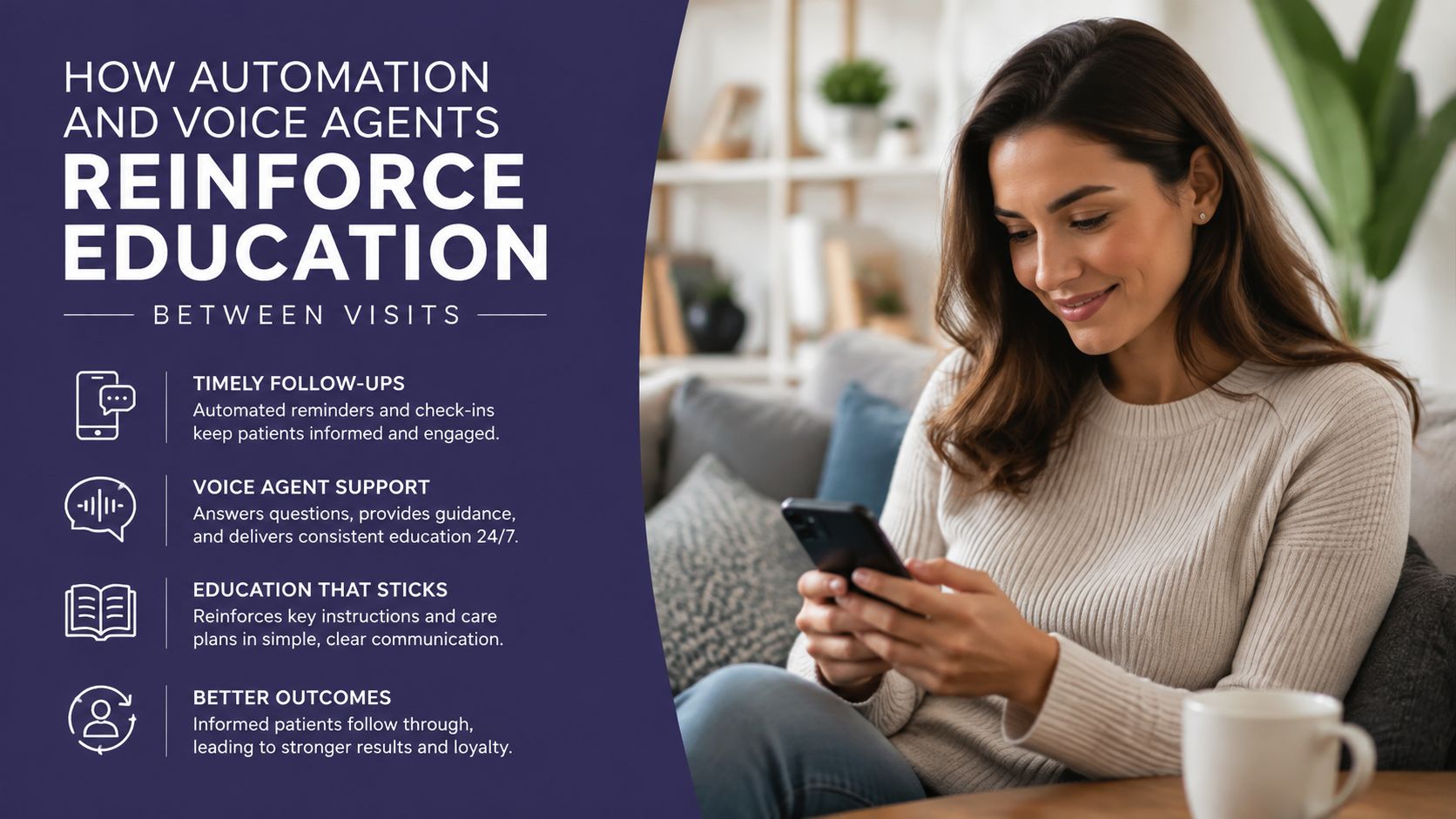
The biggest weakness in most education programs is the gap after the visit. Patients hear the plan once, then they go home, fill prescriptions, forget parts of the instructions, or run into a barrier they didn't mention in the exam room. That's where automation earns its place, not by replacing staff, but by repeating the right messages consistently and capturing responses before the problem escalates.
Voice-driven follow-up works best when it's narrow. The call should reinforce the discharge teaching, confirm medication use, ask about daily weights or symptoms, and flag anything that needs staff attention. A practical guide to the role of voice tools in care delivery is the voice assistant healthcare guide, which is useful background for teams thinking about how conversational systems fit into clinical workflows.
Where automation helps most
The best use cases are repetitive, time-sensitive, and easy to standardize:
- Post-visit reinforcement, so patients hear the same plan again after they've had time to think.
- Adherence check-ins, especially when medication changes are new.
- Weight and symptom prompts, which keep the patient engaged between visits.
- Refill coordination, so lapses don't become a gap in therapy.
- Pre-visit intake, which saves staff time and captures context before the appointment.
Simbie AI fits naturally as one operational option. Its voice agents can handle patient calls, post-visit reinforcement, chart documentation, and routine outreach while keeping the human team in control of exceptions. That combination matters in a small practice because the team doesn't need another app that creates more work. It needs something that keeps education alive after the visit and writes the result back into the record.
Why this changes the workflow
When the reinforcement call happens automatically, the staff doesn't have to remember who needs a reminder today. The patient gets contacted, the answers are captured, and the clinician sees which issues need attention. That's a cleaner model than waiting for the patient to call back only after symptoms get worse.
It also supports continuity for practices with limited nursing bandwidth. Front-office staff can stay focused on live scheduling and access issues, while the education layer runs in the background. The important point is that the outreach stays clinical, not generic. It should sound like a care plan being reinforced, not a marketing call.
Measuring the Impact of Your Heart Failure Education Program
If the program is working, the record should show it. The most useful measures are clinical, adherence-related, and operational, and the team needs to see them without digging through charts by hand. For a practical benchmark, practices can use the outcomes from the targeted discharge education trial summarized by the American Heart Association as a reference point, then judge their own results against local reality and patient mix.
A simple dashboard should separate clinical change from workflow change. If readmissions improve but follow-up engagement stays low, the program still depends too much on individual staff memory. If engagement improves but symptoms are not being escalated, the teaching script needs revision. The point is to connect education to visible signals, not just assume the discharge packet did its job.
| Key Metrics for Heart Failure Education Programs | ||
|---|---|---|
| Metric Category | Example Indicators | Data Source |
| Clinical outcomes | Readmissions, emergency visits, symptom escalation | EMR, claims, follow-up notes |
| Adherence behavior | Medication refill consistency, daily weight logging, reported missed doses | EMR, patient outreach logs |
| Education delivery | Teach-back completion, education documented, follow-up contact completed | Visit note, call record |
| Operational performance | Outreach completion, response capture, chronic care management documentation | Automation dashboard, EMR reports |
What to review each month
Keep the monthly review tight. Check which patients were reached, which calls were completed, which symptoms were reported, and whether the education note made it into the chart. If automation is part of the workflow, compare the outreach log against the EMR so documentation gaps do not hide program gaps. A good place to connect that review to follow-up workflow is how follow-up calls reduce readmissions, because the call record and the clinical record should tell the same story.
Good measurement does not ask whether the education happened. It asks whether the patient acted differently after it happened.
That is the standard that keeps the program honest. It also helps the clinic tighten the script, cut what patients ignore, and keep the parts they use.
Building a Sustainable Education Program That Scales With Your Practice
The clinics that sustain these programs don’t try to do everything manually. They build a simple teaching path, reinforce it after the visit, and let automation handle the repetitive follow-up so staff can focus on exceptions. That’s the practical version of protecting doctor time while keeping patients from slipping through the cracks.
For independent practices, the win isn’t more education for its own sake. It’s a cleaner system where clinicians teach, the team reinforces, and the patient gets timely support without waiting on a busy front desk. That’s how heart-failure education becomes part of chronic care, not an extra task that falls off the list when the day gets busy.
If you’re building a more reliable way to reinforce patient education for heart failure, Simbie AI can help your practice automate follow-up calls, education reinforcement, refill coordination, and EMR documentation without adding staff. If you’re evaluating how that would fit into your workflow, you can see it in action at Simbie AI.