

Most hospital revenue problems don’t start with a dramatic system failure. They start with small misses that repeat all day: a wrong subscriber ID, an authorization that never got queued, a charge that never dropped, a denial nobody trends, a patient statement that raises more questions than it answers.
I’ve seen finance teams chase cash at the back end while the actual damage started weeks earlier at scheduling and registration. That’s why any serious effort around how to improve hospital revenue cycle has to look at the whole path, not just billing office output. The cleanest hospitals I work with treat revenue cycle as one operating system. Front desk, clinical staff, coding, claims, denials, and patient collections all affect the same cash result.
The good news is that hospitals usually don’t need a total rebuild. They need a clear map, sharper ownership, and better use of automation in the spots where manual work keeps creating the same errors.
Finding the leaks in your financial ship
Monday starts with a denial workqueue that looks routine. By Wednesday, patient access is reworking insurance, coders are holding charts, and finance is wondering why cash is light again. No one event caused the problem. A set of small process failures did.

Leakage is usually systemic, not personal
Hospitals rarely lose margin because one team stopped caring. They lose it because work moves across too many hands, too many systems, and too many informal fixes. Staff end up compensating for weak design.
The American Hospital Association reports that providers can use revenue cycle analytics to spot denials, underpayments, and write-offs that would otherwise stay buried in daily operations. In practice, that matters because recurring leakage often hides inside ordinary activity until it becomes a material cash problem, as noted earlier in the AHA source.
I start by looking for repeated failure points, not individual mistakes.
Practical rule: If the same denial reason shows up every week, the workflow is producing it.
Front-end operations deserve more scrutiny than they usually get. Weak scheduling, poor reminder workflows, rushed registration, and inconsistent intake create bad claims and harder collections later. Hospitals that are also working on patient access should connect revenue cycle cleanup with related issues such as reducing patient no-shows, because missed visits, incomplete intake, and bad eligibility data often come from the same broken process.
That is also why I want finance leaders to borrow thinking from adjacent process disciplines. The habits involved in optimizing the O2C cycle, clear handoffs, clean data, and fewer avoidable touches, apply directly to hospital revenue cycle performance.
What to check before you buy another tool
Technology helps, but buying software before identifying the leak usually gives hospitals a faster way to repeat the same error. Start with the friction that keeps resurfacing.
- Repeat denials by root cause: Group denials by reason code, payer, location, and originating step. Registration, authorization, medical necessity, and coding issues leave different fingerprints.
- A/R aging tied to one upstream miss: Eligibility errors, missing prior auth, delayed documentation, and unresolved secondary coverage often sit in aging buckets long before anyone labels them a process problem.
- Manual rescue work: If senior staff fix claims from memory, maintain shadow spreadsheets, or know which payer portal trick gets a claim through, the operation depends on tribal knowledge.
- Routine write-offs and underpayments: Small balances get dismissed fast. Over a year, those “too small to chase” losses add up.
I also look for where automation should replace repetitive human work. Voice AI at intake is a good example. Used well, it can collect insurance details, confirm demographics, remind patients about required documents, and route follow-up tasks before the visit. Used poorly, it just adds another layer that staff have to correct. The trade-off is straightforward. Automation should remove preventable variation, not create a new exception queue.
Why leak detection pays better than another round of cuts
Cost reduction has limits. Process repair improves cash flow, reduces rework, and gives staff cleaner accounts from the start. HFMA has documented that denied claims remain a major source of preventable revenue loss for providers, and hospitals that reduce avoidable denials usually improve both cash timing and labor efficiency at the same time, according to HFMA’s reporting on denial prevention and revenue cycle performance.
That is the point of leak detection. It shows where revenue cycle performance breaks first, where automation belongs, and where leaders need tighter ownership. Without that visibility, hospitals keep treating symptoms in the back office while the leak stays open at the front door.
The blueprint for mapping your end-to-end revenue cycle
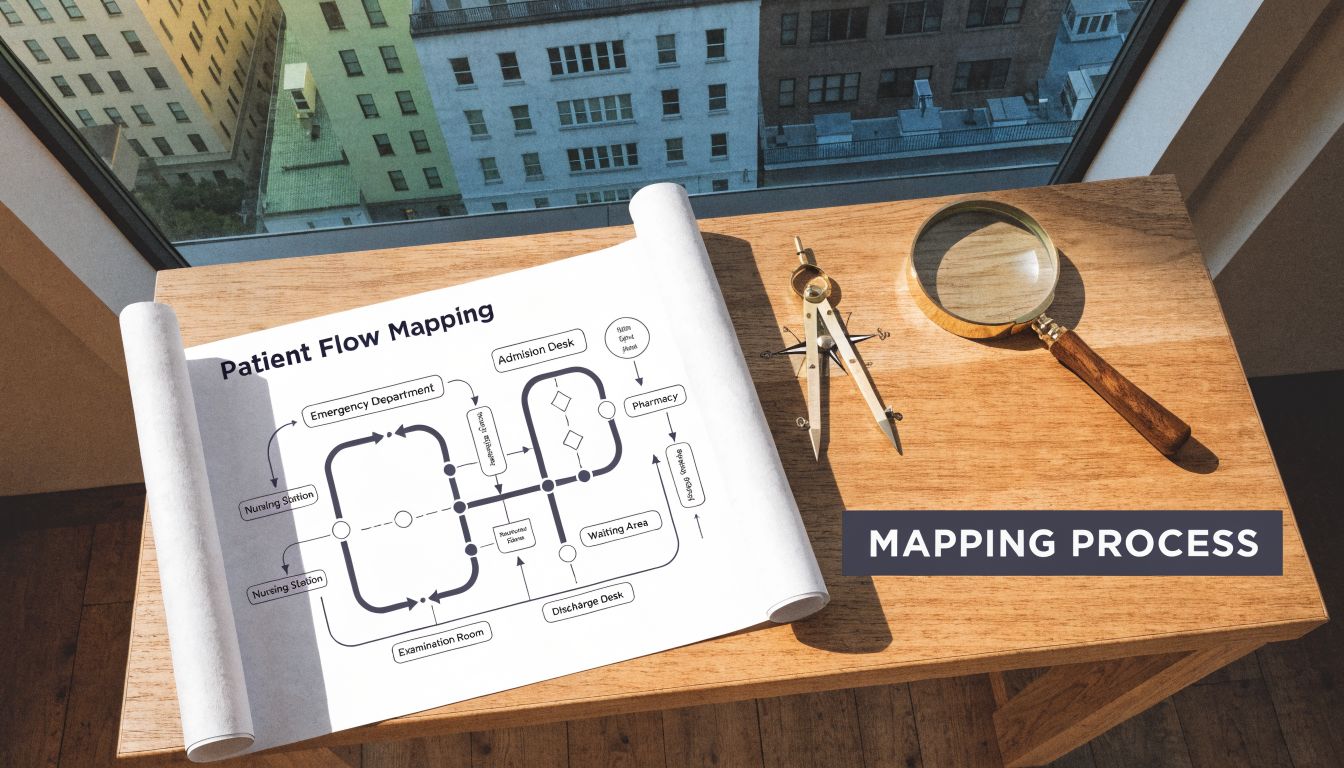
Most hospitals think they know their revenue cycle until they map it on a wall. Then the gaps show up fast. The scheduler does one thing, registration does another, the unit clerk has a workaround, coders wait on documentation, and billing gets the fallout.
A process map sounds basic. It isn’t. It’s one of the fastest ways to expose where cash gets delayed.
Get the right people in the room
Don’t make this a director-only exercise. If you want the actual workflow, include the people who touch the work every day:
- Schedulers and call center staff who collect the first set of patient and insurance data
- Registration and patient access staff who see where data quality breaks
- Clinical staff and case management who know where documentation or medical necessity gets missed
- Coders, billers, and denial staff who see the downstream impact
- IT or interface support if your EHR, PM, clearinghouse, and payer tools don’t talk cleanly
I prefer a whiteboard or digital flow tool that forces the team to show every handoff. Keep it visual. Boxes for steps, arrows for movement, and bright markers for delays, duplicate entry, and manual fixes.
Map the patient journey in three phases
Break the revenue cycle into phases so people don’t jump straight to claims.
Pre-service
Start with first contact. Ask:
- How is the patient scheduled?
- Who gathers demographics and insurance?
- When does eligibility run?
- Who checks authorization requirements?
- How are estimates delivered?
- Where do staff re-enter data?
Hidden waste becomes quickly apparent. If staff are still calling payers manually, copying data between portals, or waiting until arrival to verify benefits, write it down exactly as it happens.
At service
Now look at what happens on the day of care:
- What gets reverified at check-in?
- How are copays or patient amounts requested?
- Where does documentation lag start?
- How do clinical actions become billable charges?
- Which departments still rely on paper, spreadsheet trackers, or memory?
I’ve seen hospitals believe they had clean intake because the front desk checked insurance cards. Then we mapped the actual process and found staff were bypassing missing fields just to move the line.
Post-service
Then map the path after discharge or visit completion:
- When do charges drop?
- What holds coding?
- How are claims scrubbed?
- What edits stop claims before submission?
- Who owns denials by category?
- How are patient balances explained and collected?
The map should show reality, not policy. The shortcuts matter because they often explain the financial outcome better than the formal workflow does.
Mark every software handoff
Process mapping becomes more than a workshop exercise by putting every system on the map: EHR, practice management, clearinghouse, payer portal, call center tool, patient texting platform, and payment vendor.
If data moves by spreadsheet export, screenshot, sticky note, or verbal relay, that’s a leak. Hospitals borrow a useful idea from finance and supply chain here. Teams that study adjacent workflows like optimizing the O2C cycle often get better at spotting where handoffs break accountability.
Questions that expose the real bottlenecks
Ask a few blunt questions while the map is being built:
- Where do we touch the same account more than once?
- What work depends on one experienced person?
- Which errors are discovered too late to fix cheaply?
- Where does staff leave the core system to finish a basic task?
- Which queues grow unnoticed until month end?
By the time this exercise is done, you should have a visual record of where your revenue cycle slows down, where it breaks, and where automation would help. That last part matters. A bad workflow with more software is still a bad workflow.
Plugging the leaks with front-end and pre-service fixes
If you forced me to pick one place to start, I’d start before the patient arrives. The front end decides whether the rest of the cycle runs clean or gets buried in avoidable rework.
Hospitals that treat registration as a clerical task usually pay for it later. Hospitals that treat it as a financial control point usually collect faster and argue with payers less.
Why the front desk matters more than most teams admit
Dialog Health notes that a pre-service workflow can help hospitals reach a 95% clean claims ratio, and high-performing organizations reduce denials to under 5% from an industry average of 10% to 15%. The same source also states that registration errors cause 40% of all denials and ties that problem to the broader issue of $262 billion in annual U.S. hospital denial losses in this hospital RCM workflow guide from Dialog Health.
That lines up with what I see on the ground. A bad phone intake doesn’t stay in scheduling. It follows the claim all the way to denial and then lands in A/R.
What a better pre-service workflow looks like
A clean front-end process usually includes these moves:
- Collect patient data before arrival. Don’t wait for the check-in rush to gather demographics, insurance, and contact details.
- Run eligibility checks early. If coverage is inactive or mismatched, fix it before the visit.
- Queue prior authorizations with documentation support. Auth work breaks when it lives in email and memory.
- Send clear estimates and payment expectations. Patients handle balances better when the financial discussion starts early.
- Scrub the record before the encounter. Missing fields, wrong subscriber details, and incomplete registration should never survive to claim creation.
Manual intake can work for low volume. It breaks fast in busy hospitals because interruptions, hold times, and rushed conversations produce bad data. Voice AI has become useful here because it can gather information before arrival, document the interaction, and push structured data into the system for staff review.
One example is patient access solutions for intake and verification, which include voice-based workflows that collect demographics, support eligibility steps, and help queue prior authorizations before the patient gets to the front desk.
What works and what usually doesn’t
I’m not in the “automate everything” camp. Some hospitals hear that message and then bolt on a new tool without fixing ownership. That just creates faster confusion.
What does work:
- Pre-arrival data capture so staff aren’t rebuilding the chart at check-in
- Real-time eligibility checks connected to the registration workflow
- Authorization work queues with clear accountability
- Estimate delivery by portal or text so patients aren’t surprised later
What usually doesn’t:
- Throwing bots at a messy script nobody has reviewed
- Running verification too early without a final check closer to service
- Asking staff to work both the old manual path and the new digital path forever
- Treating front-end errors as “just access issues” instead of revenue issues
Fixing front-end friction is cheaper than fixing denials. Every hospital says it believes that. The ones that act on it build the workflow to prove it.
Optimizing coding, charge capture, and claims submission
Front-end cleanup gives you a chance at a clean claim. Coding and charge capture decide whether you produce one.
This is the middle of the revenue cycle, and it’s where hospitals often drift into two bad habits. First, clinical teams assume documentation detail is somebody else’s problem. Second, finance teams assume software will catch what documentation missed. Neither assumption holds up.
Where claims break in the middle
Coding errors don’t always come from poor coding. They often start with incomplete physician documentation, late operative notes, missing modifiers, weak charge capture by departments, or a chargemaster that no longer reflects current practice.
I’ve also seen hospitals undercode because teams are so worried about audit exposure that they bill the safest version of care instead of the supported one. That protects nobody if the documentation supports a different level and the organization leaves money behind.
Medical Office Force notes that FY2024 Medicare improper payments were 7.66%, with coding errors as a major factor, and states that pre-submission AI scrubbing of CPT and ICD-10 codes against payer rules helps hospitals move toward a 95% clean claims rate in this RCM claims scrubbing discussion.
Use claim scrubbers as a control, not a crutch
A good scrubber checks claims before submission against payer edits and coding logic. It can catch missing fields, invalid code combinations, modifier issues, and payer-specific rule conflicts while the account is still fixable.
That matters because prevention is cheaper than appeal work.
Here’s the way I explain it to teams: a scrubber should be the last safety check, not the main coding strategy. If your edits fire constantly for the same reasons, go upstream and fix the documentation, training, or charge process that creates them.
For organizations comparing workflow options, it also helps to look at practical uses of AI in medical coding so you can separate real support tools from vague marketing claims.
Common revenue leaks and tech-based solutions
| Leak point | Common cause | Tech-based solution |
|---|---|---|
| Registration data reaches billing with errors | Manual re-entry and missing validation | Eligibility checks tied to intake and required-field validation |
| Charges never make it onto the claim | Departmental lag or missed documentation | Charge review queues and interface monitoring |
| Coding delays hold claims | Incomplete physician notes or late sign-off | Documentation prompts and coder work queues |
| Claims fail payer edits | Invalid code pairing, modifier issue, missing data | Pre-submission claim scrubber with payer rule checks |
| Denials repeat without a pattern view | Teams work denials one by one | Dashboards that group denials by root cause, payer, and department |
Train clinicians on financial impact without turning them into billers
Some leaders avoid talking to physicians and nurses about revenue because they don’t want care decisions driven by finance. Fair. But there’s a difference between pushing clinicians to think like billers and helping them understand how documentation affects reimbursement for care they already delivered.
“If the note can’t support the service, the claim can’t carry it.”
That’s the message. Keep it simple. Show examples from your own denials. Don’t bury staff in payer jargon. They don’t need every billing rule. They need to know which missing details lead to lost or delayed payment.
Mastering the final mile with denial management and patient collections
Even strong hospitals get denials. The difference is how fast they identify them, route them, and stop the same denial from coming back next week.
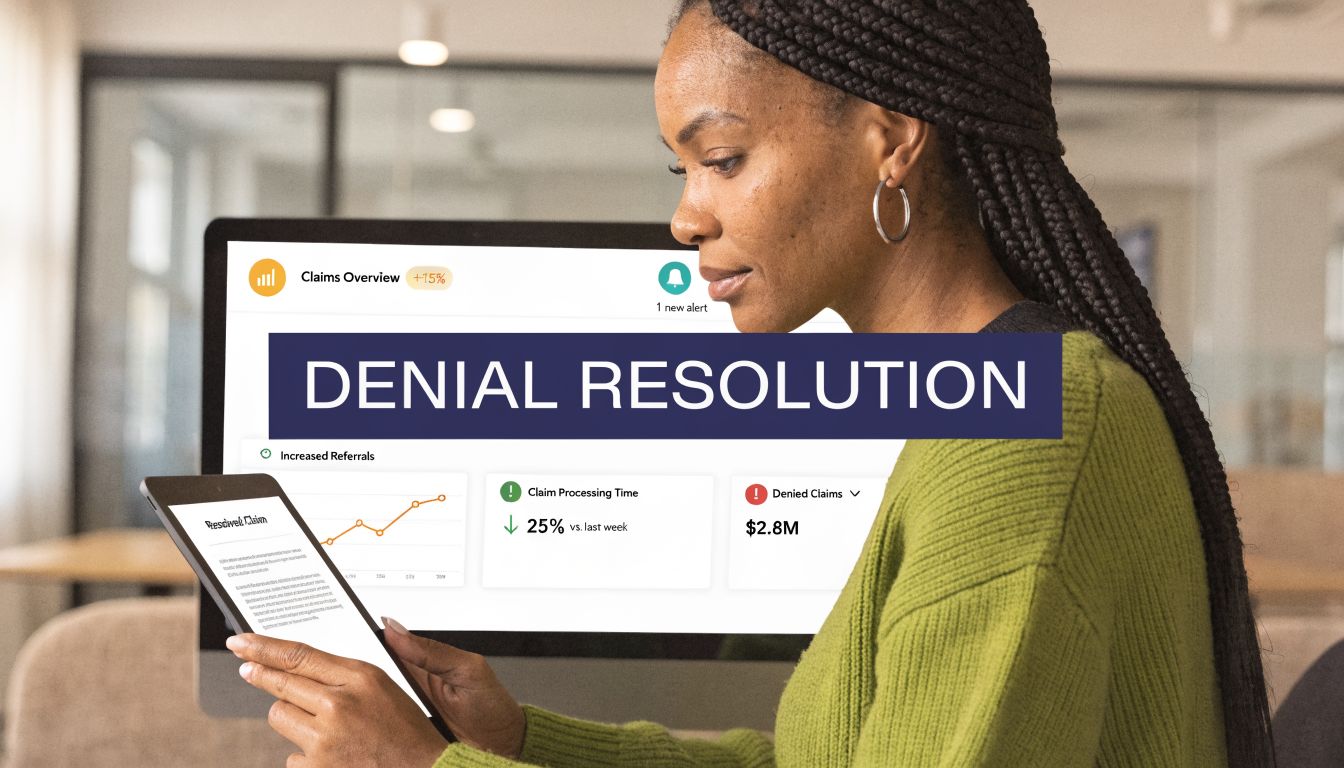
Bad denial management is emotional. Teams argue with payers, work whatever lands in front of them, and celebrate individual saves. Good denial management is operational. It sorts, assigns, tracks, and feeds the learning back upstream.
Build a denial process people can actually follow
I like a simple four-part model.
Sort denials by root cause
Don’t run one giant denial queue. Separate denials into categories such as eligibility, authorization, coding, medical necessity, timely filing, and coordination of benefits. The category tells you where to fix the source problem.
Assign work to the right owner
If registration caused the denial, billing shouldn’t own the whole fix. If coding caused it, route it there. If payer behavior changed, contract or payer relations may need to step in. Ownership should follow cause.
Work fast on fresh denials
Old denials get expensive. Teams lose documents, filing clocks tighten, and payer conversations get harder. Put time-sensitive denials at the top and create a standard path for appeals, corrected claims, and follow-up notes.
Feed denial trends upstream
Every denial team should produce a short trend view that patient access, coding, and operations can use. If they only recover money but never change the source process, they’re doing collection work, not management.
Patient collections need clarity, not pressure
Patient balances are a different kind of final-mile problem. Hospitals that send confusing statements and then escalate quickly to harsh collection tactics usually hurt both recovery and patient trust.
What works better is boring, but effective:
- Use plain-language statements that show what was billed, what insurance handled, and what the patient owes.
- Offer digital payment options because many patients will pay if the path is easy.
- Set up payment plans early for balances that need time.
- Give patients a way to ask billing questions without sitting on hold.
- Keep outreach consistent across text, portal, phone, and mail based on patient preference.
If your team is redesigning this part of the workflow, a general accounts receivables automation guide can help frame where automation reduces manual follow-up and where human review still matters.
The best patient collection process doesn’t sound like collections. It sounds like a clear explanation and a simple way to pay.
Watch for two back-end traps
The first trap is treating every denial as worth the same effort. They aren’t. Some need appeal work. Some need a corrected claim. Some expose a contract issue. Some should trigger a front-end retraining fix.
The second trap is separating patient collections from patient communication. If statements are vague and support is hard to reach, balances age because patients don’t trust the bill, not always because they refuse to pay.
Building a performance culture with KPIs and continuous improvement
Monday starts with a clean cash forecast. By Friday, a registration issue in one clinic, a coding backlog in one service line, and a payer edit no one escalated have already thrown the month off course. That is how revenue cycle performance slips. Not in one dramatic failure, but in small misses nobody owns quickly enough.
Hospitals keep gains when revenue cycle work is visible, assigned, and reviewed on a set cadence. I have seen strong improvement efforts fade within a quarter because the organization fixed workflows but never fixed accountability.
Pick KPIs that expose operational failure early
A crowded dashboard usually hides the underlying problem. Use a short scorecard that connects front-end execution, middle-cycle accuracy, and back-end cash.
Start with metrics leaders can act on:
- Days in A/R, to spot where cash is slowing down
- Clean claim rate, to see whether registration, authorization, and coding are holding up
- Denial rate, to identify recurring defects by payer, location, or service line
- Cost to collect, to show how much labor rework is consuming
- Patient payment performance, to measure whether bills, outreach, and payment options are working
Those metrics matter because they point to process owners, not just outcomes. A denial rate by itself is not management. A denial rate broken down by root cause, payer, and department gives a director something to fix this week.
Build a review rhythm people cannot ignore
Monthly reporting is too slow for recurring revenue leakage. Weekly operating reviews work better, especially when access, HIM, patient financial services, denials, IT, and operations are looking at the same scorecard.
Keep the meeting tight.
Review what changed, where the issue started, who owns the correction, and what gets tested before the next meeting. If a voice AI intake tool is collecting insurance details after hours but eligibility errors are still rising, the problem may not be intake volume. It may be script design, payer-specific logic, or a weak handoff into the EMR. Good review habits catch that kind of disconnect early.
If your internal bench is thin, bringing in outside support such as experienced Financial Analysts can help finance leaders clean up reporting, separate signal from noise, and build a more useful view of cash performance.
Run continuous improvement in 90-day cycles
Long transformation plans often die in committee. A 90-day operating cycle keeps the work grounded.
- Days 1 to 30: confirm baseline definitions, audit reporting accuracy, and identify the top failure points by volume and dollar impact
- Days 31 to 60: fix one or two repeat defects, standardize ownership, and document the new workflow
- Days 61 to 90: measure whether the change held, retrain where compliance slipped, and decide what moves into the next cycle
This approach forces trade-offs. Some fixes need system build. Some need staff coaching. Some need better automation. The point is to stop treating every issue as a major project and start working the queue in an order that protects cash.
The hospitals that improve fastest run revenue cycle like an operating discipline. They do not wait for perfect integration, and they do not confuse more reporting with better control. They build a simple management system, use automation where it removes repetitive work, and hold leaders to the same definitions every week.
If you’re working on front-end cleanup, Simbie AI is one option to evaluate for voice-based patient intake, eligibility-related workflows, prior authorization support, and EMR-connected administrative automation. It fits best for teams that want to reduce manual intake work without forcing staff to handle every routine patient interaction by phone.