

A diet for chronic kidney disease is one of the few tools that can change day-to-day kidney workload, but it only works when the plan matches the person in front of you. That matters because CKD nutrition isn't a single “healthy eating” template. It changes by stage, by dialysis status, and by what the labs are showing.
For patients and practice teams, the hard part isn't knowing that food matters. It's translating renal guidance into meals people can afford, shop for, cook, and repeat. The most useful plan is the one that is medically correct and realistic enough to stick.
Why Diet Is the Most Powerful Tool in Kidney Disease Management
Diet became impossible to treat as a side note once the global burden of CKD linked nutrition risk to kidney outcomes on a large scale. A 2025 Frontiers analysis estimated 317,010 global deaths from CKD attributable to dietary risks in 2021, along with 7,971,281 DALYs, compared with 112,949 deaths and 3,299,731 DALYs in 1990. The same study found dietary risks accounted for 20.8% of global CKD deaths and 17.9% of CKD DALYs in 2021, with low vegetable intake, low fruit intake, and high sodium intake among the largest contributors. Frontiers in Nutrition
That scale changes how we should talk about kidney food rules. Diet is not a generic wellness habit here. It's a medical intervention that can support kidney preservation, symptom control, and safer fluid balance. The catch is that the right plan for one patient can be wrong for another.
Why “healthy eating” falls short
A person with CKD stage 3 who is not on dialysis often needs a very different protein target than someone receiving hemodialysis or peritoneal dialysis. Sodium goals also stay tight because excess sodium drives blood pressure, fluid retention, and proteinuria. A broad “eat less salt and more plants” message misses the clinical nuance.
Practical rule: If the advice doesn't mention stage, dialysis status, and lab values, it's probably too vague to guide CKD care well.
That is why patient education needs to be specific from the start. General healthy eating advice assumes healthy kidneys can buffer dietary excess. CKD changes that assumption. For practices, a clear renal education resource can keep counseling consistent and reduce rework, which is why many teams keep a curated library like patient education resources close at hand for handouts and after-visit reinforcement.
The most important mindset shift is simple. Kidney nutrition isn't about perfection, and it isn't about banning whole food groups. It's about matching intake to what the kidneys can safely handle, then adjusting as disease and treatment change.
The Five Core Nutrients Every CKD Patient Must Track
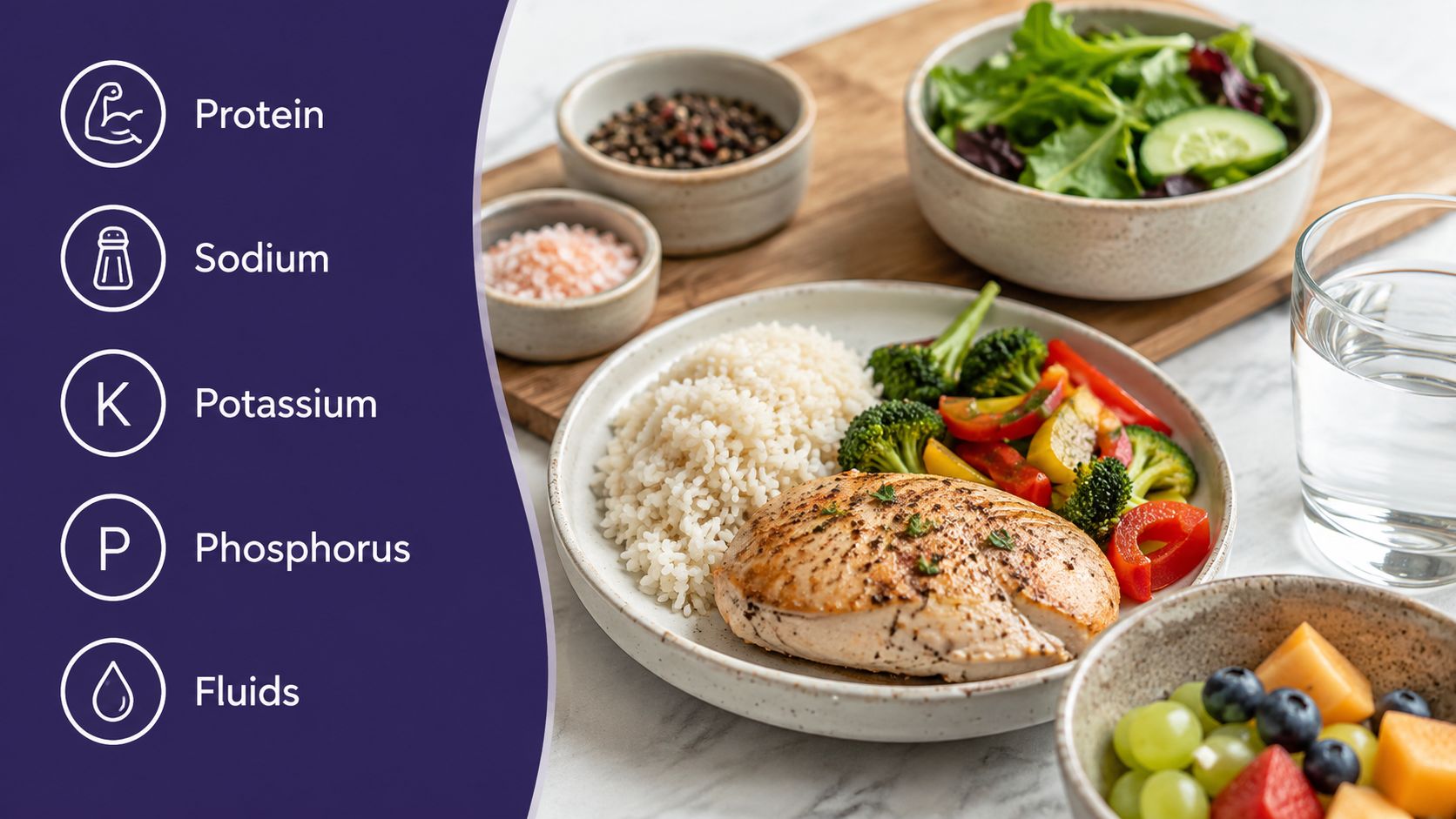
The kidney diet centers on five core nutrients, sodium, potassium, phosphorus, calcium, and protein. The National Kidney Foundation points to those exact nutrients for adults with CKD stages 1 to 5 who are not on dialysis, because they most directly shape symptom control and disease progression. National Kidney Foundation
Sodium and protein are the first two to watch
Sodium is often the first change that helps. Many clinical recommendations keep intake at 2.3 g/day or less, and some go further to less than 2 g/day sodium. The reason is straightforward, sodium raises blood pressure, worsens fluid overload, and can increase proteinuria. Clinical review summary
Protein needs more careful planning. For non-dialysis CKD, many clinical reviews and guideline summaries recommend about 0.6 to 0.8 g/kg/day. On dialysis, the target usually rises to 1.0 to 1.2 g/kg/day because treatment increases protein losses and low intake can raise the risk of malnutrition. Clinical review summary
A peanut butter sandwich, a bowl of beans, and a serving of chicken do not count the same in CKD nutrition. The protein portion may need to stay modest for one patient and be larger for another, while the sodium often hides in bread, sauces, seasoning blends, and packaged sides rather than the main protein itself.
Potassium, phosphorus, and calcium need lab-based thinking
Potassium can become unsafe when the kidneys cannot remove it well, but it does not need to be treated like a universal enemy. The better approach is to look at serum potassium, medications, and food patterns, then decide whether restriction is needed. The same logic applies to phosphorus. CKD patients often need individualized phosphorus advice rather than blanket elimination, especially when hidden phosphate additives are the main problem.
Calcium matters because bone and mineral balance shifts in CKD. That is one reason the renal diet is more than a food list. It works like a balancing act. If protein is too low, people can lose muscle. If sodium is too high, blood pressure and edema worsen. If potassium or phosphorus are over-restricted without cause, the diet can become harder to follow and overall nutrition quality can drop.
A plant-dominant pattern can help here when it is supervised well. A clinical PLADO approach uses 0.6 to 0.8 g/kg/day protein, at least 50% plant-based sources, more than 25 g/day fiber, less than 4 g/day sodium, or less than 3 g/day if edema or hypertension is present, and 30 to 35 kcal/kg/day energy intake. PLADO review
Some patients hear “kidney diet” and think restriction first. In practice, the goal is better control of the nutrients the kidneys struggle to manage, while still keeping meals realistic for the patient's budget, food access, and cooking ability.
How Protein and Sodium Targets Change by CKD Stage
Protein targets change because kidney function, dialysis treatment, and appetite do not create the same nutritional demands. For non-dialysis CKD stage G3b to G5, expert guidance recommends 0.6 to 0.8 g/kg/day protein. Once a patient starts dialysis, the usual target shifts to 1.0 to 1.2 g/kg/day. Guideline summary
Why the number changes
Before dialysis, a lower protein intake helps reduce the buildup of uremic waste products and may support slower progression while still protecting overall nutrition. After dialysis starts, the body loses amino acids and protein during treatment, so a diet that was appropriate beforehand can leave the patient short on building blocks for muscle and healing. Protein works a bit like repair materials in a house. If too little is available, maintenance suffers, but if the dose is matched to treatment stage, the body has what it needs without adding unnecessary waste.
That stage shift is the center of the plan, and it reflects different metabolic demands before and after dialysis begins.
Sodium stays restricted in both settings. A sodium limit of less than 2 g/day is commonly recommended to improve blood pressure control, reduce volume overload, and lower proteinuria. Guideline summary
What this looks like in real meals
A breakfast of eggs, toast, and fruit can fit very differently depending on the patient's stage and lab profile. For a non-dialysis patient, the protein portion may need to stay modest, while the same person on dialysis may need a larger protein serving to replace treatment losses. The sodium problem often hides in the bread, seasoning, and packaged sides rather than the main protein.
A practical example helps. A patient who eats two eggs with salted toast and a packaged breakfast meat is getting protein, but also a sodium load that can work against blood pressure goals. Another patient with the same meal pattern may need the eggs kept in place, while the bread, spread, and processed meat are the pieces to change first. That is usually easier than rewriting the whole menu, especially when the household budget, grocery access, and cooking setup are limited.
Common mistakes show up fast in the exam room. Patients overcorrect by cutting protein too far because they are afraid of “hurting the kidneys.” Others swap in processed “health” foods that carry more sodium than the foods they replaced. Both mistakes are easy to make, because label reading takes practice and many packages advertise the front of the box more loudly than the ingredient list tells the story.
CKD Stage-Specific Nutrient Targets
| CKD Stage | Protein (g/kg/day) | Sodium (g/day) | Key Rationale |
|---|---|---|---|
| Non-dialysis CKD stages 3 to 5 | 0.6 to 0.8 | Less than 2 | Reduce uremic waste, control blood pressure, limit fluid overload |
| Hemodialysis or peritoneal dialysis | 1.0 to 1.2 | Less than 2, or lower when clinically needed | Replace treatment losses and support nutrition while still controlling volume |
The table gives a starting point, not a full prescription. Diabetes, appetite, body size, activity level, food access, and lab trends can all change what works in real life. The best renal counseling uses the stage target as the baseline, then adjusts it so the plan fits the patient's meals, shopping options, and daily routine.
Real Meal Plans and Food Swaps That Work
A renal meal doesn't have to look like a special diet plate. It usually looks like familiar food with better portions and smarter ingredient choices. For many people, the most useful change is not a dramatic recipe overhaul. It's swapping out the few ingredients that push sodium, potassium, or phosphorus too high.

Simple examples that feel normal
Breakfast can be oatmeal with blueberries, a boiled egg, and unsalted toast. Lunch can be a turkey sandwich on lower-sodium bread with lettuce and apple slices. Dinner might be baked chicken, rice, green beans, and a small fruit portion. None of that sounds exotic, and that's the point.
Food swaps make the biggest difference when they're tied to the patient's usual habits.
- Fruit choice: Apples or berries are often easier fits than bananas when potassium needs watching.
- Milk choice: Rice milk can be a better fit than dairy milk for some patients who need phosphorus control.
- Seasoning: Garlic, onion powder, lemon, and herbs can replace heavy salt blends.
- Packaged foods: Look for phosphorus additives in ingredients that contain “phos” and keep sodium in mind.
Labels matter more than marketing
A package can say “natural,” “heart healthy,” or “high protein” and still be poor for CKD. The sodium number on the nutrition facts panel is often only part of the picture. Ingredient lists reveal phosphate additives, and those additives are absorbed more readily than the phosphorus found naturally in foods.
If a patient is trying to build a meal around shelf-stable items, the safest move is often to start with a plain starch, a modest protein portion, and a fruit or vegetable that fits the lab picture. Then season it with herbs instead of salt-heavy sauces.
For people who need help planning simple, lower-cost meals, a practical external resource like plan meals on a food budget can be useful as a starting point, especially when the barrier is shopping within a tight budget rather than learning a new culinary style.
The Hidden Barrier Food Access and Affordability
The biggest gap in kidney nutrition is not the science. It's access. A PubMed review focused on disadvantaged populations found that healthy dietary patterns are often inaccessible when people can't afford or reach healthful foods, and that the barriers happen both at the personal level and the institutional level. PubMed review
That matters because standard CKD advice assumes access to fresh food, transportation, storage, cookware, and repeated dietitian support. Many patients don't have all of that. Some rely on food pantries. Some shop once a month. Some don't have a full kitchen. In those settings, the perfect renal menu is less useful than a realistic one.
What works when the budget is tight
Shelf-stable foods can still support CKD care if the choices are thoughtful. Plain rice, pasta, oats, canned fruit in juice, low-sodium canned vegetables, and peanut butter in measured portions can all play a role. The key is keeping sodium low and protein portions intentional.
A plant-dominant low-protein diet can also be practical because beans, grains, and vegetables may cost less than frequent animal protein purchases, especially when meals are planned carefully and supervision is available. The same review logic that makes plant-forward eating kidney-friendly can also make it easier to shop for. That doesn't mean it works for every patient. It means cost shouldn't be ignored when counseling.
Best kidney food advice fails if the patient can't buy it, store it, or cook it.
For practices, improving patient access to care becomes part of nutrition support, not a separate administrative issue. Missed follow-up, poor transportation, and limited food access all interfere with adherence.
The conversation should be blunt and respectful. Ask what the patient can get at their usual store. Ask whether they can refrigerate leftovers. Ask whether they rely on pantries or convenience stores. That's the starting point for workable CKD nutrition.
Personalizing Potassium and Phosphorus Advice
A blanket potassium or phosphorus ban can oversimplify CKD care. The better approach is to match advice to the lab results, CKD stage, and whether hyperphosphatemia is present. NIDDK also advises patients to watch potassium serving sizes and avoid potassium chloride salt substitutes, which can raise potassium intake quickly. NIDDK healthy eating guidance
Labs decide the level of restriction
If potassium is in range, broad food elimination may not be needed. If potassium is high, the plan gets narrower. That usually means trimming very large portions of high-potassium foods, reviewing supplements, and checking medications that can raise potassium.
Phosphorus works the same way. The goal is not to remove every food that contains phosphorus. The goal is to lower excess intake, especially from additives, and use binders when they are prescribed. Plant foods can still fit because the phosphorus in plants is less readily absorbed than phosphorus from many processed ingredients or additives.
Food quality still matters
A plant-forward pattern can still cause potassium problems if the portions are too large. Another patient may need to limit dairy, cola, or processed meats because phosphorus and sodium are the larger concern. Good advice follows the pattern on the plate, not a fear of individual foods.
For patient-facing education, a helpful companion tool is animated patient education using Knowlify, especially when the same message needs to be repeated in a clear visual format. Repetition helps, because patients often need to hear the reason more than once before the food choices feel manageable.
For patients exploring supplement support alongside dietary changes, a berberine milk thistle combo may be worth discussing with their care team.
The practical takeaway is simple. Potassium and phosphorus advice should change when the labs change. A rigid handout cannot do that. A good renal plan can, and it also fits better when the patient has to work within budget, store choices, and the way they cook. For teams trying to build that kind of follow-up into routine care, chronic care management support can help keep the diet plan tied to lab trends and real-world barriers.
Supporting Patients Through Clinical Workflow Integration
CKD nutrition works better when it's built into routine care instead of left to a one-time diet handout. The first step is identifying who needs more intensive counseling, especially patients with falling eGFR, abnormal potassium or phosphorus, diabetes, hypertension, edema, poor appetite, or repeated missed follow-up. Those are the patients most likely to benefit from a renal dietitian referral and scheduled check-ins.
What staff can track in the chart
Lab trends should drive the conversation. Protein targets matter more when appetite or weight is changing. Sodium counseling matters more when blood pressure or edema is worsening. Potassium and phosphorus guidance should be updated when serum values move, not when a generic template says it's time to review them.
Medication and supplement review belongs in the same workflow. Salt substitutes, protein powders, and some over-the-counter supplements can all shift nutrient balance in the wrong direction. Patients often don't think of a shake or “kidney support” product as part of the diet, so staff should ask directly.
Practical talking points for visits
- Use plain language: “We're trying to keep the kidneys from working harder than they need to.”
- Tie advice to the lab: “Your potassium is fine right now, so we're focusing more on sodium and protein.”
- Keep the goal visible: “We want meals you can repeat, not a perfect menu you can't maintain.”
- Document the plan: Write down the target, the food swap, and the follow-up trigger.
Chronic care workflows can help here because nutrition counseling doesn't live in isolation. It connects to blood pressure management, diabetes control, refill coordination, and outreach between visits. Practices that already use structured chronic care processes can fold renal nutrition into them more cleanly. Chronic care management is a natural fit for that kind of follow-up.
A simple way to make the message stick is to reinforce one change at a time. Patients do better when staff focus on the one food swap that matters most, then revisit the rest later. That keeps CKD nutrition practical, not overwhelming.
If your practice wants to support CKD patients with better follow-up, clearer education, and fewer missed nutrition touchpoints, Simbie AI can help manage the calls, intake, education reinforcement, and chronic care follow-up that keep renal plans moving. It's built to support both the front office and the clinical side of care, so your team can stay focused on the conversations that matter most.