
Most clinics don't need another promise about “less admin.” They need the last two hours of the day back.
I've seen the same pattern across outpatient groups, specialty clinics, and larger systems. The schedule runs full, the visits go fine, and then the actual second shift starts. Notes pile up. The physician stays late or signs back in after dinner. Staff wait on unfinished documentation before they can close loops on billing, refills, and follow-up tasks. That's the operational problem ambient listening ai is trying to fix.
The reason people are paying attention now is simple. This is no longer a fringe pilot. By 2024, about 30% of physician practices were already using ambient listening AI, according to the Medical Group Management Association as cited by AHIMA. In an early evaluation referenced by the same AHIMA piece, more than 3,400 physicians used ambient AI across 303,000 patient encounters, and they reported more personal patient interactions plus less after-hours clerical work.
That doesn't mean every deployment works. It does mean practice managers should stop treating ambient listening as speculative. The better question now is whether your clinic can implement it in a way that improves documentation instead of adding one more layer of review.
The end of after-hours charting is in sight
The most believable sales pitch for ambient listening ai isn't a product demo. It's the look on a clinician's face when they finish clinic and don't still have a backlog of notes.
A familiar day in practice looks like this. A physician runs from room to room, tries to maintain eye contact, clicks through the EHR, types fragments into the note, and still leaves with charts open. The problem isn't just the time spent writing. It's the constant task switching. That's what wears people down.
Ambient listening ai fits this problem better than old dictation tools because it works during the visit instead of asking the clinician to recreate the visit after it ends. If the system can capture the conversation, identify the medically useful parts, and draft a usable note, the doctor starts from review instead of from a blank screen.
Why this feels different in practice
For practice leaders, the value is operational as much as clinical:
- The provider gets time back: Less note creation happens after clinic, which can ease the nightly chart backlog.
- The visit feels less screen-driven: Patients notice when the clinician is listening instead of typing.
- Staff get cleaner handoffs: When documentation closes faster, downstream work moves faster too.
- Burnout discussions become concrete: You're not talking about “wellness” in the abstract. You're dealing with one of the daily causes of stress.
Ambient listening ai works best when you treat it as a documentation workflow change, not as a gadget.
I wouldn't frame it as the end of documentation. That's not realistic. The note still needs clinician review, and some encounters will still require real editing. But for practices drowning in unfinished charts, the difference between “write everything from scratch” and “review a draft that matches the visit” is large enough to matter.
What is ambient listening AI really doing
Ambient listening ai is not Siri in an exam room, and it's not old-school voice dictation with a new label.
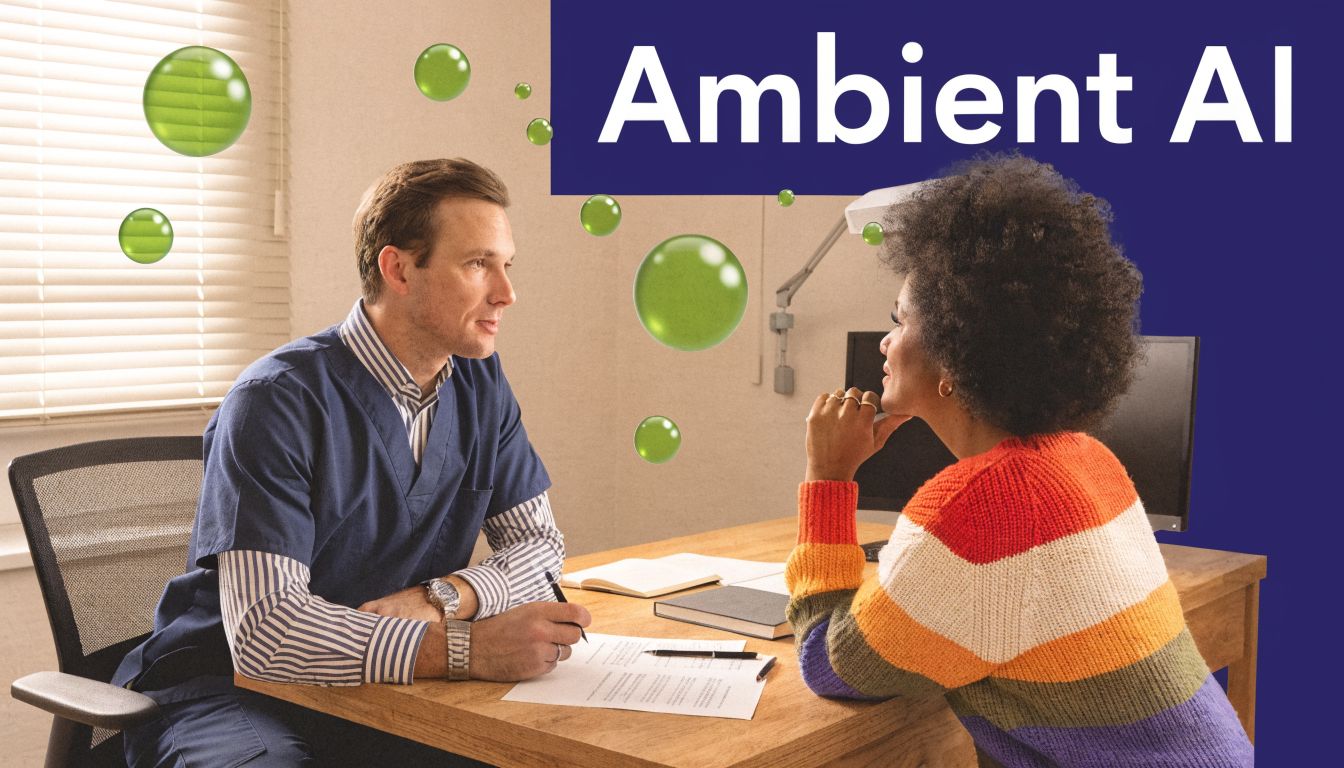
At a technical level, it's a pipeline. According to Twofold's explanation of ambient clinical intelligence, the system combines always-on audio capture, speaker diarization, automatic speech recognition, generative AI, and clinical NLP to produce structured notes. It listens during the visit, converts dialogue to text, drafts note sections such as SOAP content, and can map problems to codes like ICD-10. The clinician still has to review and accept the draft before it goes into the chart.
The workflow under the hood
In plain language, the system is doing a few separate jobs.
It captures the room conversation
The software listens passively while the visit happens. That matters because the clinician doesn't have to stop, press record, or dictate commands after every finding.
It figures out who said what
Speaker diarization separates clinician speech from patient speech. Without this step, the output gets messy fast, especially in visits with interruptions, family members, or repeated symptom statements.
It turns speech into text
This is the speech recognition layer. In healthcare, general transcription isn't enough. The tool has to handle medication names, symptom language, and the shorthand clinicians use naturally.
It shapes the transcript into a clinical note
The system stops being a recorder and starts acting like a documentation assistant at this point. It pulls forward the parts likely to belong in the HPI, assessment, plan, or problem list, then drafts a note the clinician can edit.
Why that distinction matters
Many clinics first compare ambient listening ai to dictation because that's the budget line they already understand. That comparison misses the actual change.
Dictation starts after the visit and still depends on the clinician to structure the whole note. Ambient systems try to do the first pass during the encounter, which is why they can reduce keyboard time and context switching. They're still not autonomous. If a vendor markets them as “set it and forget it,” I'd be cautious.
Practical rule: If the tool can't show you how the transcript leads to the draft note, quality review gets harder and trust drops.
There's also a human factor here. Practices trying to reduce after-hours work often need more than one fix. If documentation pressure has already blurred the line between clinic time and home time, it helps to pair workflow changes with better boundary-setting. This short guide on how to stop overworking after hours is useful because it speaks to the behavior side, not just the software side.
The proven impact on clinical work and physician wellbeing
Ambient listening ai either becomes a real operational tool or stays a nice demo at this critical juncture. The useful question isn't “Does it sound smart?” It's “Does it reduce note burden in practice?”

One of the clearest data points comes from Sutter Health. In a study published in JAMA Network Open, clinicians' mean time spent on notes per appointment fell from 6.2 minutes to 5.3 minutes after implementation, as reported by Sutter Health's summary of the study. The same study reported better clinician well-being, including lower mental demand and less feeling rushed during documentation.
What those gains mean operationally
A reduction in note time per appointment may not sound dramatic to someone outside clinic operations. Inside a busy schedule, it adds up quickly. More important, it changes where the work happens.
If the draft note is ready near the end of the encounter, the clinician can review closer to the point of care. That usually means less memory reconstruction later, fewer missing details, and less “I'll finish this tonight.”
The qualitative impact matters too. Earlier deployments referenced by AHIMA found that physicians reported more personal, meaningful patient interactions while reducing after-hours clerical work. I take that seriously because it matches what clinicians usually want from documentation tech. They don't need a flashy interface. They want to be present with the patient and still get the note done.
What improves and what still doesn't
Ambient listening ai tends to perform well in a few areas:
- Routine follow-ups: Stable chronic care and medication review visits often produce cleaner drafts.
- High-volume clinics: Repeated visit patterns make template logic and note normalization more useful.
- Providers with heavy charting burden: The greater the baseline documentation drag, the easier it is to feel the difference.
- Teams trying to cut “pajama time”: Even modest note-time reductions can matter if after-hours work is the main pain point.
What usually still needs attention:
- Complex visits: Multi-problem encounters can need substantial editing.
- Nonstandard communication: Interpreters, cross-talk, and noisy settings can affect note quality.
- Provider style differences: Some physicians prefer sparse assessment language; others write nuanced narrative plans. The tool has to fit that reality.
- Coding sensitivity: Suggested codes can be helpful, but they should never be accepted casually.
Better clinician well-being usually comes from less friction in the workday, not from the software itself. The software helps only if it fits the actual workflow.
That's the standard I'd use. If note creation gets faster and clinicians feel less rushed, the tool is doing its job. If staff spend their time cleaning up awkward drafts, the burden has only moved.
Navigating privacy security and HIPAA compliance
Privacy concerns are not a side issue with ambient listening ai. They are the adoption issue.
Every practice leader I've worked with asks the same basic questions. Is the audio stored? For how long? Who can access it? How do we explain this to patients? Those are the right questions, and vendors should answer them plainly.
What “HIPAA-compliant” should mean to you
I don't put much weight on a homepage badge. For ambient tools, compliance starts with documentation and contract terms, not marketing copy.
You should expect:
- A Business Associate Agreement: If the vendor handles protected health information, this is not optional.
- Clear data flow documentation: The vendor should explain what is captured, what is stored, and what is discarded.
- Encryption standards in transit and at rest: Practices need this spelled out, not implied.
- Access controls and auditability: You need to know who can retrieve transcripts, drafts, and related encounter data.
- Retention rules you can understand: If audio or transcript data persists, your team should know where and why.
For a practical overview of what healthcare teams should check, this guide to HIPAA-compliant AI tools is a solid starting point.
Consent and trust matter as much as security controls
A technically compliant deployment can still fail if patients feel surprised or uneasy. Clinics need a simple script and a consistent process. The physician or rooming staff should be able to explain that the system listens during the visit to draft documentation, that the clinician reviews the note, and that the tool does not replace medical judgment.
That explanation should sound normal, not legalistic. Patients usually respond well when the message is honest: this helps the clinician focus on the conversation instead of the keyboard.
If your front desk, MAs, and clinicians all describe the tool differently, patients notice. Standardize the language before go-live.
The other risk is internal complacency. Once staff hear “AI note tool,” they may assume the draft is safe to accept as-is. It isn't. Ambient listening ai should lower the writing load, but the originating clinician still owns the chart. If your policy doesn't make that explicit, you're creating legal and quality risk.
A practical implementation checklist for your clinic
Most ambient ai rollouts don't fail because the speech recognition is terrible. They fail because the clinic skips change management, picks the wrong pilot group, or never defines success.
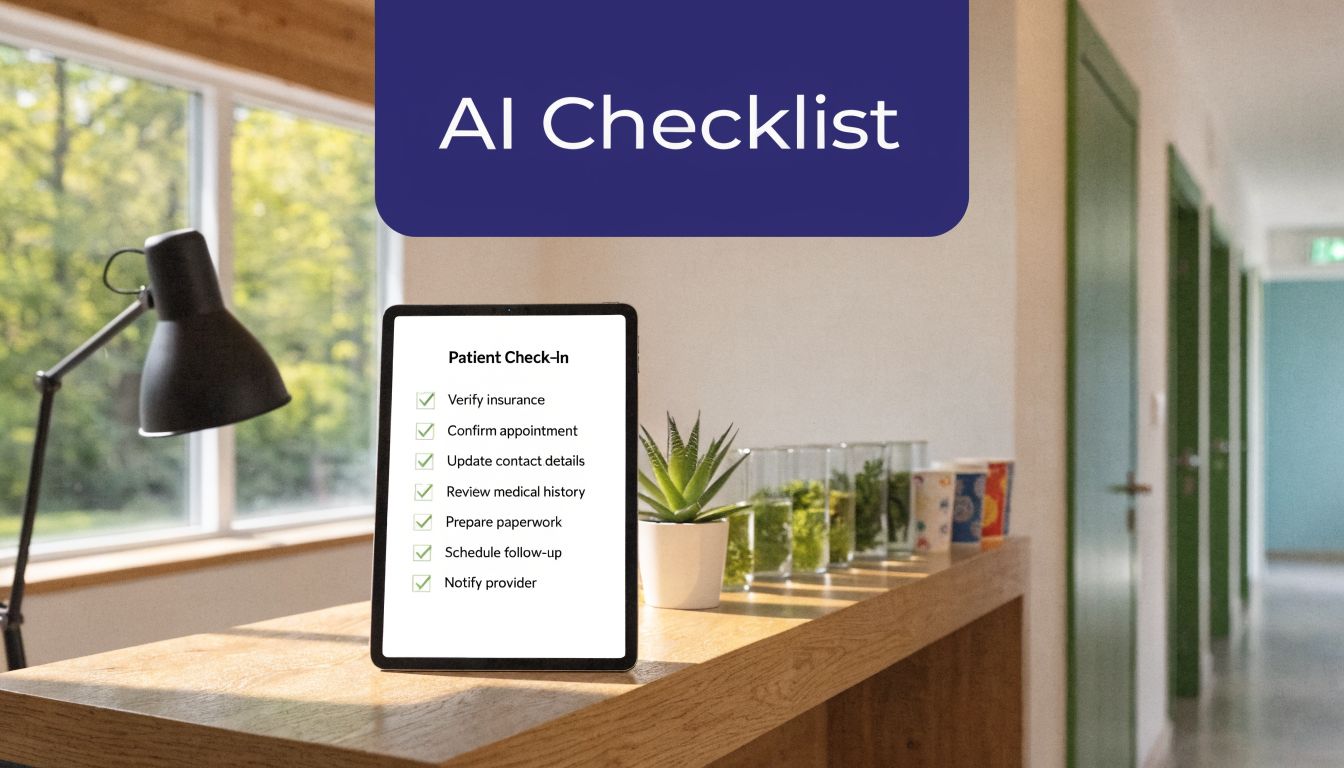
AMIA's best-practices guidance is useful here. It recommends validating models on large cohorts across specialties and settings, reviewing note quality with end users, ensuring traceability back to the original transcript for quality control, and requiring the originating clinician to review and accept the draft before it populates the chart, as laid out in AMIA's ambient listening guidance.
Start with the right pilot
Don't roll this out to every provider at once. Pick a pilot group that gives you honest feedback and a fair test.
- Choose willing clinicians: Don't force your most skeptical physician to be the first user unless they volunteered.
- Pick visit types with repeatable patterns: Follow-ups often give you a cleaner signal than highly complex consults.
- Include at least one demanding user: You need someone who will catch note quality problems early.
- Set a short review cadence: Weekly feedback beats waiting until the end of the pilot.
Evaluate the workflow, not just the transcript
A good pilot asks whether the tool fits the clinic day.
Look at how the draft appears in the EHR, where edits happen, whether staff need to touch the note, and how fast the provider can sign. If the physician has to jump between multiple windows or copy text manually, the tool may still create friction even if the transcript quality is decent.
For teams comparing options, it helps to review how the product connects with the record system before buying. This overview of EMR integration for AI workflow tools covers the practical integration questions worth asking in vendor calls.
Use a simple checklist before you buy
I'd keep the evaluation sheet plain:
- Does the note sound like your clinicians write?
- Can users trace the draft back to the source transcript when something looks wrong?
- How much editing happens after each visit?
- Does the tool fit your EHR workflow or fight it?
- What happens in noisy rooms, interpreter visits, and multi-person conversations?
One option practices may review in this category is Simbie AI, which offers voice-based healthcare automation and ambient documentation tied to clinical workflows. It belongs in the evaluation set with other vendors, especially if your team also wants phone and admin workflow automation, but the same standards apply. Test note quality, review burden, and EHR fit before making a larger commitment.
Standalone tool vs EHR-native which is the right choice
This decision has become more important over the last year because the market is changing fast. According to Signify Research's market analysis, Epic has integrated Nuance's DAX into workflows, Oracle Health launched a voice-first EHR driven by ambient listening, and this shift is forcing standalone vendors such as Abridge to show where they add value.
That changes the buying question. You're no longer asking only “Which ambient vendor is best?” You're asking whether a separate tool still makes sense if your EHR can deliver something good enough.
A side-by-side way to think about it
| Criterion | Standalone Ambient AI | EHR-Native Ambient AI |
|---|---|---|
| Integration depth | May need extra setup, interface work, or workflow mapping | Usually fits existing chart workflow more directly |
| Feature flexibility | Often stronger in specialty-specific note behavior or customization | Often more standardized across the health system |
| Vendor relationship | Separate support team and contract | Fewer vendors to manage if you already rely on the EHR |
| Pace of change | Can move faster on product features | May improve more slowly, but with tighter native fit |
| Buying logic | Better if ambient documentation is a strategic differentiator | Better if simplicity and consolidation matter more |
When standalone usually makes sense
A separate platform can make sense if your clinic needs specialty-specific behavior, stronger coding support, or more control over note style than the EHR offers. I'd also look harder at standalone products if your current EHR-native option exists mostly on paper but isn't mature in day-to-day use.
When waiting for the EHR may be smarter
If your practice is small or midsized and already stretched thin on IT support, native tools often win on operational simplicity. Fewer interfaces, fewer support tickets, and fewer workflow workarounds count for a lot.
This is also where many teams confuse EHR and EMR buying issues. If your leadership group still uses those terms interchangeably, this short guide on EHR vs EMR differences can help ground the discussion before vendor selection.
My rule is simple. If the native option removes enough charting pain and fits the visit workflow, “good enough” may be the right answer. If your clinic has specialty complexity that the embedded tool can't handle, a standalone product can still earn its place.
How to tell if ambient AI is actually working for you
Ambient listening ai should not be judged by the demo note. It should be judged by what happens after the first month, when the novelty wears off and people either keep using it or stop without making a fuss.
A useful reality check comes from emergency medicine. A 2025 quality-improvement study found that ambient AI scribes can reduce administrative burden, but they still require clinician review and editing. In one emergency department, only 11.2% of eligible encounters used the tool, according to JAMA Network Open's report. That tells me two things. First, the tool can help. Second, adoption is not automatic, and the best fit may be limited to certain visit types.
The metrics that actually matter
Don't rely on one success metric. Look at the pattern.
- Adoption by clinician: Who is using it consistently, and who tried it once and stopped?
- Adoption by visit type: Follow-ups, annuals, acute visits, interpreter encounters, and complex consults often produce different results.
- Edit burden: Are clinicians reviewing and signing, or rewriting large parts of the draft?
- Note quality: Audit a sample for completeness, accuracy, and consistency with clinician intent.
- Clinician sentiment: Ask whether the tool lowers stress or changes where the work happens.
Signs the tool is helping
You'll usually know it's working when clinicians stop talking about the software and start talking about time. They finish notes earlier. They feel less rushed. They stay in the conversation during visits. The staff stop chasing unsigned charts late in the day.
Signs the burden has just moved
These are the warning signs I watch for:
- The draft looks polished but needs heavy cleanup
- Only one or two clinicians use it regularly
- Use drops in complex visits
- Providers trust it too much and miss note errors
- The tool adds extra review clicks without removing writing time
The wrong ambient ai deployment doesn't remove admin work. It changes admin work into supervision and cleanup.
That's why I tell practice managers to review the first months as closely as they review the first week. If adoption stays narrow and editing stays heavy, pause and fix the workflow. You may need better templates, clearer visit-type targeting, stronger clinician training, or a different product path entirely.
If your team is evaluating ambient documentation and broader voice automation together, Simbie AI is one option to review. It focuses on healthcare voice workflows such as documentation support, intake, scheduling, refills, and EMR-connected admin tasks, so it's worth a look if you want to assess ambient listening ai as part of a larger operational redesign rather than as a standalone note tool.