
Meta description: What is patient pre-charting? Learn how better chart prep reduces admin drag, improves visit readiness, and supports safer, smoother practice workflows.
If your physicians are opening Athenahealth, eClinicalWorks, or EMA ModMed before the first patient arrives and already feeling behind, the problem usually starts before the visit, not during it. What is patient pre-charting really about? It's the operational work of getting a patient encounter ready so the clinician isn't hunting through labs, medications, and old notes while the patient waits. For independent dermatology, gastroenterology, and internal medicine practices, that matters clinically, but it also matters financially because wasted prep time compounds across the whole day.
The Core Process of Patient Pre-Charting
Patient pre-charting is the disciplined review of the chart before the visit starts. The goal is simple. Walk into the room with the patient's current story already in focus.
That means reviewing recent vitals, labs, imaging, prior notes, medication changes, allergies, and anything that needs follow-up. In practice, it functions a lot like a pre-flight check. The visit goes better when the clinician already knows what changed, what still needs attention, and where the likely sticking points are.
What the review usually includes
At the mechanical level, pre-charting is not glamorous work. It is repetitive, detail-heavy, and necessary.
A solid pre-chart review usually includes:
- Recent results: lab trends, pathology, imaging, and any new reports since the last appointment
- Medication review: active meds, refill history, changes from specialists, and anything that needs reconciliation
- Problem list check: what still belongs there, what has resolved, and what may be missing
- Allergy verification: especially when the upcoming visit could lead to treatment changes
- Visit context: prior assessment and plan, referrals, pending tasks, or follow-up items
The workflow burden is real. Physicians spend approximately 3 minutes per patient on pre-charting, moving across four main EHR screens for results, summaries, flowsheets, and chart review, and that prep work accounts for 50% of the total time spent getting ready for an encounter, according to peer-reviewed research on EHR pre-charting workflow.
Why it matters before the patient walks in
Those few minutes shape the rest of the encounter. Good pre-charting reduces in-visit chart chasing, cuts down on missed details, and makes it easier to focus on the patient rather than the screen.
Practical rule: Pre-charting should prepare the clinician to verify and act, not force them to reconstruct the whole case in real time.
For practices trying to tighten intake and prep before the schedule starts, a structured AI pre-visit questionnaire workflow can help gather cleaner information upstream so the provider's review is faster and more targeted.
What doesn't work is treating pre-charting like optional admin cleanup. When it gets skipped, the physician pays for it during the visit, after clinic, or both.
Key Components and Who Is Involved
The most efficient pre-charting process is shared work. If the physician is the only person touching chart prep, the practice is using its most expensive clinical time for tasks that can often be standardized earlier.
In a well-run office, pre-charting starts before the provider opens the chart. Support staff handle the first pass. The clinician handles interpretation and decision-making.

The chart scrub comes first
The first layer is the chart scrub, a process where a team member checks the chart ahead of the visit for missing information and overdue care items.
A key operational detail is timing. A team member checks for missing data and flags overdue preventive care 1 to 2 days before the visit, allowing MAs to act on care gaps using standing orders during rooming, as described in this overview of chart scrub workflow.
That sounds basic, but it changes the day. Instead of discovering a missing A1c, overdue screening, or absent outside record while the provider is in the room, the practice catches it early enough to do something useful.
The clinician's part is synthesis
Once the scrub is done, the provider's job is different. The physician is not searching for loose pieces. The physician is reviewing a chart that has already been cleaned up enough to support judgment.
That usually means:
- Confirming the clinical picture: what changed since last visit and what needs follow-up now
- Setting the visit agenda: medication discussion, symptom reassessment, procedure follow-up, test review, or preventive needs
- Flagging likely actions: orders, counseling, referrals, refill decisions, or monitoring
A physician should spend prep time thinking, not scavenging.
For practices comparing workflow support options, it also helps to understand where pre-charting ends and documentation support begins. This medical scribe overview is useful because many owners blur those functions together, even though they solve different problems.
Shared ownership works better than heroic effort
Here is the practical division of labor:
| Role | Primary contribution to pre-charting |
|---|---|
| MA or nurse | Chart scrub, missing data checks, preventive care flags, rooming follow-through |
| Front office or intake staff | Insurance confirmation, demographics, external paperwork routing |
| Physician or APP | Clinical synthesis, prioritization, and visit planning |
What fails is an informal process where everyone assumes someone else reviewed the chart. Standard ownership beats good intentions every time.
The Benefits of Effective Pre-Charting
When pre-charting is done well, the appointment feels calmer. The clinician enters with context. The staff knows what to watch for. The patient gets a more focused conversation.
The clinical value is straightforward. Medication lists are more accurate. Allergies are easier to verify. Follow-up on labs and preventive care is less likely to slip. That is not just cleaner workflow. It's safer care.
The provider benefit is mental bandwidth
The hidden gain is cognitive relief. A physician who is not toggling through old notes and test results during the visit has more attention left for the patient in front of them.
That matters for retention and day-to-day sustainability in smaller practices. Protecting Doctors' Time for Doctoring isn't a slogan if your physicians are still carrying chart prep and chart completion into nights and weekends.
There is also direct evidence that automation can improve the prep phase itself. In a study cited by the American Academy of Family Physicians, doctors using automated pre-charting summaries saved an average of 9 minutes of preparation time per visit and reported a 45% increase in feeling prepared for the encounter, as summarized in this review of automated pre-visit summaries.
The business benefit is less obvious, but just as real
For an independent practice, better pre-charting shows up in operations before it shows up in any dashboard. The day runs with fewer interruptions. Staff spends less time chasing basic information. Physicians are less likely to fall behind because of avoidable chart friction.
Better chart prep doesn't create revenue by itself. It protects capacity that poor workflow quietly destroys.
That is why pre-charting should be treated as a business process, not just a physician habit.
Common Challenges and Compliance Risks
Manual pre-charting breaks down for two reasons. First, the information is scattered. Second, people try to save time in ways that create billing and compliance risk.
Both are common in community practices. Neither gets enough attention when people talk about efficiency.
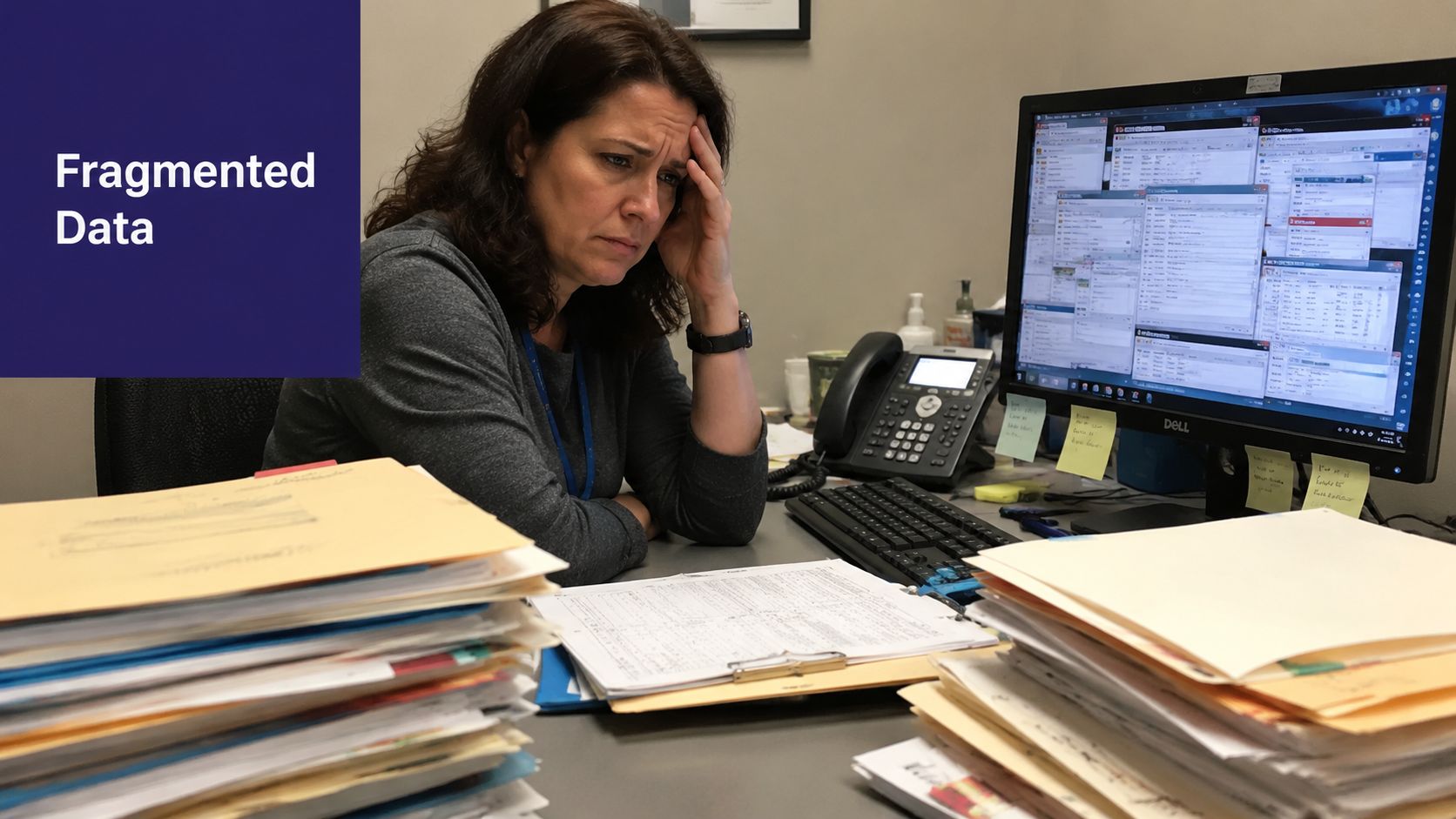
Fragmented data slows everything down
Most physicians don't pre-chart from one clean view. They piece it together from chart review, lab tabs, scanned PDFs, specialist notes, refill records, and whatever landed in the fax queue. In systems like Athenahealth, Epic, DrChrono, gGastro, or EMA ModMed, the issue usually isn't that data is absent. It's that the data is spread out.
That operational drag has consequences:
- More backtracking: staff and physicians reopen the same records repeatedly
- Higher error risk: medication discrepancies and missed follow-up items are easier to overlook
- Longer visit prep: clinicians spend time retrieving information instead of evaluating it
The compliance line is easy to cross
There is also a distinction many practices miss. Reviewing objective chart information before the visit is fine. Writing subjective history into the note before seeing the patient is not.
A documented phrase like "patient feels better" entered before the encounter can become a serious audit problem because the provider has not yet obtained that information directly. According to this discussion of pre-charting compliance risk, auditors flag this type of pre-documentation as fraud, and an estimated 12% to 15% of denied claims in internal medicine stem from this kind of "unobtainable" pre-visit documentation.
If the patient hasn't said it yet, it doesn't belong in the subjective part of the note.
That line matters even more when practices add new automation tools. If the workflow helps assemble chart data, good. If it encourages staff or providers to insert unverified symptoms into the HPI before the visit, that is not efficient. It's risky.
For teams reviewing policy and controls around this process, a practical HIPAA compliance checklist for healthcare AI workflows can help frame where documentation boundaries and oversight need to be explicit.
Streamlining Pre-Charting with AI and Automation
The answer to manual pre-charting is not asking physicians or MAs to click faster. The better answer is to reduce the amount of manual retrieval the workflow requires in the first place.
That is where automation helps, especially in smaller practices that do not have layers of support staff. A virtual assistant can gather what is already in the record, organize it, and put it where the care team can use it.
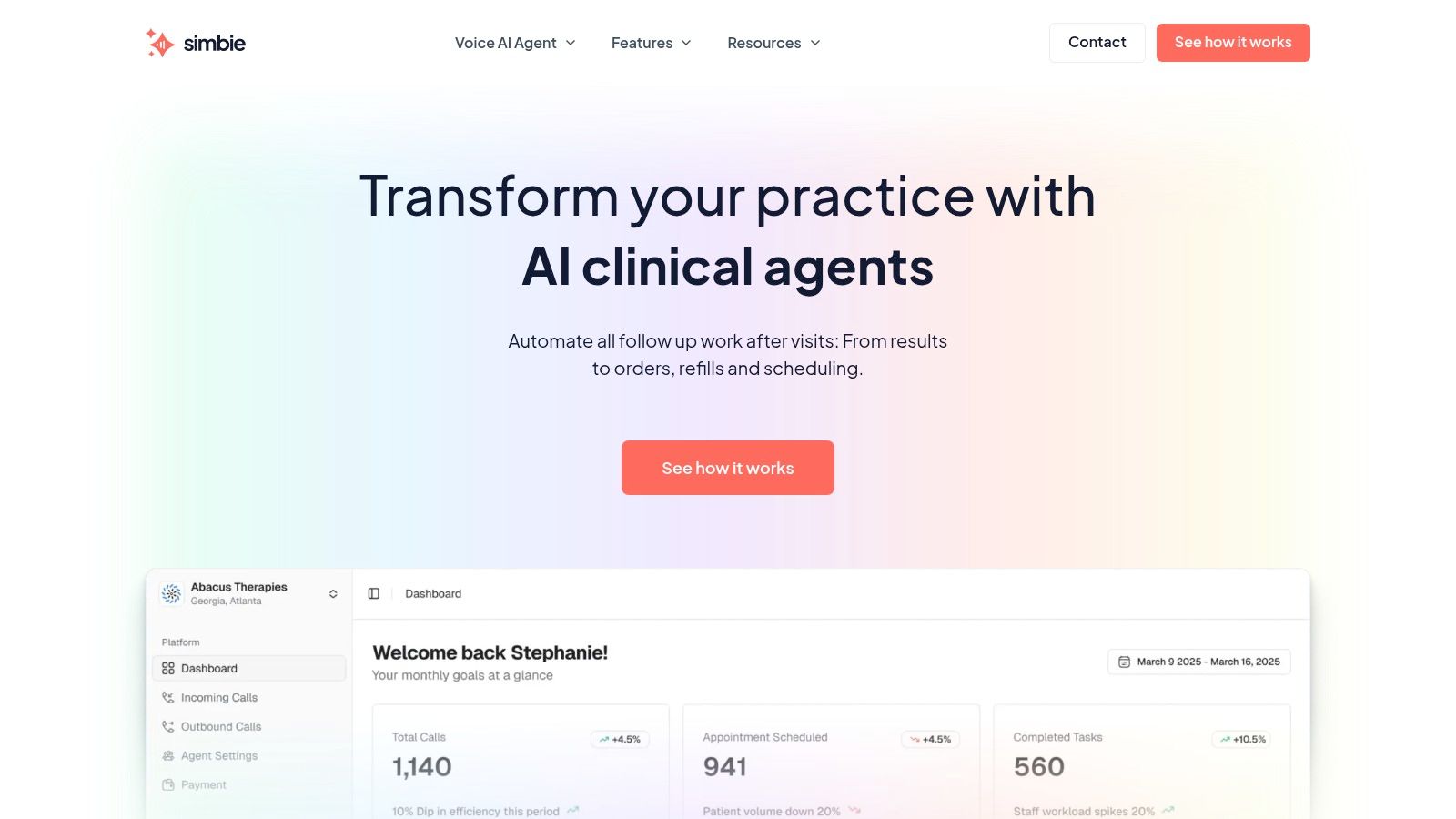
What automation should actually do
The useful version of AI in pre-charting is not "write the visit before it happens." It is much more practical than that.
According to this overview of virtual assistants in chart prep, virtual assistants can automate pre-chart preparation by reviewing previous notes, gathering recent lab results, confirming insurance details, and organizing external documents into the correct EHR section for immediate physician access.
Those functions solve real bottlenecks in community practice:
- Data assembly: pulling together prior notes, recent results, and outside records
- Administrative cleanup: confirming demographics, insurance, and documentation placement
- Staff support: reducing repetitive prep work before rooming starts
That is why the most credible model is AI medical staff, not a narrow AI receptionist pitch. The practices getting the most value use automation across both layers of work. Front-office operations like scheduling, intake, calls, refills, and prescription renewals. Clinical support work like test result review, patient education, adherence check-ins, pre-op and post-op calls, and chronic disease management campaigns.
Integration matters more than flashy output
If the tool doesn't fit the systems your staff already uses, the workflow gets worse. For smaller specialty groups, that means practical integration with eClinicalWorks, gGastro, EMA ModMed, Athenahealth, Epic, and DrChrono, not another disconnected dashboard.
Owners evaluating options should also understand the larger software stack around the clinic. This guide to practice management systems is useful context because pre-charting problems often sit at the intersection of scheduling, intake, documentation routing, and billing operations, not just the chart itself.
What good automation looks like in practice
A workable setup usually has three traits.
First, it runs continuously. If inbound calls, refill requests, patient questionnaires, and external documents arrive after hours, the system should still capture them. That is where 24/7 availability and 100% of inbound calls captured matter operationally, because chart prep quality depends on information arriving cleanly before the visit.
Second, it respects compliance boundaries. The system should support review and verification, not invent history or fill in subjective symptoms.
Third, it reduces staffing strain across the whole office. The bigger ROI often comes from combining pre-visit support with phone, intake, and follow-up automation. In that model, practices can see up to 60% reduction in front-office staff costs while giving staff better control over exceptions and handoffs. The strongest platforms also pair those gains with HIPAA-compliant controls and SOC 2 Type 2 certification, because workflow speed is not worth much if the security posture is weak.
For practices exploring phone-based workflow automation tied to clinical operations, this voice AI agent overview shows how the front office and pre-visit layers can reinforce each other instead of running as separate systems.
Best Practices and Measuring Success
The practices that improve pre-charting do not start with a giant transformation plan. They start by removing variation. If every MA, nurse, and provider preps the chart differently, the process won't scale and it won't be measurable.
Start with a standard checklist
The fastest fix is a repeatable checklist that applies to every visit type, with a few specialty-specific additions for dermatology, gastroenterology, or internal medicine. Keep it short enough to ensure consistent use.
A practical checklist usually includes:
- Verify the essentials: active medications, allergies, problem list, recent results, outside notes
- Check missing items early: referrals, consent forms, pathology, or imaging that should already be in the chart
- Flag visit priorities: follow-up actions, preventive gaps, refill needs, and anything likely to change today's plan
Standard work reduces friction because people stop deciding from scratch on every chart.
Delegate the right work to the right layer
The initial scrub should not consume physician time if staff or automation can do it first. Physicians should review a prepared chart, not build one from fragments.
That is where shared systems and clear documentation rules matter. For teams building internal playbooks, these knowledge management best practices are helpful because pre-charting improves when the practice has one consistent source of workflow rules rather than scattered tribal knowledge.
A stronger setup also depends on connected systems. Deep EMR integrations are what prevent staff from re-entering the same information across scheduling, messaging, and chart prep workflows.
Measure outcomes you can actually act on
Do not overcomplicate the scorecard. The best metrics are the ones your office can observe weekly and discuss in operations huddles.
Use a simple review table like this:
| Operational area | What to watch |
|---|---|
| Provider prep burden | Average daily time spent on chart prep, plus whether prep spills into off-hours |
| Chart quality | Medication reconciliation issues, missing documentation, and avoidable follow-up corrections |
| Visit readiness | Whether care gaps, test results, and external records are available before rooming |
| Staff strain | Volume of manual calls, intake tasks, and refill follow-up still handled by front-desk staff |
You should also ask physicians directly whether the process feels lighter. A cleaner schedule, fewer interruptions, and less end-of-day cleanup are often the earliest signs that the workflow is finally working.
For independent practices, the long-term win is not just faster chart prep. It is a more stable operating model, one that supports staff retention, cleaner patient access, and more reliable throughput without forcing clinicians to carry every administrative task themselves.
If you're evaluating AI for your practice and want to see how clinically trained, HIPAA-compliant automation can support both front-office work and clinical workflow, including pre-visit preparation, calls, intake, refills, and follow-up, take a look at Simbie AI and see it in action at book a demo.