
If you're running a small dermatology, GI, or internal medicine practice, concurrent review usually shows up at the worst possible time. Your staff is already juggling phones, refill requests, schedule gaps, portal messages, and payer follow-ups, then another request lands asking for updated clinical information while care is still underway. That's where what is concurrent review stops being a textbook question and becomes an operations problem.
For independent practices, especially outpatient groups, concurrent review is less about theory and more about keeping treatment moving without coverage gaps, denials, or staff burnout. Most explainers focus on hospital admissions. Smaller practices need the outpatient reality. Here's the practical version, what concurrent review is, how it differs from other review types, where it breaks down, and how to run it better.
Meta description: Learn what concurrent review is and how independent practices can manage it better to protect revenue, reduce denials, and keep care moving.
How Concurrent Review Differs from Prospective and Retrospective
The easiest way to understand concurrent review is to place it next to the other two review types. Think of utilization review as before, during, and after care.
Prospective review happens before treatment starts. That's the world of prior authorization.
Concurrent review happens while treatment is actively being delivered.
Retrospective review happens after services have already been provided.
According to Solum's concurrent review definition, concurrent review is a utilization management process that occurs mid-treatment, is initiated on the first business day after hospital admission notification is received, and continues throughout the stay to make sure the patient receives the right level of care at the right time.
That hospital-based definition matters, but the operational lesson matters more for a private practice. Concurrent review is the only review type that can still change the course of care while the patient is in treatment. That makes it uniquely important for avoiding interruptions, correcting documentation gaps early, and preventing the kind of denials that show up after the work is done.
Utilization review types at a glance
| Review Type | Timing | Primary Purpose | Example |
|---|---|---|---|
| Prospective | Before care starts | Confirm coverage and medical necessity in advance | Prior authorization for a procedure, infusion, imaging study, or therapy course |
| Concurrent | During active care | Reassess whether ongoing care remains medically necessary and appropriate | Mid-treatment review of continued services, active facility care, or ongoing ambulatory treatment |
| Retrospective | After care ends | Evaluate whether delivered care met coverage and documentation requirements | Post-service claim review after treatment is complete |
Why the during phase matters most
Prospective review protects the starting line. Retrospective review judges the finish. Concurrent review protects everything in the middle.
That middle is where smaller practices lose time and money. A treatment plan can be clinically appropriate and still run into trouble if your team misses a payer checkpoint, submits incomplete updates, or doesn't respond fast enough when new documentation is requested.
Practical rule: If prior authorization gets care started, concurrent review is what keeps authorized care from quietly falling apart midway through treatment.
This is also why practices that understand how prior authorization works in healthcare tend to perform better with concurrent review. The two processes are related, but they solve different problems. Prior auth gets approval to begin. Concurrent review protects continuation.
The Typical Concurrent Review Workflow and Key Players
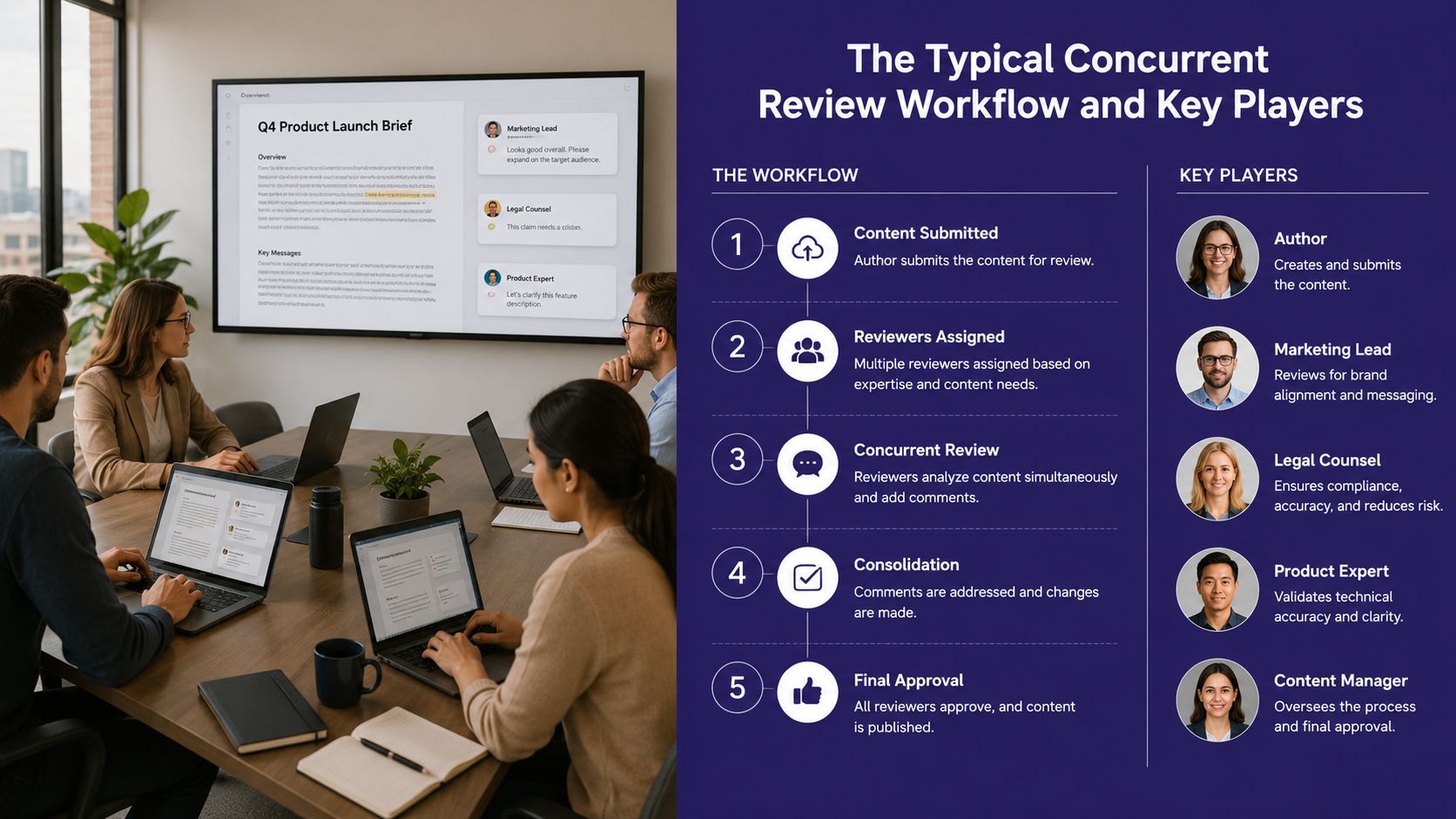
Concurrent review feels chaotic when nobody owns the sequence. In reality, it follows a fairly predictable chain of events. Once your team sees the handoffs clearly, the process gets easier to control.
What usually triggers the review
The trigger is ongoing care. In inpatient settings, that often means admission and continued stay review. In outpatient settings, it may mean extending previously approved treatment, validating continued medical necessity, or submitting updated clinical information partway through a course of care.
The payer is not just asking whether care was reasonable at the start. They're asking whether the current level, frequency, intensity, and duration still make sense based on the patient's condition and response so far.
The review itself commonly relies on standardized criteria. Health Net's utilization management guidance notes that the process uses nationally recognized criteria such as InterQual Acute Care Guidelines, Prest, and ASAM, along with medical evidence, to justify admission, continued stay, and quality of care.
The key players
The provider team
Your side usually includes front-desk or authorization staff, an MA or nurse, and the treating clinician. In a small practice, one person may cover several of those roles. That's part of the problem.
The provider team gathers the updated chart notes, treatment plan details, progress documentation, and any payer-specific forms. If the documentation is vague, generic, or inconsistent with the request, the review slows down fast.
The payer reviewer
This is often a utilization management nurse or reviewer working from payer criteria. Their job is to determine whether the requested continuation of care meets medical necessity rules and fits the approved level of service.
They are looking for alignment. Diagnosis, severity, treatment response, current need, and next-step plan all need to tell the same story.
The patient
Patients are rarely part of the technical submission, but they absorb the consequences. If the review drags, they may face confusion about appointments, treatment continuity, or coverage responsibility. In private practice, that often lands back on your phones.
The best-run practices don't treat concurrent review as an isolated payer task. They treat it as a patient access task with clinical and revenue consequences.
A practical workflow that works
- Identify the checkpoint early: Don't wait until the last covered day to notice ongoing review is due.
- Pull the current clinical story: Notes, treatment response, current symptoms, and rationale for continuation should be current and internally consistent.
- Match the submission to payer criteria: Generic chart dumping doesn't work well.
- Send and document everything: The submission date, who sent it, what was sent, and what was requested back.
- Track the response loop: Approval, modification, delay, denial, or request for more information.
- Route the decision correctly: Scheduling, billing, and clinical staff all need the answer.
Practices that map this into their daily operations do better than those relying on memory, sticky notes, and call-backs. If your team is still patching this together manually, a structured approach to healthcare workflow automation can reduce missed steps without changing your clinical judgment.
Navigating Compliance and Deadlines in Concurrent Review
Concurrent review has a clock on it. Sometimes several clocks.
That's the part many independent practices underestimate. The clinical case may be strong, but if the request goes in late, if the extension is submitted after the cutoff, or if staff misses a communication window, reimbursement risk rises quickly. In these instances, operational discipline matters as much as documentation quality.
The 24-hour clock and the 5-day window
In regulated settings like California workers' compensation, the deadlines are explicit. DaisyBill notes that concurrent review decisions are legally required within 5 business days after receipt of a completed concurrent Request for Authorization, and the claims administrator must communicate approve, modify, delay, or deny decisions to the requesting physician within 24 hours through phone, fax, or email, as outlined in California workers' compensation concurrent review rules.
Even if your practice doesn't live in that exact framework, the lesson is the same. Once a concurrent review request is active, everyone is operating on short turnaround expectations.
The 2:00 PM cutoff problem
Some organizations make the deadline even tighter. The Michigan behavioral health guidance states that providers must submit extension requests by 2:00 PM on the last covered day of the approved authorization, and the management organization is required to make a medical necessity determination within three hours of receiving the request, based on the MCCMH concurrent review requirements.
For a small practice, that's not a paperwork detail. That's a same-day operations issue. If the treating clinician is in procedures, the MA is rooming patients, and the front office is buried in calls, a missed cutoff can happen for a very ordinary reason.
Operational reality: Most concurrent review failures in private practice don't start with bad medicine. They start with timing, handoffs, and incomplete follow-through.
What compliance looks like in a small office
A lot of independent groups hear “compliance” and think policy binder. Concurrent review compliance is more practical than that. It means your team can answer four questions at any point:
- What is due today
- Who owns it
- What clinical information is still missing
- When the payer's response deadline expires
If your process can't answer those four in under a minute, it's fragile.
For practice leaders trying to tighten the broader compliance picture around workflow, documentation, and payer-facing processes, RiverAxe's guide to healthcare regulations is a useful plain-language reference.
Why Concurrent Review Is a Challenge for Independent Practices
A five-provider GI clinic does not have a utilization management department. Neither does most dermatology or internal medicine groups. They have a front office, a billing team that's already stretched, a nurse or MA trying to keep clinicians moving, and too many payer rules to keep straight.
That's why concurrent review hits independent practices differently. The process may be the same on paper, but the staffing reality is not.

The outpatient blind spot
Most published explanations lean hard on inpatient admissions. That leaves smaller ambulatory practices with guidance that doesn't match their actual work.
WPS reports that 42% of outpatient authorization denials occur during ongoing ambulatory care where concurrent review is critically underutilized, according to its discussion of concurrent review in outpatient settings. That single point explains why so many private practices feel blindsided. The denials are happening during treatment, but the playbooks they're given are built around hospitals.
What it looks like on the ground
In a typical small specialty practice, three active reviews can create a full afternoon of disruption.
One payer wants updated progress notes. Another needs a phone review. A third asks for additional clinical justification that isn't documented clearly in the note. Meanwhile, the same staff handling those requests is also taking patient calls, managing refill messages, checking patients in, and trying to fill next week's cancellations.
The work doesn't fail because staff doesn't care. It fails because concurrent review competes with every other urgent thing in the office.
The trade-offs smaller groups live with
- Phone dependence: Too many payer interactions still happen by call, fax, and portal message, which creates fragmented documentation.
- Role overload: The person best equipped to manage deadlines is often also covering unrelated front-office tasks.
- EMR friction: Helpful information may be in eClinicalWorks, Athenahealth, Epic, DrChrono, gGastro, or EMA ModMed, but not gathered into a clean submission packet.
- Clinical interruption: When documentation gaps appear late, physicians get pulled back into administrative cleanup.
When concurrent review is weak, the practice pays twice. First in staff time, then in delayed or disputed reimbursement.
How AI Automation Supports the Concurrent Review Process
Independent practices usually don't need another dashboard. They need fewer dropped handoffs, fewer missed calls, cleaner documentation, and a reliable way to keep payer communication moving while staff handles patients in front of them.
That's where AI automation can help, if it's used as workflow support instead of hype.
Where automation actually helps
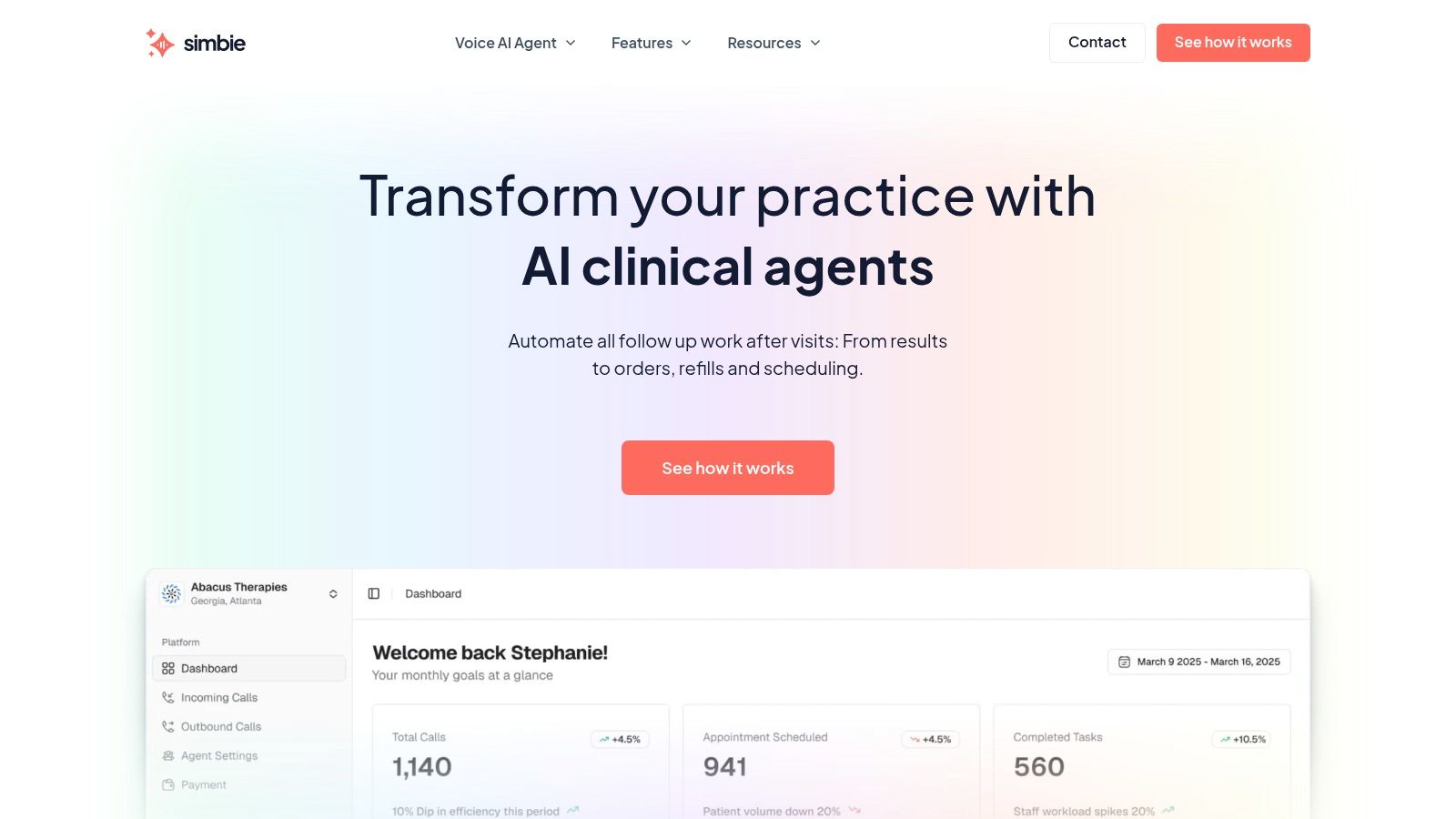
The strongest use cases are operational, not diagnostic. AI can support concurrent review by handling repetitive communication, documenting interaction history, and keeping tasks from disappearing between phone calls and charting.
For example, AI medical staff tools can:
- Capture every inbound call: That matters when staff can't afford to miss a payer callback tied to an active review.
- Handle outbound follow-up: Ongoing status checks, document requests, and authorization-related communication don't always require a human to dial manually.
- Write back into the chart: When payer communication is logged cleanly in systems such as eClinicalWorks, Athenahealth, Epic, DrChrono, gGastro, or EMA ModMed, your team has a better audit trail.
- Support adjacent work: Scheduling, intake, refills, prescription renewals, test result review, patient education, adherence check-ins, pre-op and post-op calls, and chronic disease outreach all compete with utilization work for the same staff time.
That broader support matters. If your front office is drowning in routine calls, it won't perform well on concurrent review deadlines.
What good implementation looks like
This is not about replacing clinicians. It's about protecting staff capacity and Protecting Doctors' Time for Doctoring.
The practical model is human-in-the-loop. AI handles the repetitive layer. Staff supervises, intervenes when needed, and escalates true clinical or payer exceptions. That approach is more believable, safer operationally, and much more useful in a private practice than grand claims about full autonomy.
A good overview of the broader concept is Doczen's article on AI-powered process optimization, especially if you're comparing where automation helps most in repetitive administrative workflows.
What to look for before adopting anything
Not all healthcare AI is built for real practice operations. For concurrent review support and related workflows, the basics matter:
- Administrative and clinical coverage: Front-office support alone isn't enough if your team also needs help with refill coordination, chart-linked follow-up, and patient communication.
- Security standards: HIPAA compliance is table stakes. SOC 2 Type 2 matters too.
- Call reliability: 24/7 availability, zero hold times, and 100% of inbound calls captured are operationally meaningful in busy practices.
- EMR integration: If it can't connect into systems your team already uses, it creates more work.
- Real cost pressure relief: Up to 60% reduction in front-office staff costs can be meaningful for independent groups, but only if the workflow quality is there.
If you're evaluating how automation can reduce prior auth and concurrent review burden together, it helps to compare tools that also support automated prior authorization workflows. In practice, those processes often overlap operationally even when the payer rules differ.
Best Practices for Mastering Concurrent Review in Your Practice
Concurrent review gets easier when it stops being a scramble and starts being a routine. The practices that handle it well are not necessarily bigger. They're more consistent.
A 2016 AHA case study, referenced in this MedCity News summary of concurrent review, found that a hospital shifting to concurrent review improved compliance and patient care outcomes, and those gains were maintained over an entire fiscal year. The setting was hospital-based, but the operational lesson still applies to outpatient groups. Real-time review works better than after-the-fact cleanup.
Build a process your staff can actually follow
Start with the simplest version that will hold under pressure.
- Create a payer cheat sheet: Keep one living document with each major payer's review trigger, submission route, required clinical elements, and escalation path.
- Name one owner: Even in a small office, one person should track active concurrent reviews and deadlines. Shared ownership often turns into no ownership.
- Standardize the clinical packet: Use a repeatable template for progress summary, treatment response, current need, and rationale for continuation.
- Document every contact: Date, time, payer rep, method, status, and next step. If it isn't logged, it didn't happen.
- Escalate early: If physician input is likely to be needed, don't wait until the last covered day.
Tighten the handoffs
A lot of denials begin with internal misfires. The physician thinks the office sent the update. The office thinks nursing added the note. Billing assumes authorization was extended. Scheduling books the visit without knowing the review is still pending.
That's avoidable.
A workable concurrent review process is boring on purpose. It should feel repetitive, visible, and hard to derail.
Use short daily check-ins for any active review that could affect the current week's patient schedule. In small groups, that can be a five-minute huddle. It doesn't need to be complicated. It needs to be reliable.
Use technology where repetition is the problem
Don't waste staff judgment on tasks that are mostly tracking, calling, routing, and documenting. Save human attention for the parts that require clinical reasoning, payer escalation, or patient counseling.
For most independent practices, the best technology stack supports three things:
- Task visibility, so no active review disappears.
- Communication capture, so call and message history is easy to find.
- EMR-linked documentation, so your team isn't retyping the same story into multiple places.
That's especially helpful when your office runs in eClinicalWorks, Athenahealth, gGastro, EMA ModMed, Epic, or DrChrono and already has enough fragmented workflows to manage.
Keep the goal where it belongs
Concurrent review is not about pleasing payers. It's about preserving continuity of care, protecting reimbursement, and keeping your staff from drowning in avoidable administrative churn.
If your current process depends on memory, heroics, and whoever happens to answer the phone first, it's time to tighten it up.
If you're evaluating AI for your practice, especially for phone coverage, documentation, and the operational work around utilization management, you can see Simbie AI in action at book a demo.