
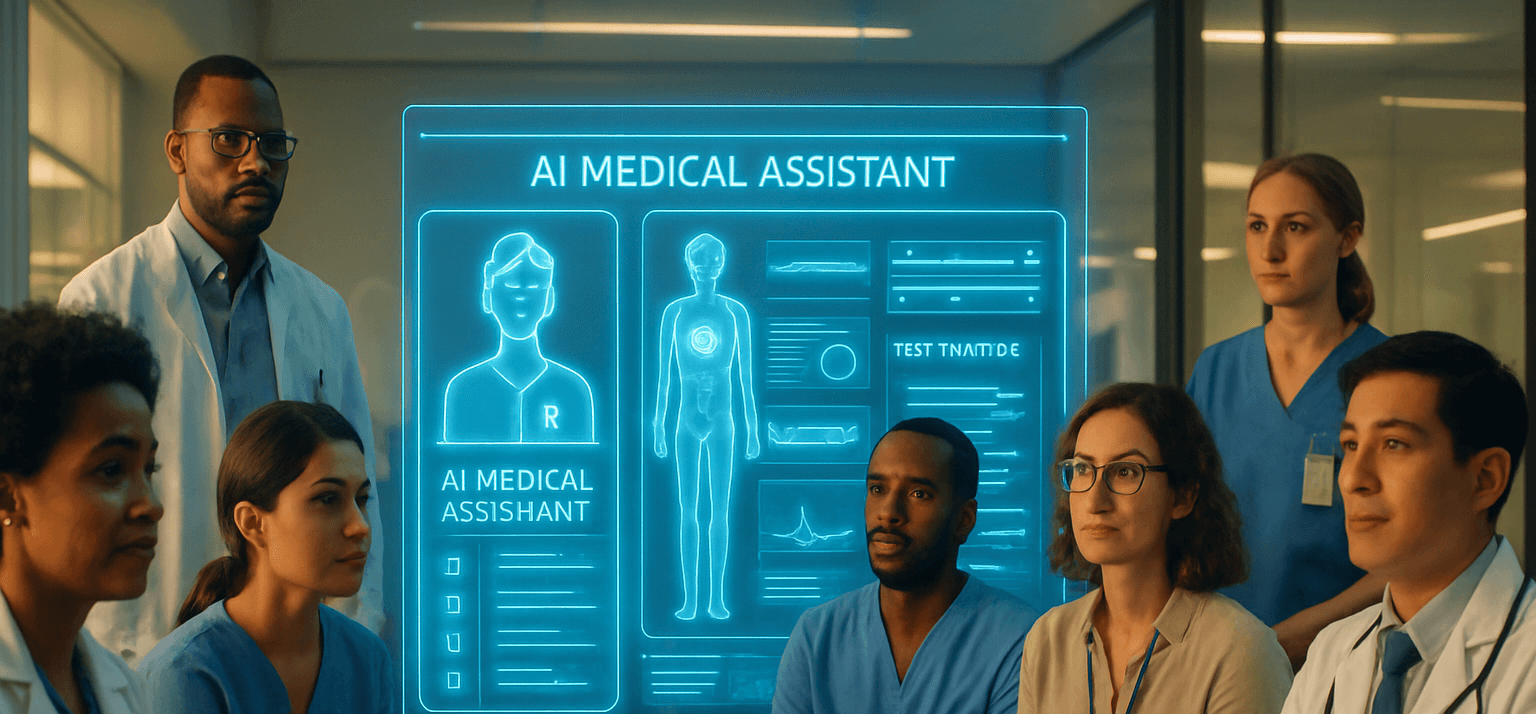
Introduction: The Evolving Role of AI in Healthcare
The integration of Artificial Intelligence (AI) into healthcare is no longer a futuristic concept; it is a present-day reality transforming medical practices worldwide. From streamlining administrative tasks to enhancing diagnostic capabilities, AI medical assistants are poised to revolutionize how healthcare is delivered. However, the true potential of these advanced tools can only be realized when human and artificial intelligence work in seamless synergy. This requires a thoughtful and strategic approach to training medical staff, ensuring they are not only proficient in using AI tools but also comfortable and confident in their evolving roles. This blog post will delve into the best practices for training your staff to work effectively alongside AI medical assistants, fostering a collaborative environment that maximizes efficiency, improves patient satisfaction, and ultimately, elevates the standard of care.
Understanding the ‘Why’: The Benefits of AI Medical Assistants
Before diving into the specifics of training, it’s crucial for staff to understand the compelling reasons behind integrating AI medical assistants into their practice. AI is not intended to replace human professionals but rather to augment their capabilities, freeing up valuable time and resources. The benefits are multifaceted, impacting various aspects of a medical practice:
Enhanced Efficiency and Workflow Streamlining: AI medical assistants excel at automating repetitive and time-consuming administrative tasks. This includes scheduling appointments, managing patient inquiries, handling prescription refills, and updating electronic health records (EHRs). By offloading these duties, human staff can dedicate more time to direct patient care, complex problem-solving, and strategic initiatives. This leads to a more efficient workflow, reduced administrative burden, and ultimately, a more productive practice [1].
Improved Patient Experience and Satisfaction: AI can significantly enhance the patient journey. For instance, AI-powered virtual assistants can provide instant responses to patient queries, offer 24/7 availability for scheduling, and send automated reminders, leading to reduced wait times and improved communication. This responsiveness and accessibility contribute to higher patient satisfaction and a more positive healthcare experience [2].
Reduced Burnout and Increased Staff Morale: The healthcare industry is notoriously prone to staff burnout, largely due to heavy workloads and administrative overhead. By automating routine tasks, AI medical assistants can alleviate some of this pressure, allowing staff to focus on more engaging and rewarding aspects of their jobs. This reduction in administrative burden can lead to improved job satisfaction, reduced stress, and higher staff retention rates [3].
Data-Driven Insights and Decision Support: AI systems can process vast amounts of data quickly and accurately, identifying patterns and providing insights that might be missed by human analysis alone. This capability can support clinical decision-making, improve diagnostic accuracy, and personalize treatment plans. While the ultimate decision rests with the human clinician, AI acts as a powerful tool for informed choices.
Cost Savings and Revenue Optimization: The efficiency gains and reduction in administrative overhead directly translate into significant cost savings for medical practices. By optimizing resource allocation and reducing the need for manual processing, AI can contribute to a healthier bottom line. Furthermore, improved patient satisfaction and streamlined operations can lead to increased patient volume and revenue generation.
Scalability and Accessibility: AI medical assistants offer scalability that human staff cannot. They can handle a high volume of tasks simultaneously and are available around the clock, making healthcare services more accessible to patients, especially in areas with limited medical resources.
Understanding these tangible benefits is the first step in fostering staff buy-in and enthusiasm for AI integration. When staff members recognize AI as a valuable partner rather than a threat, they are more likely to embrace the training and actively participate in the successful adoption of these technologies.
References
[1] Chase Clinical Documentation. (2024, June 4). Best Practices for Integrating Virtual Medical Assistants into Healthcare Teams. Available at: https://www.chaseclinicaldocumentation.com/best-practices-for-integrating-virtual-medical-assistants-into-healthcare-teams [2] Simbo.ai. (2025, July 22). Preparing for the Future: How Medical Administrative Assistants Can Leverage AI Training to Advance Their Careers. Available at: https://www.simbo.ai/blog/preparing-for-the-future-how-medical-administrative-assistants-can-leverage-ai-training-to-advance-their-careers-879161/ [3] AMA. (2024, June 8). AI & Your Medical Staff: The Good, The Bad & The Unknown. Available at: https://www.ama-assn.org/system/files/omss-ai-medical-staff.pdf
Addressing Staff Concerns: Overcoming Resistance to Change
Introducing new technology, especially one as transformative as AI, can often be met with apprehension or resistance from staff. These concerns are natural and typically stem from a fear of the unknown, job displacement, or the perceived complexity of learning new systems. Addressing these concerns proactively and empathetically is paramount for successful AI adoption. Ignoring them can lead to decreased morale, reduced productivity, and ultimately, a failed implementation.
Common Staff Concerns and How to Address Them:
1.Fear of Job Displacement: This is perhaps the most significant concern. Staff may worry that AI medical assistants will take over their roles, leading to job losses. It is crucial to communicate clearly and repeatedly that AI is a tool designed to assist and augment human capabilities, not replace them. Emphasize that AI will free up staff to focus on more complex, patient-facing, and fulfilling aspects of their jobs, enhancing their value rather than diminishing it. Highlight how AI can eliminate tedious, repetitive tasks, allowing staff to engage in more meaningful work [4].
2.Lack of Understanding/Skepticism: Some staff members may not fully grasp what AI medical assistants are or how they function, leading to skepticism about their utility. Provide clear, concise explanations of the technology, its capabilities, and its limitations. Use relatable examples of how AI will directly benefit their daily tasks and improve patient care. Educational workshops and demonstrations can be highly effective in demystifying AI.
3.Fear of Complexity and Learning Curve: The prospect of learning a new, sophisticated system can be daunting. Acknowledge that there will be a learning curve but reassure staff that comprehensive training and ongoing support will be provided. Break down the training into manageable modules and emphasize hands-on practice. Highlight the user-friendly aspects of the AI system and how it can simplify existing complex processes.
4.Data Security and Privacy Concerns: Healthcare professionals are acutely aware of the importance of patient data security and privacy. Address these concerns head-on by explaining the robust security measures in place for the AI system, compliance with HIPAA and other relevant regulations, and how patient data is protected. Transparency in this area builds trust.
5.Loss of Human Touch/Patient Relationships: Some staff may worry that AI will depersonalize patient interactions. Emphasize that AI handles routine inquiries, allowing human staff to dedicate more quality time to patients who require empathy, complex communication, and personalized attention. Position AI as a facilitator of deeper human connections, not a barrier.
Strategies for Overcoming Resistance:
•Early and Transparent Communication: Begin communicating about the AI integration process well in advance. Be open about the reasons for adoption, the benefits, and how it will impact roles. Create an open forum for questions and concerns.
•Involve Staff in the Process: Engage key staff members in the planning and implementation phases. Their input can be invaluable in identifying potential challenges and developing practical solutions. This also fosters a sense of ownership and reduces resistance.
•Highlight Success Stories: Share examples of how AI has successfully been implemented in similar practices or how it has already benefited early adopters within your own organization. Positive testimonials can be powerful motivators.
•Provide Adequate Resources and Support: Ensure staff have access to comprehensive training materials, dedicated support channels, and readily available technical assistance. Ongoing support is crucial during the initial transition period.
•Leadership Buy-in and Advocacy: Leaders must visibly champion the AI initiative. When staff see their leaders embracing and advocating for the technology, it sends a strong message of commitment and confidence.
By proactively addressing these concerns and implementing effective change management strategies, medical practices can transform potential resistance into enthusiastic adoption, paving the way for a smoother transition to an AI-augmented future.
References
[4] Scalefocus. (2024, July 17). AI Implementation in Healthcare: 10 Challenges and Solutions. Available at: https://www.scalefocus.com/blog/ai-implementation-in-healthcare-10-challenges-and-solutions
Developing a Comprehensive Training Program
A well-structured and comprehensive training program is the cornerstone of successful AI medical assistant integration. It goes beyond simply teaching staff how to click buttons; it aims to cultivate a deep understanding of the AI’s capabilities, limitations, and how it fits into the overall workflow. The program should be designed to be flexible, engaging, and tailored to the diverse learning styles and roles within the medical practice.
Key Steps in Program Development:
1.Assess Training Needs: Before designing the curriculum, conduct a thorough assessment of your staff’s current knowledge and skill levels regarding AI and technology. Identify specific roles and responsibilities that will interact with the AI medical assistant and tailor training modules accordingly. For example, front-desk staff will need different training than clinical staff or billing personnel.
2.Define Clear Learning Objectives: For each training module, establish clear, measurable learning objectives. What should staff be able to do after completing the training? Examples include: “Staff will be able to accurately schedule appointments using the AI assistant,” or “Nurses will understand how to retrieve patient summaries generated by AI.”
3.Choose Appropriate Training Methods: A blended learning approach often yields the best results. This can include:
•Interactive Workshops and Hands-on Sessions: These are crucial for practical application. Allow staff to interact directly with the AI system in a simulated environment. Provide realistic scenarios and problem-solving exercises.
•Online Modules and E-learning: Self-paced online courses can cover foundational knowledge, system navigation, and frequently asked questions. This allows staff to learn at their own pace and revisit material as needed.
•One-on-One Coaching and Mentorship: For more complex roles or staff who require additional support, personalized coaching can be highly effective. Pair experienced users with those who are struggling.
•Documentation and Quick Reference Guides: Create easily accessible user manuals, FAQs, and quick reference cards that staff can consult during their daily work.
4.Develop a Phased Rollout Plan: Instead of a sudden, full-scale implementation, consider a phased rollout. This could involve:
•Pilot Programs: Start with a small group of early adopters or a specific department to test the training program and the AI system. Gather feedback and make necessary adjustments before a wider rollout.
•Gradual Integration: Introduce AI functionalities incrementally. For example, begin with administrative tasks like appointment scheduling before moving to more complex patient communication or data entry.
5.Identify and Train Internal Champions: Select enthusiastic and tech-savvy staff members to become internal AI champions. These individuals can serve as peer mentors, troubleshoot minor issues, and advocate for the AI system within their departments. Their enthusiasm can be contagious and help drive adoption.
6.Allocate Sufficient Time and Resources: Training should not be an afterthought. Dedicate adequate time for staff to complete training without compromising their regular duties. Ensure that necessary resources, such as training rooms, computers, and dedicated trainers, are available.
By meticulously planning and executing a comprehensive training program, medical practices can equip their staff with the knowledge, skills, and confidence needed to seamlessly integrate AI medical assistants into their daily operations, transforming potential challenges into opportunities for growth and efficiency.
Key Components of Effective AI Training
Effective AI training extends beyond basic software tutorials; it encompasses a holistic approach that addresses technical proficiency, ethical considerations, and the cultivation of a collaborative mindset. To ensure staff are not just users but active partners with AI medical assistants, the training program should incorporate several key components:
1.Technical Proficiency and System Navigation:
•Hands-on Practice: Provide ample opportunities for staff to interact directly with the AI system in a simulated or controlled environment. This includes practical exercises on data input, information retrieval, task delegation, and troubleshooting common issues.
•Workflow Integration: Train staff on how the AI assistant integrates into their existing workflows. This means demonstrating how AI handles specific tasks (e.g., appointment reminders, patient intake) and how human staff can seamlessly hand off or take over from the AI.
•Understanding AI Outputs: Teach staff how to interpret and validate the information provided by the AI. This includes understanding the confidence levels of AI suggestions, identifying potential biases, and knowing when to seek human verification or intervention.
2.Ethical Considerations and Responsible AI Use:
•Data Privacy and Security: Reinforce the importance of HIPAA compliance and other data protection regulations. Train staff on how to handle sensitive patient information when interacting with AI systems and the protocols for data breaches or security concerns.
•Bias Awareness: Educate staff about the potential for algorithmic bias in AI systems and how it can impact patient care. Train them to recognize and mitigate bias, ensuring equitable and fair treatment for all patients.
•Accountability and Oversight: Clarify the roles and responsibilities of human staff in overseeing AI operations. Emphasize that AI is a tool, and human professionals remain ultimately accountable for patient outcomes and decisions.
3.Communication and Collaboration Skills:
•Human-AI Interaction: Train staff on effective communication strategies when interacting with AI medical assistants. This includes clear command phrasing, understanding AI responses, and providing constructive feedback to improve AI performance.
•Team Collaboration: Foster a collaborative environment where human staff and AI are seen as a unified team. Encourage open communication about challenges and successes, and promote a culture of mutual support and learning.
•Patient Communication: Equip staff with the skills to explain the role of AI to patients, addressing their concerns and building trust in the technology. This includes transparently communicating when AI is being used and how it benefits their care.
4.Problem-Solving and Critical Thinking:
•Troubleshooting: Train staff on basic troubleshooting steps for common AI-related issues. Empower them to resolve minor problems independently before escalating to technical support.
•Scenario-Based Training: Use realistic scenarios and case studies to help staff develop critical thinking skills in situations involving AI. This prepares them for unexpected challenges and encourages adaptive problem-solving.
5.Continuous Learning and Adaptation:
•Ongoing Education: Emphasize that AI technology is constantly evolving. Establish a framework for ongoing education, including regular updates, refresher courses, and access to new training modules as the AI system is enhanced.
•Feedback Mechanisms: Create channels for staff to provide feedback on the AI system and the training program. This feedback is invaluable for continuous improvement and ensures the training remains relevant and effective.
By incorporating these key components, medical practices can ensure their staff are not only technically proficient but also ethically aware, collaborative, and adaptable, ready to embrace the full potential of AI medical assistants in transforming healthcare delivery.
Fostering a Culture of Collaboration and Continuous Learning
Successful integration of AI medical assistants hinges not just on technical training, but on cultivating a workplace culture that embraces collaboration between human and AI, and a commitment to continuous learning. This cultural shift is vital for maximizing the benefits of AI and ensuring its long-term success within the medical practice.
Promoting Human-AI Collaboration:
•Redefine Roles and Responsibilities: Clearly articulate how roles will evolve with AI integration. Emphasize that AI handles routine, repetitive tasks, allowing human staff to focus on higher-value activities requiring critical thinking, empathy, and complex problem-solving. This redefinition helps staff see AI as a partner, not a competitor.
•Team-Based Approach: Frame the human-AI interaction as a team effort. Encourage staff to view the AI medical assistant as an extension of their team, working together to achieve common goals, such as improved patient outcomes and operational efficiency. Celebrate successes that are a result of this collaboration.
•Open Communication Channels: Establish forums for staff to share their experiences, challenges, and successes with the AI system. This could be through regular team meetings, dedicated chat channels, or suggestion boxes. Open dialogue helps identify areas for improvement and fosters a sense of shared ownership.
•Lead by Example: Leadership must actively demonstrate their belief in and commitment to the human-AI collaborative model. When leaders use and advocate for the AI system, it sets a positive example for the entire staff.
Cultivating Continuous Learning:
•Embrace a Growth Mindset: Encourage staff to adopt a growth mindset, viewing AI integration as an opportunity for professional development and skill enhancement. Highlight that continuous learning is essential in a rapidly evolving healthcare landscape.
•Regular Updates and Refresher Training: AI systems are dynamic and will receive updates and new functionalities. Schedule regular refresher training sessions and provide updates on new features. This ensures staff remain proficient and can leverage the latest capabilities.
•Access to Resources: Provide easy access to a library of learning resources, including online tutorials, FAQs, user manuals, and best practice guides. Make it simple for staff to find answers to their questions and deepen their understanding.
•Feedback Loops: Implement robust feedback mechanisms where staff can provide input on the AI system’s performance, usability, and areas for improvement. This feedback is invaluable for refining the AI and tailoring it to the practice’s specific needs. It also empowers staff by giving them a voice in the ongoing development.
•Knowledge Sharing: Encourage peer-to-peer learning and knowledge sharing. Create opportunities for staff to share tips, tricks, and best practices for working with the AI medical assistant. This can be through internal workshops, mentorship programs, or informal discussions.
By intentionally fostering a culture of collaboration and continuous learning, medical practices can ensure that AI medical assistants become seamlessly integrated, highly effective tools that empower staff, enhance patient care, and drive the practice forward into the future of healthcare.
Measuring Success and Iterating
Implementing AI medical assistants and training staff is an ongoing process, not a one-time event. To ensure long-term success and maximize the return on investment, it is crucial to establish clear metrics for success and commit to a continuous cycle of evaluation and iteration. This data-driven approach allows practices to identify what’s working, address challenges, and refine their AI integration strategy over time.
Key Metrics for Measuring Success:
1.Operational Efficiency:
•Reduced Administrative Time: Track the time saved on tasks now handled by AI, such as appointment scheduling, patient intake, and prescription refills. This can be measured by comparing pre- and post-AI implementation data.
•Improved Workflow Speed: Monitor the turnaround time for key processes. For example, how quickly are patient inquiries resolved, or how efficiently are new patient registrations completed?
•Staff Productivity: Assess if staff are able to handle more patients or focus on higher-value tasks due to AI assistance.
2.Patient Satisfaction:
•Patient Feedback: Conduct surveys or gather feedback on patient experiences with AI interactions (e.g., automated calls, virtual assistants). Look for improvements in accessibility, responsiveness, and overall satisfaction.
•Reduced Wait Times: Measure any decrease in patient wait times for appointments or responses to inquiries.
3.Staff Satisfaction and Adoption:
•Staff Surveys: Regularly survey staff to gauge their comfort level, satisfaction, and perceived benefits of working with AI medical assistants. Look for improvements in morale and reduction in burnout.
•AI Utilization Rates: Track how frequently and effectively staff are using the AI tools. Low utilization might indicate training gaps or usability issues.
•Feedback and Suggestions: Monitor the quantity and quality of staff feedback regarding the AI system and training. Engaged staff will provide valuable insights.
4.Financial Impact:
•Cost Savings: Quantify savings from reduced administrative overhead, optimized resource allocation, and decreased staff overtime.
•Revenue Growth: Assess if improved efficiency and patient satisfaction lead to increased patient volume or new revenue streams.
The Iteration Cycle:
Once metrics are established, the process becomes a continuous loop of:
1.Data Collection: Regularly collect data on the chosen metrics.
2.Analysis: Analyze the data to identify trends, successes, and areas needing improvement.
3.Feedback Integration: Actively solicit and integrate feedback from staff and patients.
4.Adjustment and Refinement: Based on data and feedback, make necessary adjustments to the AI system configuration, training programs, workflows, or communication strategies.
5.Retrain and Re-educate: If adjustments are made, ensure staff are retrained and re-educated on the changes.
This iterative approach ensures that the AI medical assistant system remains optimized, responsive to the evolving needs of the practice, and continues to deliver maximum value. It transforms AI implementation from a project into an ongoing strategic advantage.
Conclusion: A Seamless Transition to the Future of Healthcare
The integration of AI medical assistants into healthcare practices represents a significant leap forward in efficiency, patient care, and staff well-being. However, the success of this transformation hinges critically on how well medical staff are prepared and supported to work alongside these new technologies. By prioritizing comprehensive training, proactively addressing concerns, fostering a culture of collaboration, and committing to continuous learning and iteration, medical practices can ensure a seamless and highly beneficial transition.
AI is not merely a tool; it is a partner that, when properly integrated and understood, empowers human professionals to deliver even higher quality care, reduce administrative burdens, and create a more satisfying work environment. The future of healthcare is one where human expertise and artificial intelligence converge, creating a synergistic ecosystem that benefits patients, providers, and practices alike. Embracing this future through thoughtful training and strategic implementation will position medical practices at the forefront of innovation and excellence.
Ready to see how a clinically-trained AI can cut administrative costs by up to 60% and ensure you never miss another patient call? Learn how Simbie AI can support your practice by visiting Simbie AI