
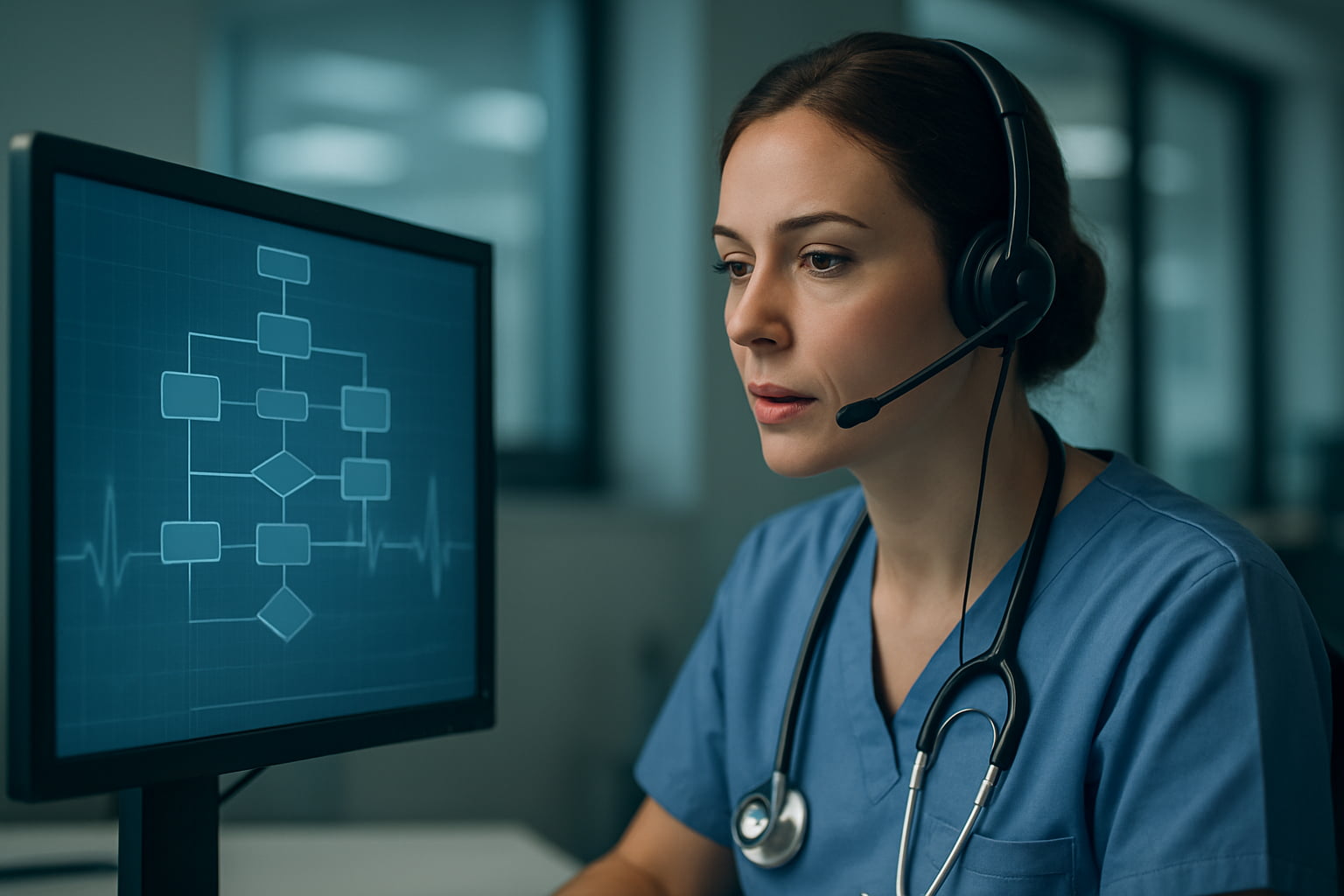
Telephone triage protocols are much more than just scripts. Think of them as structured, evidence-based guides that help nurses navigate patient calls. They provide a clear pathway to assess symptoms, figure out how urgent the situation is, and point the patient toward the right level of care—all over the phone. These frameworks create a consistent standard, so every patient gets safe, high-quality advice, no matter which nurse answers the call. In modern healthcare, where the first point of contact is often remote, these protocols are the bedrock of patient safety and operational efficiency, serving as the essential playbook for any high-functioning medical call center.
Why Standardized Triage Protocols Are So Important

A triage call isn’t just a quick chat; it's a critical clinical encounter that can define a patient's entire care journey. Without a solid framework, nurses have to lean on their own experience and memory, which can lead to dangerous inconsistencies. One nurse might tell a patient with certain symptoms to head to the ER, while another might suggest home care. That kind of variability introduces real risk, potentially leading to delayed treatment for a serious condition or, conversely, an unnecessary and costly emergency room visit.
Standardized telephone triage protocols for nurses take the guesswork out of the equation. They give nurses a clear, logical sequence for their assessment, making sure every important question gets asked and no red flags are missed. This systematic approach is the foundation of patient safety in remote care. It ensures that every decision is backed by evidence and a consistent standard of care is applied universally across the organization.
More Than Just a Simple Checklist
It's easy to think of protocols as rigid, robotic scripts that tie a nurse's hands, but that's a common misconception. Modern protocols are dynamic tools that actually empower nurses by supporting their clinical judgment, not replacing it. They provide a reliable, evidence-based foundation for every call, allowing nurses to focus their energy on listening, applying critical thinking, and building rapport with the patient.
The benefits of adopting these structured guidelines are immediate and significant:
- Fewer Medical Errors: A thorough and consistent assessment process means there's less chance of missing a critical symptom or underestimating a situation's urgency. This systematic approach minimizes the cognitive load on the nurse, reducing the likelihood of human error during high-stress calls.
- Better Patient Outcomes: Getting patients to the right place at the right time—whether it's the ED, an urgent care clinic, or self-care at home—prevents treatment delays and cuts down on unnecessary healthcare visits. This ensures timely care for those who need it most and conserves resources for the entire healthcare system.
- Greater Nurse Confidence: Having a clear, defensible process to follow gives nurses a safety net, helping them handle even the most complex and high-stakes calls with confidence. This confidence translates into clearer communication with patients and better overall performance, reducing burnout.
How Structure Boosts Accuracy
The impact of formal training and solid protocols on a nurse's triage accuracy is huge. When nurses have the right tools, their ability to correctly categorize patient needs improves dramatically. This isn't just better for patients; it's also a much more efficient use of healthcare resources. A nurse equipped with a well-designed protocol is less likely to over-triage (send a patient to a higher level of care than necessary) or under-triage (fail to recognize a serious condition).
A fascinating 2023 study from Qatar really drives this home. After triage training, nurses boosted their correct categorization rate from 63% to a staggering 90%. Even better, the rate of over-triage—sending patients to a higher level of care than needed—plummeted from 37% to just 10%. This shows just how powerful protocols are for making safer decisions and allocating resources wisely. You can read the full study about the impact of nurse triage training.
"A well-designed protocol doesn't replace a nurse's critical thinking; it channels it. It ensures that the nurse's expertise is applied consistently and safely, protecting both the patient and the provider from the inherent risks of remote assessment."
Building a Foundation for Legal Protection
In the high-stakes world of healthcare, great documentation is everything. Standardized protocols create a clear roadmap for what needs to be documented on every triage call. By following a protocol, nurses naturally build a detailed and legally defensible record of the entire interaction, capturing the essential elements of the assessment in a structured manner.
This record demonstrates that a recognized standard of care was met, spelling out the questions asked, the patient's answers, and the clinical reasoning behind the final recommendation. This kind of structured documentation is a huge asset for risk management and offers a strong defense if an adverse outcome ever occurs. It proves that the assessment was thorough, logical, and based on established clinical evidence.
At the end of the day, telephone triage protocols have come a long way from the days of clunky paper binders. Today, they are sophisticated, software-integrated systems that are essential for any well-run medical call center, ensuring every patient's first contact with your practice is safe, effective, and reliable.
Building Your Core Clinical Decision Pathways
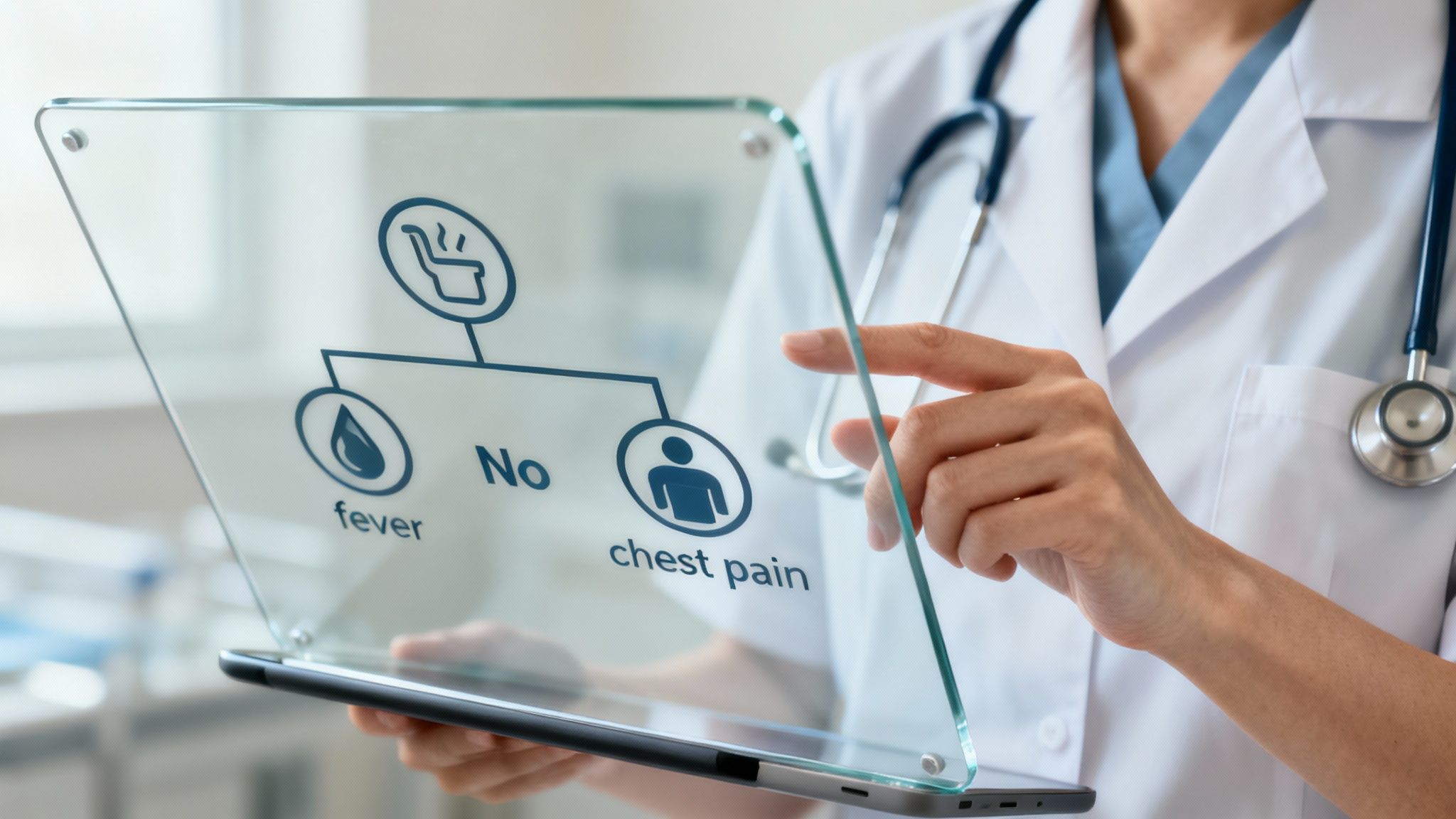
The real engine of your triage system is its clinical logic. This is where you move from theory to practice, building the clear, safe, and efficient pathways that will guide your nurses through every single patient call. It’s about creating decision trees that are medically sound and genuinely work for your team and the people you serve. The quality of these pathways directly impacts patient safety and the overall efficiency of your telehealth services.
Fortunately, you don’t have to start from scratch. The foundation of any strong telephone triage protocol is a set of evidence-based guidelines. Proven frameworks like the Schmitt-Thompson protocols offer a trusted, peer-reviewed starting point that has been refined over decades of clinical use. These protocols cover a vast range of symptoms for pediatric and adult populations, providing a robust framework that has been vetted by clinical experts.
Leaning on a gold-standard model like this ensures your core logic is built on solid ground from day one, giving you a comprehensive library of symptom-based pathways that are already tested for safety and effectiveness.
Making the Protocols Your Own
Adopting a standard set of protocols is just the beginning. The magic happens during customization. A protocol that works perfectly for a massive urban hospital probably won’t fit the needs of a small, rural pediatric clinic. This is where you have to take a hard look at your specific world and tailor the guidelines to your unique operational context.
Think about these key factors:
- Your Patient Population: Do you mostly see children, adults, or seniors? The red flags and care advice for pediatric fever, for example, are completely different from those for an adult. Protocols must be age-specific and reflect the common conditions your practice manages.
- Your Local Resources: What's actually available to your patients? Your protocols need to reflect reality, whether that means a 24-hour urgent care, specific specialists, or readily available telehealth appointments. A disposition to a service that doesn't exist is useless and frustrating for patients.
- Your Most Common Calls: Dig into your call data. What are the top 10-15 symptoms your nurses handle? Focus on building out and perfecting these high-volume pathways first. It’s the fastest way to make a big impact on the majority of your callers and streamline your team's workflow.
Crafting Smart, Clear Branching Logic
Branching logic is the “if this, then that” thinking at the heart of any triage protocol. It's a series of questions designed to quickly narrow down possibilities and guide the nurse to the safest disposition. The goal is a path that’s simple to follow under pressure but still clinically airtight, always prioritizing the most dangerous potential diagnoses first.
Let's walk through a stripped-down example for a common and critical symptom: adult chest pain.
- First Question: "Is the chest pain severe, crushing, or are you also feeling short of breath, sweaty, or have pain going into your arm or jaw?"
- If YES: This is an immediate red flag. The protocol instantly points to one action: Disposition: Call 911 now. The script would guide the nurse to ensure the caller hangs up and makes the call, staying on the line if policy requires.
- If NO: The logic branches to the next question. "Is the pain sharp? Does it get worse when you take a deep breath or press on the area?"
- If YES: This might suggest something musculoskeletal or respiratory, not a cardiac emergency. The pathway would then continue with more questions to land on the right urgency level, perhaps leading to Disposition: See your doctor within 24 hours.
This branching structure makes sure the most dangerous conditions are ruled out first. A well-designed protocol provides this framework for hundreds of symptoms, from a simple headache to complex abdominal pain, ensuring a consistent and safe assessment every time.
A great protocol is like a decision-making co-pilot for the nurse. It doesn't fly the plane, but it ensures all the safety checks are done in the right order. This frees up the nurse to focus on the nuances of the patient's story.
Defining Your Urgency Levels
Every pathway has to end with a clear disposition, and that means defining exactly what each level of urgency means for your organization. Vague instructions like "seek care soon" just create confusion. Instead, build a concrete framework that every nurse understands and can communicate clearly to patients. This standardization is crucial for ensuring that the advice given is actionable and appropriate.
Here is a straightforward framework for defining urgency levels. It helps categorize symptoms and gives nurses a consistent set of actions for each situation.
Sample Urgency Level Definitions
| Urgency Level | Definition & Sample Symptoms | Required Nurse Action |
|---|---|---|
| Emergent | Life-threatening conditions. Examples Severe chest pain, trouble breathing, uncontrolled bleeding, signs of stroke. | Advise patient/caller to hang up and call 911 immediately. Stay on the line if required by policy. |
| Urgent | Conditions needing evaluation within a few hours. Examples High fever with lethargy, possible fracture, moderate asthma attack. | Direct patient to the nearest Emergency Department or Urgent Care center for same-day evaluation. |
| Acute | Non-urgent issues requiring evaluation within 1-2 days. Examples UTI symptoms, persistent cough, minor rash, ear pain. | Facilitate an appointment with their primary care provider within the next 24-48 hours. |
| Home Care | Symptoms that can be safely managed at home. Examples Mild cold symptoms, minor cuts, seasonal allergies. | Provide specific self-care advice and clear instructions on when to call back if symptoms worsen. |
A structured approach like this one completely removes the guesswork. It ensures that when a protocol lands on an "Urgent" disposition, every nurse on your team knows this means sending the patient to an ED or urgent care now. This consistency is the bedrock of safe, high-quality care.
Designing Your Triage Scripts and Documentation Tools
The best clinical pathways are only as good as the tools your nurses use to implement them. This is where the rubber meets the road. We're talking about the scripts, checklists, and documentation templates that nurses will rely on for every single call. These tools are the practical application of your protocols.
Think of these tools as the steering wheel and dashboard of your triage system. They guide the conversation, make sure nothing critical gets missed, and create a clear, defensible record of the entire encounter. Without them, even the most brilliant protocol can't be applied consistently or safely. A well-designed toolset makes the right thing to do the easy thing to do.
Scripts: Finding the Balance Between a Guide and a Cage
Let's be clear: this isn't about creating a robotic script that a nurse reads word-for-word. Patients can spot that a mile away, and it instantly kills any real connection. Instead, you're building a structured yet flexible guide that supports the nurse's natural communication style.
A great script prompts the nurse to cover all the essential clinical bases while giving them the freedom to use their own judgment and empathy to steer the conversation. It’s the safety net that ensures the key questions for high-risk conditions—like sepsis or a potential stroke—are always asked, even in the middle of a chaotic shift.
So, how do you strike that perfect balance?
- Lead with open-ended questions. Always start with something like, "Tell me what's going on today." This lets the patient tell their story in their own words, which not only builds rapport but often uncovers the most important clues right from the start.
- Weave in critical questions naturally. Don't just fire off a checklist. Instead of a blunt, "Do you have chest pain?" you could try, "You mentioned feeling really weak. Are you noticing any other sensations, like pressure or discomfort in your chest?" This conversational approach feels more empathetic.
- Offer different ways to ask. Give your nurses a few phrasing options for sensitive or key questions. This lets them adapt to the patient's tone and use language that feels natural to them, enhancing the human connection.
A script should serve as a safety net, not a cage. Its job is to make sure every critical base is covered so the nurse can focus their energy on listening and connecting with the patient.
Getting this right can also have a big impact on your call times. The 2023 Nurse Triage Benchmarking Report found that over 40% of call centers had average call lengths between 11 and 16 minutes, with a significant 15% of calls lasting 20 minutes or longer. A well-designed script that guides the conversation efficiently, without sacrificing safety, is key to managing that.
Checklists and Documentation: Your Best Defense
If scripts guide the conversation, then checklists and documentation templates are what capture the evidence. A messy, disorganized charting process is a huge source of inefficiency and, frankly, a major liability. The goal is a template that perfectly mirrors the flow of your triage protocols, making it second nature for a nurse to chart as they talk. This integration prevents double work and reduces the chance of documentation errors.
This template needs to be built for your EMR, capturing every essential data point in a structured format. When done right, you get a clean, legally sound record of every single triage call that is easy for the next provider to understand.
The Anatomy of a Rock-Solid Triage Template
| Section | Key Information to Capture | Why It's Critical |
|---|---|---|
| Patient Demographics | Name, DOB, contact information, and who is calling if not the patient. | This is ground zero for accurate identification and follow-up. |
| Chief Complaint | The patient's primary reason for calling, documented in their own words. | This sets the entire focus for the clinical assessment. |
| Symptom Assessment | Onset, duration, severity, location, and any related symptoms. | This is the detailed clinical evidence that supports the final decision. |
| History Review | Relevant medical history, allergies, and current medications. | This puts the current symptoms in context and flags potential risks. |
| Protocol Used | The specific clinical protocol or guideline that was applied. | This shows you adhered to an established, evidence-based standard of care. |
| Disposition & Rationale | The final recommendation (e.g., Home Care, ED) and the clinical reasoning. | This is the single most important section for legal protection and care continuity. |
| Patient Education | Specific advice given, including clear "call back if" instructions. | This confirms the patient understood the plan and the safety-netting advice. |
A well-structured template isn’t just about compliance; it makes the information infinitely more useful for the next clinician in the patient's journey. For a deeper dive into structuring clinical notes, exploring a detailed progress note template can offer some great ideas. Thoughtful design here turns documentation from a painful chore into one of your most powerful tools for patient safety and risk management.
Integrating Protocols With EMR and AI Technology
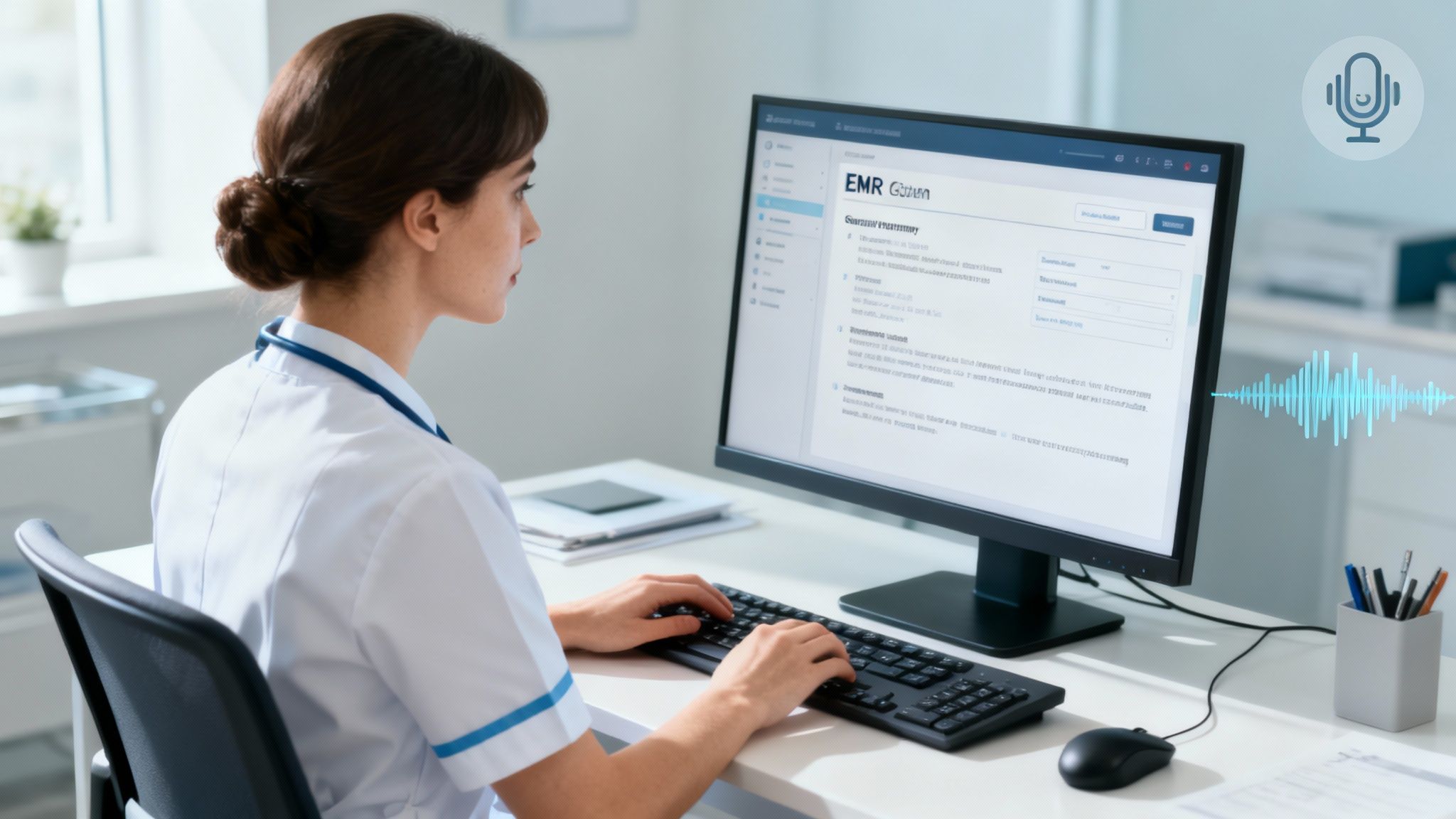
This image captures the future of triage perfectly. A nurse isn't just typing; she's interacting with a system that listens, documents, and supports her, allowing her to focus entirely on the patient. This isn't science fiction anymore—it's what effective triage looks like today.
Standalone protocols are a relic of the past. To be truly effective, your clinical guidelines must live inside the technology your nurses use every single day. Weaving your telephone triage protocols for nurses directly into your Electronic Medical Record (EMR) isn't just a "nice-to-have"; it's a must for providing safe, consistent, and efficient care. Without this integration, nurses are forced to toggle between systems, which is inefficient and a major source of errors.
This kind of integration turns static documents into dynamic, interactive tools. It closes the gap between making a clinical decision and charting it, creating a seamless workflow that cuts down on errors and shaves precious time off every call.
Embedding Decision Support Directly Into Your EMR
The single biggest leap forward you can make is building your triage protocols right into your EMR. When a nurse picks up the phone, they shouldn't have to open another program or grab a binder. The right protocol should pop up automatically, right next to the patient's chart.
The advantages here are immediate and powerful:
- Instant Access to Patient History: The nurse sees allergies, current meds, and recent appointments while going through the triage questions. That context is absolutely critical for making the safest call. For example, a new symptom might take on a different level of urgency in a patient with a known chronic condition.
- Streamlined Charting: As the nurse moves through the protocol, the answers can auto-populate the triage note. This massively reduces manual typing and ensures every chart is complete and consistent. It transforms documentation from a post-call task to a real-time process.
- Improved Protocol Adherence: Let's be honest—if a tool is easy to use and part of the existing workflow, people will use it. This drives standardization and makes sure every patient gets the same high-quality assessment, reducing practice variation.
Integrating protocols with the EMR isn't about convenience; it’s a powerful patient safety strategy. It ensures that clinical judgment is always informed by the most current and complete patient data available.
Making this connection happen is a big technical step, but it's one you can't skip. If you're planning this out, it's worth digging into the details of what it takes. A good starting point is this comprehensive EMR integration and AI voice agent compatibility guide.
The Growing Role of AI in Telephone Triage
Beyond the EMR, Artificial Intelligence is opening up some incredible new ways to make triage smarter. AI-powered voice agents are quickly becoming a triage nurse's best co-pilot, taking on the administrative grunt work that often leads to burnout.
Think about it: platforms like Simbie AI can listen to a triage call as it's happening and transcribe the whole thing. Better yet, they can pick out the important clinical details—symptoms, vitals, medications mentioned—and plug them straight into the right fields in the EMR. This is known as ambient listening technology, and it's a game-changer.
This frees up the nurse from the constant mental juggling act of "listen, type, think." They can give their full attention to what really matters: connecting with the patient, showing empathy, and using their hard-earned critical thinking skills. To get a better sense of how this works in practice, it’s helpful to understand AI's role in streamlining healthcare practices.
Unlocking Richer Data for Quality Improvement
Perhaps the biggest long-term win from all this tech integration is the data you get back. When every single triage call is captured in a structured way inside your EMR, you're sitting on a goldmine of information. This data allows for powerful analytics that were previously impossible with paper-based or disconnected systems.
Suddenly, you can easily track key metrics:
- Which protocols get used the most?
- What are the most common outcomes (e.g., ED referral, home care advice)?
- How often do nurses override a protocol, and what are the reasons?
- Are we seeing any new symptom trends across our patient population?
This data completely changes your quality assurance game. You can shift from random spot-checks to a truly data-driven approach, pinpointing protocols that might be confusing or identifying where nurses could use a bit more training. It creates a feedback loop for continuous improvement that makes your entire triage service safer and more effective over time.
Training Your Team and Keeping Quality High
Here’s the hard truth: even the best-written telephone triage protocols are just paper until your team brings them to life. Turning those guidelines into a consistent standard of care comes down to two things: excellent training and a rock-solid quality assurance (QA) program. This is how you make sure every nurse can confidently and safely navigate any call that comes their way, especially under pressure.
This isn’t about a one-and-done orientation session. It's about building a culture of constant learning. We want our teams to see feedback as a tool for growth, not a critique, all centered around the shared mission of keeping patients safe. The real goal is to build a team that doesn't just follow the rules, but genuinely understands the clinical reasoning behind them.
Laying a Strong Training Foundation
Onboarding is your first, best shot to set the bar high. A new nurse needs more than a binder of protocols. They need practical, hands-on training that closes the gap between theory and the fast-paced reality of a live triage call. That means less time in lectures and more time in interactive, scenario-based learning.
Role-playing is, without a doubt, one of the most effective training tools you have. It gives nurses a safe space to practice tricky calls without any real-world risk.
- Start with the basics. Kick things off with the calls they'll get every day—coughs, fevers, rashes. This helps them get comfortable with the core protocols and builds their confidence in navigating the software and scripts.
- Turn up the heat. Once they're comfortable, introduce higher-stakes scenarios like chest pain, shortness of breath, or a fussy pediatric patient. This is where you see their critical thinking skills shine and identify areas for more focused coaching.
- Don't forget the human element. Throw in calls with anxious parents, angry patients, or people who have trouble explaining their symptoms. This builds crucial communication and de-escalation skills that are just as important as clinical knowledge.
The final piece of the puzzle is competency checks. Before any nurse handles a call alone, they have to prove they can do it right. This means running them through simulated calls and knowledge tests to show they can consistently land on the correct, safe disposition. For an even more immersive experience, technologies like virtual reality for medical training can be incredibly effective at simulating real-world patient encounters.
Training isn't just about teaching the "what" of a protocol; it's about cementing the "why." When a nurse understands the clinical reasoning behind a question, they're far better equipped to use their judgment when a call goes off-script.
Creating a QA Program That Actually Works
Once your nurses are taking calls, your focus shifts from initial training to ongoing quality assurance. A good QA program isn't about catching people making mistakes. It's a supportive process for spotting learning opportunities and celebrating great work. The core of this process is regular call audits.
The aim is simple: review a random sample of calls for each nurse, every single month. This gives you a clear snapshot of their performance and helps you identify trends—both good and bad—before they become habits.
To do this fairly, you need a clear scoring rubric. It takes the guesswork out of feedback and focuses the conversation on objective, measurable criteria. This ensures all nurses are held to the same standard and that feedback is consistent and actionable.
A well-structured QA program ensures your triage nurses have the support they need to consistently perform at their best. Here are the essential pieces to include.
Core Components of a Triage QA Program
| QA Component | Objective | Key Activities |
|---|---|---|
| Random Call Audits | Evaluate adherence to protocols and identify coaching opportunities. | Review 5-10 calls per nurse per month using a standardized scorecard. |
| Standardized Scorecard | Ensure fair, consistent, and objective evaluation for every call. | Define clear criteria for assessment, disposition, patient education, and documentation. |
| Regular Feedback Sessions | Provide constructive, one-on-one coaching to reinforce strengths and address gaps. | Schedule monthly or quarterly meetings to review audit findings and set goals. |
| Peer Review | Foster a collaborative learning environment and share best practices. | Facilitate group sessions where nurses can review de-identified calls together. |
| Trend Analysis | Identify system-wide issues or widespread knowledge gaps. | Track QA data over time to spot patterns in protocol use or call outcomes. |
This structured approach turns feedback from an opinion into a practical coaching tool. By consistently reviewing performance against these standards, you create a powerful feedback loop that drives real, continuous improvement and keeps patient safety at the forefront of everything you do.
Common Questions About Triage Protocols
When you start building or refining your telephone triage protocols, you'll find the same questions come up again and again. It's smart to tackle these concerns head-on. Clear answers not only give your nursing staff confidence but also help manage legal risks and set everyone up for success.
Teams often ask if protocols are too restrictive, where the biggest legal pitfalls lie, and how often these detailed guidelines really need to be updated. Let's dig into those, because they are great questions.
How Often Should We Update Triage Protocols?
This one comes up a lot. At a bare minimum, you should review every single telephone triage protocol once a year. Clinical standards change, new evidence comes to light, and your guidelines have to reflect the most current best practices. A stagnant protocol is a dangerous protocol.
But an annual review is just the starting point. Certain events should trigger an immediate review:
- After a critical incident: If there's an adverse patient outcome, the first thing you should do is pull the protocol that was used and analyze it from top to bottom. Was the logic flawed? Was a key question missing?
- When new guidelines emerge: A new recommendation from a major medical body, like the American Heart Association, means your related protocols need to be updated right away. No exceptions.
- In response to QA trends: Are you noticing in your quality assurance audits that nurses are consistently tripping up on a specific protocol? That’s a huge red flag that the guideline itself might be confusing or just plain wrong.
What Is the Biggest Legal Risk in Telephone Triage?
Hands down, the single biggest legal risk is inadequate documentation. You can have the best protocol in the world, but if the nurse’s charting is incomplete, it’s a massive liability. From a legal perspective, a poorly documented call might as well have never happened.
The patient’s medical record is your first and best line of defense. It needs to tell the full story: the specific questions asked, the patient's answers, the logic behind the final decision, and the exact self-care advice given. Anything less leaves your organization wide open to risk. If a decision is ever questioned, the chart is the only objective evidence of the quality of care provided.
The old saying, "If it wasn't documented, it wasn't done," is the absolute golden rule of telephone triage. A strong protocol helps create a complete, consistent, and defensible story in the chart.
Can a Nurse Ever Deviate From a Protocol?
This is a critical point, and it’s one that can be confusing for nurses new to triage. The short answer is yes. Protocols are clinical guidelines, not handcuffs. An experienced nurse absolutely can—and sometimes should—deviate from a protocol, but it has to be a deliberate act of clinical judgment.
A seasoned nurse might hear something subtle in a patient's voice or pick up on a detail in their story that just doesn’t feel right, suggesting the situation is more serious than the checklist implies. In that moment, their clinical expertise should take over, and they should escalate care. The protocol provides the floor, not the ceiling, for the standard of care.
The absolute key, though, is documenting the why. When a nurse goes off-protocol, they must clearly explain their reasoning. For example: "Protocol suggests home care, but escalating to an urgent appointment due to patient's extreme anxiety and history of similar symptoms leading to hospitalization." That note shows a thoughtful, patient-first decision, not a mistake. It demonstrates critical thinking in action.
Ready to see how technology can support your nurses and make your triage process safer? Find out how Simbie AI can automate documentation and work hand-in-hand with your existing protocols. Visit Simbie.ai to learn more.