
Preventing nurse burnout isn't just a nice-to-have—it's an operational imperative for any healthcare organization. This mission extends far beyond offering superficial wellness apps or mindfulness sessions. It demands real, systemic changes that confront the root causes head-on: unmanageable workloads, relentless administrative tasks, and a pervasive lack of genuine support. These are not merely individual struggles; they are symptoms of a strained system.
The ultimate goal is to cultivate a resilient, engaged, and sustainable nursing workforce. This is achieved not through quick fixes but by strategically focusing on foundational pillars: implementing smarter staffing models, embracing workflow automation, and fostering a deep-rooted culture of psychological safety. By addressing these core areas, organizations can create an environment where nurses can thrive, not just survive.
Confronting the High Cost of Nurse Burnout

Let's be unequivocally clear: nurse burnout is far more than an HR buzzword or a passing trend. It's a direct and escalating threat to patient care, operational efficiency, and your organization's financial stability. The fallout from an exhausted, disengaged nursing staff ripples through every department, creating a dangerous and self-perpetuating cycle of medical errors, high staff turnover, and an erosion of patient trust that can take years to rebuild.
This is not a crisis of individual resilience or a lack of coping skills. It is a systemic problem with tangible, often devastating, consequences that demand an organizational-level response. When nurses are consistently overworked, emotionally drained, and feel unsupported, the entire healthcare system feels the strain. To truly begin preventing nurse burnout, we must first be adept at identifying the key signs of emotional burnout within our teams.
The Real-World Impact on Patient Safety
The connection between a nurse’s well-being and a patient's outcome is ironclad and extensively documented. To grasp the scale of this problem, consider the evidence. A massive global study encompassing 9,387 nurses across 35 countries painted a stark picture: 61% of them are actively dealing with symptoms of anxiety, depression, or burnout. An almost unbelievable 57% reported feeling exhausted every single day they are at work.
This profound emotional toll directly compromises the safety and quality of patient care. Extensive research—analyzing a staggering 85 different studies and over 288,000 nurses—confirms a direct correlation between burnout and a higher incidence of medical errors, increased hospital-acquired infection rates, more patient falls, and plummeting patient satisfaction scores. The numbers are frightening and impossible to ignore. A mere 10% increase in nurses reporting their intention to leave their jobs is directly linked to a shocking 14% jump in patient mortality rates. That single statistic is a powerful testament to how burnout can have fatal consequences.
From Staff Exhaustion to Financial Strain
The financial bleeding caused by nurse burnout is just as severe and immediate as its impact on care quality. Every time a nurse quits due to burnout, it costs a facility tens of thousands of dollars—sometimes more—to recruit, hire, and adequately train their replacement. This high turnover also forces organizations to lean more heavily on expensive travel nurses and agency staff, which sends labor costs soaring and puts an immense strain on already tight operational budgets.
Investing in systemic changes, better technology, and a genuinely supportive culture is not an operational expense—it is a crucial and non-negotiable strategy for survival and success in the modern healthcare landscape.
This isn't a single, isolated problem but a complex chain reaction that impacts the bottom line from multiple angles. The table below illustrates how the devastating effects of burnout cascade across the entire organization, affecting every stakeholder from the bedside to the boardroom.
The Cascade Effect of Nurse Burnout
| Affected Group | Key Impacts and Statistics |
|---|---|
| Patients | Increased risk of medical errors, hospital-acquired infections, and falls. Lower satisfaction scores and a significant decrease in trust in the care they receive. |
| Hospitals | Skyrocketing turnover costs ($22K to $64K per nurse), higher labor expenses due to reliance on travel nurses, and an increased risk of costly malpractice lawsuits. |
| Nursing Staff | Pervasive emotional and physical exhaustion. Higher rates of clinical depression and anxiety, leading to a diminished capacity to provide compassionate and effective care. |
This table shows a clear, interconnected crisis that cannot be ignored. Issues such as increased overtime pay required to cover understaffed shifts directly inflate payroll, while a higher risk of lawsuits stemming from fatigue-related errors creates massive and unpredictable financial liabilities. At the same time, decreased patient satisfaction, often reflected in crucial HCAHPS scores, can directly hurt reimbursements and damage an organization's public reputation.
Ultimately, a robust strategy for preventing nurse burnout is not just about protecting your staff. It is an essential business imperative for safeguarding your patients, ensuring the long-term financial health of your organization, and maintaining its reputation as a provider of high-quality care.
Building Your Foundation with Smarter Staffing Models

If you ask any nurse what the single biggest driver of burnout is, you'll hear the same answer again and again: an unsustainable workload. The knee-jerk reaction for many organizations is simply to "hire more nurses," but that’s a temporary band-aid on a much deeper, more systemic problem. A real, effective strategy begins by building a smarter, more responsive staffing foundation from the ground up. This is a fundamental step in any serious effort toward preventing nurse burnout.
This means consciously leaving behind the rigid, outdated, one-size-fits-all staffing models of the past. The most forward-thinking healthcare systems are now leveraging data and technology to build agile frameworks that protect their most valuable asset—their nursing staff—while ensuring optimal patient coverage.
Moving from Reactive to Predictive Staffing
Traditional staffing is often a masterclass in chaos management. A sudden patient surge hits the emergency department, the med-surg floor census spikes unexpectedly, and the charge nurse is left scrambling, making frantic phone calls and enforcing mandatory overtime. This reactive, crisis-driven approach is a guaranteed recipe for staff stress, resentment, and profound exhaustion.
The modern alternative is predictive staffing. By using historical admission data, seasonal trends, and real-time inputs, you can actually forecast patient volume and acuity with remarkable accuracy. It's about getting ahead of the curve instead of constantly being overwhelmed by it.
Imagine your system knowing that Tuesday afternoons almost always bring a wave of post-op admissions from the OR, or that a local flu outbreak will likely drive ER visits up by 20% by the end of the week. This kind of foresight allows you to adjust schedules proactively, not reactively. You end up with the right number of nurses, with the right skills, on the floor at the right time. This doesn't just manage workloads—it provides nurses with the sense of stability, predictability, and control they so desperately need and deserve.
Empowering Nurses with Flexible Scheduling
Giving nurses a real say in their schedules is a powerful antidote to the feelings of powerlessness that fuel burnout. When they feel like they have zero control over their work-life balance, their professional autonomy and morale plummet. Introducing flexible scheduling models into your organization is one of the most immediate and impactful ways to hand that control back.
Here are a few models I’ve seen work wonders in various clinical settings:
- Self-Scheduling: Nurses are empowered to pick their shifts based on the unit’s pre-defined needs for the week or month. This fosters a sense of fairness, encourages teamwork, and allows them to build a schedule around their personal lives, which is a huge win for job satisfaction.
- Compressed Workweeks: Options like four 10-hour shifts or three 12-hour shifts can give nurses more full days off to truly unplug, rest, and recharge. This model isn't a perfect fit for every single unit, but where it works, the improvement in staff morale is often dramatic and immediate.
- Flexible Shift Lengths: Offering a diverse mix of 4, 8, and 12-hour shifts can accommodate everyone—from parents who need shorter days to attend to family needs, to others who prefer to stack their hours and maximize their days off.
These aren't just "nice-to-have" perks; they are critical strategic tools in today's competitive healthcare landscape. We’re in a global nursing crisis, and innovative approaches are essential. Trials of flexible scheduling, such as the four-day workweek, have shown a remarkable 22% reduction in feelings of exhaustion and a significant 15% cut in turnover intentions.
Creating Fair and Transparent Workloads
Even with perfect staffing ratios on paper, the perception of unfairness in workload distribution can be just as corrosive as an actual staff shortage. That's where acuity-based staffing systems become absolutely essential. These sophisticated systems look beyond simple nurse-to-patient ratios and factor in the complexity, intensity, and specific care needs of each individual patient.
When workloads are seen as challenging but fair, nurses are more engaged, feel more respected, and are far less likely to feel overwhelmed. Transparency in how those patient assignments are made is the key to building trust and fostering a collaborative unit culture.
For instance, a nurse caring for two high-acuity post-surgical patients has a profoundly different workload than a nurse with four stable, largely independent patients. Acuity tools make these critical distinctions clear and objective, allowing charge nurses to create balanced and equitable assignments. This fairness is crucial for preventing the resentment that festers when some nurses consistently get handed the toughest and most demanding caseloads.
Getting this right is a cornerstone of any effective burnout prevention plan, and modern healthcare staff scheduling software is critical for managing this complexity efficiently and transparently.
Ultimately, smarter staffing is about creating an environment where nurses can focus on what they love—providing excellent, compassionate patient care—without burning themselves out in the process. By embracing predictive analytics, offering genuine flexibility, and ensuring transparent, acuity-based workloads, you can build a resilient foundation that supports your staff for the long haul.
Making Workflows Actually Work for Nurses
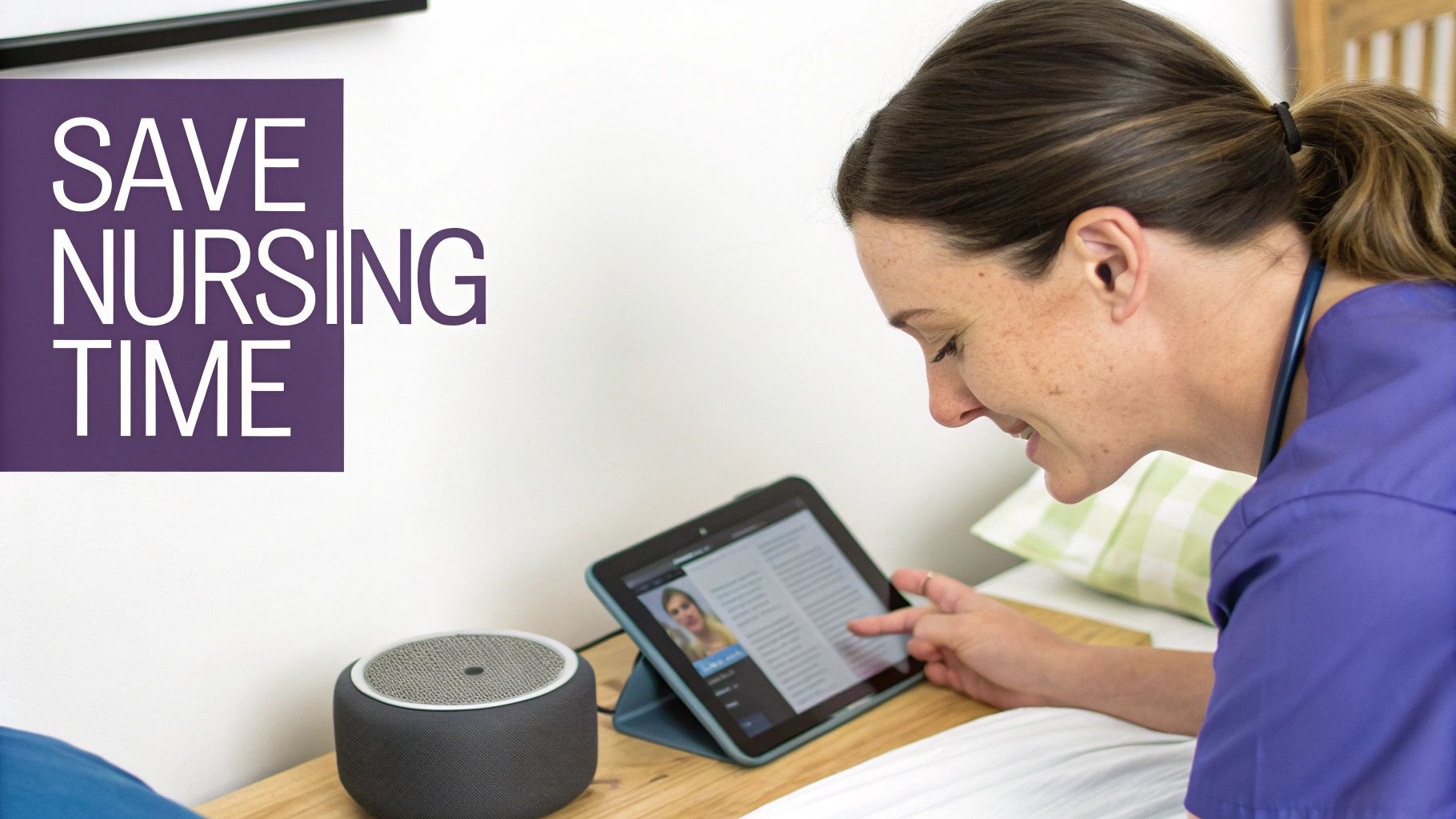
Imagine giving your nurses back a huge chunk of their day—all that precious time they currently lose to repetitive phone calls, redundant charting, and the frustrating hunt for information. This isn't some far-off, futuristic dream. It's what happens when you strategically target administrative overload with smart, targeted automation.
Tools like voice-based AI assistants can lift the immense weight of those repetitive, low-value administrative tasks that bog down clinical staff and divert their attention from patient care.
These intelligent systems are built to handle the high-volume, low-complexity work that consumes valuable nursing hours. By automating routine patient follow-up calls, mundane data entry, and even initial patient screenings, you free up your skilled clinicians to do what only they can do: provide direct, hands-on, empathetic patient care. This isn't just about being more efficient; it's about reducing the cognitive load and "death by a thousand cuts" that is a primary driver of nurse burnout.
Pinpointing the Biggest Time Sinks
So, where do you start this journey of workflow optimization? First, you need to find out where your nurses are really losing the most time. A simple "day in the life" audit can be an incredibly eye-opening exercise. Shadow your nurses for a few shifts or ask them to log their time, paying close attention to any task that isn't direct patient care.
You’ll probably find that a staggering amount of their day is spent on work that doesn't actually require a nursing license or critical thinking skills.
- Endless Patient Outreach: Think of the hundreds of pre-op instruction calls, post-discharge check-ins, or appointment reminders that must be made each week.
- Tedious Documentation: The hours spent manually typing or transcribing patient information into the Electronic Health Record (EHR).
- The Information Hunt: The constant, frustrating process of digging for lab results, physician's notes, or information from a specialist.
These tasks are absolutely necessary for patient care, but they’re also perfect candidates for intelligent automation. A voice AI, for instance, can make thousands of outbound calls simultaneously, ask scripted clinical questions, collect the answers in a structured format, and then flag only the responses that require a nurse's professional review. This one change can give hours back to every single nurse, every single shift.
How Voice AI Fits Into a Clinical Workflow
Let’s be clear: integrating automation isn't about replacing nurses. It’s about giving them superpowers by augmenting their capabilities and allowing them to work at the top of their license.
Consider a real-world scenario. A busy primary care clinic has to follow up with dozens of patients who just started a new blood pressure medication. The old way? A dedicated nurse spends their entire afternoon on the phone, methodically calling each person and asking the same list of questions: "Are you having any side effects? Are you checking your blood pressure at home? Do you have enough medication for the month?"
With a voice-based AI assistant like Simbie, that entire workflow gets a significant upgrade. The system automatically calls every patient on the list, documents their answers directly into the EHR, and then presents the nurse with a clean, prioritized list of patients who need attention. Now, instead of manually calling all thirty patients, the nurse only needs to personally connect with the three who reported feeling dizzy or having issues.
The real goal of automation is to filter out the noise and handle the predictable. It empowers nurses to use their critical thinking, clinical judgment, and empathy where it truly matters, instead of having them function as glorified call-center agents.
This targeted, exception-based approach doesn't just save an incredible amount of time. It ensures that nurses are applying their valuable expertise to manage the exceptions and complex cases—the very work that is far more professionally rewarding and a key part of keeping them engaged and preventing nurse burnout.
A Realistic Roadmap for Implementation
Rolling out new technology can feel overwhelming, but a phased, thoughtful approach makes it completely manageable and helps get your team on board from the start. You don't have to boil the ocean.
- Start Small with a Pilot: Pick one high-impact, low-risk task. Automating appointment reminders or post-discharge follow-ups are usually great places to start. This proves the concept quickly and delivers an immediate, visible win.
- Get Feedback and Adjust: Involve your nursing staff from day one. Ask them what’s working, what isn’t, and what other soul-crushing tasks they’d love to hand off to an automated system. Their frontline perspective is gold and essential for success.
- Measure What Matters: Track key metrics before and after you start the pilot. Look at the time spent on the task you automated, nurse satisfaction scores, and even patient feedback. Hard data builds a compelling case for expanding the program. For a closer look at the possibilities, see what’s achievable with healthcare workflow automation.
- Scale and Expand: Once you’ve proven the value in one area, you can strategically and confidently roll out automation to other departments or for different tasks, like prior authorizations or prescription refill requests.
By focusing on easing the administrative burden, you're directly addressing one of the most persistent frustrations nurses face daily. You’re sending a clear and powerful message that you value their time and expertise, which is a powerful step toward building a more sustainable and supportive workplace. This is about more than just efficiency—it’s about bringing joy and purpose back to the practice of nursing.
Cultivating a Culture of Psychological Safety

You can have the most advanced staffing models and the most perfectly designed workflows, but if the underlying culture is toxic, your best nurses will still walk out the door. The undeniable truth is that preventing nurse burnout goes far beyond logistics and operations. It requires a genuine, organization-wide commitment to building psychological safety.
What does that really mean in a clinical setting? It’s about creating an environment where nurses feel safe enough to speak up, to ask for help when they're struggling, to admit a mistake without fear of retribution, or even to challenge a long-standing process without fearing blame or punishment. This isn't a "nice-to-have" or a soft skill—it's the absolute foundation of a resilient, high-performing, and engaged nursing team.
It All Starts with Leadership: Empathy and Active Listening
A truly supportive and psychologically safe culture is built from the top down. When nurse managers and hospital executives lead with authentic empathy and make a conscious point to actively listen to their frontline staff, it sends a clear and powerful signal that every single person on the team matters. This isn't about being "soft"; it’s about being a smart, emotionally intelligent leader who understands that a supported team is an effective team.
Investing in this kind of leadership training for managers and supervisors pays for itself almost immediately. Think about it: when a nurse feels truly heard, validated, and understood by their direct manager, their stress levels naturally drop, and their trust in the organization skyrockets. That simple but profound shift in dynamic can completely transform a unit's atmosphere from one of fear to one of collaboration.
High-Impact Support Initiatives That Actually Work
Empty platitudes and posters about "supporting our heroes" are meaningless without concrete programs to back them up. To make a real, lasting difference, healthcare organizations have to put their money where their mouth is and invest in initiatives that provide tangible, accessible support.
Here are a few strategies that have a proven track record of success in preventing nurse burnout:
- Structured Peer Support Groups: Set up confidential, facilitated groups where nurses can unload about their experiences with colleagues who just get it. This cuts through the profound isolation that is so common in high-stress jobs and builds an incredible sense of community and solidarity.
- Mindfulness and Resilience Training: Offer practical, evidence-based workshops that teach techniques for managing stress, such as mindfulness exercises, emotional regulation, and cognitive reframing. These aren't just feel-good sessions; they are practical tools that empower nurses to better handle the immense emotional weight of their work.
- Accessible Mental Health Resources: Go beyond a generic and often-impersonal Employee Assistance Program (EAP). Provide easy, confidential access to therapists and counselors who specialize in the unique trauma, moral injury, and stress that healthcare workers face.
These aren't just perks. They are essential tools for survival in a field where, as of 2025, a shocking 65% of nurses are reporting high levels of stress and burnout. This crisis has tangible consequences: since 2022, over 138,000 U.S. nurses have left the profession for these very reasons.
The good news? Research shows that these interventions work. Well-designed resilience-building programs can slash burnout symptoms by a significant 28%. Similarly, promoting work-life balance with initiatives like paid mental health days can lower feelings of low professional accomplishment by 21%. You can explore the powerful human stories behind these statistics and the critical importance of prevention by visiting call-light.com.
A truly supportive culture doesn't wait for a crisis to emerge. It anticipates the needs of its staff and provides the right resources before people hit their breaking point. It's about being proactive and preventative, not reactive and restorative.
This proactive mindset is what separates organizations with high retention rates from those stuck in a perpetual cycle of turnover. The table below breaks down how these different interventions target specific aspects of the burnout syndrome.
High-Impact Mental Health Interventions for Nursing Teams
| Intervention Type | Primary Focus | Reported Impact on Burnout |
|---|---|---|
| Peer Support Groups | Reducing isolation and building a strong sense of community. | Decreases feelings of depersonalization and emotional exhaustion. |
| Mindfulness Workshops | Providing practical stress-management and coping skills. | Improves emotional regulation and reduces perceived stress levels. |
| Resilience Training | Equipping staff to navigate adversity and chronic workplace stress. | Increases job satisfaction and feelings of personal accomplishment. |
| Supportive Leadership | Creating a safe environment through empathy, active listening, and trust. | Lowers team-wide stress and significantly improves staff morale and engagement. |
These initiatives all contribute to a culture where nurses feel valued, seen, and protected, which is crucial for their well-being, their longevity in the profession, and their long-term commitment to your organization.
From a Blame Culture to a Just Culture
Finally, a critical and non-negotiable piece of psychological safety is shifting from a punitive blame culture to a restorative just culture. This is an organizational framework that accepts a simple, human reality: medical errors are often the result of broken systems, flawed processes, and latent safety threats—not bad people.
In a traditional blame culture, a nurse who makes a mistake is often singled out and punished. This approach just encourages everyone else to hide their errors, creating a dangerous and secretive environment where systemic problems never get identified and, therefore, never get fixed.
A just culture, on the other hand, shifts the focus from "who is to blame?" to understanding why the error happened. Was the nurse working a double shift due to understaffing? Was a critical protocol confusing or outdated? Was a piece of essential technology malfunctioning? By digging into the root cause, you can fix the system itself and prevent the same mistake from happening again. This approach doesn't just improve patient safety—it builds incredible trust and empowers staff. When nurses feel safe enough to be transparent about near-misses and errors, they become your greatest asset in continuous quality improvement and a powerful force in preventing nurse burnout.
How to Measure Your Anti-Burnout Initiatives
Launching programs to fight nurse burnout feels like the right thing to do, but without data, you’re just flying blind. How do you actually know if that new flexible staffing model or the workflow automation tool is making a real difference?
Measuring your efforts isn't just another administrative task. It's the only way to prove the value of your investment, make a compelling case for future funding, and intelligently tweak your strategy for the biggest possible impact.
This is all about connecting the dots between your actions and your outcomes. By tracking the right key performance indicators (KPIs), you can build a powerful, data-driven story that shows how preventing nurse burnout directly strengthens your organization’s bottom line, enhances patient care, and improves the work lives of your staff.
Defining Your Key Performance Indicators
To get the full, comprehensive picture, you need to look at two distinct but related kinds of data: hard operational metrics and softer nurse-centric feedback. One tells you about the health of your organization, while the other gives you a direct window into the well-being and morale of your staff. You absolutely need both to tell a complete story.
Before you roll out any new initiatives, it is critical to establish a baseline for these key metrics. This is your "before" picture, the benchmark against which you'll measure all future success and calculate your return on investment.
Key Operational KPIs to Track:
- Staff Turnover Rate: This is the big one. A tangible drop in voluntary turnover is one of the most powerful and financially significant signs that your efforts are boosting job satisfaction and retention.
- Vacancy Rate: Fewer open positions mean you’re spending less time and money on recruitment because your experienced nurses are choosing to stay.
- Overtime Spending: As workloads become more balanced and staffing stabilizes, your reliance on costly mandatory and voluntary overtime should drop significantly.
- Agency Nurse Utilization: Just like overtime, cutting back on spending for temporary travel nurses is a clear win for building a stable, cohesive, and satisfied core team.
The goal is to build a simple, clear dashboard that visually connects your anti-burnout strategies to improved financial performance and better patient outcomes. This data-driven approach transforms the conversation from a cost-center to a high-return investment in your most valuable asset.
Capturing the Human Element
Numbers on a spreadsheet only tell half the story. To truly understand the impact of your initiatives on your team, you have to measure their direct experiences and perceptions. These nurse-centric metrics provide the crucial "why" behind the operational data.
Essential Nurse-Centric Metrics:
- Employee Engagement Surveys: Regular, anonymous pulse surveys are perfect for tracking shifts in morale, job satisfaction, and whether nurses feel supported by leadership over time.
- Maslach Burnout Inventory (MBI): This is the gold standard, scientifically validated tool for measuring the three core dimensions of burnout: emotional exhaustion, depersonalization, and a reduced sense of personal accomplishment.
- Absenteeism Rates: A noticeable dip in unscheduled absences is almost always a reliable indicator of lower stress levels and a healthier, more positive work environment.
Connecting Initiatives to Outcomes
Once you’re consistently tracking these KPIs, the final and most important piece of the puzzle is to link them directly to your specific programs. For instance, after you implement a voice AI to handle all post-discharge follow-up calls, you should be able to see a measurable drop in the "administrative burden" complaints on your next engagement survey.
This cause-and-effect analysis is what makes your data so powerful and persuasive. You can create a simple table or dashboard mapping each initiative to its expected outcomes and the specific KPIs you’ll use to track them. This not only keeps your strategy focused but also makes it incredibly easy to share your wins with leadership and justify further investment. It’s a fundamental component of any successful and sustainable healthcare quality improvement initiatives.
By consistently measuring, analyzing, and acting on this data, you move beyond guesswork and good intentions. You gain the hard evidence needed to prove that investing in your nurses is the single best investment you can make for your patients, your community, and your entire organization.
An Action Plan for a More Resilient Workforce
Knowing the causes of nurse burnout is one thing; doing something meaningful about it is another. It's time to move from awareness to decisive action. The most effective way forward is with a prioritized, phased plan that gets you some quick, tangible results. This approach builds momentum and, more importantly, shows your nursing staff that you’re serious about making a real, lasting change.
You can't solve every problem at once, so don't even try. The key is to focus on a few high-impact initiatives that tackle the biggest and most immediate pain points first. Pick the right battles, win them convincingly, and you'll build a solid foundation of trust and success for lasting cultural transformation.
Your Initial Checklist for Change
Start by going after the low-hanging fruit: crushing workloads and mind-numbing administrative busywork. These are the areas where you can achieve some quick wins and provide your team with immediate, palpable relief.
- Audit the Admin Tasks: For one week, meticulously track the top three repetitive, non-clinical tasks that eat up your nurses' time. Is it endless post-discharge phone calls? Chasing down prior authorizations from insurance companies? Manually sending appointment reminders? Find out exactly where the hours are disappearing.
- Pilot a New Scheduling Approach: You don't need to rip up your entire scheduling system overnight. Try running a self-scheduling model on a single, willing unit for one month. See what happens. Gather direct, honest feedback on how it affects work-life balance, autonomy, and overall team morale.
- Start a Leadership Listening Tour: Make it mandatory for every nurse manager and clinical leader to spend dedicated, protected time on the floor. Their mission? Ask one simple but powerful question: "What's one thing we could change right now to make your shift better?" Write down every single answer and look for the common, actionable threads.
A winning strategy for preventing nurse burnout doesn't kick off with some massive, intimidating, five-year overhaul. It starts with small, visible, and meaningful actions that prove you're committed and build the crucial trust you'll need for the bigger transformations that lie ahead.
While you're working on fixing the system, don't forget the individuals who are already feeling the strain. Offering immediate and accessible support is critical. For practical ways to help nurses cope, recover, and build resilience, resources like a comprehensive guide to overcoming CNA burnout can be incredibly helpful and provide valuable insights.
This dual approach is your most powerful path forward: relentlessly fix the systemic problems while you compassionately support individual resilience. One cannot succeed without the other.
Got Questions About Nurse Burnout? We Have Answers.
When hospital leaders and nurse managers begin to seriously tackle the issue of nurse burnout, a lot of practical, real-world questions come up. Let's get into some of the most common ones I hear and offer some straight-up, actionable answers based on what we've seen work in organizations of all sizes.
What’s the Single Best Place to Start?
If you’re looking for the one thing that will make the biggest and most immediate impact, it’s this: aggressively lighten the workload. A comprehensive, multi-year plan is great, but nurses are drowning now. Immediate relief is paramount.
Start by taking an honest, data-informed look at your staffing ratios and patient acuity levels. At the same time, conduct a thorough audit of the administrative tasks that are eating up your nurses' valuable day. You will probably be surprised, if not shocked, by how much of their time is spent on non-clinical, clerical work.
A great way to get a quick and visible win is to pilot a technology that automates some of that administrative burden. For example, a voice-based AI assistant can take over the tedious process of documentation, pre-op instructions, or patient follow-up calls. This gives nurses immediate relief, demonstrates that you're serious about helping, and builds crucial momentum for bigger, more complex changes.
How Do We Actually Measure the ROI on This?
It’s completely possible—and essential—to measure the return on investment (ROI) for burnout prevention initiatives. Tracking the right metrics will allow you to paint a clear and compelling financial picture for your executive team.
Focus your measurement efforts on a few key areas:
- Turnover Costs: Calculate the hard dollars saved on recruiting, hiring, onboarding, and training new nurses. This is a huge and often underestimated expense.
- Agency and Overtime Pay: Watch how much you're spending on temporary staff and mandatory OT. As your core staff becomes more stable and satisfied, this number should drop significantly.
- Patient Safety Incidents: Look for a measurable decrease in things like medical errors, patient falls, or hospital-acquired infections. Fewer incidents mean better care, improved outcomes, and lower associated costs.
- Patient Satisfaction Scores: Keep a close eye on your HCAHPS scores. Happier, less-stressed nurses consistently lead to happier, more satisfied patients, which can directly boost reimbursements and enhance your reputation.
Just compare the "before" and "after" numbers for these metrics. The financial case for investing in your nurses will become crystal clear and impossible to refute.
Are AI Solutions Only for Big Hospitals? Is It Too Expensive for Us?
Not anymore. This is a common misconception. The cost of sophisticated AI tools has come down dramatically in recent years, and many now operate on a flexible, scalable subscription model (SaaS). This completely gets rid of the massive upfront capital investment that was once a barrier, putting these powerful solutions well within reach for smaller community hospitals, clinics, and private practices.
When you're looking at the price tag of a new technology, don't forget to weigh it against the staggering and ongoing cost of doing nothing. Replacing just one experienced nurse can cost over $50,000 when all factors are considered. That number makes the investment in a good efficiency tool look much more reasonable and strategically sound.
Honestly, the time saved, the efficiencies gained, and the drop in staff turnover often mean these tools pay for themselves well within the first year. Think about it: if you can automate even a few hours of paperwork for each nurse every week, you’re not just saving on payroll—you're freeing them up to provide more direct patient care, mentor new nurses, and contribute to quality improvement. It’s a smart financial move that directly supports your team's well-being and your organization's bottom line.
By taking the administrative grind off your nurses' plates, Simbie AI gives them back the time and energy to focus on why they got into this demanding profession in the first place: caring for patients. Our intelligent voice-based AI platform takes over repetitive, time-consuming tasks like patient intake, follow-up calls, and prior authorizations, directly cutting down on the tedious work that fuels burnout. See how you can build a more resilient and supported nursing team by exploring what Simbie can do for you.