
Think of patient engagement software as the digital front door to your practice. It's a platform that opens up a direct, two-way line of communication with your patients, one that stays open long after they've left the clinic. This technology is all about empowering patients to take an active role in their own health journey.
What Is Patient Engagement Software
At its heart, patient engagement software is a collection of tools that helps shift healthcare from a model based on occasional, reactive visits to one built on a proactive, ongoing partnership. It swaps out the endless phone calls, voicemails, and paper forms for a smarter, automated system that patients actually find easy to use. The result is a much better experience for them and a huge boost in efficiency for your practice.
Instead of your staff being tied up on the phone all day, the software lets patients book, change, or confirm their own appointments whenever it's convenient for them. It sends out reminders automatically, which cuts down on no-shows, and it can push important health information right to a patient's phone. By giving patients these simple tools, you turn them from passive recipients into active partners in their care.
Moving Beyond the Waiting Room
The real magic of this technology is how it keeps you and your patients connected between appointments. A person's health doesn't stop and start at your clinic door, and this software makes sure the conversation and support don't either.
Here’s how it works in the real world:
- Automated Follow-ups: Send out post-visit summaries, reminders to take medication, or quick check-in surveys without anyone lifting a finger.
- Secure Communication: Patients can send non-urgent questions through a secure message portal, finally putting an end to frustrating phone tag.
- Access to Information: It creates a single, easy-to-find place where patients can see their lab results, review treatment plans, and access educational content you’ve shared.
This constant flow of information and communication is key to better health outcomes. When patients feel informed and connected, they're far more likely to stick with their treatment plans and get better at managing chronic conditions. You can see how this approach improves the patient journey by exploring modern patient access solutions.
"True patient engagement isn't about simply sending reminders; it's about building a continuous, supportive relationship that empowers patients to take control of their health."
Key Functions of Patient Engagement Software
To get a clearer picture, let's break down the core functions of this software and the direct benefits they bring to your practice.
| Core Function | Primary Benefit for the Practice |
|---|---|
| Online Appointment Scheduling | Frees up front desk staff from phone calls and reduces administrative workload. |
| Automated Reminders | Significantly lowers no-show rates, protecting practice revenue. |
| Digital Patient Intake & Check-in | Eliminates manual data entry, reduces errors, and shortens wait times. |
| Secure Two-Way Messaging | Resolves patient queries efficiently without tying up phone lines. |
| Patient Portal/Info Hub | Reduces routine calls for lab results or records, empowering patients. |
| Post-Visit Surveys & Feedback | Gathers valuable insights to improve patient satisfaction and online reputation. |
| Telehealth Integration | Offers convenient virtual care options, increasing access and visit volume. |
Each of these features is designed not just to make life easier for patients, but to directly address common operational headaches within a medical practice.
A Growing Market Reflects a Critical Need
The fact that these platforms are being adopted so quickly shows just how essential they've become. In 2024, the global patient engagement software market is booming, with valuations anywhere from USD 8.12 billion to USD 26.09 billion. The software itself makes up more than 55% of that market, which tells us that digital tools are now the main way modern practices build and maintain patient relationships.
This growth isn't just a trend; it's a response to a clear need. Engaged patients lead to healthier communities and more successful practices. For any clinic serious about improving patient satisfaction and clinical outcomes, this kind of software is no longer a "nice-to-have"—it's a fundamental part of providing excellent care.
Essential Features Your Practice Needs
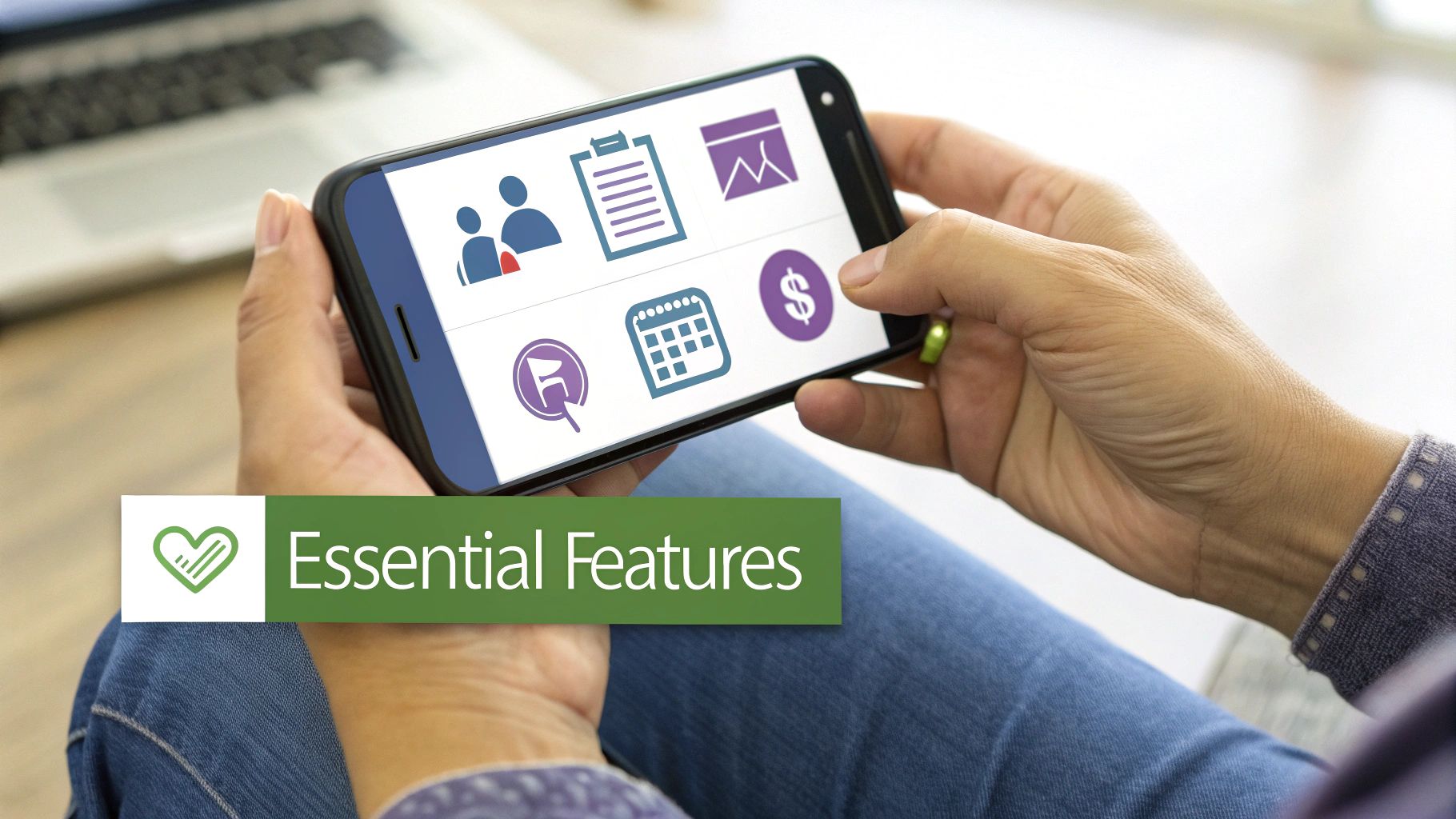
When you start looking at patient engagement software, you’ll quickly realize there’s a huge range of options out there. But while many platforms are loaded with bells and whistles, only a handful of core features truly form the backbone of a system that will make a real difference in your practice.
These are the non-negotiables. They’re the tools that tackle the biggest communication headaches and administrative logjams you face every single day. Think of them as the must-haves for solving real-world problems, from ending the endless game of phone tag to finally getting a handle on no-shows. Knowing what to look for will help you cut through the noise and find a solution that delivers.
Secure Patient Portals and Messaging
First up is a secure patient portal. This is your practice's digital front door. It’s where patients can go anytime to check lab results, see their health records, or review care instructions without having to call your office. Giving them this direct access empowers them and cuts down on the routine phone calls that tie up your staff.
Right alongside the portal, you need HIPAA-compliant two-way messaging. This is the feature that finally kills phone tag for good. Patients can send a quick, secure note about a prescription or a follow-up question, and your team can reply when they have a moment. It’s all documented, clear, and incredibly efficient.
Automated Scheduling and Reminders
Booking appointments by phone is a massive time-drain for your front desk. Good patient engagement software hands this process over to the patients themselves, letting them book, change, or cancel appointments online, 24/7. This self-service approach is what patients expect now, and it frees up your team for more important work.
And then there are the reminders. Automated reminders are probably the single most effective tool for slashing your no-show rate. The system can send a text, email, or even a voice call at just the right time before an appointment. Practices that implement these systems see a major drop in missed appointments, which goes straight to protecting your bottom line. You can dive deeper into the best ways to set these up by reading about effective patient appointment reminders.
A powerful patient engagement platform doesn't just send messages; it opens conversations. It transforms one-way announcements into two-way dialogues that build trust and improve care coordination.
The best platforms don't just blast out reminders; they allow for easy confirmations and customizable messages, helping you keep your schedule full and predictable.
Streamlined Administrative Tools
The right software should also help you conquer the mountain of administrative work that slows everything down. Look for features that automate daily workflows and get rid of tedious manual data entry.
- Digital Intake and Check-In: Let patients fill out all their forms on their phone or computer before they even walk in the door. This saves a ton of time in the waiting room and guarantees the information is accurate and easy to read.
- Online Bill Pay: Give patients a simple, secure way to see their statements and pay their bills online. When it’s this easy, you get paid faster and spend less time stuffing envelopes and making collection calls.
- Educational Content Delivery: Send targeted health information—like pre-op instructions or articles on managing diabetes—directly to the right groups of patients, right when they need it.
The Power of AI Integration
The most forward-thinking platforms are now building in artificial intelligence to push automation even further. AI-powered voice agents can take on complex administrative jobs that go way beyond simple reminders.
These smart systems can answer inbound calls around the clock to handle things like prescription refill requests, prior authorizations, and even initial patient intake. For example, Simbie AI can ask clinically relevant questions and type the answers right into the patient’s EHR. This gets your highly-trained staff out of repetitive work so they can focus entirely on the patients in front of them. By offloading these time-consuming tasks to AI, practices can seriously lighten their administrative load and run a much smoother operation.
How Better Engagement Boosts Your Bottom Line
Investing in patient engagement software isn't just about making patients happier—it's a smart business move that pays dividends across your entire practice. The benefits are real and measurable, impacting everything from clinical outcomes to how smoothly your office runs and, of course, your financial health. When you connect with patients more effectively, you start a positive chain reaction that makes every part of your organization stronger.
This technology helps you stay connected with patients between visits, turning them from passive recipients of care into active partners in their own health. When people are more involved, they’re far more likely to stick to their treatment plans, which naturally leads to better results and a more successful practice.
Driving Better Clinical Outcomes
One of the biggest returns you’ll see is in your clinical results. It’s simple: engaged patients are healthier patients. When they can easily see their health info, securely message their providers, and get timely reminders, their ability to follow through with treatment plans goes way up.
For anyone managing a chronic condition like diabetes or heart disease, this kind of consistent connection is a lifeline. The software allows for ongoing monitoring and support, helping them stay on top of their health. This means fewer complications, fewer hospital readmissions, and better long-term outcomes—exactly what modern healthcare is all about.
A well-implemented patient engagement strategy can do more than just streamline workflows; it can fundamentally improve population health by empowering individuals to take control of their own well-being.
Better outcomes also do wonders for your practice's reputation. Happy, healthy patients are your best advertisers. They leave positive reviews and recommend you to friends and family, driving organic growth. To really make this work for you, it helps to fit patient engagement into a larger strategy, like the one detailed in this guide to digital marketing for medical practices.
Slashing Operational Inefficiencies
From an operational standpoint, patient engagement software is a huge relief for your administrative team. It automates all those repetitive, time-sucking tasks that lead to burnout, freeing up your staff to focus on what they do best: helping patients.
Think about what these automated features can do for you:
- Reduced No-Show Rates: Sending appointment reminders automatically by text or email is one of the easiest ways to cut down on missed appointments. A full schedule protects your daily revenue and keeps your bottom line healthy.
- Less Administrative Burden: Digital intake forms get rid of tedious manual data entry. Online scheduling frees up your front desk from being tied to the phone all day. This means a smaller team can handle a larger volume of patients without feeling overwhelmed.
- Faster Payment Cycles: When patients can see and pay their bills online, they’re more likely to settle them quickly. This simple convenience speeds up your collections and dramatically improves your practice's cash flow. You can learn more about how technology streamlines billing in our guide to healthcare revenue cycle optimization.
These improvements aren't happening in a vacuum. With chronic diseases on the rise and the healthcare system moving toward value-based care, practices need solutions that improve outcomes while cutting costs. AI-driven platforms like Simbie AI are at the forefront, automating complex jobs and reducing manual workloads by up to 60%, which helps practices grow without being buried in paperwork.
Boosting Financial Performance
At the end of the day, all these clinical and operational wins add up to a much stronger financial position. The return on investment from patient engagement software isn't just a theory; you can see it right in your practice's key performance metrics.
By cutting down on no-shows, you get back revenue that was walking out the door. By automating admin work with AI-powered tools, you lower your overhead and might not need to hire that next staff member. And by keeping patients happy, you keep them coming back while attracting new ones. Each benefit builds on the last, creating an undeniable financial argument for making the investment.
Choosing the Right Software for Your Practice

Picking the right patient engagement software can feel like a monumental task, but it doesn't have to be. The key is to break the decision down into a clear, structured evaluation. Your goal is to find a platform that solves today's problems and can grow with your practice tomorrow. Think of it less like buying a product and more like choosing a long-term partner.
You wouldn’t hire a new team member without making sure they have the right skills and fit your office culture, right? Apply that same thinking here. You need a solution that fits seamlessly into your current workflow, is easy for your team and patients to use, and comes with solid support when you hit a snag.
Start With Your Core Needs
Before you even book your first demo, take a step back and define what success actually looks like for your practice. What are the biggest administrative headaches you're trying to eliminate? Is your main goal to slash no-show rates, get paid faster, or simply rescue your front desk staff from being tied to the phone all day?
Your answers will immediately highlight the features that matter most. Make a list of your absolute must-haves. This isn't about finding software with the longest feature list; it’s about finding the one with the right features to solve your specific challenges.
This list becomes your guide. It keeps you focused during sales calls and helps you avoid getting sidetracked by flashy tools you’ll probably never use. Nailing this first step is the single most important thing you can do to make a smart, confident decision.
Key Evaluation Criteria
With your goals in hand, you can start measuring potential software against a few critical benchmarks. These are the make-or-break factors that determine whether a platform will be a genuine asset or just another operational headache.
- Seamless EHR/EMR Integration: Your patient engagement software has to talk to your existing Electronic Health Record system without a hitch. If it doesn't, you’ll create frustrating data silos and force your staff to enter information twice, which completely defeats the purpose of the software. Ask vendors for concrete proof of successful integrations with your specific EHR.
- Rock-Solid HIPAA Compliance: This is an absolute deal-breaker. The platform must meet all HIPAA standards for protecting patient data, from encryption to secure communication. Don’t just take their word for it—ask to see their compliance documentation and confirm they will sign a Business Associate Agreement (BAA).
- Ease of Use (for Everyone): If the software is clunky, people won't use it. It's that simple. Your team needs an interface that feels intuitive and makes their jobs easier, not harder. At the same time, the patient portal or app has to be straightforward enough for someone who isn't tech-savvy to navigate without calling your office for help.
"The best technology is invisible. It should enhance the human connection between patient and provider, not create a barrier. If your team or your patients struggle to use it, it has failed its primary purpose."
Scalability and Support
Your practice isn't static, and your needs will evolve. The software you pick today must be able to keep up. Can the platform handle more providers, new locations, or a growing patient load without performance issues or a massive price hike? It’s a question you need to ask right from the start.
Just as crucial is the quality of customer support. When something goes wrong—and eventually, it will—you need quick and competent help from people who actually understand healthcare. Find out about their support hours, average response times, and whether you'll get a dedicated contact. Great support isn't a bonus; it's a core feature of a true partnership. For example, a system like Simbie AI should be backed by a team that can help you fine-tune its powerful voice-AI features as your practice grows.
Patient Engagement Software Buyer's Checklist
To help you compare your options side-by-side, we’ve put together a checklist. Use this table to score different vendors on the criteria that matter most to your practice. It’s a simple way to keep your evaluation organized and objective.
| Evaluation Criterion | Vendor A | Vendor B | Simbie AI |
|---|---|---|---|
| Seamless EHR Integration | |||
| HIPAA Compliance & BAA | |||
| Intuitive Staff Interface | |||
| Easy Patient Portal/App | |||
| Customizable Patient Communication | |||
| Automated Appointment Reminders | |||
| Digital Intake & Forms | |||
| Online Bill Pay & Statements | |||
| AI-Powered Voice Automation | |||
| Scalability for Growth | |||
| Responsive Customer Support | |||
| Transparent Pricing | |||
| Positive User Reviews | |||
| Implementation & Training Included | |||
| Reporting & Analytics |
By methodically checking these boxes, you can cut through the marketing noise and get a clear picture of which solution truly aligns with your practice's operational and clinical goals. This structured approach ensures you invest in a tool that delivers real, measurable value from day one.
A Roadmap for Successful Implementation
Choosing the right patient engagement software is just the first step. The real test comes when you roll it out. A smooth implementation can make the platform a core part of your workflow, while a bumpy one just creates another headache for your team. Think of it like building a bridge—a great design is useless without a solid construction plan to connect it securely to both sides.
Success doesn't happen by accident. You need a clear, strategic roadmap to guide your practice from the initial decision all the way to full adoption by both your staff and patients. This process is as much about managing people as it is about technology, making sure everyone understands the "why" behind the change.
The Planning and Preparation Stage
Before you even think about the technical side, you need a solid plan. This foundational stage sets the tone for the entire project and can prevent a world of hurt down the line. Start by getting crystal clear on your goals. Are you trying to cut your no-show rate by 25%? Maybe you want to slash administrative phone calls in half or just get paid faster.
With your goals defined, you need to assign a project lead. This person is your quarterback, acting as the main point of contact between the software vendor and your team. They'll be responsible for keeping everything on schedule and putting out any fires that pop up. This role is absolutely essential for keeping the momentum going and making sure everyone is on the same page.
Navigating Technical Integration and Vendor Support
Now for the technical part. The heart of any implementation is getting the new software to talk to your existing Electronic Health Record (EHR) system. This is non-negotiable. If the systems don't communicate seamlessly, you'll end up with data stuck in different places or, even worse, your staff will be stuck doing double data entry. That completely defeats the purpose.
You'll need to work hand-in-hand with your vendor to map out this integration.
- Data Mapping: Nail down exactly what information will flow between the two systems. This includes things like appointment schedules, patient demographics, and billing data.
- Testing Phase: Don't skip the testing period. This is your chance to find and squash any bugs before you go live.
- Ongoing Support: Get a clear picture of the technical support your vendor will offer after launch. You need a reliable partner you can call when things inevitably go sideways.
The goal of integration is to make the technology disappear. It should work so smoothly in the background that your staff can focus on the patient, not the software.
Driving Adoption Through Training and Onboarding
Great technology is useless if nobody uses it. That's why staff training and patient onboarding are so critical. A rushed, one-and-done training session is a recipe for confusion and low adoption. Instead, build a training plan that shows your team exactly how this new tool will make their jobs easier, not harder.
Make the training specific to each role. Your front desk staff needs to become masters of the scheduling and messaging features. Your billing team, on the other hand, should be laser-focused on the online payment tools. The key is to frame the software as the solution to their biggest daily frustrations. Explaining how systems with AI-powered voice agents like Simbie AI can take over repetitive inbound calls will get your front desk team excited about the change.
Finally, don't forget your patients. Create a simple plan to get them on board. Put up flyers and posters in the office. Send out an email campaign with clear, simple instructions and a link to sign up. The easier you make it for patients to get started, the higher your adoption rates will be—and the faster you’ll see a real return on your investment.
The Future of Patient Engagement is AI-Powered

The world of patient engagement software is evolving fast, and artificial intelligence is at the heart of that change. Early platforms were great for automating simple things, but the next wave of AI is pushing us toward truly predictive and personalized care. We're moving from just reacting to problems to actively preventing them.
Think about it this way: instead of just pinging a patient with a reminder, newer AI systems can analyze their data to spot who’s at high risk for missing medications or being readmitted to the hospital. This gives care teams a heads-up to step in with the right support before a small issue becomes a big one. It’s all about using data to get ahead of the curve.
The Rise of Conversational AI
One of the most practical developments we're seeing is conversational AI, which makes talking to your healthcare provider's office feel a lot more human. Voice-based AI assistants can handle complex conversations with patients around the clock. They can manage initial intake, answer questions about a treatment plan, or schedule a follow-up, all with a surprisingly natural feel.
This kind of technology makes healthcare easier to access for everyone, especially for patients who aren't tech-savvy or prefer talking over typing. By just using their voice, patients can take control of their health, which is a huge step in breaking down barriers to engagement. To see how this trend fits into the bigger picture, you can explore how AI is already being used in small to medium businesses.
AI in patient engagement isn't about replacing the human touch; it's about making it possible to deliver that touch more often. When AI handles the routine stuff, your staff is free to focus on the high-value, empathetic care that patients really need.
Creating a Smarter, Connected System
The end game is to create a fully connected system that pulls in data from multiple sources to build a complete health profile for every patient.
- Wearable Device Integration: Imagine getting real-time alerts from a patient's smartwatch about their activity levels, sleep quality, or vital signs. This data allows for truly proactive remote monitoring and care adjustments.
- Population Health Management: By looking at anonymized data across all patients, these platforms can spot health trends in your community. This helps your practice launch targeted initiatives that make a real difference.
The patient engagement software market is set to explode, growing from USD 20.55 billion in 2025 to a projected USD 61.06 billion by 2032. That kind of growth sends a clear signal: investing in this technology now will set your practice up to lead in a future where healthcare is more intelligent, connected, and focused on the patient. For a deeper dive, check out these market projections.
Got Questions? We’ve Got Answers.
When you're thinking about bringing new technology like patient engagement software into your practice, a lot of questions pop up. It’s a big decision, and you need to feel confident you're making the right one. Let's tackle some of the most common questions practice managers and providers ask, from data security to getting everyone on board.
We’ve gathered the essential questions to give you the clear, straightforward answers you need to move forward.
How Secure Is Patient Data on These Platforms?
This is usually the first question everyone asks, and rightly so. Any patient engagement platform worth its salt puts security front and center. They are legally required to follow strict HIPAA (Health Insurance Portability and Accountability Act) rules. This means all patient data is locked down with encryption, both when it's just sitting on a server and when it's moving between systems.
Here's the bottom line: before you sign anything, make sure the vendor provides a Business Associate Agreement (BAA). This is a non-negotiable legal contract that makes them just as responsible for protecting patient data as you are.
Will Our Patients Actually Use This Software?
Patient buy-in is everything. The good news is that the best platforms are designed to be incredibly easy to use, even for patients who aren't tech-savvy. Think about it—people are already used to booking flights and managing their bank accounts online. They've come to expect that same level of convenience from their healthcare.
To get patients on board, look for software that offers:
- A clean, simple design that’s easy to get around.
- Multiple ways to connect, like SMS texts and email.
- A painless signup process that doesn’t feel like a chore.
We've seen practices get the best results when they actively talk about the new tools in the office and give patients simple, clear instructions to get started.
How Difficult Is It to Get This Up and Running?
This really depends on the vendor, but a good partner won't just hand you the software and walk away. They’ll be with you at every step. The most important piece of the puzzle is making sure the new software plays nicely with your current Electronic Health Record (EHR) system. Always choose a vendor who can show you a history of successful integrations.
The whole process usually unfolds in a few stages: planning, technical setup, and then training your team. It definitely takes some coordination, but with a solid plan and a supportive vendor, you can get it done without turning your daily operations upside down.
Ready to see how smart automation can change the game for your practice? Simbie AI brings a clinically-trained voice AI to your team, handling administrative work 24/7 so your staff can focus on what matters most—your patients. Learn more about Simbie AI and book a demo today.