

At its core, a medical virtual receptionist is a service designed to handle all those front-desk administrative tasks, but remotely. Think of it as a digital front desk that can manage calls, book appointments, and process patient information 24/7, often without needing direct human supervision. The goal is to free up your on-site team so they can focus entirely on the patients right in front of them. It's a strategic move to enhance efficiency and patient care simultaneously.
The Hidden Costs of an Overwhelmed Front Desk
We’ve all seen it: the phone is ringing off the hook, a line of patients is forming at the counter, and a stack of paperwork seems to grow by the minute. For many medical practices, this isn't just a bad day; it's the daily reality. The traditional front desk model is simply cracking under the pressure of modern patient demands and administrative loads.
This chaos isn't just stressful—it creates real bottlenecks that have significant, though often invisible, consequences for the practice. When the front desk becomes a point of friction instead of a welcoming gateway, the entire patient journey is compromised from the very first interaction.
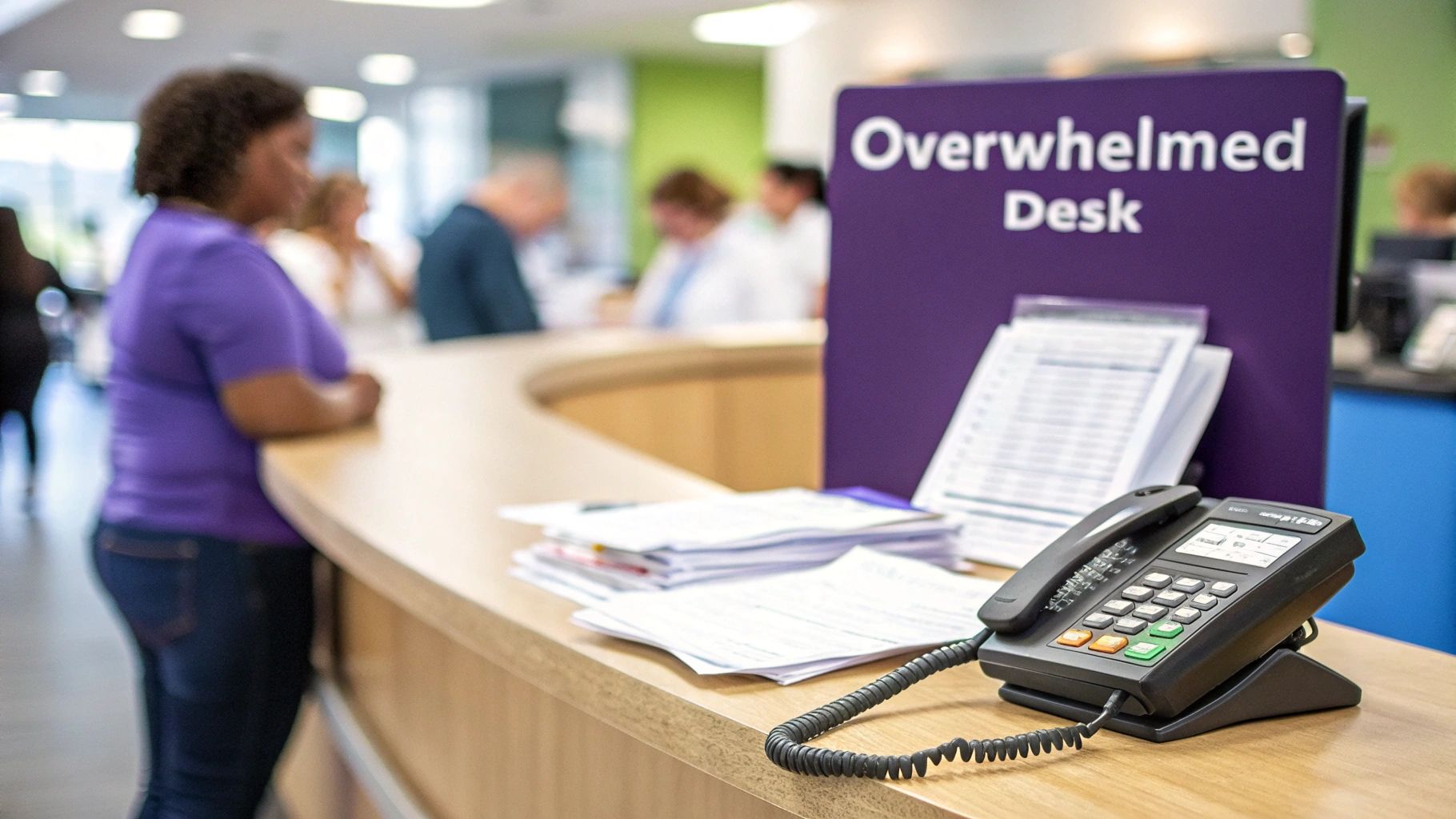
The most direct hit is to your patient volume. Studies have found that an incredible 74% of patients will hang up if they're put on hold. That's not just a missed call; it's lost revenue and a potential new patient who is now likely looking for another provider. Each unanswered ring is a missed opportunity to connect with someone who needs your care, and in a competitive healthcare landscape, these missed connections add up quickly. A single busy signal can be the difference between gaining a new long-term patient and losing them to a competitor down the street.
The Ripple Effect on Staff and Patients
This constant pressure doesn't just hurt the practice's finances; it takes a serious toll on your team and the quality of patient care. When your staff is juggling phones, checking in patients, and answering billing questions all at once, errors are bound to happen. The cognitive load becomes too high, and small mistakes can snowball into significant problems.
This can quickly spiral into:
- Scheduling Errors: Think double-booked slots or incorrect patient details, which can throw the entire clinic's schedule into disarray. A simple mistake here can lead to long wait times, frustrated patients, and stressed-out providers trying to catch up all day.
- Patient Frustration: Long waits on the phone and rushed, impersonal interactions at the desk create a negative experience from the very first touchpoint. Patients may feel like they are just a number, which undermines the trust and rapport essential for effective healthcare.
- Staff Burnout: Juggling too many tasks is a recipe for administrative burnout. This leads to higher employee turnover and the expensive, time-consuming cycle of hiring and training new people. Replacing a skilled front desk team member can cost thousands in recruitment and lost productivity.
The fallout from an overstretched front desk can even create serious compliance risks. When staff are too busy, critical tasks like adhering to HIPAA requirements for IT equipment disposal can be overlooked, potentially leading to heavy fines and damaging your practice's reputation.
When you add it all up, it becomes clear that the old way of running a front desk just isn't working anymore. It’s time for a solution built for the demands of a modern healthcare practice, one that empowers both your staff and your patients.
What Is a Medical Virtual Receptionist?
When you hear “medical virtual receptionist,” your mind might jump to a basic answering service—someone sitting in a call center, taking messages. That’s a common misconception, and it’s like comparing a modern smartphone to a flip phone. They both make calls, but that's where the similarities end.
A true medical virtual receptionist is a sophisticated, AI-powered system built from the ground up for the unique demands of a healthcare practice. Think of it less as a person and more as a digital extension of your front office staff—one that works 24/7 without ever needing a coffee break. It is an intelligent system designed to understand context, execute complex tasks, and integrate seamlessly into your existing clinical workflows.
This isn’t just about answering the phone. It’s about creating a smart, automated hub that manages the entire patient communication workflow with precision and empathy.
When a patient calls, this digital assistant doesn't just record a name and number. It instantly understands why they're calling and takes the right action, right away. Using natural language processing, it can discern intent from the caller's words, whether they need to book a check-up, ask about lab results, or get directions to the clinic.
More Than Just a Call Center
The real magic is in what a medical virtual receptionist can do. It actively participates in running your clinic, moving far beyond the passive role of a traditional answering service. It is a proactive tool that streamlines operations and enhances patient engagement around the clock.
It handles a surprising number of critical tasks that usually bog down your front desk staff:
- Smart Call Routing: The system figures out if a patient needs to book an appointment, ask about a bill, or request a prescription refill. It then routes the call to the right person or department, or handles the task itself, ensuring every call is managed efficiently.
- 24/7 Appointment Booking: It checks your calendar in real-time, finds open slots that match patient and provider preferences, books the appointment, and even sends out automated reminders via text or email to cut down on no-shows.
- Effortless Patient Intake: New patients can be guided through the entire intake process right over the phone, with all their demographic and insurance information captured and entered correctly into your system, reducing manual data entry errors.
- Simple Prescription Refills: It processes routine refill requests by verifying patient info against their records and sending the request directly to your clinical team for approval, freeing up phone lines for more urgent matters.
At the heart of it all is the system's ability to sync directly with your Electronic Medical Record (EMR) or Practice Management (PM) software. This connection is what makes it so powerful. Every interaction is logged, every appointment is accurate, and every piece of patient data is up-to-date across your entire system.
This integration transforms the virtual receptionist from a simple call-handling tool into an indispensable part of your practice. It ensures your clinic runs smoothly around the clock, giving every patient a consistent and professional experience every single time they reach out. It's a solution designed not just to field calls, but to solve the real operational headaches that busy medical offices face every day.
The Real-World Benefits for a Modern Healthcare Practice
Bringing a medical virtual receptionist on board isn't just a minor operational change—it's a strategic decision that delivers concrete, measurable results across your entire practice. The advantages go way beyond just getting the phones answered. You'll see positive ripple effects on your finances, daily workflow, and, most importantly, the quality of care you give your patients. By handing off the routine administrative tasks, you free up your highly-trained team to focus on what they do best: providing excellent clinical care and building patient relationships.
This shift explains why the healthcare virtual assistants market is growing so quickly. It was valued at USD 1.1 billion back in 2021 and is expected to hit USD 6.0 billion by 2026, all because practices desperately need to be more efficient. More and more clinics are using AI to handle calls and appointments, with some seeing their administrative overhead drop by as much as 60%. The numbers don't lie; the financial and operational wins are significant. You can read the full research about the healthcare virtual assistants market growth to dig deeper.
A Stronger Financial Foundation
One of the first things you'll notice is the impact on your budget. A virtual receptionist costs just a fraction of what it takes to hire, train, and keep a full-time employee. We're not just talking about salary here; think about all the related expenses you can cut, like benefits, payroll taxes, paid time off, and even the need for extra office space and equipment.
Plus, you can't ignore the high cost of staff turnover. Administrative burnout is a huge problem, causing stress for 53% of practice managers. A virtual assistant takes that pressure off, handling the repetitive, high-volume tasks that often lead to exhaustion. This creates a much more stable and sustainable work environment. When your team is happier and less stressed, they stick around longer, which saves you money on recruitment and training, and provides better continuity of care for your patients.
By automating the administrative workload, you're not just cutting costs. You are reinvesting your team's valuable time into patient-facing activities that generate revenue and build loyalty, such as discussing treatment plans or managing complex billing inquiries.
Smoother, Error-Free Operations
From a day-to-day perspective, a medical virtual receptionist provides a level of consistency and reliability that's hard to match with human staff alone. It's on the job around the clock, making sure you never miss a call—whether it comes in during a hectic lunch rush or in the middle of the night. This 24/7 availability means every opportunity to book a new patient or help an existing one is captured, maximizing your practice's accessibility and revenue potential.
This technology also slashes the risk of human error, which is often a byproduct of a chaotic work environment. Here’s where you’ll see the biggest improvements:
- Seamless EMR Integration: Every appointment, patient question, and piece of intake information gets logged into your EMR system automatically and accurately. This eliminates the need for manual data entry and reduces the chance of critical errors.
- Reduced Manual Mistakes: Automating repetitive tasks like data entry and scheduling gets rid of common slip-ups like double-bookings or typos in patient files. This leads to a more organized schedule and fewer disruptions for both patients and providers.
- Consistent Patient Communication: Every single caller gets the same high-quality service, following your practice's exact scripts and protocols every time. This ensures a professional and uniform patient experience, reinforcing your practice's brand.
A Better Patient Experience
In the end, all these improvements lead back to one thing: the patient. Nobody likes being put on hold, and studies have shown that most patients will simply hang up if they have to wait. A medical virtual receptionist gets rid of hold times completely, offering instant, helpful service the moment a patient calls. This immediate responsiveness is a powerful differentiator in today's on-demand world.
When patients can book a visit, ask a question, or request a refill without any friction, they feel heard and respected. It makes for a great first impression and starts building a real sense of trust and loyalty. By providing that immediate and reliable support, you create a patient experience that truly makes your practice stand out and encourages positive word-of-mouth referrals.
A Day in the Life with Your Virtual Receptionist
To really get a feel for how a medical virtual receptionist changes the game, let's walk through a typical day at a busy practice. Imagine it's 8:00 AM. Your in-house team is getting ready for the first wave of patients, but your virtual receptionist has already been "at work" for hours, handling overnight inquiries and is now managing the morning phones.
The first call of the morning is from a new patient looking to book a physical. Instead of pulling your front desk staff away from their morning prep and greeting arriving patients, the virtual receptionist greets the caller warmly. It quickly confirms they're new to the practice and starts the intake process right away, guiding them with clear, friendly prompts.
In less than two minutes, it gathers their name, date of birth, and insurance info, entering it all directly and accurately into your EMR system. Then, it pulls up your clinic’s live calendar, offers a few available slots based on the patient's preferred day, and books the appointment. Before the call even ends, the patient receives a confirmation text with a link to their new patient forms. Simple as that. No hold music, no waiting, just efficient service.
Managing the Mid-Day Rush
Fast forward to 11:30 AM, and the clinic is in full swing. Your front desk staff is juggling check-ins, collecting co-pays, and verifying insurance cards. At the same time, the phone lines are lighting up with calls. This is where a virtual receptionist truly proves its worth. It can field dozens of calls at once, meaning no patient ever gets a busy signal or gets stuck on hold.
Here’s a quick look at what it can handle in just a few minutes, simultaneously:
- Call One: A patient needs a refill for their blood pressure medication. The system verifies their identity against their patient record, logs the request, and sends it directly to the clinical team's queue for approval, all without human intervention.
- Call Two: Someone has a question about a recent bill. The virtual assistant recognizes the query is about billing and instantly routes the call to the right person—your billing specialist—who is available to help with this more complex issue.
- Call Three: Another patient needs to move their follow-up appointment to next week. The system finds their current booking, cancels it, and helps them find a new time that fits their schedule, updating the EMR in real-time.
Each of these interactions is logged automatically in the patient’s file, creating a perfect, time-stamped record. This frees up your human staff from getting bogged down by these routine tasks, allowing them to give their full, undivided attention to the patients right in front of them, providing a more personal and higher-quality in-office experience.
After-Hours and Emergency Triage
Just because the clinic doors close doesn't mean patient needs stop. It’s 9:00 PM, and a call comes in from a parent whose child has a high fever. Your virtual receptionist is trained to listen for keywords that signal a potential emergency, such as "shortness of breath," "chest pain," or "high fever."
It calmly informs the parent that it can't offer medical advice but immediately escalates the call to the on-call nurse's line, providing the nurse with the caller's information. The parent gets the help they need, right when they need it. This smart triage provides incredible peace of mind and shows your patients you’re there for them around the clock, strengthening their confidence in your practice.
How to Implement a Virtual Receptionist in Your Practice
Bringing a virtual receptionist into your practice is a lot more straightforward than you might think. It's not about ripping out your old systems and starting from scratch overnight. Think of it as a gradual, strategic integration, a phased rollout that turns a tech investment into a genuine strategic advantage for your clinic. The secret is taking it one clear step at a time, ensuring a smooth transition for both your team and your patients.
It all starts with taking an honest look at your practice's biggest headaches. Are you constantly missing calls during lunch hours? Is your front desk staff drowning in appointment scheduling and reminder calls? Is patient intake a source of errors and delays? Nailing down these specific pain points helps you figure out what you actually need and lets you pick a provider that solves your most urgent problems first.
Finding the Right Partner
Once you know what you’re looking for, the search for a HIPAA-compliant provider begins. This part is absolutely non-negotiable. Any partner you consider must have ironclad security protocols to protect patient health information (PHI). This includes end-to-end encryption, secure data centers, and a signed Business Associate Agreement (BAA).
Just as important is how well their system plays with yours. You need seamless communication between the virtual receptionist and your EMR for data to flow accurately and in real-time. A system that can read and write directly to your EMR is the gold standard. You can learn more about how EMR integration empowers your practice to build a truly connected workflow.
The market for these services is blowing up. Projections show the healthcare virtual assistants market is expected to reach USD 19.5 billion by 2035, which tells you just how many practices are getting on board. This boom is fueled by the need to automate tasks like answering calls and booking appointments—jobs where AI is great at cutting down on human error and improving operational efficiency. For a deeper dive, you can explore the full research on the healthcare virtual assistants market.
Planning Your Rollout and Team Training
With a provider picked out, it's time to map out the implementation. A great rollout is about more than just turning on the software. It takes some thoughtful planning and clear communication with your team to ensure everyone is on board and understands the benefits.
I always recommend starting with a pilot program. Have the virtual receptionist handle just one specific task to begin with, like managing after-hours calls or handling new patient intake. This gives you a chance to work out the kinks in a controlled environment and get feedback from your team before you expand its role. This approach builds confidence and minimizes disruption.
Training is just as critical. Your staff isn't being replaced; they're being supported. Show them how the virtual receptionist frees them up to focus on higher-value, in-person patient care. When your team understands how this tool makes their jobs easier and reduces their stress, they become champions of the new system.
Finally, as you're setting things up, looking into virtual phone number solutions for business can really boost your practice's communication and make it easier for patients to reach you. A well-planned implementation makes for a smooth transition, giving your staff a helping hand and making your clinic more efficient from day one.
Is a Virtual Receptionist Really Worth the Investment?
When you’re thinking about bringing new technology into your practice, it always boils down to one simple question: will this actually pay off? For a medical virtual receptionist, the return on investment (ROI) goes way beyond just cutting costs. It’s about creating real, measurable value for your patients, your staff, and your bottom line.
To figure out the true ROI, you have to look at the hard numbers, of course. But you also need to account for the softer, yet equally important, benefits that make a huge difference in the day-to-day running of your practice and contribute to its long-term success.
Hard Numbers: Tracking the Financial Wins
The most obvious place you'll see a return is in your budget. A virtual receptionist directly tackles the high overhead of front-office administration, including salaries, benefits, and the time and money spent on training and retaining staff. By handing off the repetitive, time-consuming tasks, you can dramatically reduce your administrative spend or reallocate those resources to more critical areas.
To get a crystal-clear picture of the financial impact, you’ll want to track a few key performance indicators (KPIs). These metrics give you the concrete data to show your investment is working.
Here’s where to start:
- Call Abandonment Rate: Think about how many patients hang up because they're stuck on hold. A virtual receptionist can drop this number to nearly zero, which means you’re capturing revenue you were likely losing before. Each captured call is a potential appointment.
- New Appointment Bookings: Your practice doesn't have to stop working when you close for the day. Track the number of new appointments booked after hours—this is business you wouldn't have captured otherwise and represents pure growth.
- Staffing Costs: Add up the savings from reduced overtime pay or the need for temporary help during busy periods. These are direct, immediate savings you can take to the bank. Calculate the cost of turnover and how improved staff retention impacts your bottom line.
- No-Show Rate: With automated, consistent appointment reminders, you can significantly reduce the number of no-shows, which directly translates to more filled appointment slots and increased revenue.
Ultimately, you’re looking to see how these small improvements add up to a healthier, more profitable practice. It’s about making sure every single patient call turns into a scheduled visit and that your clinic runs as smoothly and cost-effectively as possible.
Beyond the Balance Sheet: The Impact on People
While the financial metrics are powerful, the "human" ROI is just as important. Creating a calmer, more organized front office has a ripple effect that benefits everyone who walks through your doors—staff and patients alike. This improved environment is a key asset for any healthcare practice.
Imagine the boost in team morale when your staff isn't constantly interrupted by a ringing phone. Reducing that daily stress and frustration helps prevent burnout, which in turn leads to lower employee turnover—a huge, often hidden, cost for any practice. A happier team is a more productive and empathetic team. For a deeper look at the technology behind this, you can learn more about healthcare conversational AI and how it works.
At the same time, you'll likely see your patient satisfaction scores climb. When people can get what they need instantly without being put on hold, their entire perception of your practice improves. They feel valued and respected. A better patient experience builds loyalty, encourages positive online reviews, and creates a virtuous cycle that naturally attracts new patients through word-of-mouth.
Frequently Asked Questions
Bringing a new system like a medical virtual receptionist into your practice naturally brings up some questions. Practice managers often ask how it will blend with their current workflow, what it means for their staff, and how patients will react. Let's walk through some of the most common ones.
Will This Technology Replace My Front Desk Staff?
Not at all. Think of a medical virtual receptionist as a powerful assistant for your team, not a replacement. It’s designed to take on the high volume of repetitive, predictable tasks that often bog down the front desk—things like routine appointment scheduling, basic questions, and reminders. These are the tasks that, while necessary, don't require a human touch.
This frees up your incredible human staff to focus on the work that truly requires their expertise and compassion. They'll have more time for complex insurance verifications, helping a patient in the office with a difficult situation, or simply providing a warm, personal welcome. It's about elevating their role from task-doer to patient experience manager, making their job more fulfilling and your practice more effective, not smaller.
How Secure Is Patient Data With a Virtual System?
This is a critical question, and the answer is that patient data security is the absolute top priority. Reputable virtual receptionist platforms are built from the ground up to be fully HIPAA-compliant. They use multiple layers of security to protect sensitive information at every stage of the interaction.
All protected health information (PHI) is encrypted, both in transit and at rest. These systems are specifically designed to connect safely with your existing EMR through secure, audited channels. Before choosing a provider, you should always verify their security credentials and ask for their Business Associate Agreement (BAA). Getting familiar with the world of HIPAA compliant AI tools is a smart move to ensure you're always keeping patient data safe and maintaining your practice's integrity.
A trustworthy medical virtual receptionist provider makes compliance a cornerstone of their service, giving you confidence that your practice is upholding all legal and ethical standards for data protection. They should be transparent about their security measures.
Can an AI Receptionist Handle Upset or Emergency Calls?
AI is great at handling predictable conversations, but it’s also smart enough to know its own limits. A well-designed system is programmed to instantly recognize signs of an emergency, a complex medical question, or an emotionally charged call. It listens for specific keywords, tones of voice, and phrases that indicate distress or urgency.
When it detects these situations, it doesn't try to handle them. Instead, its protocol is to immediately and smoothly transfer the call to a human staff member. For example, it might say, "I understand this is important, and I'm connecting you with a member of our team who can best assist you right now." This ensures that every sensitive call gets the empathy, nuance, and critical thinking it deserves from a real person. Patient safety and compassionate care always come first.
Ready to see how a virtual receptionist can free up your practice? Discover how Simbie AI automates administrative tasks, reduces staff burnout, and improves patient satisfaction. Get started with Simbie AI today.