
Burnout isn't a soft topic anymore. It's a workforce problem, a scheduling problem, and an operations problem. The Association of American Medical Colleges projects a U.S. physician deficit of 86,000 by 2036 according to a review in Frontiers in Public Health (frontiersin.org). If practices keep treating burnout like a personal weakness instead of a broken system, that gap gets harder to close.
I say that as a physician-turned-practice-consultant who has watched good doctors hit the wall for reasons that had nothing to do with grit. We've tried the yoga lunch hour. We've tried the resilience webinar. Those things can help some people for a moment, but they don't fix a bad template, a bad inbox, or a bad staffing model. If you want to know how to prevent physician burnout, start where the work breaks people.
More than just a buzzword, the real cost of physician burnout
Small and mid-sized practices get hit from both sides. They don't have the spare capacity of a large system, and they still carry the same documentation load, patient messaging load, refill work, prior auth work, and call volume.

The part many leaders miss is this. Burnout often looks like an individual problem because the suffering is individual, but the cause is usually operational. Nearly half of physicians report that decreasing administrative burden would have the best impact on reducing burnout, and physicians often spend as much or more time on EHR and paperwork than with patients, according to C8 Health’s review of the gap facing smaller practices (c8health.com). The same piece notes that reducing administrative time by 10 minutes per interaction can save over 10,000 hours annually in a department of 250 providers. That example is from a much bigger group than most independent practices, but the lesson still applies. Small teams feel the friction faster because they have less room for waste.
Why small practices burn out differently
In a hospital system, one bad workflow might annoy a department. In a six-physician group, it can wreck the month.
A few patterns show up again and again in smaller clinics:
- Inbox creep: Results, portal messages, refill requests, and forms pile up after clinic, so physicians finish the “second shift” at home.
- Role blur: MAs, front desk staff, nurses, and physicians all end up doing work that belongs to someone else.
- No slack in the schedule: One sick call, one no-show gap filled badly, or one provider out on leave can destabilize the whole week.
- Tech that adds clicks instead of removing them: Many practices bought software that digitized the mess rather than fixing it.
Practical rule: If your physicians are doing work that a protocol, assistant, or system could handle safely, your practice has a design problem.
That’s why I usually push leaders toward operational fixes first, then support programs second. Broader workplace support still matters, and some groups also pair workflow changes with a formal wellness corporate solution so managers have a structured way to support staff. But if the physician still goes home with two hours of charting and a refill basket, the root issue is untouched.
Staff attrition follows the same logic. Burnout rarely stays isolated to one doctor, which is why retention work and burnout work overlap heavily. If you're seeing the early churn signals, this breakdown of how to reduce staff turnover is worth reading alongside your burnout plan.
First, you need to recognize the warning signs
Most practices wait too long because they look for collapse instead of drift. Burnout usually shows up first as behavior change, not confession.
The classic framework breaks burnout into emotional exhaustion, depersonalization, and reduced personal accomplishment. Those terms are useful in research, but in real clinics I translate them into what managers can see.
What the three parts look like at work
Emotional exhaustion is the easiest to spot. The physician looks spent before the day is half over. They stop taking breaks, stay late to finish charting, and start each morning already behind.
Depersonalization is more subtle and more dangerous. This is the doctor who becomes cynical, detached, or flat with patients and staff. They may still perform well on paper, but their language changes. Patients become “the diabetic in room three” instead of people.
Reduced personal accomplishment often gets mistaken for low morale. The physician starts saying none of this matters, nothing changes, or all they do is click boxes. Even good outcomes stop feeling meaningful.
Burnout doesn't always look dramatic. Sometimes it looks like a reliable doctor getting quieter, sharper, and later every night.
A practical checklist for practice leaders
You don't need a formal diagnosis to notice risk. You need pattern recognition.
Watch for these signs in your team:
- Charting after clinic becomes routine: One late evening happens. Five nights a week means the workday is too big.
- Tone changes in meetings: More cynical comments, less patience, more visible frustration with “one more task.”
- Absenteeism rises: Not just sick days. Watch for frequent schedule changes, requests to swap call, or pulling back from optional work.
- Patient interactions flatten: Less warmth, less eye contact, shorter visits that feel rushed even when the schedule isn't full.
- Small obstacles trigger outsized reactions: Prior auths, inbox messages, staffing gaps, and EHR issues provoke anger that didn't used to be there.
What not to do when you notice it
Here, many groups make it worse.
Don't start with a lecture on self-care. Don't ask a doctor who's drowning to “speak up sooner” if your clinic has ignored the same complaints for a year. And don't use a pizza lunch as a substitute for fixing the schedule.
Instead, ask operational questions:
| What you see | Better question |
|---|---|
| Physician stays late every night | What tasks are landing after clinic, and who else could own them? |
| Tension with staff | Is this a personality issue, or is role confusion causing friction? |
| Flat affect with patients | Has visit design become too compressed to allow real connection? |
| Frequent frustration with inbox | Are messages being triaged well before they reach the physician? |
Recognition matters because burnout doesn't improve just because someone is aware of it. But if you miss the signs, you'll keep blaming the person and protect the process.
Building individual resilience the right way
I’m not against resilience work. I’m against pretending it can carry a broken system.
Mindfulness, coaching, counseling, and peer support can help physicians recover some steadiness. They can improve how a clinician responds to stress. They cannot fix a schedule with no recovery time or an inbox that refills faster than anyone can clear it.

What actually helps at the individual level
There is real evidence for structured programs. A review in PMC notes that structured mindfulness training such as an eight-week MBSR course, paired with group discussion, showed significant short- and long-term reductions in burnout scores and improved patient-centered attitudes (pmc.ncbi.nlm.nih.gov). The same review reports that psychodynamic counseling cut emotional exhaustion by 25 to 35 percent.
That matters. Emotional exhaustion is often the part physicians feel first and hide longest.
Still, there’s a catch that matches what I’ve seen in practices. These programs work only when leaders protect time for them. If you ask clinicians to attend mindfulness sessions before clinic, after clinic, or over lunch while their inbox grows, participation falls and resentment rises.
The resilience work I’d keep
If a practice wants to invest in individual support, I’d keep it narrow and practical.
- Structured mindfulness with protected time: Not an app recommendation tossed into an email. A real program, scheduled into work, with leadership support.
- Confidential peer groups: Doctors often need a place to say the hard thing without feeling watched.
- Short-term counseling or coaching access: Some clinicians need help processing stress, conflict, or career fit. That support should be easy to access and private.
- Clear permission to use it: If leaders praise wellness and punish absence, nobody believes the message.
The resilience work I’d drop
A lot of burnout programming fails because it asks physicians to adapt to conditions that should never have been normalized.
I’d be cautious with:
- One-off workshops: They may feel good for a day, then disappear into the same bad workflow.
- Mandatory positivity campaigns: Burned-out clinicians can smell fake optimism immediately.
- Wellness that adds homework: If your plan gives physicians one more thing to complete, it isn't relief.
"If the only solution you're offering is breathing exercises, you're asking physicians to breathe through preventable friction."
I still tell individual physicians to protect sleep, boundaries, and relationships where they can. That's basic maintenance. But on its own, it isn't how to prevent physician burnout. It’s how people survive it for a little longer.
Where resilience fits in the larger plan
Think of resilience work as shock absorption. It can reduce the wear and tear. It can't rebuild the road.
The best use of individual support is to pair it with visible systems work. If leadership is changing templates, redistributing admin tasks, and redesigning call coverage, then mindfulness or counseling becomes a useful support instead of a hollow gesture. Clinicians will trust it more too, because they can see the organization doing its part.
Re-architecting work schedules and hours
Physicians do not burn out on philosophy. They burn out on calendars.
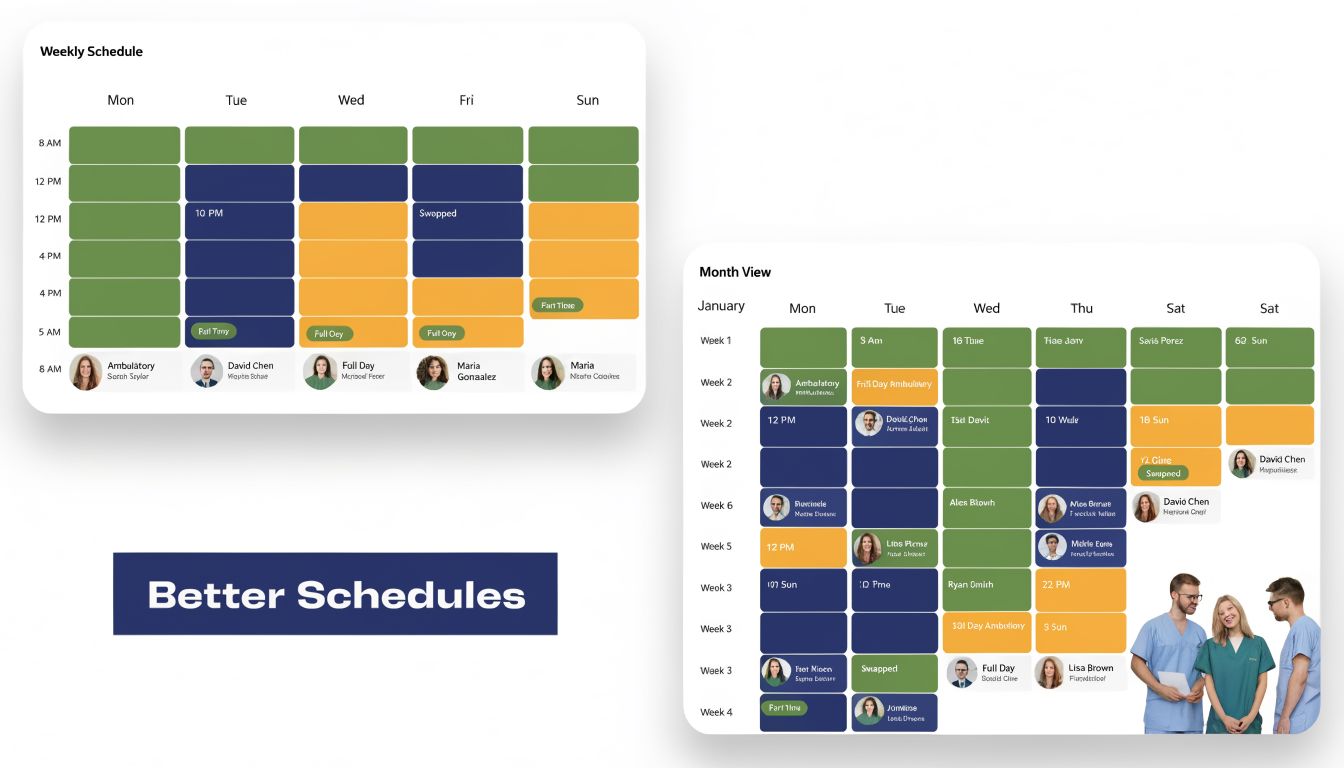
If there is no protected recovery time, every other intervention loses force. I have seen practices spend money on wellness programming while keeping schedules that guarantee fatigue, inbox spillover, and constant low-grade dread about the next clinic day.
What the evidence says about hours and days off
Research has been consistent on one point. Workload structure matters, and time off only helps when it is real time off.
As noted earlier, studies on physician burnout have linked lower burnout with better protected time away from work, including limits on excessive weekly hours and more reliable days off. One finding is especially relevant for smaller practices. Physicians with very few days off each month had much higher burnout risk than peers with more regular time away.
That tracks with a common oversight in smaller groups. Owners and managers count clinic sessions, but they do not count the work wrapped around them. Call, refill requests, prior auths, result review, and patient messages often turn a nominal day off into a delayed workday.
Recovery needs clean edges.
Scheduling fixes that work in real clinics
A full redesign is rare on day one. A better operating rhythm is still possible.
Start with the parts of the calendar that create the most predictable strain:
- Break up long stretches of clinical days: Four or five packed days in a row hits differently when each session includes inbox cleanup before and after clinic.
- Build cross-coverage with rules, not goodwill: Coverage works when the covering physician knows what must be handled now, what can wait, and how handoffs are documented.
- Protect one work-free day each week when possible: No charting catch-up. No refill queue. No “quick check” of the inbox at dinner.
- Adjust visit templates to acuity: A schedule full of complex follow-ups, behavioral health concerns, or multimorbidity needs more buffer than a low-complexity session.
- Count hidden labor before setting FTE expectations: If a physician is carrying heavy message volume, lab review, and forms, the visible clinic template is only part of the job.
I usually advise practices to review one physician’s week in 30-minute blocks, including after-hours work. That exercise changes the conversation fast. Leaders stop talking about “capacity” in the abstract and start seeing where the actual overload lives.
The trade-offs leaders need to face
Scheduling reform is not free.
If you create cleaner time off, someone has to cover. If you reduce punishing clinic runs, short-term appointment supply may tighten. In some markets, that means longer waits for routine follow-up until staffing, panel size, or team roles catch up.
Those are real costs. They are still cheaper than physician turnover, chronic delay in chart closure, rising patient complaints, and the quiet productivity loss that shows up when exhausted doctors start pulling back.
Continuity is the objection I hear most. It is a fair concern. Patients value seeing their own physician, and physicians value owning the care plan. But continuity breaks down anyway when the doctor is overloaded, running late every day, or thinking seriously about leaving. A good schedule protects continuity by making the physician more available over time, not less.
My rule in scheduling redesign: Protect recovery first. Then build capacity around that boundary.
Tools can help, but only after the policy changes
Software does not fix a schedule built on magical thinking. It does make patterns easier to see and correct.
Once a practice has agreed on coverage rules, fairer templates, and minimum standards for time off, the right tools can help managers spot overload before it becomes normal. For smaller groups that need practical options without enterprise pricing, this overview of healthcare staff scheduling software is a useful place to compare what supports physician scheduling.
The technology matters less than the operating rule behind it. Fewer punishing stretches. Fewer fake days off. Clearer shared coverage. That is what changes the work.
Optimizing workflows with team models and automation
Once the calendar is less abusive, the next question is simpler. What work is the physician doing that doesn't require a physician?
Many burnout plans stall because leaders know admin burden is part of the problem, but they treat every task as fixed. It isn't fixed. Work can move.

Team-based care works when roles are real
AHRQ-funded research on Patient-Centered Medical Home changes gives a useful model. In 26 clinics, reducing physician panel sizes to 1,800 patients, allowing more flexible visit lengths, cutting daily face-to-face visits, and adding team staffing reduced burnout from 32.7% to 25.8%. The same work found that staff reporting “extreme satisfaction” with the workplace rose from 38.5% to 42.2% (ahrq.gov).
The key point is not the label PCMH. It’s the design choices behind it.
In healthier clinics, physicians don't personally carry every refill, every patient education point, every prep task, and every inbox touch. MAs, nurses, care coordinators, and front desk staff work at the top of their roles too.
What task redistribution looks like in practice
This is usually less dramatic than leaders expect. It often starts with protocol.
A stronger workflow might shift work like this:
| Task | Physician should do | Team can do with protocol |
|---|---|---|
| Complex diagnosis and treatment decisions | Yes | No |
| Medication reconciliation before the visit | Review and decide | Initial collection and update |
| Routine patient education | Final reinforcement | Standard education workflows |
| Refill queue prep | Final sign-off where needed | Collect details, queue requests |
| Visit prep and history gathering | Review key issues | Initial intake and documentation |
The best practices I work with don't ask, “How can we make physicians work faster?” They ask, “Why is the physician touching this at all?”
Automation is the force multiplier smaller practices need
Even a good team model leaves a lot of repetitive work on the table. Calls still come in. Refills still need intake. Prior auth information still has to be gathered. Histories still need to get into the chart.
That’s where automation starts to matter, especially for smaller practices that can't hire a full layer of extra staff.
Used well, a voice AI system can:
- answer routine calls at all hours
- gather intake details before a human visit
- handle scheduling workflows
- queue refill requests with the needed information
- capture call content directly into the chart for staff review
One example is medical scribing services, which can reduce the clerical load tied to documentation. Simbie AI is another option in this category of operational tools. It uses clinically trained voice agents to handle tasks such as intake, scheduling, prescription refill workflows, prior authorizations, and chart-ready call documentation. The point isn't to replace people. It's to stop wasting skilled human time on repetitive work that technology can handle safely with oversight.
What works and what doesn't with automation
Automation helps only if you use it with discipline.
What works:
- Clear task boundaries: Automate repeatable workflows first, not edge cases.
- Human review paths: Staff need a smooth way to take over when the case is messy.
- Protocol-backed design: Technology should follow your clinical and operational rules, not invent new ones.
- EMR connection: If the output lands outside the chart, you just moved the work instead of removing it.
What doesn't work:
- Buying tech before fixing the workflow: Bad process plus software still equals bad process.
- Automating chaos: If your refill rules vary by physician and no one agrees on triage, the tool can't save you.
- Treating AI like magic: It needs supervision, iteration, and limits.
The best automation acts like a calm, reliable teammate. It takes the first pass on repetitive work so the clinical team can use judgment where judgment matters.
For many small practices, this is the most realistic path forward. They may not be able to fund a full PCMH redesign overnight, but they can tighten protocols, redistribute work, and use automation to absorb call and clerical volume that would otherwise fall back on physicians.
Your implementation roadmap from measurement to mastery
Good intentions fail because they stay vague. Burnout work needs a method.
The most usable model I’ve found is simple. Measure. Analyze. Implement. Monitor. It sounds basic, but most practices skip at least one step, usually the first or the last. They either act without baseline data, or they launch a fix and never check whether it worked.
A practical framework from the Well-Being Index describes that exact four-step cycle, and it includes a strong real-world example. In the APEX family medicine program, delegating history-taking, medication reconciliation, and patient education to trained medical assistants reduced burnout from 53% to 13% in six months, and the approach was cost-neutral (mywellbeingindex.org).
Measure what people are actually living
If you don't measure burnout in a structured way, you'll rely on the loudest complaint or the most recent resignation.
Use a validated tool and make participation feel safe. Confidentiality matters. Physicians won't respond truthfully if they think the results will be used against them.
I usually tell practices to measure more than distress itself. Add a few local indicators that point to the source of the distress.
Start with:
- Burnout or distress scores: Use a validated assessment, not an informal pulse check alone.
- After-hours charting patterns: Even a simple self-report can reveal where the “second shift” lives.
- Inbox and refill burden: If possible, track what lands on physicians versus support staff.
- Schedule pressure: Look at packed templates, overbooked sessions, and spillover work.
- Turnover and call-out trends: They don't diagnose burnout, but they often track with it.
Analyze before you prescribe
Leadership has to stop guessing.
If burnout is concentrated in one site, one service line, or one physician role, don't launch a whole-system wellness campaign as your first move. Study the local friction. One clinic may need cross-coverage. Another may need refill protocols. Another may need intake redesign because physicians are gathering information that should already be in the chart.
I’ve seen practices make this mistake repeatedly. They ask, “What should we offer our physicians?” when the better question is, “What is making their work harder than it needs to be?”
Implement changes in the right order
Sequence matters. If you try to fix everything at once, staff can't tell what's helping and leaders lose focus.
I like this order:
Fix schedule pain first
Reduce obvious overload, protect time off, and tighten coverage expectations. If physicians have no recovery time, every other intervention lands badly.
Move work off the physician
Reassign prep, intake, education, refill staging, and message triage wherever protocols allow.
Clean up documentation
Use templates, scribes, or chart-support tools to reduce work after clinic. The goal is simple. Fewer notes at night.
Add targeted individual support
Once the environment starts improving, support programs feel credible and people are more likely to use them.
Monitor with a visible scorecard
If burnout prevention is real, it should show up on the leadership dashboard. Not as a slogan. As operating data.
Here’s a simple scorecard I’d put in front of any practice manager.
| KPI | How to measure | Target goal |
|---|---|---|
| Burnout or distress score | Regular confidential survey with a validated tool | Downward trend over time |
| After-hours charting time | Self-report or EHR activity review | Less charting outside clinic hours |
| Physician inbox burden | Count messages and refill tasks routed to physicians | More triage before physician review |
| Schedule recovery time | Review days off, consecutive clinical days, and coverage gaps | Consistent protected recovery time |
| Staff turnover | Track departures and internal transfer patterns | Lower avoidable turnover |
| Absenteeism and call swaps | Review scheduling records | Fewer strain-related disruptions |
| Patient satisfaction themes | Review comments for rushed visits, delays, communication issues | Fewer complaints tied to access or rushed care |
This table won't replace judgment, but it keeps the work honest. If a practice launches three wellness programs and physicians are still charting late every night, the dashboard tells the truth.
Leadership check: If you don't review burnout metrics with the same seriousness as access, revenue, or quality, staff will assume it isn't a real priority.
Borrow ideas, but don't copy blindly
Plenty of organizations publish proven strategies to prevent burnout, and those lists can be useful. But don't import solutions without checking your own bottlenecks first. A hospital-grade intervention may be too heavy for a ten-provider group. A small clinic fix may be too narrow for a multi-site system.
The smartest implementations I’ve seen share four habits:
They start small but real
One clinic, one workflow, one physician group. Not a grand plan nobody can operationalize.
They involve the clinicians doing the work
Physicians and staff know where time gets wasted. Ask them before you redesign the process.
They protect trust
Confidential survey data stays confidential. Feedback channels stay safe.
They keep adjusting
Burnout prevention isn't a one-time project. Every staffing change, technology change, and growth phase can reopen old problems.
If you're deciding where to begin this month, pick one measurable friction point. Late charting. Refill burden. Call coverage. Portal messages. Then redesign that piece of work and watch what changes. That's how durable burnout prevention starts. Not with slogans. With fewer bad systems.
If your practice wants to reduce the admin load that keeps physicians stuck in after-hours work, Simbie AI is one option to evaluate. It uses voice-based AI for healthcare workflows such as patient intake, scheduling, refill handling, prior authorizations, and chart-ready documentation, which can help teams move repetitive work off clinicians and back into a managed process.