
Patients usually don't leave a private practice because the medicine was bad. They leave because the front desk missed a call, the schedule felt hard to manage, or no one closed the loop after the visit. If you're trying to figure out how to improve patient retention in private practice, the answer starts with access, follow-up, and less friction at every step.
That matters most in dermatology, gastroenterology, and internal medicine, where one missed handoff can turn into a lost return visit. The fix isn't a better slogan or a nicer waiting room alone. It's a system that makes it easy for patients to book, return, refill, and stay connected without putting more strain on a small team.
Why Patients Leave Independent Practices
A lot of practice owners notice the problem the same way. A patient who seemed engaged at the visit never books the next one. Another calls twice, gets voicemail, and never tries again. Someone else meant to schedule a follow-up but ran into intake friction, then drifted.
That drift costs more than many practices want to admit. In one healthcare synthesis, established patients have a 60 to 70% chance of returning for their next appointment, while new patients have only a 5 to 20% chance of coming back for a second visit. The same source says that after 5 years, only about 43% of patients remain with their original doctor, and physicians may lose roughly 50% of their patient database over that period. It also reports that 43% of healthcare organizations lose more than 10% of revenue to poor patient retention, and another 19% say the impact is 20% of revenue. Patient retention statistics in healthcare
The real cause is usually access friction
The failure point is often not clinical. It's operational. Unanswered calls, slow scheduling, confusing intake, and weak follow-up after the visit all create drop-off, which is why patient retention has to be treated as an operational metric, not just a satisfaction score. The MGMA guidance on turnover points to those friction points directly, and that's the right lens for small practices that can't afford to guess where patients are getting stuck. MGMA on key areas to limit patient turnover
Practical rule: If patients can't reach you, can't schedule easily, or can't get back in touch after the visit, retention will leak no matter how strong the clinical care is.
That's why operational basics matter so much. Fast follow-up, consistent reminders, and easy rebooking often do more for continuity than competing on price or adding another marketing campaign.
The Patient Retention Funnel Most Practices Never Map
Retention gets easier to fix when you stop treating it like a feeling and start treating it like a funnel. Patients move through five points, first contact, scheduling, intake, the visit, and follow-up. Each point fails in a different way, and each one needs a different fix.
The root cause is usually access friction
The first break often happens before a patient ever arrives. Missed calls, voicemail loops, slow callbacks, and unclear next steps push people away, which is why retention needs to be managed as an access problem as much as a care problem. ChartSpan's guidance on access design makes that point clearly, and the same logic applies in small practices where every abandoned call or stalled request is visible in the schedule. ChartSpan on access design and patient retention
A practical loyalty workflow also depends on the tools that keep repeat visits from slipping through the cracks. That is where BonusQR loyalty card software becomes a useful reference, because it frames repeat engagement as a process that has to be maintained, not a one-time outreach effort.
Intake and the visit
Intake friction is the quiet problem. Forms that take too long, unclear visit expectations, and a rushed check-in can make the patient feel processed instead of received. The clinical care may still be strong, but the experience of getting to it can still make rebooking feel optional.
That gap matters in independent practice. A patient who is willing to trust the clinician may still hesitate to return if the front office feels disorganized or if the visit begins with confusion. The retention problem is often sitting in the handoff, not in the exam room.
Follow-up and recall
Retention also breaks down after the visit, and that failure is easy to miss because the patient has already left. A structured recall system works better than a single reminder. One healthcare marketing source says the next visit should be scheduled in advance, usually at the end of the current appointment, and that the process should use multiple contacts rather than one reminder. Improving patient retention with recall systems
That is the point most practices overlook. If the patient leaves without a clear next step, the burden shifts to memory, and memory is unreliable when people are busy, anxious, or trying to compare other options. A clean recall process gives the staff a way to close the loop without relying on chance.
A useful audit is simple. If patients disappear at first contact, fix phones and callback speed. If they vanish after the visit, fix recall and rebooking. If they stall during intake, fix forms and expectation setting. Spreading effort evenly across every stage wastes staff time and hides the main leak.
The main lesson is plain. Retention becomes measurable once the patient journey is mapped, and without that map, teams keep guessing where the drop-off starts.
Improving the Patient Experience at Each Touchpoint
The patient experience still matters, but it works best when it's specific. Generic advice about “better communication” doesn't help a front desk team at 8 a.m. on Monday. Concrete habits do.
The first 30 seconds on the phone
The first voice a patient hears sets the tone. A calm greeting, a quick confirmation of the reason for the call, and a clear next step can lower friction immediately. That doesn't require more staff, it requires a script that feels human and can be repeated under pressure.
Scheduling conversations shape expectations
Patients need to know what happens next. If the scheduler says the appointment type, timing, and any prep clearly, the patient is less likely to forget, reschedule, or show up confused. That's especially helpful in specialty clinics where visit types vary and the wrong slot creates follow-on problems.
Operational note: Patients don't just remember how the visit felt, they remember how easy it was to get there and what happened when they tried to come back.
The in-room visit and the goodbye
The visit itself doesn't need theatrics. It needs enough breathing room that the patient doesn't feel rushed through a one-way interaction. Then the checkout handoff matters. A clear goodbye, a confirmed next step, and a booked follow-up do more for return behavior than many practices expect.
For practices that want a cleaner public presence, a review management platform can help surface patient feedback patterns after the experience, which is useful when the same friction keeps appearing in reviews or comments.
The goal isn't to make every interaction elaborate. It's to make each touchpoint predictable, respectful, and easy to finish. That's what patients remember when they decide whether to come back.
Scheduling and Access Fixes That Prevent Drop-Off
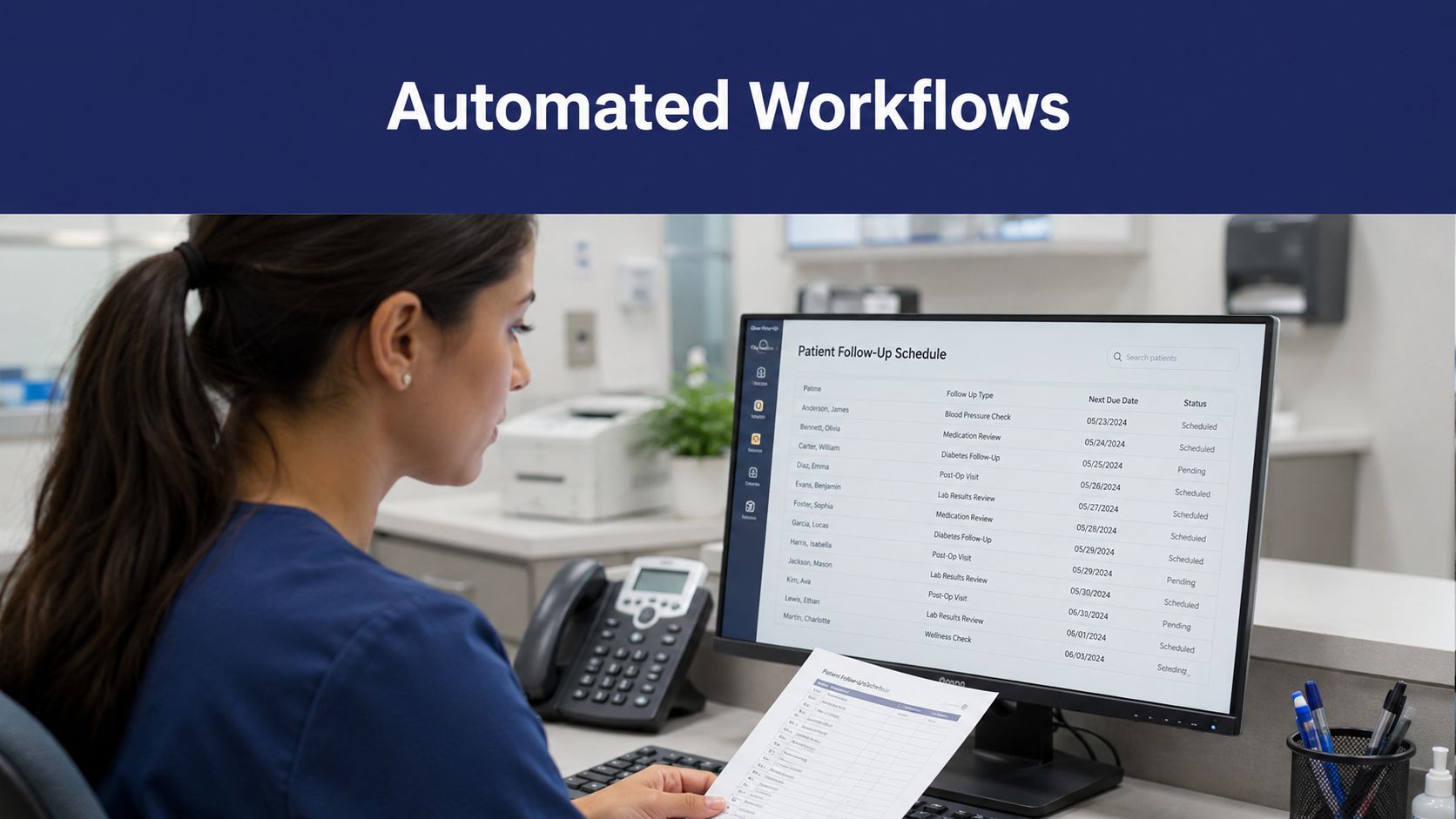
Access is where retention often lives or dies. If the patient can't get in quickly, can't reach someone after hours, or gets bounced between calls and portals, they leave before loyalty even has a chance to form. The fix is to design the front door around actual demand, not an idealized schedule.
Same-day capacity and concurrent call handling
A Monday morning surge can overwhelm a small practice fast. If several callers hit voicemail before lunch, you've already lost some of them. That's why concurrent call handling matters, especially when the team is already busy with check-in and charting.
Online scheduling that matches the chart
Self-scheduling is useful only if it maps to real appointment types and durations. The scheduling logic has to reflect the chart, not a side spreadsheet, which is why integrations with eClinicalWorks, Athenahealth, and EMA ModMed matter in daily operations. If the patient books the wrong slot, the front desk still pays the price.
A short internal guide on medical appointment scheduling guidelines can help teams tighten this logic without turning it into a separate project.
One clinic example
A dermatology clinic may discover that a large share of inbound calls are going to voicemail before lunch, and the issue isn't patient demand, it's call coverage. The practical response is not just “answer faster.” It's to add after-hours coverage, reduce hold time, and make sure rebooking happens inside the same workflow that answered the call.
Access rule: The less effort a patient needs to get through the front door, the more likely they are to return through it again.
When the front office is built around accessibility, the rest of the retention work gets easier. When it isn't, every other improvement has to fight the same bottleneck.
Reminders, Refills, and Follow-Up Workflows

The slow leak in patient retention usually happens between visits. That's where reminders, refill handling, and recall cadences either keep patients connected or let them fade away. A practice that only reacts when a patient calls back is already behind.
Build a recall cadence that runs on purpose
A practical retention method is to schedule the next appointment before the patient leaves, then add recall touches later. Expert guidance for small clinics recommends a rollout that starts with baseline retention calculation and dropout-warning training, then adds expectation-setting scripts at initial evaluations, limits home-care tasks to 2 or 3 items, and finishes with 30-day, 60-day, and annual recall automations plus a monthly retention review meeting. Proactive Chart on improving patient retention
That cadence works because it doesn't depend on memory. It depends on workflow.
Refill and pre-visit tasks need to be tied together
In practices that manage chronic care, refills are not just an admin task. They're part of keeping the patient in motion between visits. When the refill pipeline is slow or inconsistent, patients disappear from the schedule and sometimes from care entirely. The same is true for pre-visit intake, which can be automated so the visit starts with less friction.
You can configure this kind of cadence inside systems like gGastro, DrChrono, eClinicalWorks, ModMed, and Athenahealth if the workflow is built cleanly enough to use the EMR instead of working around it. A separate patient appointment reminders page can be useful for teams comparing different reminder patterns and deciding what should be automated first.
The point is not to send more messages. It's to send the right ones at the right time, and to make sure the next step is already waiting.
Measuring Retention With KPIs That Actually Fit a Small Practice
Retention only improves when the practice can see it move. A small clinic doesn't need a giant dashboard. It needs a few numbers that show where patients are getting lost and whether the fix is helping.
| KPI | What it measures | Healthy baseline |
|---|---|---|
| Rebooking rate at checkout | How many patients leave with the next visit already scheduled | Aim for improvement over your current baseline, especially when rebooking is part of the checkout workflow |
| 30-day and 90-day return rate | Whether patients actually come back after the visit | Track it by visit type and look for drop-offs in the next-visit cycle |
| No-show and DNA rate | Missed visits that break continuity | Watch for downward movement once reminders and scheduling improve |
| Refill turnaround time | How quickly refill requests are resolved | Keep it short enough that patients don't lapse while waiting |
| Call capture rate | Whether inbound calls are answered or lost | Capture as close to all calls as possible during open hours, then extend coverage after hours |
Keep the review simple
A monthly retention review meeting is enough for most small practices. Look at the one or two metrics that moved, then decide whether the issue is phones, scheduling, reminders, or follow-up. That keeps the team focused on the core problem instead of arguing about broad satisfaction scores.
The 2026 Private Practice Barometer gives a useful reference point for UK private practice. Across 700+ clinic owners, the average patient rebooking rate in private MSK clinics was 74%, the median was 80%, and the top 10% of clinics reached 90%+. The same analysis found that price, technology, and review volume had near-zero correlation with whether a patient books a second appointment, while automated reminders were associated with a +2.6 percentage-point increase in rebooking and a reduction in DNA rates from 11% to 6.3%. Private Practice Barometer on patient retention
Healthy dashboard rule: If a metric doesn't change a decision, it doesn't belong on the page yet.
That kind of simplicity helps a 2 to 10 provider clinic stay honest about what's working. It also keeps retention from becoming an abstract reporting exercise.
Staff Training, Escalation, and AI Medical Staff That Scales the Workflow
The strongest retention systems usually combine people, process, and automation. Staff still need to know how to answer, reassure, and rebook. The workflow cannot depend on them doing every repetitive task by hand, because that is where patients wait, calls get missed, and follow-up slips.
Train the team on retention scripts and escalation
Front-office staff should know what to say when a patient is overdue, confused, or trying to reschedule a visit that matters clinically. They also need a clear escalation path for exceptions. If an automation hits something unusual, a human should take over without the patient feeling bounced around or forced to repeat the same story.
Training works best when it covers the key friction points in the practice, not just a polished phone script. Staff need to know which calls can be resolved at the front desk, which ones belong in clinical review, and which ones should be handed off immediately. That keeps the team from improvising under pressure.
Use AI where the workflow is repetitive
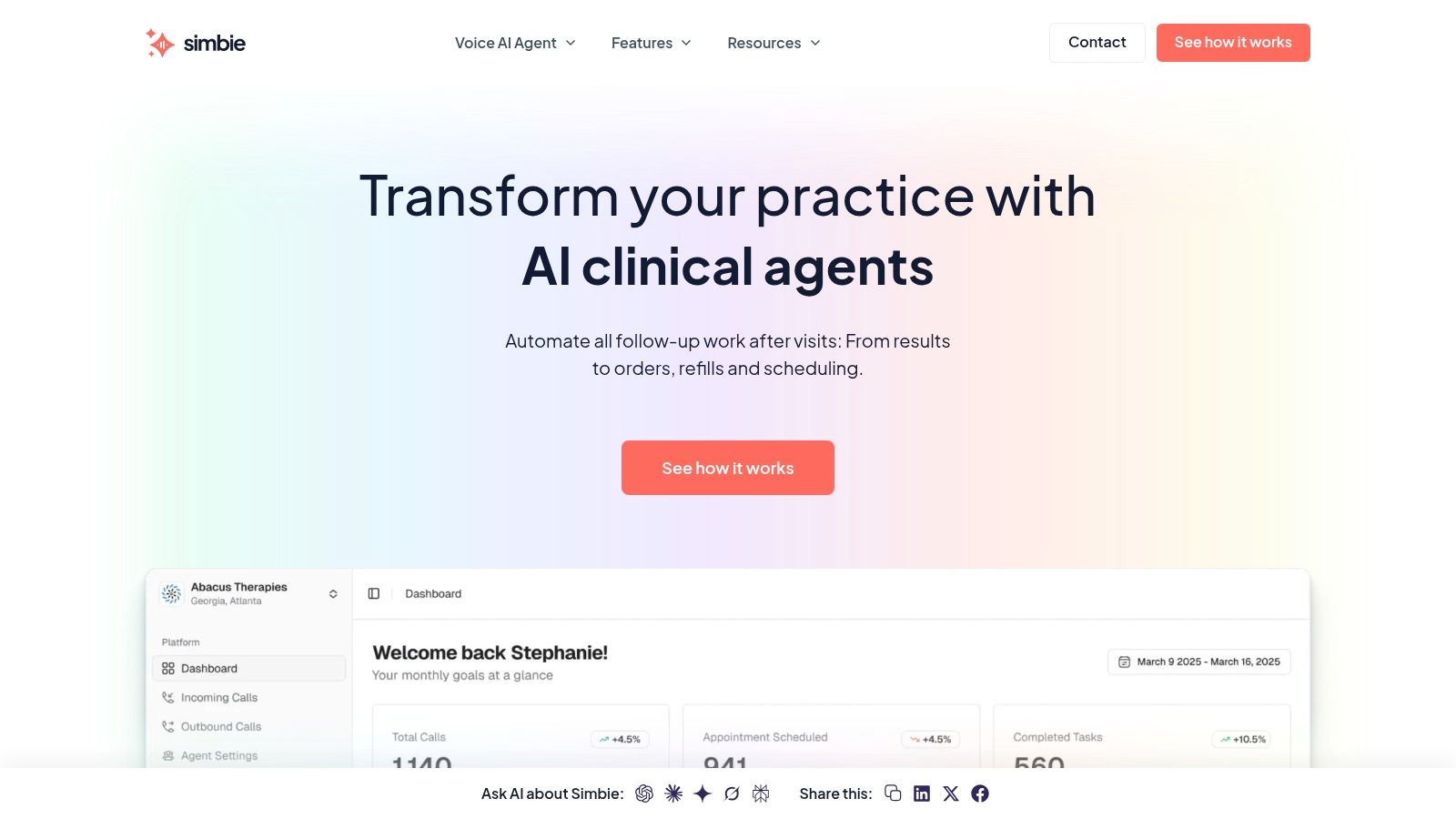
An AI Medical Staff model can cover administrative front-office work and clinical support without replacing physician judgment. That includes scheduling, intake, calls, refills, prescription renewals, test-result follow-up, patient education, adherence check-ins, pre- and post-op calls, and chronic disease management campaigns. In practices that need tighter front-desk coverage, it can also capture inbound calls continuously, including after hours, while keeping staff in the loop for exceptions.
The AI medical staff overview is useful for practices that want to separate routine tasks from work that still needs a human decision. Simbie AI connects to EMRs such as eClinicalWorks, gGastro, EMA ModMed, Athenahealth, Epic, and DrChrono, so the workflow stays tied to the chart instead of living in a separate system. It is HIPAA-compliant and SOC 2 Type 2 certified, and it is built by clinicians, which matters when the work touches patient calls, chart documentation, and follow-up tasks.
The practical move is to pilot one workflow, measure it against the KPIs above, then expand only after the team trusts the process. That is how a small practice gets broader coverage without losing control over exceptions or patient experience.
If you are evaluating AI for your practice, a short demo can be a useful reality check. Simbie AI is one way to see how the workflow would fit into daily clinic operations.