
Think of healthcare automation software as a skilled digital assistant for your practice. It's a specialized technology designed to take over the repetitive, time-consuming administrative and clinical tasks that bog down your team, freeing them up to focus on what they do best: patient care. From intelligently handling appointment scheduling and insurance verification to sending out patient reminders and managing refill requests, this software helps create a much more efficient, accurate, and responsive healthcare environment.
The real goal here is to slash the manual workload, drastically cut down on human error, and ultimately give patients a better, smoother, and more connected experience from their first contact with your clinic. This isn't just about efficiency; it's about building a practice that's both more profitable and more patient-centric.
What Is Healthcare Automation and Why It Matters Now
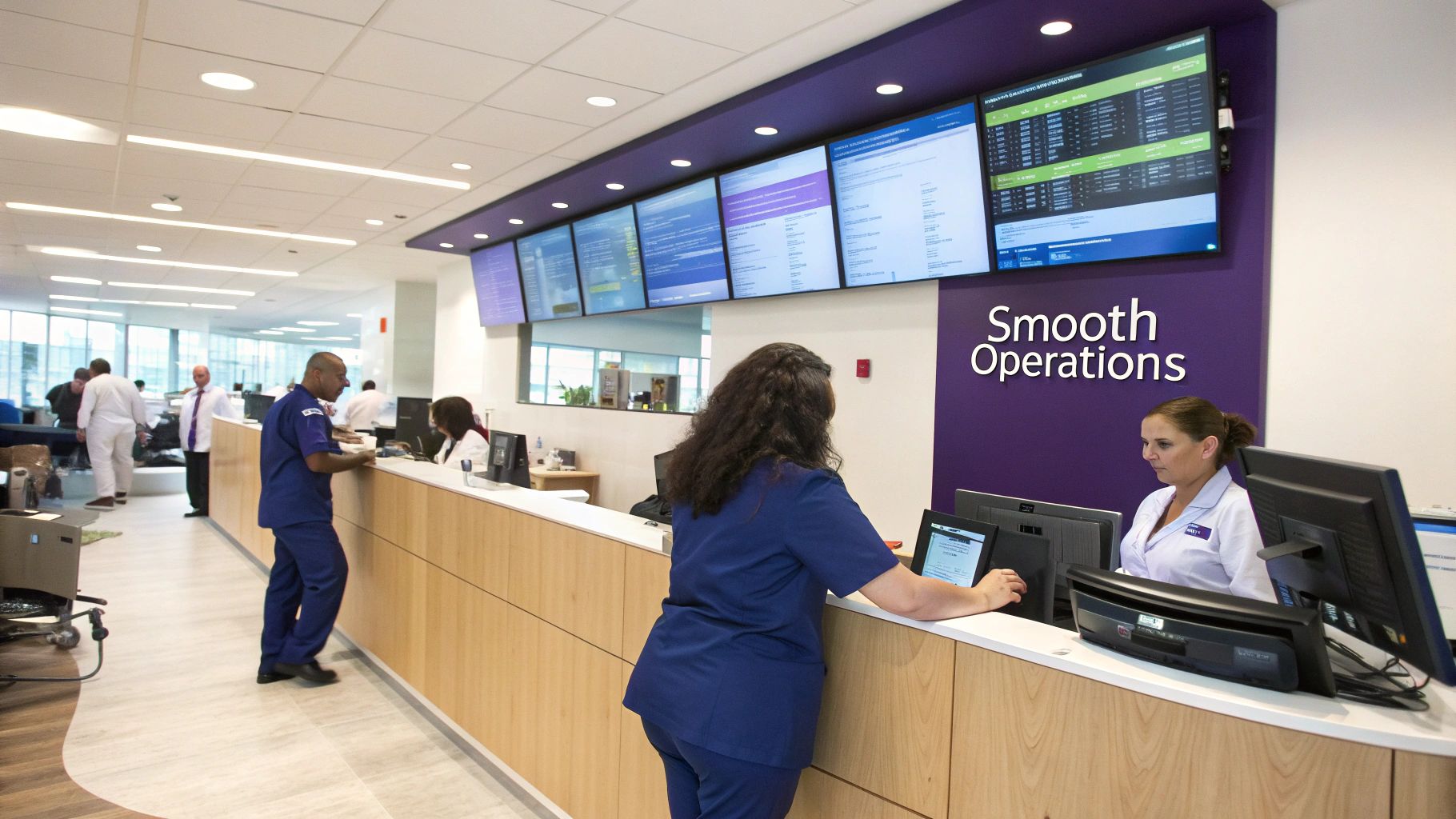
Picture a bustling clinic during peak hours. It can feel a lot like an airport's air traffic control tower, right? Without a sophisticated, reliable system, you'd have chaos—patients getting delayed, staff running ragged trying to manage phones and paperwork, and critical communication falling through the cracks. Healthcare automation software acts as that modern-day control tower for your practice, coordinating all the moving pieces with precision and intelligence.
This technology is specifically built to handle the predictable, rules-based work that consumes so much of your team's day. Instead of a staff member manually calling every single patient for an appointment reminder or getting stuck on hold with an insurance company for an eligibility check, the software simply does it—instantly and accurately. Frankly, in the current healthcare landscape, this kind of system isn't a luxury anymore; it's an essential operational tool for surviving, growing, and thriving in today's demanding healthcare world.
The Driving Forces Behind Automation Adoption
So, what's pushing so many providers, from small clinics to large hospital systems, to bring in automated tools? A few significant pressures are at play: rising operational costs, patients who now expect the same digital convenience from their doctor as they get from Amazon, and a serious, industry-wide problem with staff burnout. Automation hits all of these challenges head-on by creating smarter, more resilient workflows.
For instance, a system can automatically check a patient's insurance eligibility before their visit, a simple step that helps prevent frustrating and costly claim denials later on. It can also manage prescription refill requests, collecting all the necessary information and lining it up for a doctor's final approval without anyone having to pick up the phone. This isn't just about saving a few minutes; it's about fundamentally redesigning processes to be more efficient and less prone to error.
By taking over these high-volume, low-complexity tasks, automation empowers skilled medical staff to dedicate their time, expertise, and empathy to what truly matters—delivering compassionate and effective patient care.
The market growth statistics show just how urgent this shift is. Valued at USD 46.85 billion in 2025, the global healthcare automation market is expected to shoot up to USD 119.19 billion by 2035. This massive projected jump is being driven by improvements in IT infrastructure, a growing demand for cost-effective care, and new policies encouraging high-tech medical solutions across the board.
A Strategic Shift Not Just a Technical Fix
Bringing this technology on board is about far more than just a simple software update. It’s a strategic decision to build a practice that’s more resilient, scalable, and centered around the patient journey. When you automate routine operations, your clinic can become more nimble, more profitable, and quicker to respond to what your patients need, both clinically and administratively.
This transformation means rethinking old, often inefficient workflows and identifying the bottlenecks that technology can solve. To get a better sense of the bigger picture behind these kinds of changes, it's worth understanding the core ideas of AI Digital Transformation. At the end of the day, this is all about creating an environment where technology supports and enhances human connection, not replaces it, allowing your team to work at the top of their licenses.
Getting to Know Modern Healthcare Automation Platforms
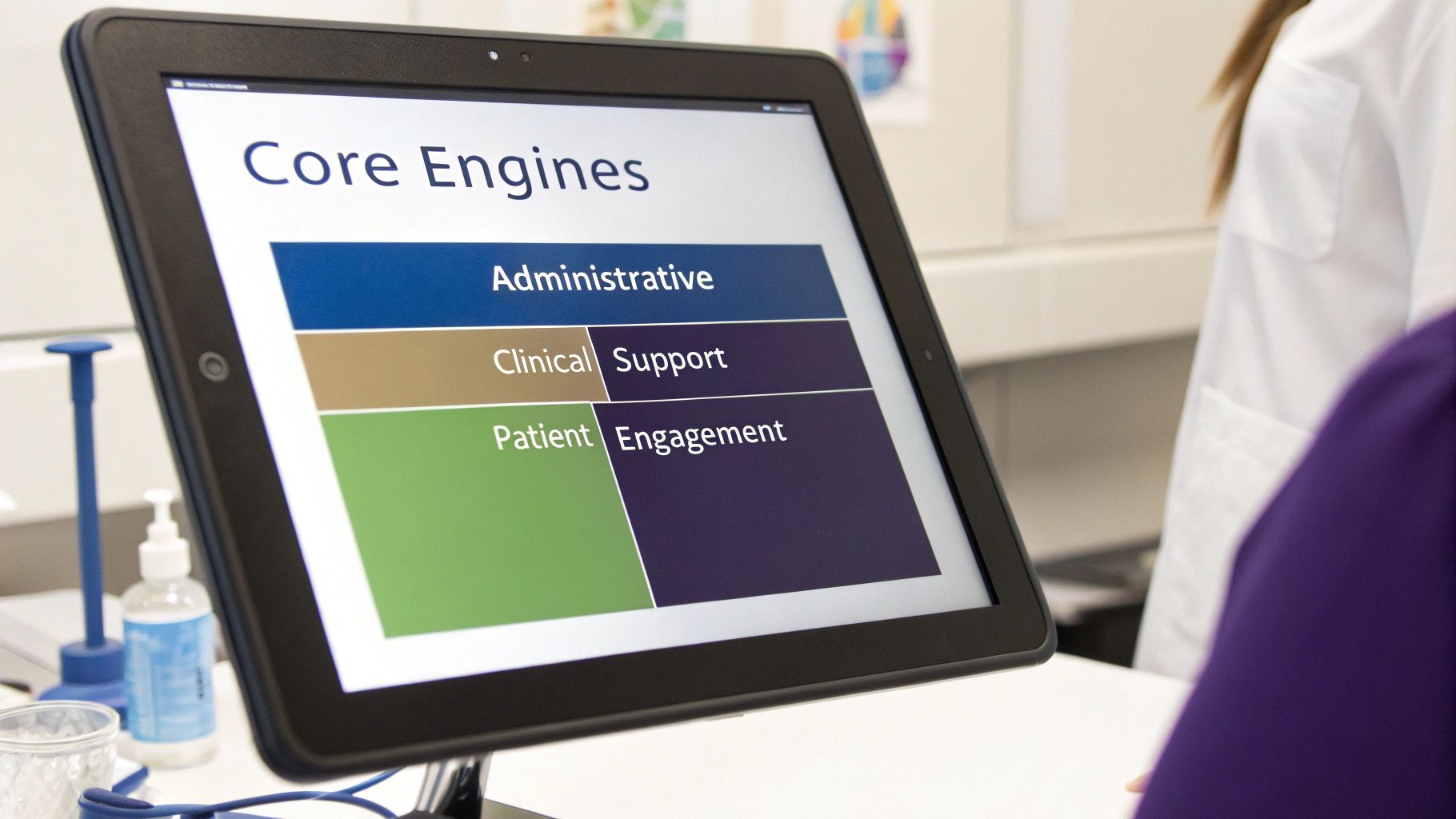
To really understand what healthcare automation software does, it helps to look under the hood. It’s easy to get bogged down in a long list of individual features, so a better way to think about it is to see a modern platform as having three core "engines." Each one is built for a specific job, but they all work together seamlessly to make your entire practice run smoothly and efficiently.
Think of them like the key departments in a well-oiled hospital system. One engine runs the front desk and handles all the administrative paperwork, another provides critical support to the clinical staff, and the third is dedicated entirely to improving the patient experience. Let’s take a closer look at how each one functions to streamline your operations.
The Administrative Engine
This is the behind-the-scenes powerhouse of your practice. It tackles the high-volume, repetitive tasks that are absolutely necessary to keep the doors open but can quickly lead to staff burnout and costly errors. Its entire purpose is to make the front-office workflow—from a patient's first call to their final payment—feel effortless, accurate, and professional.
You can think of it as your ultimate digital office manager. This engine automates the crucial tasks that don't require a clinical eye, creating a much smoother and more reliable process for both your team and your patients.
A few key functions usually include:
- Smart Patient Scheduling: An advanced AI agent can field incoming calls to book, change, or cancel appointments around the clock. It intelligently finds the best available slot based on the provider’s schedule, appointment type, and the stated reason for the visit.
- Automatic Intake and Registration: Forget the dreaded clipboard. The software sends digital intake forms to patients ahead of their visit and then automatically pushes that structured information directly into the EMR, cutting out tedious and error-prone manual data entry.
- Instant Insurance Verification: The system checks a patient’s insurance eligibility in real-time before they even walk in the door, which helps prevent frustrating and costly claim denials later on, improving the revenue cycle from the very first step.
The Clinical Support Engine
While the administrative engine is busy managing the front office, the clinical support engine works in the background to give your medical staff a crucial helping hand. It handles routine clinical communications and documentation, which frees up valuable time for nurses and medical assistants, allowing them to focus on hands-on patient care where they're needed most.
This engine essentially acts as a highly efficient digital assistant for your clinical team. It’s not making medical judgments, but it’s ensuring all the right information is gathered, organized, and passed to the right person at the right time, reducing administrative burden.
By automating these preparation and follow-up tasks, the software lifts a huge documentation burden off your providers' shoulders. That means they can give their full and undivided attention to the person right in front of them in the exam room.
Here are a couple of common, high-impact examples:
- Prescription Refill Requests: The system can gather all the necessary details from a patient asking for a refill—like pharmacy information and medication verification—and package it up neatly for a doctor to review and approve with a single click.
- Automated Follow-Up Instructions: After an appointment, the platform can send out personalized post-visit care instructions, lab result notifications, or helpful educational material directly to the patient's phone or email, ensuring care continues even after they leave the clinic.
The Patient Engagement Engine
Last but certainly not least, the patient engagement engine is all about creating a better, more connected, and modern experience for your patients. It uses smart, AI-powered communication tools to make sure patients feel heard, supported, and informed throughout their entire care journey, even after office hours. This engine is particularly effective at answering common questions, sending intelligent reminders, and guiding patients through their next steps.
Imagine a patient calls your office at 10 PM on a Friday needing to reschedule an appointment. Instead of hitting a frustrating voicemail loop, they’re greeted by a friendly, intelligent AI voice agent. It understands exactly what they need, checks the EMR for a new opening that fits their schedule, confirms the new time, and updates the calendar—all without anyone on your staff lifting a finger. This is just one of many practice management software features that can completely transform the patient experience.
This round-the-clock availability doesn't just make patients happier; it also dramatically cuts down on no-shows, helps ensure people show up prepared for their appointments, and reduces inbound call volume for your staff. It’s a critical piece for building a truly modern, patient-first practice that stands out from the competition.
How Automation Frees Your Clinic From Administrative Chaos
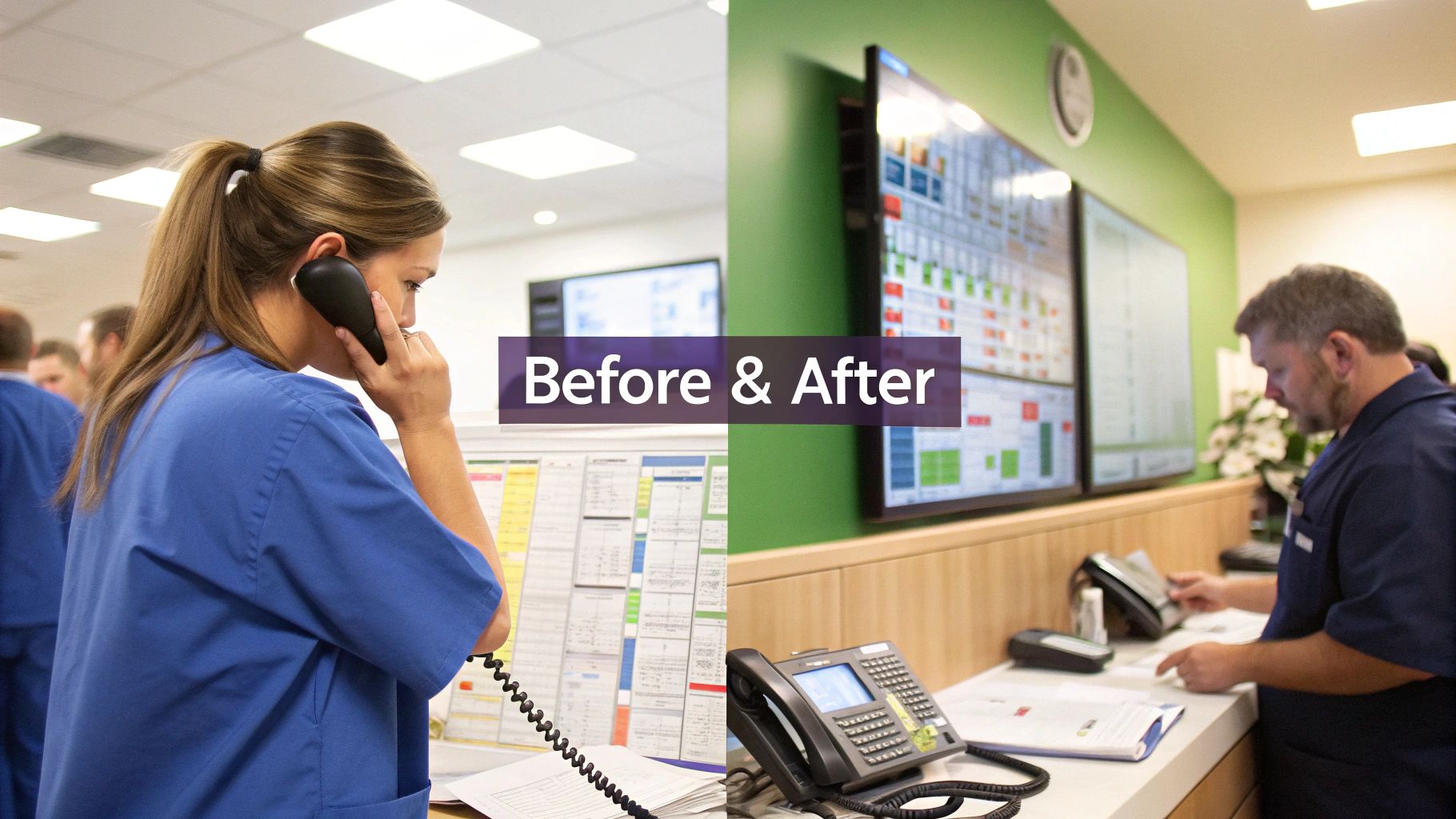
To really get a visceral feel for what healthcare automation software does, let’s walk through a typical clinic's day. Before automation, it's often a scene of organized chaos. The phones are ringing off the hook with basic scheduling requests, front desk staff are trying to check in new arrivals while simultaneously being on hold with an insurance company, and the waiting room is a sea of frustrated faces.
Manual data entry means that typos on intake forms and incorrect billing codes are almost a guarantee. This small issue quickly snowballs into a significant backlog of denied claims and endless, time-consuming follow-up calls. Your team is stretched thin, constantly putting out administrative fires instead of connecting with patients and ensuring a smooth visit. It's a stressful, reactive cycle that leads straight to staff burnout and patient dissatisfaction.
Now, picture that same clinic with a comprehensive automation platform in place. The phones are quiet because an AI-powered system is intelligently handling routine scheduling and refill calls. The waiting room is calm and efficient because patients filled out all their intake forms from the comfort of their home. Your front desk staff can actually greet people with a warm smile, free from the mountain of paperwork and the pressure of a constantly ringing phone. This isn't just about a quieter office; it’s a complete operational and cultural shift in how the practice runs.
The Daily Wins: Giving Your Staff Their Time Back
The most immediate and profound change you'll notice is in your day-to-day workflow. By taking over the high-volume, repetitive, and often monotonous tasks, the software gives your team back its most precious and non-renewable resource: time. This new breathing room leads to some pretty significant operational upgrades that you'll feel right away.
- A Massive Drop in Admin Work: Things like appointment reminders, insurance eligibility checks, prior authorization submissions, and prescription refill requests just happen on their own in the background. This frees up your staff to handle more complex patient needs and high-value duties that actually require a human touch.
- Drastically Fewer Human Errors: Automated systems don't get tired, distracted, or make typos. When patient data flows directly from a digital form into their electronic health record, you eliminate the simple but costly mistakes that cause billing headaches, claim denials, and inaccurate medical records.
- Happier Staff Who Stick Around: When your team isn't constantly bogged down by monotonous, unfulfilling work, job satisfaction skyrockets. They can focus on the rewarding, patient-facing parts of their roles, which is a huge factor in reducing employee turnover and creating a positive work environment.
This fundamental shift helps create a more sustainable, proactive, and organized environment. Instead of constantly reacting to problems as they arise, your team can proactively manage the patient experience, which means better, more attentive service for them and significantly less stress for everyone in the clinic.
Automation isn't about replacing your valued staff; it’s about empowering them. It gives them the right tools to work smarter, not harder, building a clinic culture that’s all about collaboration, efficiency, and delivering great patient care.
To see this contrast in black and white, let's compare how common tasks get done with and without the help of a modern automation platform.
Operational Impact of Manual vs Automated Healthcare Tasks
| Administrative Task | Manual Process Outcome | Automated Process Outcome |
|---|---|---|
| Appointment Scheduling | Staff spends hours on the phone; high potential for double-booking or errors. Long hold times frustrate patients. | Patients can self-schedule online; AI handles calls 24/7, freeing up to 80% of staff time from scheduling duties. |
| Insurance Verification | Time-consuming manual phone calls to insurers, often resulting in last-minute eligibility surprises and patient frustration. | Real-time, automated checks confirm eligibility before the appointment, drastically reducing claim denials and payment delays. |
| Patient Intake | Illegible handwriting on paper forms leads to data entry errors, delays at check-in, and incomplete patient records. | Digital forms are completed ahead of time on any device; data is instantly and accurately synced to the EMR. |
| Billing & Coding | Manual coding is prone to human errors, leading to frequent claim rejections, delayed payments, and revenue leakage. | AI-assisted coding suggests the most accurate codes based on documentation, reducing errors and speeding up reimbursement. |
This table shows a clear and compelling pattern: automation doesn't just make things faster, it makes them more accurate, reliable, and cost-effective, directly improving the clinic's operational and financial health.
The Financial Wins: A Smarter Workflow Pays for Itself
Beyond the day-to-day operational improvements, healthcare automation delivers a powerful financial punch that directly hits your bottom line. These aren't just small, incremental savings; they represent a major and sustainable boost to your practice's financial health and long-term stability.
It turns out that operational efficiency is directly and inextricably tied to financial performance. In fact, the latest healthcare automation market research shows that robust automation can slash administrative overhead costs by up to 60%. This critical reduction allows clinicians and staff to focus on high-value, revenue-generating care, making the practice more profitable without adding to the chaos.
Here are the key financial advantages you can expect:
- Lower Overhead Costs: When software handles tasks that once took up hours of valuable staff time, you can get more done without needing to grow your payroll. That means you can see more patients and strategically expand your practice without your administrative costs ballooning alongside that growth.
- A Healthier Revenue Cycle: Fewer billing mistakes and automated insurance checks mean far fewer denied claims. This gets you paid faster, dramatically improves your cash flow, and cuts down on the enormous amount of time your team has to spend chasing down payments and reworking claims.
- Increased Patient Capacity: With streamlined, automated workflows, your practice can handle a higher volume of patients efficiently without burning out your existing staff. This ability to scale your services effectively is essential for any practice looking to achieve sustainable growth in a competitive market.
Ultimately, bringing healthcare automation software into your clinic is a strategic investment in a more profitable, sustainable, and less frantic way of working. It lays the critical groundwork for delivering top-notch care while making sure the business side of your practice stays strong and resilient.
Real-World Examples of Automation in Action
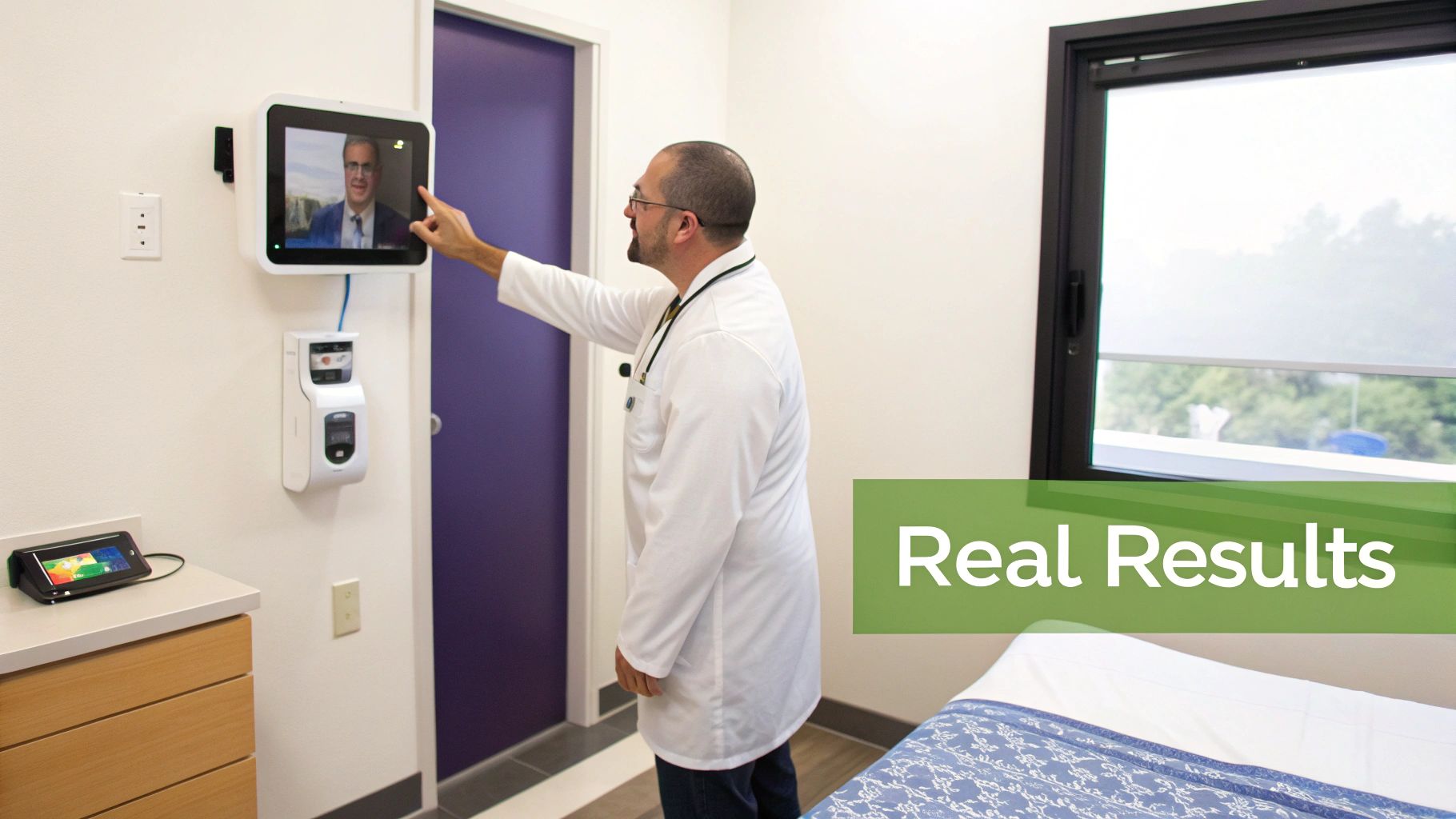
This is where the rubber truly meets the road. The genuine value of healthcare automation software really comes to life when you see it working in actual clinics, solving real, tangible problems for practices just like yours. It's one thing to talk about abstract features and benefits, but it’s another to see how this technology turns daily operational headaches into genuine success stories.
Let's look at a few common scenarios that play out every day. These examples clearly show how different types of practices are using automation to get past persistent hurdles, improve the quality of patient care, and ultimately, strengthen their financial bottom line.
The Small Clinic Overcoming Call Overload
Picture a small primary care clinic: two doctors, three front-desk staff, and phones that never, ever stop ringing. The team was drowning in a constant flood of calls for basic appointment scheduling, prescription refills, and simple billing questions. This left almost no time to focus on the patients standing right in front of them, leading to long hold times, frustrated callers, a chaotic front office, and a completely burned-out team.
Their solution? They brought in a voice-based AI agent to act as a digital receptionist and first line of defense. The system was trained to handle the most common, repetitive requests that were eating up the staff's day and causing the most friction.
- The Automated Solution: The AI now answers every single call immediately, 24/7. It can expertly book, reschedule, or cancel appointments directly in the EMR, process refill requests by gathering all necessary information, and answer simple questions about office hours, location, or directions. No human intervention is needed for these routine interactions.
- The Measurable Results: In just three months, the clinic successfully cut the call volume handled by human staff by a whopping 70%. This newfound freedom allowed the team to manage in-person check-ins more effectively, tackle complex insurance issues without interruption, and give patients in the waiting room their full, undivided attention. Not surprisingly, both patient and staff satisfaction scores shot up.
The Large Hospital Tackling Prior Authorizations
Now, let's scale up this concept to a large hospital network. Their operational Achilles' heel was the endless, time-sucking, and soul-crushing prior authorization process. A dedicated team spent their entire days on the phone with insurance companies, faxing clinical documents, and manually tracking the status of hundreds of approvals. This created huge delays in patient care and led to a high rate of claim denials, which hit the hospital's revenue cycle hard.
This isn't just an administrative problem; it directly and negatively affects patients. A 2022 survey found that 84% of physicians said their patients have abandoned a recommended course of treatment simply because of the delays and frustrations associated with the prior authorization process.
To fix this critical bottleneck, the hospital integrated an automation platform built specifically for this complex task.
The software uses sophisticated AI to pull the necessary clinical documentation directly from the EMR and submit it to payers automatically through their preferred channels. It then keeps real-time tabs on every request, flagging anything that needs more information and even starting the appeals process for denials based on rules the hospital sets.
The results were both immediate and powerful. The hospital slashed its claim denial rate from prior authorization issues by nearly 50%. The average wait time for an approval went from several days to, in many cases, just a few hours. This not only got payments flowing faster but, more importantly, it got patients the critical care they needed without the painful, stressful, and often harmful delays.
The Specialty Practice Reducing No-Shows
Finally, consider a busy cardiology practice that was being plagued by a high no-show rate. Every single missed appointment was a significant disruption to the clinical schedule and a direct loss of revenue. They were trying to make manual reminder calls, but it was incredibly inefficient and hit-or-miss—staff were often too busy with other tasks, and they frequently ended up playing phone tag with patients.
They decided to implement an automated patient engagement system that used healthcare conversational AI for smarter, more interactive, and more effective reminders. If you're curious, you can learn more about how healthcare conversational AI facilitates these kinds of dynamic, two-way patient conversations that feel natural and helpful.
The new system sent out personalized texts and voice messages two days before an appointment. Patients could easily confirm, cancel, or request to reschedule with a quick reply. If a patient canceled, the system would instantly offer that newly open slot to the next person on the practice's waitlist. This one simple change dropped their costly no-show rate by 40% and made their daily schedule far more reliable and profitable.
Your Step-by-Step Implementation Guide
Bringing automation into your practice can feel like a massive, overwhelming project, but it doesn't have to be. The key to success is to break it down into a few manageable, logical steps. Think of this less as a daunting technical overhaul and more as a practical, strategic roadmap for a smooth and successful launch that delivers results quickly.
Here’s a simple four-step framework to guide you from initial planning and vendor selection all the way to seeing measurable, positive results.
Step 1: Pinpoint Your Bottlenecks
Before you can solve a problem, you need to know exactly what—and where—it is. The most critical first step is to get a crystal-clear picture of the biggest administrative headaches in your current workflow. Where is your team losing the most time? What tasks are causing the most friction and frustration for both your staff and your patients?
Get your key team members in a room and walk through your daily processes from start to finish. You're looking for the specific, recurring pain points that are slowing things down and creating inefficiencies.
- At the Front Desk: Is your team constantly buried under an avalanche of phone calls for simple appointment scheduling or prescription refills? Are they spending more time on the phone than with the patients in front of them?
- In the Billing Department: Are you fighting a high rate of claim denials because of small but frequent manual errors in coding or missed insurance eligibility checks?
- With Clinical Staff: Are your nurses and Medical Assistants getting bogged down in repetitive paperwork and documentation when they could be spending that valuable time with patients, improving throughput and care quality?
By zeroing in on these specific bottlenecks, you create a clear "to-do" list and a set of priorities for your automation software. This targeted approach ensures you're investing in a solution that tackles your most urgent and impactful needs first.
Step 2: Choose the Right Technology Partner
Once you know exactly what needs fixing, it’s time to find the right tool for the job. Not all healthcare automation software is created equal, and the right choice should feel like a natural, intuitive extension of your team. As you start looking at different vendors, create a simple but comprehensive checklist to compare them against your specific goals and requirements.
Here’s what should be at the top of that list:
- Seamless EMR Integration: This is a non-negotiable deal-breaker. The software must connect reliably and deeply with your existing Electronic Medical Record system. If it doesn't, you'll just be creating more work and data silos, not less.
- HIPAA Compliance and Security: Your vendor needs to have an ironclad, demonstrable commitment to data security. Ask them about their encryption protocols, their third-party security audits, and their compliance certifications. When you're handling protected health information (PHI), using the right, secure tools is non-negotiable. You can learn more about finding secure solutions by exploring various HIPAA-compliant AI tools built specifically for the complexities of healthcare.
- Real Support and Training: Find out what their onboarding and implementation process looks like. Do they offer solid, role-based training for your staff and responsive, ongoing technical support when you need it? A great partner will be there to help you long after the initial sale is complete.
Choosing a vendor is more than just buying software; it's entering into a long-term partnership. Look for a company that genuinely understands the unique grind and regulatory complexities of healthcare and is deeply invested in helping your practice succeed.
Step 3: Plan Your Rollout
With your ideal partner chosen, the next critical step is to plan a smart, strategic rollout. Ripping out the old system and trying to replace it overnight is a proven recipe for chaos, staff resistance, and failure. A phased implementation is almost always the better path forward. It gives your team time to learn, adapt, and build confidence without overwhelming them with too much change at once.
Start small and target a quick win. Pick the biggest bottleneck you identified in step one and tackle that first. For many practices, that means automating the front desk to handle the endless stream of phone calls. Once that’s running smoothly and your staff feels confident and sees the benefits, you can move on to automating the next area, like prior authorizations or patient intake.
This methodical approach gives you quick, early victories. That little bit of tangible success builds powerful momentum and gets everyone on board and excited for what’s next in your automation journey.
Step 4: Measure Your Success
You can't know if it's working if you don't measure it. The final, ongoing step is all about tracking your progress to prove the value and ROI of your new healthcare automation software. Go back to the specific bottlenecks you identified at the very beginning and start tracking the key performance indicators (KPIs) associated with them.
Here are a few essential metrics to watch closely:
- Patient Wait Times: How much has automation cut down the time patients spend on hold on the phone or sitting in your waiting room?
- Staff Time Saved: Ask your team to help quantify the impact. How many hours of administrative drudgery has the software taken off their plates each week?
- No-Show Rates: Have your automated, interactive appointment reminders made a real, measurable dent in the number of costly no-shows?
- Claim Denial Rates: Is your billing department seeing fewer rejections now that human error in coding and eligibility checks is dramatically reduced?
Keeping a close eye on these numbers doesn't just prove the system's ROI to leadership. It also helps you spot new opportunities for process improvement, making sure your practice continues to get more efficient, profitable, and patient-friendly over time.
The Future of Your Practice Is Automated
If you take one thing away from this comprehensive guide, let it be this: healthcare automation isn't some far-off, futuristic idea from a sci-fi movie. It’s a practical, powerful, and accessible tool you can use right now to help your medical practice not just survive, but truly thrive. Choosing to bring in healthcare automation software is a strategic move, one that builds a more resilient, efficient, and compassionate practice for the years ahead.
This technology directly hits the biggest challenges in modern healthcare head-on. It strengthens your bottom line by cutting down on expensive administrative mistakes and getting your revenue cycle in pristine order. It also delivers a better, more modern, and more responsive experience for your patients, giving them round-the-clock access and smooth, seamless communication. Most importantly, it helps you build a happier, more effective, and more stable team by taking tedious, unfulfilling work off their plates and preventing the burnout that plagues the industry.
Moving Beyond Efficiency to Intelligence
As we look to the future, the next big leap in healthcare automation is already taking shape, and it’s all about the role of AI in business automation. The technology is rapidly evolving from simply doing pre-programmed tasks to anticipating needs and making intelligent recommendations. Imagine a system that can analyze patient data to predict which patients are most likely to miss an appointment and then proactively reach out with a personalized message to keep them on track.
Or think about an AI that can analyze inbound patient messages to spot keywords that indicate potential urgent problems before they get serious, allowing your clinical team to step in early. This is the next frontier—empowering practices to provide care that's more personal, proactive, and preventive, not just reactive to problems as they occur.
The ultimate goal of healthcare automation isn't to replace the essential human side of medicine, but to amplify it. Think of it as a strategic partner that frees up your talented, empathetic staff to focus their energy and skills where it matters most: with your patients.
Your Call to Action
The path forward for modern healthcare practices is clear. Practice leaders should see automation not as a machine taking over jobs, but as a powerful catalyst for real, sustainable growth and improvement. It’s about creating a practice where technology expertly handles the repetitive, administrative work, freeing your team to do what only people can do: heal, connect, and care with empathy.
By adopting healthcare automation software, you’re not just buying a tool. You’re making a strategic investment in a future where your practice is more financially stable, a better and more rewarding place to work, and a better place for patients to receive outstanding care. It's how you build a practice that’s ready for whatever comes next.
Frequently Asked Questions
It’s smart and responsible to have questions when you're thinking about implementing new technology for your practice. Let's walk through some of the most common ones that practice managers and physicians ask before bringing healthcare automation software on board.
Is This Kind of Software Actually Affordable for a Small Practice?
Yes, it absolutely is. The old, outdated model of a massive, one-time software purchase with a huge capital outlay is largely a thing of the past. Today, most modern platforms operate on a subscription basis, often called SaaS (Software-as-a-Service). This means you pay a predictable, manageable monthly fee instead of facing a huge upfront cost that can strain your budget.
This flexible approach puts powerful automation tools well within reach for clinics of all sizes, from solo practitioners to multi-location groups. You'll likely see a clear return on that investment pretty quickly, too. Think about it: fewer billing mistakes means more revenue captured, lower administrative costs mean better margins, and the capacity to see more patients without needing to hire more staff means scalable growth. When you automate tasks that eat up hours of your team's day, you're directly and positively impacting your practice's bottom line.
How Hard Is It to Integrate Automation with Our Current EMR?
This is a critical question, and the best automation providers have a great, reassuring answer. Top-tier healthcare automation software is built with deep integration in mind from the very first line of code. It's specifically designed to work hand-in-glove with all the major Electronic Medical Record (EMR) systems, ensuring that data can move freely, securely, and automatically between them in real-time.
Here’s a practical example: an automated system can tap into the EMR to pull a patient's history and confirm appointment details before a call. Once that interaction is done, it can automatically log the notes from the conversation right back into the patient's chart without any human intervention. No manual data entry, no risk of typos. A good vendor will have a dedicated support and implementation team to manage the entire integration process for you, so it's not another headache on your already full plate.
The whole point of integration is to create one single, smooth, unified workflow. Your automation tool should feel like a natural part of your EMR, not some clumsy, disconnected add-on that just creates more clicks and confusion for your staff.
How Does This Software Keep Patient Data Secure and HIPAA-Compliant?
Security isn't an afterthought; it's the absolute foundation of any healthcare technology tool worth its salt. Any reputable automation software is built from the ground up to be fully HIPAA-compliant, with the protection of sensitive patient data as its number one job.
This is accomplished through multiple, overlapping layers of robust security measures:
- End-to-end data encryption scrambles information so it's completely unreadable while it's moving across networks and while it's stored in the database.
- Secure cloud infrastructure utilizes data centers that are built to meet the toughest industry security standards, like SOC 2 and HITRUST.
- Strict user access controls and audit logs mean only the right people can see sensitive information, and you have a clear record of who accessed what, and when.
These platforms also go through routine, rigorous security audits by independent, third-party experts to ensure they're meeting all current regulatory requirements. This multi-layered approach keeps protected health information (PHI) safe and gives both you and your patients total peace of mind in an era of increasing digital threats.
Ready to see how a clinically-trained AI can free your team from administrative overload and enhance patient care? Simbie AI offers a voice-based platform that automates everything from scheduling and intake to prescription refills, all while integrating seamlessly with your EMR. Discover the future of practice management.