
Effective documentation is the backbone of quality patient care, legal protection, and efficient practice management. While the SOAP note format (Subjective, Objective, Assessment, and Plan) is a universal standard in healthcare, its practical application varies dramatically across different clinical scenarios. For nurses on the front lines, mastering this documentation means more than just filling out fields in an electronic medical record; it means telling a clear, concise, and complete patient story that drives effective care.
This guide moves beyond generic templates to provide a deep dive into practical nursing SOAP note examples. We will dissect each component, highlight common documentation pitfalls, and reveal how to write notes that are not only compliant but also powerfully communicative. You will see detailed examples for common situations, including acute infections, chronic disease management, post-operative care, and mental health follow-ups.
Each example is broken down to show you why it works. We will analyze the strategic thinking behind the word choices and structure. A critical aspect of the 'Assessment' section in any SOAP note involves forming a comprehensive differential diagnosis. Properly documenting this thought process is essential, and a solid grasp of this concept is a prerequisite for creating high-quality notes. For those looking to strengthen this skill, reviewing the fundamentals of understanding differential diagnosis is a great starting point. By the end of this article, you will have actionable strategies and clear examples to help you write better, more efficient SOAP notes immediately.
1. Acute Respiratory Infection SOAP Note
An acute respiratory infection is one of the most common reasons patients seek care, making proficiency in this type of documentation essential for nurses. This specific example of a nursing SOAP note focuses on a patient presenting with symptoms like a cough, fever, and shortness of breath (dyspnea). It details how to correctly document subjective complaints, objective clinical findings, and a clear plan of action, which is critical for continuity of care and accurate diagnosis.
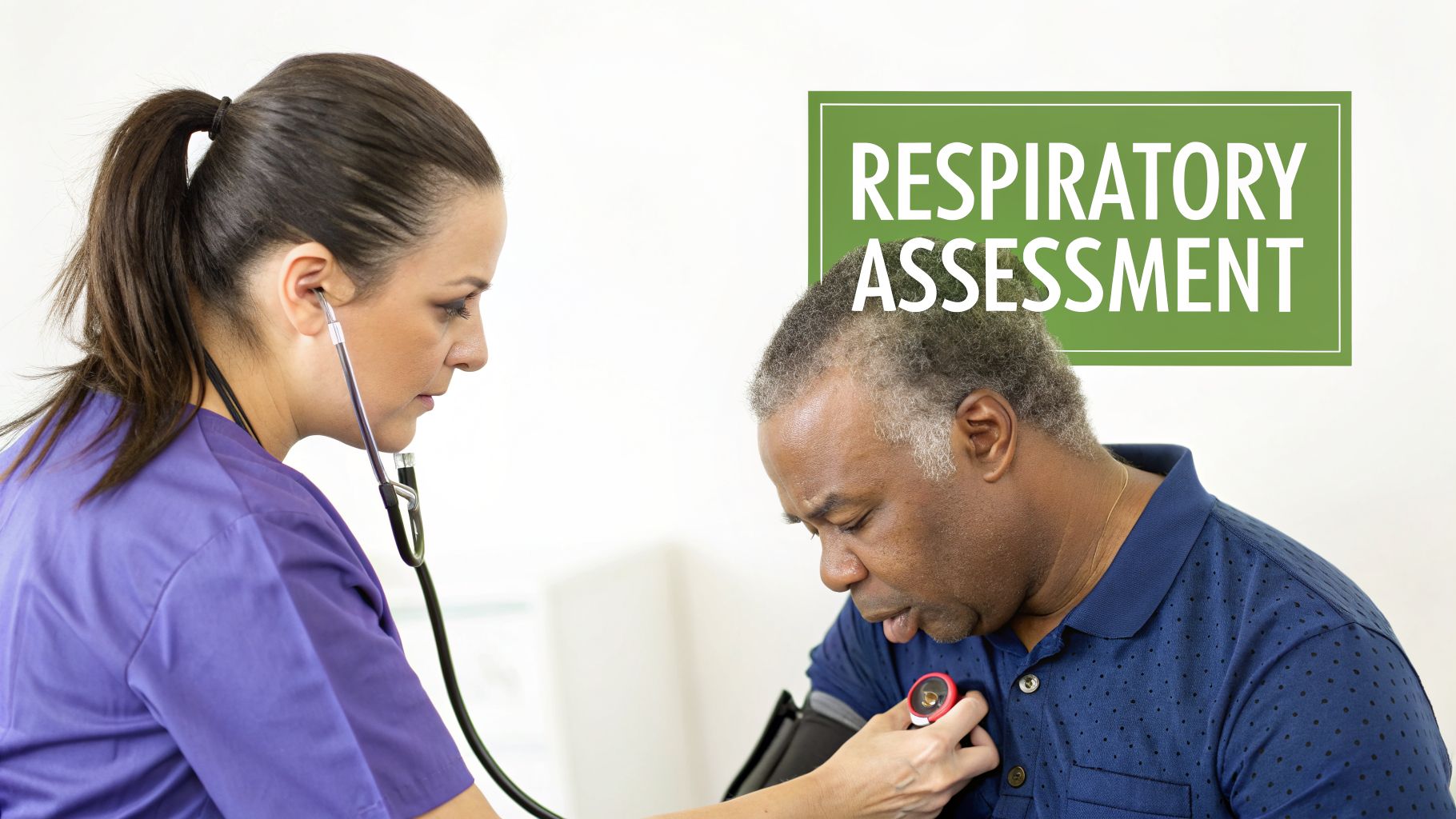
Example SOAP Note: Acute Respiratory Infection
- S (Subjective): Patient, a 68-year-old male, reports a "hacking cough" for the past 3 days, which is non-productive. States, "I feel weak and my whole body aches." Reports subjective fever and chills, with a max temperature of 101.8°F recorded at home last night. Reports increased shortness of breath with simple activities like walking to the bathroom. Denies chest pain, sore throat, and sinus congestion. Patient has a history of COPD.
- O (Objective): Vital Signs: T 101.4°F, HR 102 bpm, RR 22 breaths/min, BP 138/86 mmHg, SpO2 91% on room air. Lungs auscultated with diminished breath sounds in the right lower lobe with coarse crackles. Mild use of accessory muscles noted. Productive cough noted during exam with thick, yellow sputum. Appears fatigued.
- A (Assessment): Patient presents with signs and symptoms consistent with an acute respiratory infection, likely community-acquired pneumonia, given the focal lung sounds, fever, and hypoxia. Worsening respiratory status noted in the context of underlying COPD. At risk for respiratory failure.
- P (Plan):
- Administer O2 at 2L via nasal cannula to maintain SpO2 >92%.
- Administer first dose of Levaquin 750mg IV as ordered by the physician.
- Obtain sputum sample for culture and sensitivity.
- Draw CBC and BMP for lab analysis.
- Encourage fluid intake and use of an incentive spirometer.
- Re-assess respiratory status, including vital signs and lung sounds, in 1 hour.
- Notify physician immediately if SpO2 drops below 90% or if there is increased work of breathing.
Strategic Breakdown and Analysis
This note is effective because it connects every section logically. The subjective complaints of cough and fever are confirmed by objective findings like a temperature of 101.4°F and specific lung sounds.
Key Takeaway: The Assessment ("A") section does more than just state a diagnosis; it synthesizes the "S" and "O" to form a clinical judgment. It identifies the immediate problem (respiratory infection), the likely cause (pneumonia), and the primary risk (respiratory failure due to COPD). This level of detail justifies the urgency of the plan.
The plan is not a generic list but a direct response to the assessment. Each action item targets a specific finding: oxygen for the low SpO2, antibiotics for the suspected infection, and close monitoring due to the identified risks. This makes the note a powerful tool for communication and patient safety.
Actionable Tips for Your Practice
- Be Specific with Respiratory Details: Instead of just writing "cough," describe it: Is it productive or non-productive? What is the color and consistency of the sputum? These details help differentiate between conditions like bronchitis and pneumonia.
- Document Red Flags Clearly: Note any findings that require immediate physician attention, such as hypoxia (low SpO2), tachypnea (high respiratory rate), or the use of accessory muscles. This creates a clear safety net.
- Use AI for Initial Intake: In telehealth or clinic settings, tools like Simbie's AI voice agent can capture a patient's initial history, transcribing their description of symptoms directly into a SOAP note draft. This allows the nurse to focus on the physical assessment and plan, saving significant time. You can explore how to structure these notes with a high-quality free SOAP note template designed for efficiency.
2. Type 2 Diabetes Management and Medication Adjustment SOAP Note
Managing chronic conditions like Type 2 diabetes requires meticulous documentation to track patient progress, adherence, and treatment efficacy over time. This example of a nursing SOAP note details a common scenario: a follow-up appointment where a patient's blood sugar is not well-controlled, necessitating an adjustment in their medication regimen. It highlights how to document glycemic control, assess barriers, and formulate a collaborative plan with the physician.
Example SOAP Note: Type 2 Diabetes Management
- S (Subjective): Patient is a 55-year-old female here for a scheduled diabetes follow-up. Reports her home blood glucose readings have been "mostly in the 180s-200s" before meals. States, "I've been trying to watch what I eat, but it's hard with my work schedule." Reports taking her Metformin 1000mg twice daily but admits to missing "about 2-3 doses a week" due to forgetfulness. Denies symptoms of polyuria, polydipsia, or blurred vision. Reports feeling occasional tingling in her feet.
- O (Objective): Vital Signs: T 98.6°F, HR 78 bpm, RR 16 breaths/min, BP 134/84 mmHg. Recent lab work: HbA1c is 8.2% (up from 7.5% three months ago). Fingerstick blood glucose in-clinic today is 195 mg/dL. Weight is 195 lbs, BMI 31.5. Feet exam reveals decreased sensation to monofilament testing on the plantar surfaces of both feet. No open sores or wounds noted.
- A (Assessment): Uncontrolled Type 2 Diabetes Mellitus as evidenced by elevated HbA1c of 8.2% and high self-reported and in-clinic blood glucose readings. Patient demonstrates partial non-adherence to medication and lifestyle modifications. Early signs of diabetic peripheral neuropathy noted. At increased risk for cardiovascular and microvascular complications.
- P (Plan):
- Discussed HbA1c results and importance of glycemic control with the patient.
- Provided education on setting phone reminders to improve medication adherence.
- Reinforced diet education, providing a list of low-glycemic snack options for work.
- Consulted with Dr. Smith regarding medication adjustment. Per order, will add Jardiance 10mg daily.
- Provided patient with Jardiance prescription and educated on its purpose, side effects, and administration.
- Scheduled follow-up appointment in 3 months with repeat labs to be drawn one week prior.
- Reinforced importance of daily foot checks and proper footwear.
Strategic Breakdown and Analysis
This note effectively documents a chronic disease management visit by linking subjective reports to objective data. The patient's admission of missed medication doses ("S") directly correlates with the objective rise in HbA1c ("O"). This clear connection justifies the clinical assessment of "uncontrolled" diabetes.
Key Takeaway: The Assessment ("A") section is powerful because it provides a comprehensive clinical picture. It doesn't just state "uncontrolled diabetes." It specifies the evidence (HbA1c, glucose readings), identifies the contributing factors (non-adherence), and notes a new complication (neuropathy), creating a full justification for the updated plan.
The plan is a direct, multi-faceted response to the assessment. It includes medication changes, targeted education to address the adherence barrier, and future appointments for accountability. This transforms the note from a simple record into a strategic care plan.
Actionable Tips for Your Practice
- Quantify Everything: Instead of writing "high blood sugar," document the specific HbA1c value (e.g., 8.2%) and trends from previous visits. This objective data is critical for tracking treatment effectiveness and justifying changes in therapy.
- Investigate Barriers: When a patient is non-adherent, document the "why." Is it cost, side effects, or simple forgetfulness? Specifying the barrier in the "S" section allows you to create a targeted intervention in the "P" section, like setting up phone reminders.
- Document Patient Education and Understanding: Don't just write "educated patient." Note what you taught them (e.g., "educated on side effects of Jardiance") and their response (e.g., "patient verbalized understanding"). This is crucial for both continuity of care and legal protection.
- Use AI for Pre-Visit Preparation: For follow-up visits, a tool like Simbie’s AI can automate much of the groundwork. It can capture a patient’s medication list and adherence concerns via a pre-visit call, sync recent lab values from the EMR, and generate a pre-populated SOAP note draft. This lets the nurse focus on high-value tasks like patient education and care coordination.
3. Hypertension Follow-up with Medication Compliance Focus SOAP Note
Chronic disease management, particularly for conditions like hypertension, requires meticulous documentation that goes beyond a single encounter. This specific example of a nursing SOAP note focuses on a follow-up visit for a patient with Stage 2 hypertension. It shows how to document blood pressure trends, assess medication adherence, explore barriers like cost or side effects, and create a collaborative plan to improve control and prevent long-term complications.
Example SOAP Note: Hypertension Follow-up
- S (Subjective): Patient is a 55-year-old female here for a scheduled BP check. States, "I've been feeling fine, but I ran out of my lisinopril about a week ago and haven't gotten it refilled." When asked why, she reports, "It's just too expensive this month with my other bills." Reports missing 5 of the last 7 doses. Denies headache, dizziness, vision changes, or chest pain. Patient-provided home BP log shows average readings of 155/95 mmHg over the past week, up from 130/80 mmHg previously.
- O (Objective): Vital Signs: BP 162/98 mmHg (left arm, sitting, manual cuff), HR 78 bpm, RR 16 breaths/min, SpO2 99% on room air. Physical exam unremarkable. No JVD or peripheral edema noted. Heart rhythm is regular. Appears calm, in no acute distress.
- A (Assessment): Uncontrolled Stage 2 hypertension likely secondary to medication non-adherence due to financial barriers. Patient is at increased risk for cardiovascular events (e.g., stroke, MI) and target organ damage if BP remains elevated. Patient demonstrates understanding of the need for medication but requires assistance with affordability.
- P (Plan):
- Educated patient on the risks of uncontrolled hypertension, including stroke and heart disease.
- Provided information on the pharmacy's prescription savings program and a manufacturer's coupon for lisinopril.
- Notified physician of patient's non-adherence and current BP reading. Received verbal order to provide a 1-week sample of lisinopril 20mg to bridge the patient until her refill is obtained.
- Patient took one dose of lisinopril 20mg in the clinic.
- Instructed patient to continue daily home BP monitoring and bring the log to her next appointment.
- Scheduled a follow-up BP check in 1 week to re-assess adherence and BP control.
- Provided patient with low-sodium diet resources.
Strategic Breakdown and Analysis
This note excels by identifying the root cause of a clinical problem. The elevated blood pressure (Objective) is directly linked to the patient's statement about cost-related non-adherence (Subjective). The documentation moves beyond just recording numbers and addresses the real-world barrier impacting the patient's health.
Key Takeaway: The Assessment ("A") section clearly articulates the "why" behind the clinical problem. It doesn't just state "uncontrolled hypertension"; it connects it to "medication non-adherence due to financial barriers." This justification makes the plan logical and patient-centered.
The Plan is a direct and practical solution to the identified problem. Instead of simply telling the patient to be more compliant, the nurse takes concrete steps: providing drug samples, offering financial resources, and scheduling a prompt follow-up. This proactive approach is crucial for chronic disease management.
Actionable Tips for Your Practice
- Assess Barriers Systematically: When a patient is non-compliant, dig deeper. Ask about cost, side effects, forgetfulness, or a complex regimen. Documenting these specific barriers is the first step to solving them.
- Create Specific, Measurable Goals: Frame the plan around clear targets. Instead of "improve BP," use "achieve BP goal of <130/80 mmHg within 3 months." This provides a clear benchmark for success.
- Use Education as a Tool: Connect medication adherence to avoiding specific negative outcomes. Explaining the risk of "target organ damage" like kidney failure or vision loss can be a powerful motivator for patients.
- Leverage Technology for Follow-ups: In a busy practice, tools like Simbie can automate appointment scheduling for routine BP checks and send medication refill reminders. This helps close care gaps, especially for patients who struggle with adherence, by ensuring they don't fall through the cracks.
4. Post-Operative Wound Assessment and Infection Prevention SOAP Note
Effective post-operative documentation is fundamental for preventing complications like surgical site infections. This example of a nursing SOAP note details a follow-up assessment for a patient after surgery, focusing on wound healing, pain management, and infection risk. It shows how to document key wound parameters, vital signs, and patient-reported symptoms to create a clear record that supports safe recovery and timely intervention.
Example SOAP Note: Post-Operative Wound Assessment
- S (Subjective): Patient is a 54-year-old female, 3 days post-op from an open appendectomy. States, "The area around my incision feels tight and is more painful today than yesterday." Reports pain as 6/10, sharp and localized to the incision, which increases with movement. Reports taking prescribed Percocet 5/325 every 6 hours but claims it "only dulls the pain." Denies fever or chills at home. States she noticed "a small amount of reddish fluid" on the dressing this morning.
- O (Objective): Vital Signs: T 99.8°F, HR 88 bpm, RR 16 breaths/min, BP 130/78 mmHg. Abdominal incision on RLQ is approximately 8 cm in length, with staples intact. Edges are well-approximated. 2 cm area of erythema (redness) noted along the superior border of the incision. No induration or fluctuance. Small amount of serosanguineous drainage noted on the old dressing; no active drainage or purulence observed from the wound itself. Patient grimaces with palpation around the wound site.
- A (Assessment): Patient is in the early stages of post-operative healing. The increased localized pain and erythema are signs of a developing inflammatory response, which could be a normal part of healing or an early sign of a surgical site infection. Current pain management appears suboptimal. Patient requires close monitoring for worsening signs of infection.
- P (Plan):
- Cleanse wound with normal saline and apply a new dry, sterile dressing.
- Educate patient on signs/symptoms of infection to monitor for: increased redness or swelling, pus-like drainage, foul odor, and fever >100.4°F.
- Reinforce instructions to keep the wound clean and dry.
- Contact physician to discuss increasing the frequency of pain medication or adjusting the prescription to improve pain control.
- Schedule a follow-up telehealth check-in for 48 hours to re-assess the wound and pain level.
- Instruct patient to call immediately if any red-flag symptoms develop.
Strategic Breakdown and Analysis
This note excels at documenting subtle but critical changes in a post-operative wound. The subjective report of increased pain is directly correlated with the objective finding of new erythema, painting a complete clinical picture.
Key Takeaway: The Assessment ("A") section correctly identifies the clinical ambiguity. It doesn't prematurely diagnose an infection but instead flags the risk and the key signs to watch. This frames the situation as one requiring heightened surveillance, which justifies the detailed plan.
The plan is proactive rather than reactive. It addresses both current problems (wound care, suboptimal pain control) and future risks (infection). Actions like educating the patient and scheduling a specific follow-up create a safety net, empowering the patient while ensuring professional oversight. This is a great example of a nursing SOAP note that balances immediate care with preventative strategy.
Actionable Tips for Your Practice
- Use Specific Measurements: Instead of "some redness," document "2 cm area of erythema." Precise measurements provide an objective baseline, making it easier to track if the condition is improving or worsening over time. Comparison photos are also very effective.
- List Explicit Return Precautions: Clearly document the exact signs and symptoms that should prompt the patient to seek immediate care (e.g., "fever over 100.4°F," "pus-like drainage"). This removes ambiguity and improves patient safety.
- Automate Follow-Up: For post-operative monitoring, an AI voice agent like Simbie can be scheduled to perform standardized check-ins on post-op days 1, 3, 7, and 14. It can ask about pain levels, drainage, and other red flags, documenting the responses and alerting the nursing staff to any concerning answers for urgent review.
5. Mental Health and Anxiety Disorder Management SOAP Note
Documenting mental health encounters requires sensitivity, precision, and a structured approach to capture both subjective feelings and objective data. This example of a nursing soap note is tailored for a patient with anxiety and depression, demonstrating how to integrate standardized screening tools and safety assessments. It's an essential skill, especially with the rise of telehealth, where clear documentation guides every step of the patient's care journey.
Example SOAP Note: Mental Health and Anxiety
- S (Subjective): Patient is a 34-year-old female who reports a 2-month history of "constant worry" and feeling "overwhelmed by everything." States, "I can't seem to turn my brain off." Reports decreased interest in hobbies she once enjoyed, like gardening. Reports difficulty falling asleep 3-4 nights per week, stating she "just lays there with racing thoughts." Patient denies suicidal ideation when asked directly ("Have you had thoughts of hurting yourself?"). She also denies any specific plan or intent. Patient completed a GAD-7, scoring 15 (severe anxiety), and a PHQ-9, scoring 16 (moderately severe depression).
- O (Objective): Patient appears tired with a flat affect but is cooperative during the interview. Speech is logical and goal-directed. Maintains appropriate eye contact. No psychomotor agitation or retardation noted. Vital signs are within normal limits. Confirms having a strong support system including her partner and a close friend, whom she identifies as protective factors.
- A (Assessment): Patient presents with symptoms consistent with Generalized Anxiety Disorder (GAD) and Major Depressive Disorder (MDD), moderate to severe, based on reported symptoms and validated screening tool scores (GAD-7: 15, PHQ-9: 16). Sleep disturbance is a significant contributing factor to her distress. While currently denying suicidal ideation, the severity of symptoms places her at an increased risk.
- P (Plan):
- Provide patient education on GAD and depression, normalizing her experience.
- Discussed lifestyle modifications including sleep hygiene (e.g., limiting screen time before bed) and light physical activity.
- Provided a referral to an in-network therapist for cognitive-behavioral therapy (CBT) and will fax the referral today.
- Discussed medication options with the patient, who agreed to start Sertraline 50mg daily as prescribed by the provider. Educated on side effects and the importance of adherence.
- Established a safety plan: Patient will contact her partner or the crisis line (number provided) if feelings of self-harm emerge.
- Schedule a follow-up telehealth visit in 2 weeks to assess medication tolerance and symptom response.
Strategic Breakdown and Analysis
This note effectively uses both the patient's own words and standardized data to build a comprehensive clinical picture. The "S" section is powerful because it combines direct quotes ("can't seem to turn my brain off") with objective scores from the GAD-7 and PHQ-9, leaving no room for ambiguity.
Key Takeaway: The Assessment ("A") section is a clinical summary that connects the subjective experience with objective data to formulate a clear impression. It identifies not just the diagnoses (GAD, MDD) but also their severity and the primary risk (potential for future self-harm), which directly informs the safety-oriented plan.
The plan is actionable and patient-centered. It moves beyond just medication, incorporating therapy referrals, education, and a concrete safety plan. This multifaceted approach is the standard of care for mental health and is documented clearly for any provider who interacts with the patient next.
Actionable Tips for Your Practice
- Use Validated Screening Tools: Always incorporate tools like the GAD-7 (for anxiety) and PHQ-9 (for depression). Documenting the scores provides an objective baseline to measure treatment progress over time.
- Document Suicide Risk Assessment Explicitly: Never assume. Ask direct questions about suicidal ideation, intent, and plan. Documenting a specific denial is just as important as documenting a confirmation. Always include protective factors.
- Use the Patient's Own Words: Quoting the patient's description of their feelings ("overwhelmed by everything") adds valuable context that quantitative scores alone cannot capture. This detail is crucial for building a strong therapeutic alliance. For a deeper dive into crafting effective notes, reviewing guidelines on how to write a nursing note can provide additional structural insights.
6. Medication Reconciliation with Polypharmacy Assessment SOAP Note
Polypharmacy, the use of multiple medications, is a significant concern, especially in elderly patients. A thorough medication reconciliation is a critical safety process to prevent adverse drug events, identify interactions, and ensure treatment efficacy. This example of a nursing SOAP note demonstrates how to document a complex medication review for a patient with numerous prescriptions, over-the-counter products, and supplements. It is essential for coordinating care between providers, pharmacists, and the patient.
Example SOAP Note: Medication Reconciliation with Polypharmacy
- S (Subjective): 82-year-old female presents for a scheduled medication review. States, "I'm not sure I'm taking all of these right. I have so many bottles." Reports feeling dizzy in the mornings after taking her medications and has experienced two near-falls in the past month. Also complains of persistent dry mouth and constipation. Patient brought in a bag containing all her medication bottles, including OTC items and herbal supplements. She is unsure of the purpose of several medications.
- O (Objective): Medication reconciliation performed by comparing patient's reported list, pharmacy records, and EMR. Total of 17 medications identified (12 prescription, 5 OTC/supplements). Discrepancies noted: Patient taking OTC diphenhydramine (Benadryl) 25mg nightly for sleep, which is not in the EMR. Patient stopped taking prescribed lactulose because "it didn't work right away." Vitals: BP 105/68 mmHg seated, HR 72 bpm. Drug interaction check reveals a major interaction between lisinopril and potassium supplement (risk of hyperkalemia) and a significant interaction between amitriptyline and diphenhydramine (increased anticholinergic burden, contributing to dizziness and dry mouth). Both amitriptyline and diphenhydramine are on the Beers Criteria list as potentially inappropriate for older adults.
- A (Assessment): Patient is experiencing adverse effects (dizziness, near-falls, dry mouth) likely due to polypharmacy and anticholinergic burden from amitriptyline and self-prescribed diphenhydramine. Patient has poor medication adherence and low health literacy regarding her regimen. At high risk for falls and adverse drug events due to specific drug-drug interactions and use of potentially inappropriate medications.
- P (Plan):
- Educate patient on stopping OTC diphenhydramine immediately due to fall risk and interaction with amitriptyline.
- Contact prescribing provider to recommend tapering off amitriptyline and considering a safer alternative for neuropathic pain.
- Contact provider to discuss discontinuing the potassium supplement, as recent labs show potassium is within normal limits.
- Provide patient with a simplified, printed medication schedule with clear indications for each drug.
- Educate on non-pharmacological methods for sleep hygiene.
- Reinforce education on lactulose for constipation, explaining its mechanism and expected timeframe.
- Schedule a follow-up telehealth check-in in 1 week to review symptoms and adherence.
- Consult with a clinical pharmacist for a comprehensive medication review.
Strategic Breakdown and Analysis
This note excels by transforming a simple medication list into a clinical assessment of risk and a plan for optimization. It goes beyond just listing drugs; it actively identifies discrepancies, interactions, and patient-reported symptoms linked directly to the medications.
Key Takeaway: The power of this note lies in the "A" (Assessment) section's synthesis. It connects the subjective complaint of "dizziness" to the objective finding of two Beers Criteria drugs with anticholinergic effects. This creates a clear, evidence-based rationale for the interventions outlined in the "P" (Plan).
The plan is a model of collaborative care. It doesn't just change things unilaterally; it outlines communication with the provider, consultation with a pharmacist, and intensive patient education. Each step is a direct, actionable response to a specific problem identified in the "S" and "O" sections, making this a robust tool for improving patient safety.
Actionable Tips for Your Practice
- Always Ask About OTCs and Supplements: Patients often don't consider these "real" medicine. Ask specifically: "What do you take for sleep? Pain? Allergies? What vitamins or herbal products do you use?"
- Document the 'Why': When a patient is non-adherent, document their reason. "Patient stopped taking lactulose because 'it didn't work right away'" provides crucial insight for targeted education.
- Automate the Initial List Creation: Performing medication reconciliation for 15+ drugs is time-consuming. AI tools like Simbie's voice agent can systematically interview the patient, transcribe their medication list, and cross-reference it with pharmacy records, flagging discrepancies for the nurse to investigate. This frees up the nurse to focus on assessment and education. The foundation of excellent paperwork, like this example of a nursing soap note, is accuracy and efficiency, which you can learn more about by reviewing other documentation samples.
Comparison of 6 Nursing SOAP Notes
| SOAP Note Example | Implementation complexity 🔄 | Resource requirements ⚡ | Expected outcomes 📊⭐ | Ideal use cases 💡 | Key advantages ⭐ |
|---|---|---|---|---|---|
| Acute Respiratory Infection SOAP Note | Moderate 🔄🔄 — vitals + auscultation required | Low–Moderate ⚡⚡ — stethoscope, pulse oximeter, occasional imaging | Timely triage, accurate treatment decisions 📊⭐ | Urgent care, nurse triage, training scenarios 💡 | Structured assessment, EMR & voice intake integration ⭐ |
| Type 2 Diabetes Management and Medication Adjustment | High 🔄🔄🔄 — labs and med management complexity | Moderate–High ⚡⚡⚡ — labs (HbA1c), pharmacy/PA workflows | Improved glycemic control and medication optimization 📊⭐⭐ | Chronic care follow-up, refill/prior authorization workflows 💡 | Medication coordination, automated refills/PA generation ⭐ |
| Hypertension Follow-up with Medication Compliance Focus | Moderate 🔄🔄 — trend analysis and adherence review | Low–Moderate ⚡⚡ — BP devices, home monitoring data | Better BP control and preventive metric improvement 📊⭐ | Population management, adherence interventions, routine follow-up 💡 | Preventive coordination, automated reminders and adherence checks ⭐ |
| Post-Operative Wound Assessment and Infection Prevention | Moderate 🔄🔄 — wound measurements + visual assessment | Moderate ⚡⚡ — photo uploads, potential in-person checks | Early infection detection, reduced complications 📊⭐⭐ | Post-op remote monitoring, scheduled wound checks 💡 | Standardized check-ins, timely escalation for red flags ⭐ |
| Mental Health and Anxiety Disorder Management | High 🔄🔄🔄 — sensitive screening and safety planning | Moderate ⚡⚡ — trained staff, validated tools, referral access | Identification of risk and linkage to care; symptom reduction 📊⭐⭐ | Integrated primary care screening, warm handoffs to MH specialists 💡 | Validated screening tools, confidential voice screening with alerts ⭐ |
| Medication Reconciliation with Polypharmacy Assessment | High 🔄🔄🔄 — comprehensive interaction assessment | High ⚡⚡⚡ — EMR/pharmacy integration, pharmacist involvement | Reduced adverse drug events and hospitalizations 📊⭐⭐⭐ | Elderly/complex patients, transitions of care, pre-op reviews 💡 | Automated reconciliation, interaction flagging, improved medication safety ⭐ |
From Documentation to Automation: Elevating Your Practice
Throughout this guide, we've broken down the essential components of effective SOAP notes through specific, real-world examples. From managing acute respiratory infections to coordinating complex post-operative wound care, the principles remain the same: clarity, accuracy, and a focus on patient-centered planning. We've seen how a well-structured example of a nursing soap note is more than just a record; it’s a narrative that tells the story of the patient's health journey.
This documentation serves as the backbone of collaborative care, ensuring every member of the healthcare team is aligned. The examples provided, spanning from mental health to chronic disease management, highlight a core truth: the quality of your documentation directly impacts the quality of patient outcomes.
Key Takeaways for Stronger SOAP Notes
Mastering the SOAP note format is a continuous process of refinement. It involves moving beyond simply filling in fields to strategically communicating clinical information. Your goal is to create a document that is both legally sound and clinically insightful.
Here are the most critical takeaways to apply in your daily practice:
- Be Specific in the "Subjective": Always use the patient’s own words when possible. Quoting the patient, as shown in the mental health example ("I feel like my heart is racing"), adds a layer of authenticity and precision that paraphrasing often loses.
- Quantify the "Objective": Replace vague terms with hard data. Instead of "wound looks better," use "wound bed 90% red granulation tissue, 10% yellow slough, with scant serosanguinous drainage." This provides a clear baseline for future comparisons.
- Connect "Assessment" to "S" and "O": The assessment is your clinical interpretation. It must logically follow the subjective and objective data. For instance, linking the patient’s report of dietary non-compliance (S) and elevated A1c levels (O) to an assessment of "Poorly controlled Type 2 Diabetes" creates a cohesive clinical picture.
- Make the "Plan" Actionable: Each point in your plan should be a clear, direct action. Use strong verbs and specify responsibilities, timelines, and follow-up measures. A plan stating "Will provide additional wound care education and schedule follow-up in 3 days" is far more effective than "Continue to monitor."
Moving Beyond Manual Documentation
While these skills are foundational, the reality of modern healthcare is the immense administrative weight of documentation. The time spent charting is time not spent at the bedside or in direct patient consultation. This is where technology offers a path forward, not by replacing clinical judgment, but by supporting it.
Imagine a workflow where the routine parts of information gathering, like medication reconciliation or initial symptom screening, are handled before you even enter the room. This creates the space for you to apply your expertise where it matters most: in the critical thinking and planning stages of patient care. To truly elevate your practice and move towards automation, exploring advanced technologies like dedicated AI solutions for documentation automation can streamline your documentation processes. By adopting tools that manage initial data collection, you ensure every SOAP note begins with a solid foundation of accurate information. This shift allows nurses to focus on the high-value tasks of assessment and planning, leading to better efficiency, reduced burnout, and a higher standard of care.
Mastering the craft of writing a great example of a nursing soap note is about more than compliance; it's about advocating for your patient through clear and powerful communication. It is a fundamental skill that, when combined with modern tools, allows you to practice at the very top of your license.
Ready to spend less time charting and more time caring? See how Simbie AI can automate your clinical documentation, from patient intake to generating a structured SOAP note draft. Discover the future of efficient, accurate charting at Simbie AI today.