
Choosing the right Electronic Medical Records (EMR) system is one of the most critical decisions a healthcare practice can make. It fundamentally impacts everything from clinical efficiency and patient safety to financial stability and regulatory compliance. With hundreds of options flooding the market, the selection process can feel overwhelming and fraught with risk. This comprehensive guide is engineered to simplify your search by providing a detailed electronic medical records software list, meticulously curated for practices of all sizes and specialties. We will move beyond generic marketing claims to offer a practical, in-depth analysis of each platform, focusing on real-world use cases, critical integration capabilities, and non-negotiable considerations like HIPAA compliance and ONC certification.
This list is designed to be your definitive resource, whether you're launching a small solo practice or managing a large, multi-specialty clinic. We've cut through the industry noise to give you a clear, side-by-side look at the top EMR software vendors and the essential review platforms that evaluate them. Each entry includes direct links and key details on core features such as medical billing, e-prescribing, patient scheduling, and interoperability. As you navigate the complexities of modern EMR solutions, it's also beneficial to understand the broader landscape of compliant technology, as insights from areas like medical device development services can highlight the rigorous standards required for success in MedTech.
Our primary goal is to empower your practice with the granular insights needed to select a system that not only meets today's operational needs but is also robust enough to scale for tomorrow's healthcare challenges. We’ll meticulously examine the pros and cons of established industry leaders like athenahealth and eClinicalWorks alongside trusted, independent review aggregators like G2 and Capterra, ensuring you have a complete, 360-degree picture to make a well-informed, strategic decision. Let’s dive into the platforms that have the potential to truly transform your practice's efficiency and patient care delivery.
1. ONC Certified Health IT Product List (CHPL)
Before diving into any commercial electronic medical records software list, your first and most crucial stop should be the ONC Certified Health IT Product List (CHPL). Maintained by the U.S. government's Office of the National Coordinator for Health Information Technology, this is not a marketplace but an essential verification tool. It serves as the official, authoritative directory for all health IT products that have met the rigorous standards of the ONC Health IT Certification Program. For any practice, ensuring a potential EMR/EHR system is ONC-certified is a critical first step for ensuring regulatory compliance, enabling seamless interoperability, and qualifying for certain federal incentive programs.
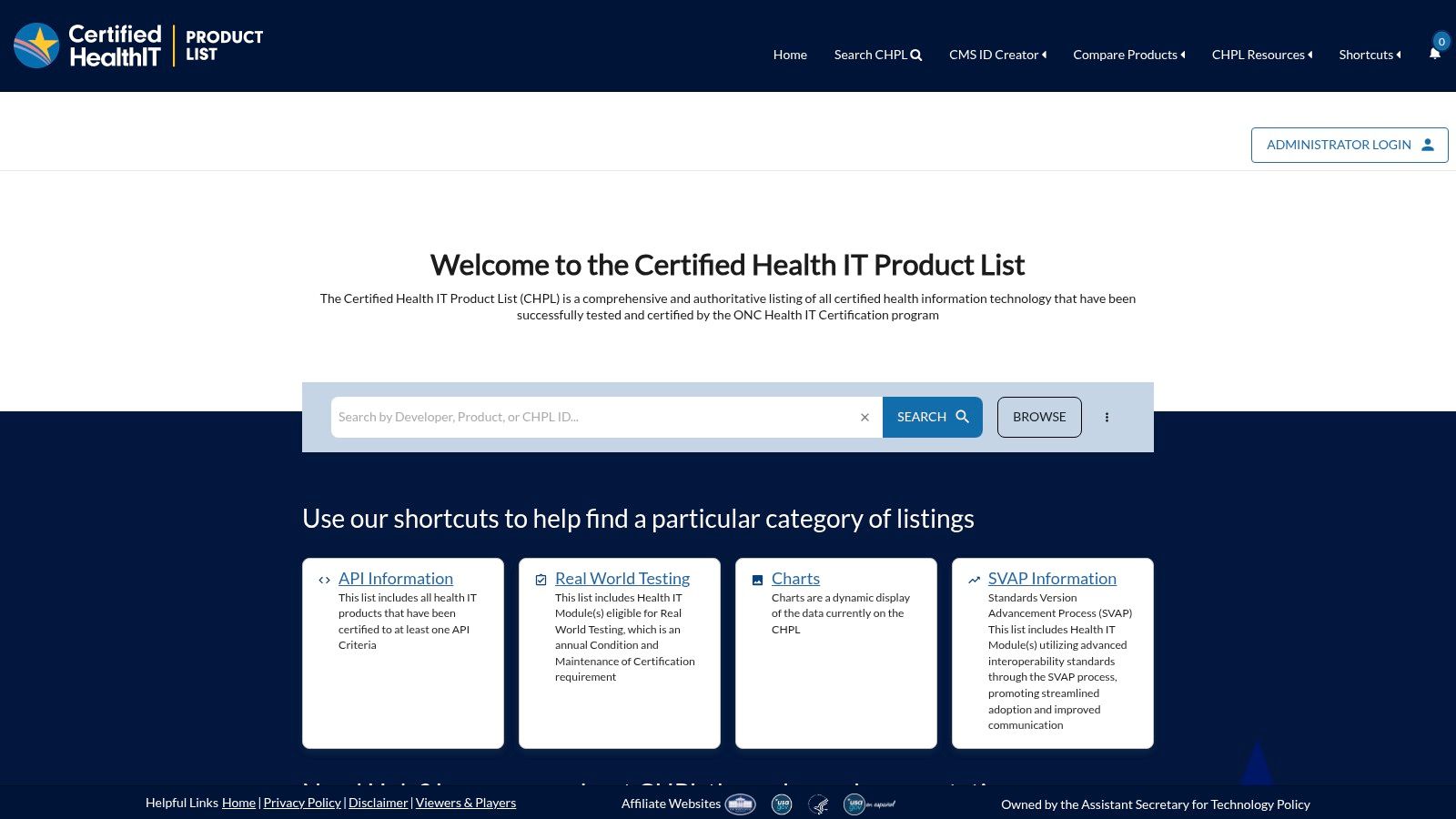
The CHPL allows you to confirm a product's precise certification status, view the specific criteria it was tested against (such as Cures Act updates), and obtain its unique Certification ID, which is often required for attestation in programs like MIPS. While the user interface can feel clinical and complex for new users, its powerful filtering capabilities are invaluable for detailed due diligence. You can search by developer name, product version, and even specific care settings to narrow down options that are certified to fit your practice’s unique needs. This verification step is a non-negotiable part of the procurement process.
Key Details & User Experience
Primary Use Case: Verifying that an EMR/EHR system is officially certified by the U.S. government, which is crucial for HIPAA compliance, data security, and participation in federal programs like MIPS.
- Pricing: Completely free to access and use.
- User Interface: The interface is data-heavy and can be intimidating initially. However, it's highly functional, designed for precise information retrieval rather than a commercial browsing experience. Its purpose is accuracy, not marketing.
- Practical Tip: Use the advanced search to filter by certification criteria relevant to your specialty. For example, a pediatric practice can filter for products certified for specific pediatric care modules, ensuring the software meets clinical requirements.
Why It's #1: The CHPL is the foundational resource for any EMR software search. It provides the unbiased, government-backed validation needed before you even begin comparing features on commercial platforms. Selecting a non-certified product can lead to significant compliance penalties, data breaches, and financial risks.
While the CHPL helps verify compliance, finding the right system involves more than just a certification check. For a deeper dive into top-rated vendors and their features, you can explore the best EMR software options currently available on the market.
Website: https://chpl.healthit.gov
2. KLAS Research
After verifying certification with the CHPL, your next step in compiling a credible electronic medical records software list should be KLAS Research. This highly respected organization provides independent, data-driven insights and performance rankings based on extensive, confidential interviews with thousands of healthcare providers. It’s the go-to resource for understanding how EMR/EHR systems perform in the real world, moving beyond polished marketing claims to deliver peer-validated performance data that reflects actual user experiences with functionality, support, and implementation.
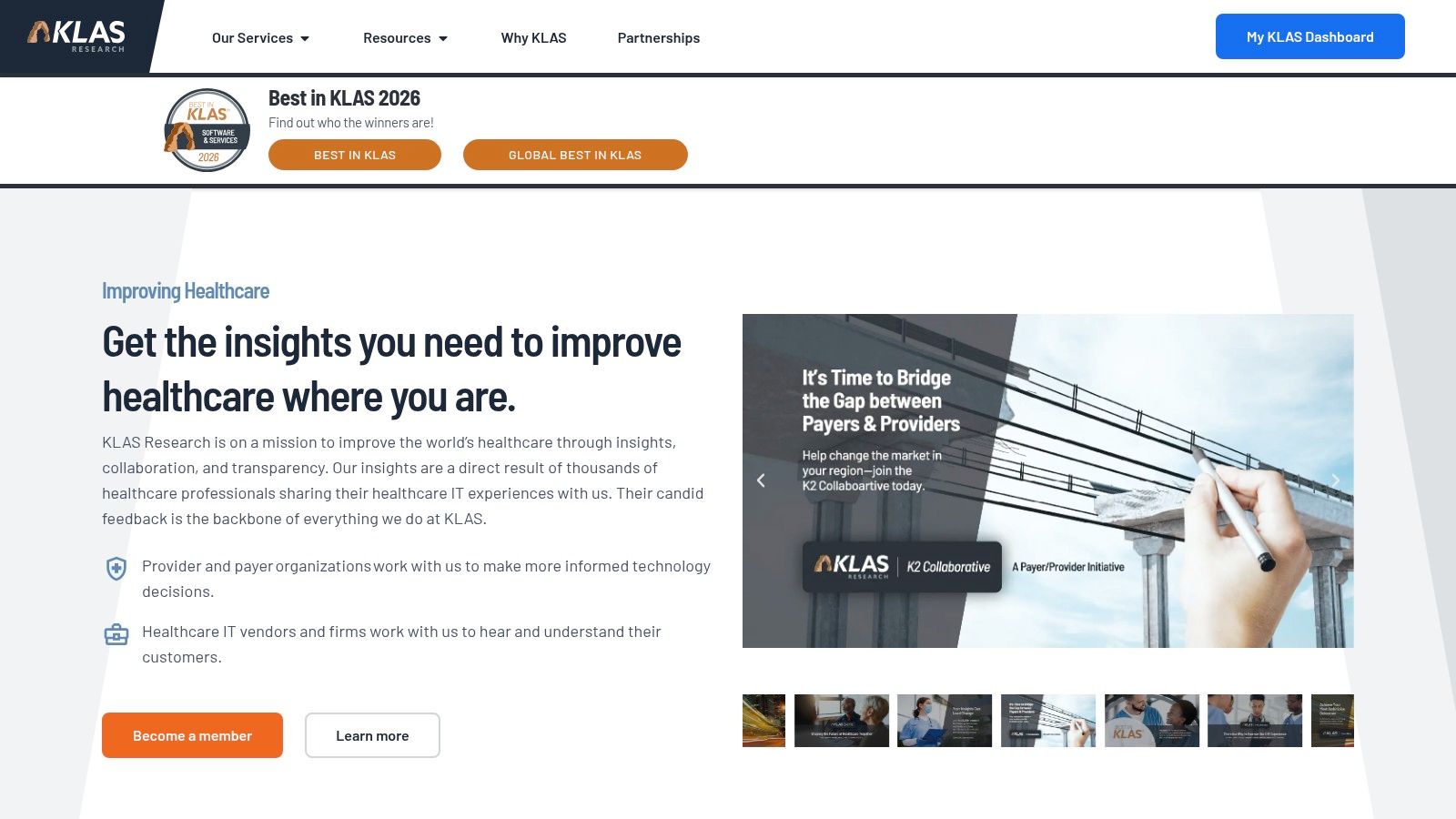
KLAS is best known for its annual "Best in KLAS" awards, which recognize the top-performing vendors across various market segments, from large academic hospital systems to small ambulatory practices. Their detailed reports provide granular scorecards on usability, customer support quality, and overall functionality, helping you create a shortlist of vendors that are highly regarded by organizations similar to yours. While it is not a direct purchasing portal, its unbiased benchmarks and qualitative feedback are invaluable for making an informed, evidence-based decision.
Key Details & User Experience
Primary Use Case: Benchmarking potential EMR/EHR vendors against one another using trusted, provider-validated performance data and shortlisting top-rated systems for your specific practice size and specialty.
- Pricing: Some high-level reports and rankings are available for free, but in-depth vendor scorecards and detailed comparative reports typically require a paid subscription or organizational access.
- User Interface: The website is professional and well-organized, designed for research and data analysis. Navigating to specific reports is straightforward, though accessing the most valuable, detailed content is often behind a paywall.
- Practical Tip: Start by reviewing the free "Best in KLAS" summary reports. This will give you a high-level overview of the market leaders in your specific segment without requiring an initial financial investment.
Why It's #2: Where the CHPL confirms if a product is compliant, KLAS tells you how well that product actually works in a clinical setting. It provides the crucial qualitative context needed to differentiate between certified options, ensuring your final choice is not only compliant but also highly rated by its actual users.
Website: https://klasresearch.com
3. G2 (EMR Software Category)
For real-world, unfiltered user feedback on a specific electronic medical records software list, G2 stands out as a leading destination. As a massive peer-to-peer review site, it offers a wealth of verified user reviews, detailed ratings, and direct comparisons across hundreds of EMR products. It excels at providing an "on-the-ground" perspective, helping you understand how a system performs in a live clinical environment, not just what a sales brochure claims. G2's filterable grids, user-generated pros and cons lists, and satisfaction scores are invaluable for shortlisting vendors based on the candid experiences of similar practices.
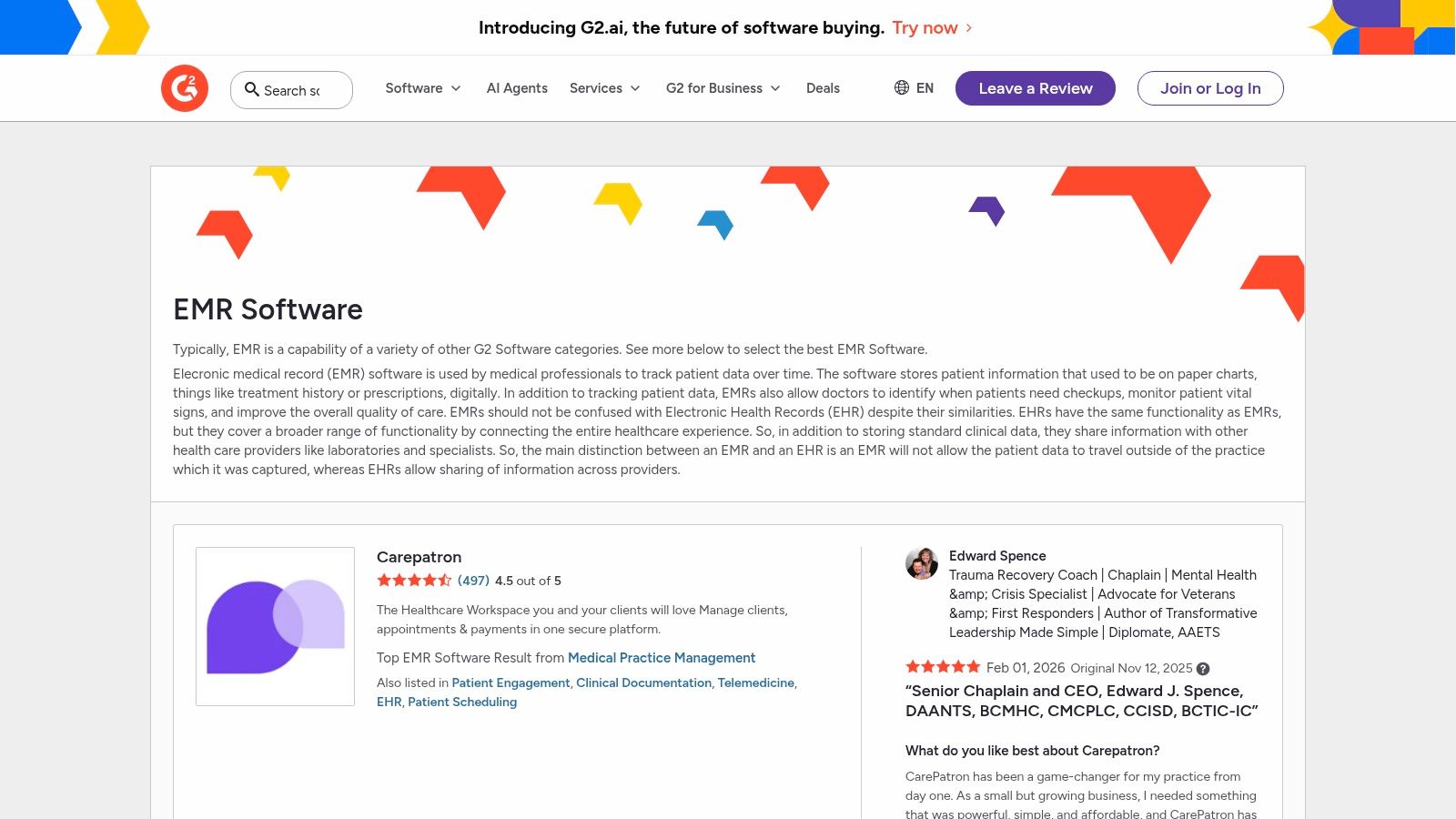
The platform’s strength lies in its review cadence and the detailed questionnaires that users fill out, which cover everything from the initial implementation process and ongoing customer support to specific feature usability and interoperability. This provides a granular view that helps you identify potential red flags (like poor customer service) or standout features that are particularly important to your specialty. While sponsored placements can influence visibility on the platform, the sheer volume of organic, verified reviews offers a powerful signal for assessing overall user satisfaction and long-term vendor reputation.
Key Details & User Experience
Primary Use Case: Gathering unfiltered, peer-reviewed feedback on EMR usability, customer support responsiveness, and real-world performance to complement official vendor information and marketing materials.
- Pricing: Free to browse reviews and compare products.
- User Interface: Clean, intuitive, and designed for easy comparison. The signature "G2 Grid" visualizes market leaders, contenders, and niche players based on user satisfaction and market presence.
- Practical Tip: Use the filters to narrow down reviews by company size (e.g., small business, mid-market) and user role (e.g., Physician, Administrator, Biller). This ensures you're reading feedback from professionals in a similar context to your own.
Why It's #3: G2 provides the crucial "voice of the customer" that is often missing from official directories and vendor websites. It helps you look past marketing claims and understand the day-to-day reality of using a particular EMR system, especially regarding customer support quality and ease of use.
Website: https://www.g2.com/software/emr
4. Capterra (Electronic Medical Records Directory)
Capterra, part of the Gartner family, serves as a massive online marketplace for business software, and its electronic medical records software list is one of the most comprehensive directories available. It hosts hundreds of EMR/EHR listings, which makes it an excellent resource for practices looking to survey the entire market landscape and discover vendors they may not have encountered through other channels. The platform is particularly useful for small to mid-sized practices that need to compare a wide range of options, from niche, specialty-specific systems (like for dermatology or mental health) to general-purpose platforms.
The real strength of Capterra lies in its combination of user-generated reviews and powerful, granular filtering tools. You can sort the electronic medical records software list by specific features (like telehealth or patient portal), deployment type (cloud vs. on-premise), and practice size. This allows you to quickly create a highly relevant shortlist of potential vendors that meet your core technical and functional requirements before you invest time in deeper research or scheduling product demos.
Key Details & User Experience
Primary Use Case: Comparing a broad range of EMR systems based on features and verified user reviews to build a preliminary shortlist for further evaluation and outreach.
- Pricing: Free to browse and use the comparison tools.
- User Interface: The interface is clean and user-friendly, designed for easy browsing and comparison. However, it is important to be aware that sponsored listings are often prioritized in search results and may receive more visibility.
- Practical Tip: Use the side-by-side comparison tool to select up to four products and view their features, pricing models, and user ratings in a concise, easy-to-read table. This is highly effective for quickly identifying key differentiators and deal-breakers.
Why It's #4: For practices in the initial discovery phase, Capterra provides an unparalleled breadth of options and user feedback. While you need to be mindful of sponsored placements, its verified reviews and detailed feature filters offer a realistic, user-centric perspective that is invaluable when narrowing down your choices from hundreds of potential systems.
Website: https://www.capterra.com/electronic-medical-records-software/
5. Software Advice
Software Advice, another Gartner-owned company, serves as a free advisory service for practices navigating the crowded and often confusing EMR market. Instead of leaving you to browse endless listings on your own, it offers a human-assisted approach. You can get a personalized shortlist of vendors after a brief phone or chat consultation with one of their advisors, making it ideal for those who are new to the EMR procurement process and appreciate a guided, consultative experience. This service helps cut down research time significantly.
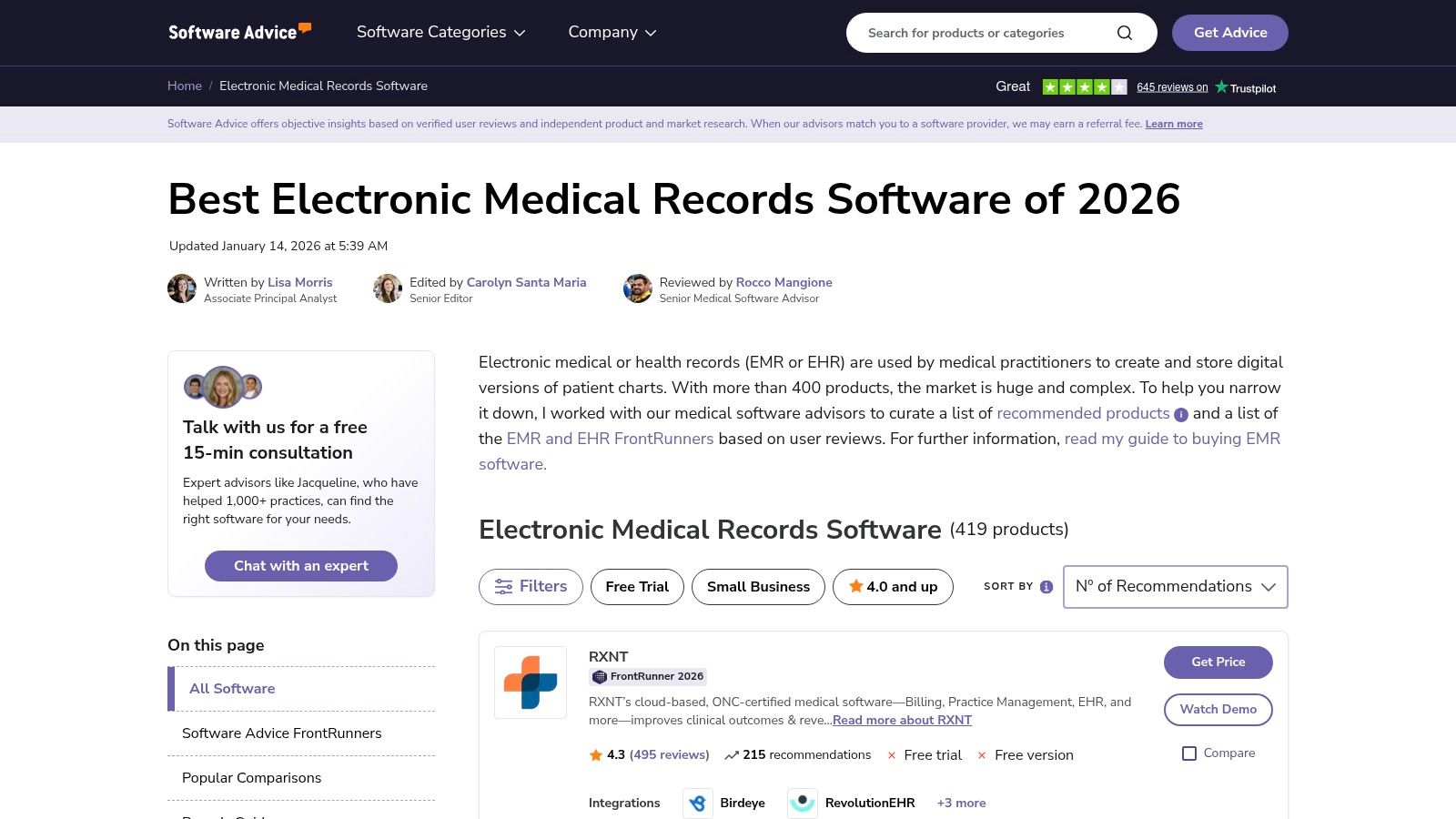
The platform also provides detailed comparison pages and its proprietary "FrontRunners" reports, which use verified user reviews to highlight top-performing products based on usability and customer satisfaction. This combination of expert guidance and real-world user data helps simplify the initial discovery phase of selecting from a long electronic medical records software list. It effectively bridges the gap between independent, time-consuming research and direct vendor outreach, ensuring you start with a relevant set of options.
Key Details & User Experience
Primary Use Case: Quickly generating a tailored shortlist of EMR/EHR vendors based on a practice's specific needs, size, specialty, and budget through free consultations.
- Pricing: The advisory service is entirely free for buyers; Software Advice is compensated by software vendors when they facilitate a match.
- User Interface: The website is clean and user-friendly, designed to funnel users toward its advisory service. The comparison tools and reports are easy to navigate and digest.
- Practical Tip: Be prepared to discuss your budget, practice size, specialty, and must-have features during the consultation. The more specific and detailed you are about your requirements, the more relevant and useful your recommended vendor list will be.
Why It's #5: Software Advice excels at cutting through the noise. Its personalized, human-assisted matching service is invaluable for practices that feel overwhelmed by the sheer number of EMR options and don't know where to begin their search, saving them time and effort.
Keep in mind that this is a lead-generation service, so you should expect follow-up communications from the vendors on your final shortlist.
Website: https://www.softwareadvice.com/medical/electronic-medical-record-software-comparison/
6. GetApp (EMR Rankings and Category Leaders)
GetApp, a sister site to Capterra and also part of the Gartner network, offers a marketplace-style approach to finding the right electronic medical records software. Its standout feature is the "Category Leaders" list, which uses a data-driven methodology to rank top EMR products based on five key criteria: verified user reviews, integrations, mobile app availability, functionality, and security. This curated list allows practices to quickly identify high-satisfaction products with a strong market presence, saving valuable research time by focusing on proven performers.
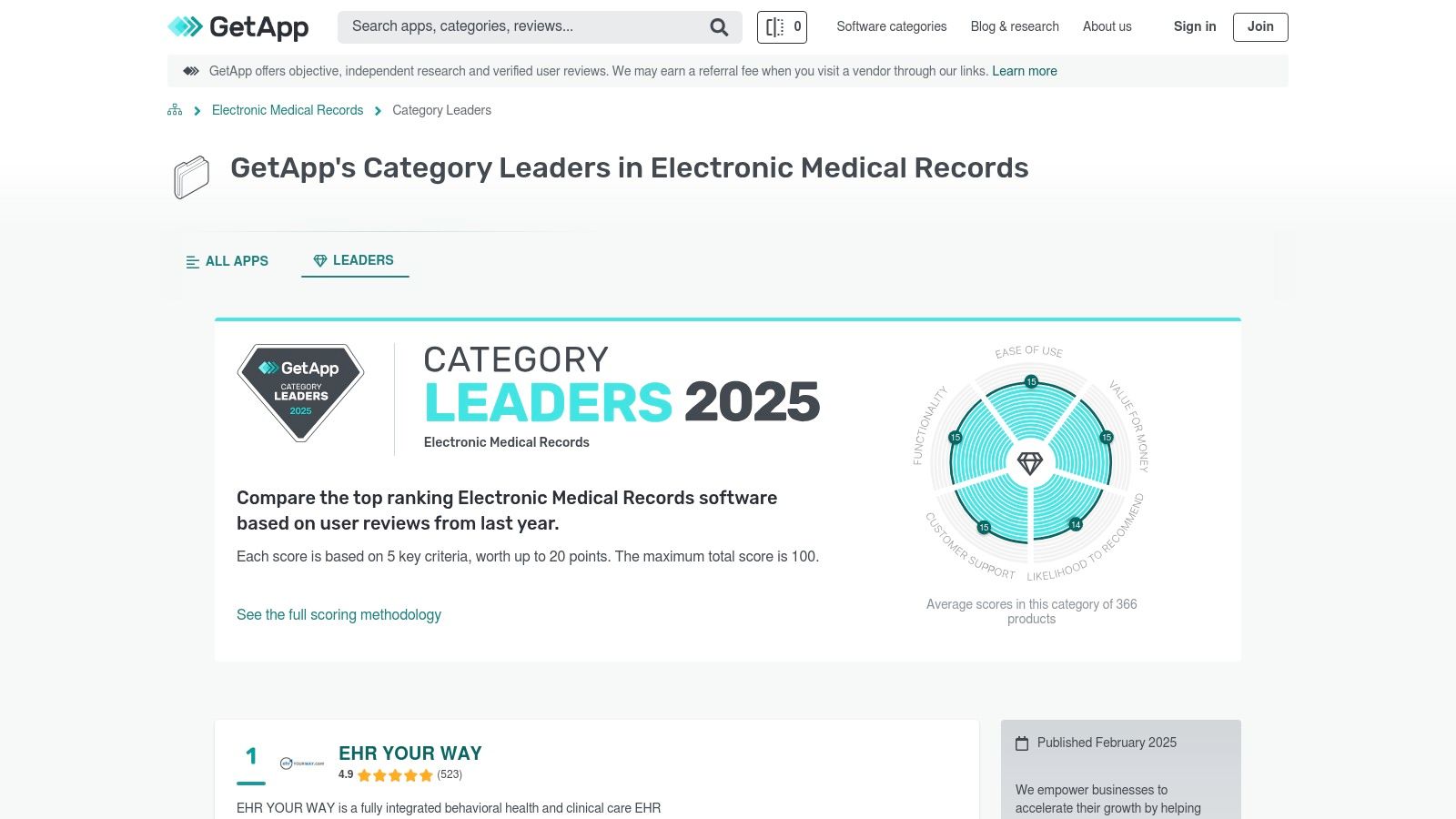
The platform’s strength lies in its robust filtering capabilities and intuitive comparison tools. You can narrow down the extensive list by deployment type (cloud-based or on-premise), business size, and essential features like e-prescribing or patient scheduling. This makes it easier to create a relevant shortlist of vendors that align with your practice’s specific operational and clinical needs before you commit time to watching demos or engaging with sales teams.
Key Details & User Experience
Primary Use Case: Quickly identifying top-rated and popular EMR solutions based on user satisfaction scores and key functionality, especially for small to mid-sized practices looking for a data-backed starting point.
- Pricing: Free for users to browse, compare, and read reviews.
- User Interface: The UI is modern, visually driven, and user-friendly, designed for easy comparison shopping. The layout makes it simple to scan key data points for each software, such as pricing models and top features.
- Practical Tip: Pay close attention to the scoring methodology for the Category Leaders list. A high score in the "integrations" category, for instance, could be a key decision factor for a tech-forward practice that relies on multiple third-party tools.
Why It's #6: GetApp excels at translating vast amounts of user review data into an easily digestible, actionable format. Its "Category Leaders" report provides a valuable, pre-vetted starting point that helps practices bypass less reputable vendors and focus their evaluation efforts on proven solutions.
While GetApp helps identify popular choices, it's important to remember that sponsored profiles can influence placement. Always cross-reference your findings with other resources on this electronic medical records software list.
7. athenahealth (athenaOne)
athenahealth offers athenaOne, a cloud-based, integrated suite that tightly combines EHR, practice management, and patient engagement tools. It is particularly well-regarded in the ambulatory care space, serving a wide range of practice sizes from solo practitioners to large multi-specialty groups. The platform's core value proposition is its network-enabled services, which leverage insights from its vast network of providers to automate tasks and aim to offload administrative burdens like revenue cycle management from the practice's staff.
This service-oriented approach is what makes athenahealth a distinct option in any electronic medical records software list. Instead of just providing software, they offer co-sourced revenue cycle operations to manage billing, claim submissions, and collections. This model allows clinical staff to focus more on patient care and less on complex administrative and financial tasks, which is a significant draw for practices looking to optimize both clinical and financial efficiency.
Key Details & User Experience
Primary Use Case: Ambulatory practices seeking a unified, cloud-based EHR and practice management system with strong, co-sourced revenue cycle management (RCM) services to improve financial outcomes.
- Pricing: Often uses a percentage-of-collections model for its RCM services, which aligns their success with the practice's financial performance. This model minimizes upfront costs but requires careful financial modeling to understand the long-term total cost of ownership.
- User Interface: The UI is designed to be modern and intuitive, with workflows built to surface relevant clinical and financial information at the point of care.
- Practical Tip: When evaluating athenaOne, thoroughly analyze your practice's collection rates, denial rates, and payer mix to accurately project the total cost of ownership under their percentage-based pricing model. Compare this to the cost of an in-house billing team.
Why It's in This List: athenahealth stands out for its powerful combination of software and services. The co-sourced RCM is a game-changer for practices overwhelmed by billing complexities, making it an excellent choice for organizations prioritizing financial health and administrative efficiency.
Website: https://www.athenahealth.com
8. eClinicalWorks
eClinicalWorks is a major and long-standing player in the ambulatory healthcare IT space, offering a unified solution that combines an EHR with practice management, telehealth, and patient engagement tools. It stands out in the crowded electronic medical records software list by publicly posting its pricing tiers, which provides much-needed transparency for small to mid-sized practices trying to budget for a new system. The platform is designed as an all-in-one solution to manage clinical documentation, patient communication, and financial operations from a single interface.
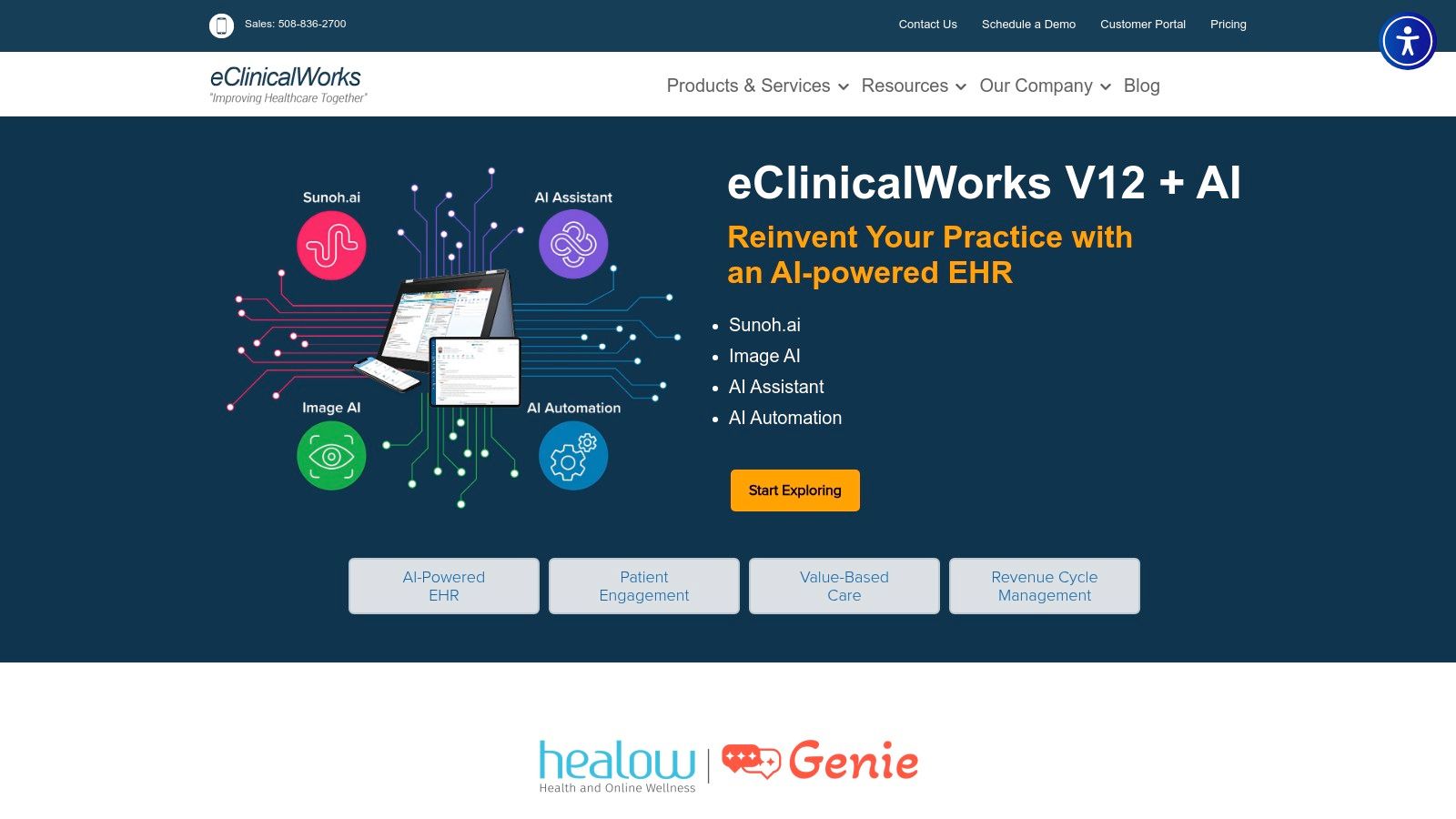
The cloud-based system includes core functionalities like a patient portal (healow), e-prescribing, and mobile applications (eClinicalMobile), making it accessible for providers on the go. For practices looking to offload administrative burdens, eClinicalWorks also offers an optional Revenue Cycle Management (RCM) service. This flexibility allows a practice to start with a core EHR and scale its services as it grows, adding integrated practice management and billing support when the need arises.
Key Details & User Experience
Primary Use Case: Ambulatory practices of all sizes, from solo doctors to large groups, seeking a comprehensive, cloud-based EHR and Practice Management solution with transparent pricing models.
- Pricing: Publishes clear per-provider monthly pricing tiers for EHR-only or an EHR and PM bundle. RCM services are available for a percentage of monthly collections.
- User Interface: The interface is feature-rich but may require a significant learning curve and dedicated time for customization to align with specific practice workflows.
- Practical Tip: Leverage their 24/7 support during the implementation phase to fully customize templates and workflows. This initial time investment can significantly improve daily efficiency and user adoption in the long run.
Why It's On The List: eClinicalWorks earns its spot for its commitment to transparent pricing and its comprehensive feature set tailored for the ambulatory market. By making costs clear upfront, it empowers smaller practices to make informed financial decisions without lengthy sales negotiations.
Website: https://www.eclinicalworks.com
9. NextGen Healthcare
NextGen Healthcare offers a versatile portfolio of solutions, making it a prominent name on any electronic medical records software list. The company provides a distinct product for small practices, NextGen Office (formerly MediTouch), and a more comprehensive, powerful suite, NextGen Enterprise, for mid-sized to enterprise-level organizations. This dual-offering approach allows NextGen to effectively serve a wide spectrum of the healthcare market, from solo practitioners to large, multi-specialty groups, with a strong focus on deep clinical content and modern workflow automation.
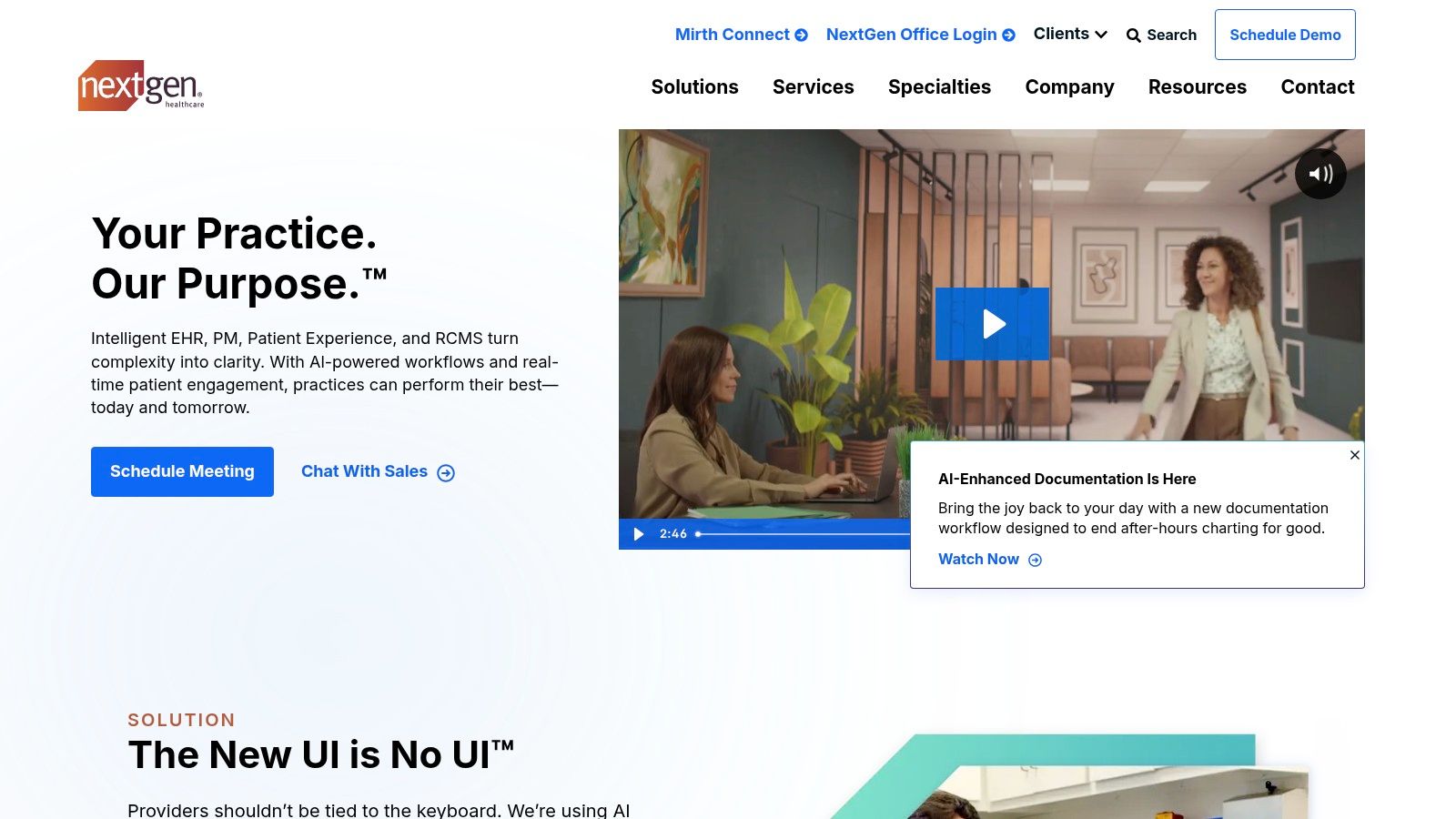
A key strength of NextGen is its extensive library of pre-built templates and clinical content for over 25 different specialties, which can significantly reduce the customization burden during implementation. The platform also emphasizes patient engagement tools (like a patient portal and automated reminders), robust analytics, and forward-thinking features like mobile documentation and ambient AI scribing (NextGen Ambient Assist) to help reduce the administrative load on clinicians. This positions NextGen as a strong contender for practices looking for a mature system that is also actively adapting to the future of healthcare technology.
Key Details & User Experience
Primary Use Case: Ambulatory practices of any size seeking a specialty-specific EHR with strong interoperability, patient engagement, and financial management tools.
- Pricing: Custom quoted based on practice size, specialty, and required features. Pricing is not publicly available and requires a consultation with their sales team.
- User Interface: The interface is generally considered clean and functional, with the NextGen Office product offering a more streamlined, cloud-native experience specifically designed for smaller practices.
- Practical Tip: During a demo, specifically request to see the workflows and templates for your specialty. Given the breadth of their offerings, confirming the depth of support for your specific clinical needs is crucial.
Why It's #9: NextGen’s flexibility to serve both small and large organizations with tailored solutions makes it a significant player. Its deep specialty content and investment in advanced technologies like AI documentation demonstrate a commitment to both established and emerging clinical needs.
For those comparing enterprise-level systems, understanding how NextGen's features stack up against other major platforms is key. You can find a detailed comparison in this breakdown of eClinicalWorks' EHR offerings to see how they differ in scope and functionality.
Website: https://www.nextgen.com
10. AdvancedMD
AdvancedMD offers a comprehensive, cloud-based suite of tools meticulously tailored for independent medical practices across the U.S. It stands out in the market by bundling its EHR with practice management, patient engagement, and telehealth into a single, unified platform. This highly integrated approach helps streamline workflows by combining clinical, administrative, and financial tasks, which improves efficiency for small to mid-sized practices that are looking for an all-in-one solution without the complexity of managing multiple vendors.
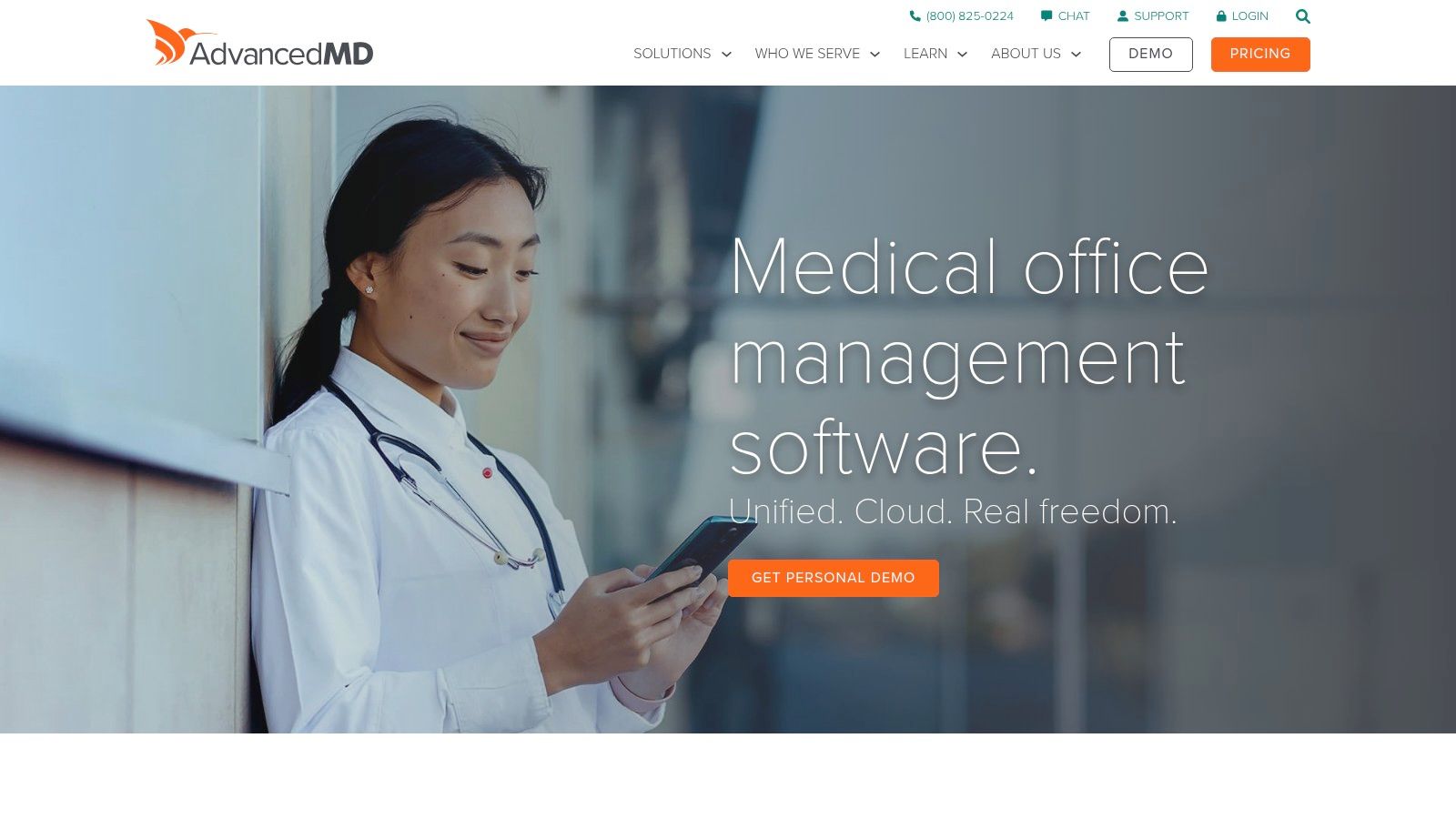
The platform is known for its flexible, "build-a-bundle" quoting system, which allows practices to select the specific modules they need and avoid paying for unnecessary features. This customization extends to its pricing, offering both per-encounter and unlimited subscription models to accommodate different patient volumes. Practices can also opt for full-service revenue cycle management (RCM) and benefit from specialty-specific discounts, making it an adaptable and scalable choice within the electronic medical records software list.
Key Details & User Experience
Primary Use Case: Independent medical practices seeking a scalable, all-in-one EHR and practice management suite with flexible pricing and optional RCM services.
- Pricing: Provides published pricing ranges, with final costs depending on the selected bundle and add-ons. Models include per-encounter or unlimited subscription options.
- User Interface: The interface is feature-rich and highly configurable. While this power is a benefit for customization, mastering the advanced workflow settings can present a notable learning curve for new users.
- Practical Tip: Request a detailed, itemized quote outlining every component of your bundle. Clearly define your practice’s needs to avoid paying for features you won't use and to ensure there are no hidden costs.
Why It's #10: AdvancedMD earns its spot with its highly flexible bundling and pricing models, which are particularly valuable for independent practices with fluctuating patient volumes or unique needs. This adaptability allows practices to scale their software investment directly with their growth.
Website: https://www.advancedmd.com
11. Tebra (formerly Kareo + PatientPop)
Tebra represents the strategic merger of two well-known names in the independent practice technology space: Kareo (which focused on EHR and billing) and PatientPop (which focused on patient experience and marketing). The result is a fully integrated, cloud-based platform designed to manage the entire patient journey, from initial online discovery to final payment collection. It is built specifically for small to medium-sized independent practices in the U.S. that need a unified solution for clinical, financial, and marketing operations without the headache of stitching together multiple disconnected vendors.
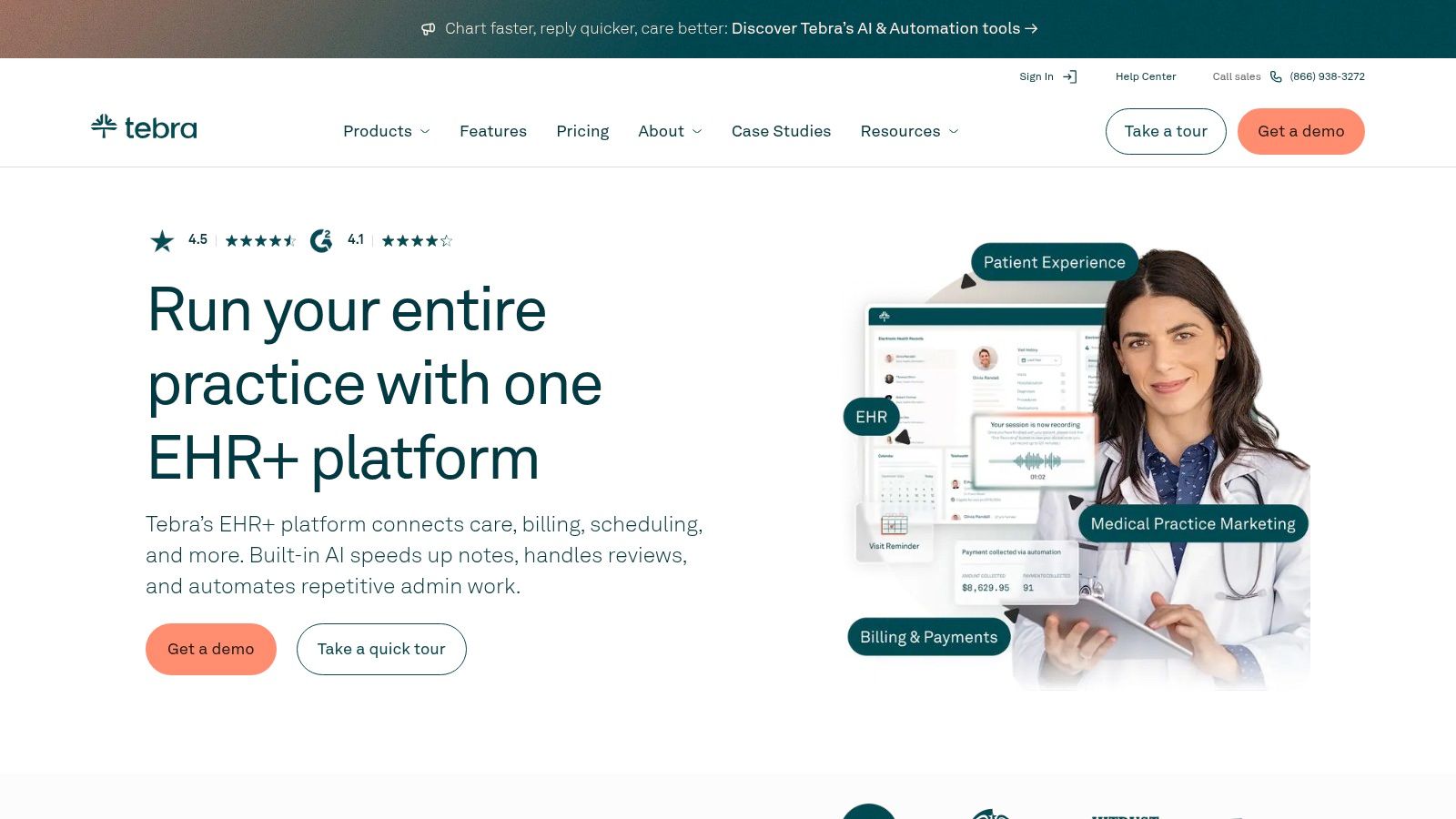
This consolidation creates a powerful "all-in-one" proposition. Practices can manage their online reputation and patient acquisition efforts, then transition seamlessly into patient scheduling, clinical documentation with an EHR, telehealth appointments, and medical billing. This integrated workflow helps reduce administrative friction and eliminates data silos between the front and back office, making it a compelling choice for practices looking to grow their patient base while streamlining internal processes. Tebra also emphasizes its modern tech stack, featuring tools like AI note assist to help clinicians save time on documentation.
Key Details & User Experience
Primary Use Case: Independent practices seeking a single, modern platform to manage clinical care (EHR), practice management (billing, scheduling), and patient growth (marketing, online reputation).
- Pricing: Quote-based. Pricing is not public and will depend on the practice size, specialty, and the specific modules or services required.
- User Interface: Generally clean and modern, reflecting its cloud-native design. It aims to provide a unified, seamless user experience across its clinical, administrative, and marketing tools.
- Practical Tip: Clarify all potential add-on costs during the sales process. Services like payment processing, advanced marketing tools, or custom integrations can increase the total monthly investment, so it is crucial to understand the full cost of ownership.
Why It's a Strong Contender: Tebra's unique strength lies in its fully integrated front-to-back office solution. Unlike many other platforms in an electronic medical records software list, it directly connects patient acquisition and marketing efforts with clinical and billing workflows, offering a holistic view of practice health and performance.
Website: https://www.tebra.com
12. DrChrono (by EverHealth)
DrChrono, now part of the EverHealth brand, distinguishes itself with a mobile-first approach to EHR, making it a long-time favorite among clinicians who rely on Apple devices like the iPad and iPhone. Its platform is built from the ground up for iOS, offering a seamless and intuitive user experience that allows providers to manage patient charts, e-prescribe, take clinical photos, and handle documentation on the go. This deep focus on mobility is ideal for modern, agile practices where physicians are not always tethered to a desktop computer and value flexibility.
The platform bundles EHR with practice management, offering specialty-specific templates, integrated telehealth, and a patient portal. DrChrono also provides optional revenue cycle management (RCM) services, allowing practices to outsource their medical billing for greater efficiency and to focus on patient care. Its tiered plans are designed to scale with a practice, from basic EHR access for new practices to comprehensive RCM and practice management suites for established clinics, making it a flexible option for small to medium-sized organizations.
Key Details & User Experience
Primary Use Case: Small to mid-sized practices prioritizing a native, mobile EHR experience on iOS devices for enhanced flexibility, better patient engagement at the bedside, and streamlined clinical workflows.
- Pricing: Quote-based. Plans are tiered based on features, so practices must contact the sales team for a custom price based on provider count and required functionalities.
- User Interface: Highly praised for its clean, modern, and intuitive design on the iPad and iPhone. While the desktop experience is functional, the mobile app is where the platform truly shines and delivers its core value.
- Practical Tip: Leverage the customizable medical forms and drawing tools on the iPad app during patient encounters to visually annotate diagrams and explain conditions, which can significantly improve patient understanding and engagement.
Why It's #12: DrChrono's unwavering commitment to a best-in-class mobile experience on Apple hardware makes it a standout in the electronic medical records software list. For providers who value the freedom to practice from anywhere without compromising on functionality, it remains an excellent choice.
Website: https://www.drchrono.com
Top 12 EMR Solutions Comparison
| Solution | Primary purpose | Key features ✨ | Target audience 👥 | Value / Price 💰 | Trust / Quality ★🏆 |
|---|---|---|---|---|---|
| ONC Certified Health IT Product List (CHPL) | Certification & compliance directory | Certification IDs, advanced filters, weekly updates ✨ | Compliance officers, vendors, procurement 👥 | 💰 Free to use | ★★★★★ 🏆 Official source |
| KLAS Research | Vendor benchmarking & reports | Provider interviews, scorecards, Best in KLAS awards ✨ | Health systems, CIOs, procurement teams 👥 | 💰 Some reports subscription-only | ★★★★☆ 🏆 Provider-validated |
| G2 (EMR Category) | User reviews & discovery | Verified reviews, product grids, demo contacts ✨ | Buyers comparing usability/support 👥 | 💰 Free browse; sponsored listings | ★★★★☆ |
| Capterra (EMR Directory) | Marketplace & buyers’ guide | Large listings, side-by-side comparisons, filters ✨ | SMB & mid-market buyers 👥 | 💰 Free browse; sponsored placements | ★★★★☆ |
| Software Advice | Advisory & guided shortlists | Human-assisted matching, FrontRunners reports ✨ | New buyers seeking guidance 👥 | 💰 Free consults (lead-gen) | ★★★★☆ |
| GetApp | Category leaders & quick rankings | “Category Leaders”, robust filters, verified reviews ✨ | Buyers wanting top-rated shortlist 👥 | 💰 Free browse; limited pricing detail | ★★★★☆ |
| athenahealth (athenaOne) | Cloud EHR + RCM services | EHR + co-sourced RCM, communicator suite ✨ | Small–mid ambulatory groups 👥 | 💰 Quote-based; % of collections model | ★★★★☆ |
| eClinicalWorks | Ambulatory EHR with published tiers | EHR+PM tiers, patient portal, mobile apps ✨ | Small practices planning budgets 👥 | 💰 Published per-provider tiers | ★★★★☆ |
| NextGen Healthcare | Specialty-focused ambulatory EHR | Specialty templates, analytics, AI documentation ✨ | Solo to enterprise; specialty practices 👥 | 💰 Custom-quoted | ★★★★☆ |
| AdvancedMD | Bundle-based cloud suite | Build-a-bundle quoting, flexible pricing models ✨ | Independent U.S. practices 👥 | 💰 Published ranges; add-ons vary | ★★★★☆ |
| Tebra (Kareo + PatientPop) | Unified practice & marketing stack | EHR + patient experience, telehealth, intake ✨ | Small independent practices 👥 | 💰 Quote-based; add-ons increase cost | ★★★★☆ |
| DrChrono (EverHealth) | Mobile-first EHR | Native iOS apps, specialty templates, kiosk ✨ | Clinicians prioritizing mobility (Apple) 👥 | 💰 Quote-based tiers | ★★★★☆ |
Empowering Your Practice with the Right Technology Partner
Navigating the extensive electronic medical records software list can feel like a monumental task, but it represents a critical investment in your practice's future operational efficiency and clinical excellence. We have explored a range of top-tier platforms, from comprehensive, enterprise-grade solutions like athenahealth and NextGen Healthcare to specialty-focused systems like Tebra and mobile-first innovators like DrChrono. We also highlighted invaluable, objective resources such as the ONC Certified Health IT Product List and KLAS Research to aid your essential due diligence process.
The journey doesn't end with selecting a name from a list; it begins there. Each option presents a unique combination of features, from integrated billing and patient scheduling to advanced e-prescribing and interoperability with other health systems. The right choice is not about finding the software with the longest feature list, but about identifying the technology partner that aligns perfectly with your practice's specific size, specialty, budget, and long-term strategic goals for patient care and growth.
From Selection to Successful Implementation
Choosing the right EMR is only half the battle. The transition and implementation phase is where your decision truly comes to life, and it is often the most challenging part of the process. A successful rollout requires careful planning, dedicated internal resources, and a strong commitment to comprehensive team training. A system that is powerful but poorly adopted by staff can create more problems than it solves, leading to frustration, inefficiencies, and even clinical errors.
To ensure a smooth transition and maximize your return on investment, consider these crucial factors:
- Data Migration: How will you transfer existing patient records from your old system (or paper charts) to the new one? Clarify the vendor's data migration process, all associated costs, and the expected timeline. A seamless and accurate data transfer is vital for continuity of care.
- Staff Training: Does the vendor provide robust, role-based training and ongoing support? Your entire team, from front-desk staff and billers to nurses and physicians, must be confident and competent in using the new system from day one. Inadequate training is a leading cause of implementation failure.
- Workflow Integration: The EMR should adapt to your workflows, not the other way around. During demos and trials, map your current clinical and administrative processes against the software’s capabilities to identify potential friction points and opportunities for optimization.
- Long-Term Partnership: Look beyond the initial sale and fancy demo. Evaluate the vendor's reputation for customer support, their product roadmap for future updates, and their commitment to adapting to evolving healthcare regulations and technological advancements.
Your Final Checklist for Choosing an EMR
As you finalize your decision, revisit this simple checklist. It will help you cut through the marketing noise and focus on what truly matters for your practice, your staff, and your patients.
- Define Your Core Needs: Have you clearly documented your must-have features (e.g., specific billing codes, specialty templates) versus your nice-to-haves?
- Confirm Compliance: Is the software fully HIPAA compliant and ONC-certified for the latest Cures Act Final Rule requirements?
- Evaluate Scalability: Will this system grow with your practice, or will you need to replace it in a few years? Does the pricing model support growth?
- Assess the User Experience: Is the interface intuitive for all user types, including clinical and administrative staff? Was it easy to navigate during the demo?
- Understand the Total Cost of Ownership: Have you accounted for all potential costs, including implementation, data migration, training, ongoing support, and necessary hardware upgrades?
- Check for Future-Proof Integrations: Does the platform support modern APIs for connecting with other essential tools, labs, health information exchanges, and emerging technologies like AI scribes?
Making a thoughtful, well-researched decision from the available electronic medical records software list empowers you to implement a system that will do more than just store data. It will become the digital backbone of your practice, enhancing efficiency, improving patient outcomes, and freeing your team to focus on the human side of healthcare. Choose a partner that not only solves today’s challenges but also positions you for the innovations of tomorrow.
Ready to reclaim hours spent on clinical documentation? Simbie AI integrates with your chosen EMR to automate medical note-taking, allowing you to focus on your patients, not your keyboard. Discover how our ambient AI scribe can eliminate administrative burdens by visiting Simbie AI.