
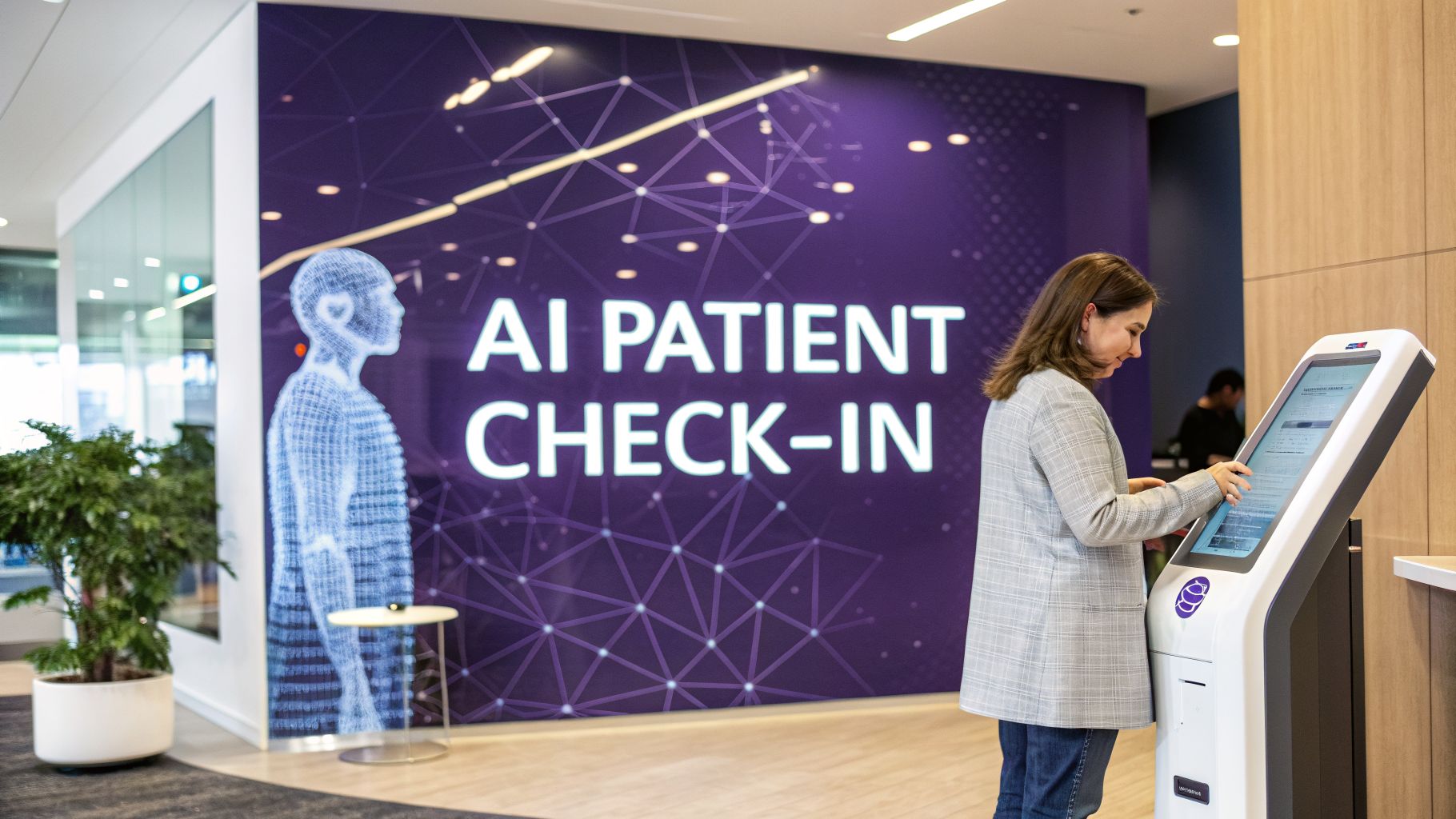
Let's be honest—the traditional patient registration process is often frustrating. It’s a cycle of clipboards, illegible handwriting, and long waits that sets a poor tone before the appointment even begins. AI-powered patient registration flips this experience on its head, turning that first point of contact into an instant, accurate, and always-available service. This guide will walk you through how this technology can boost your clinic's efficiency and improve patient care.
Your Practice's New Front Door

Think of your practice's "front door" not as a physical entryway, but as the very first interaction a patient has with you. Today, that interaction is happening online, long before they walk into your waiting room. Patients arrive better informed and expecting the same kind of fast, digital convenience they get everywhere else in their lives.
The old way feels like waiting in line at the bank to fill out forms by hand. Automated patient registration, on the other hand, is like using a smart mobile banking app that already knows who you are. It securely gathers all the necessary information before the patient even leaves their home.
This isn't just about adding new tech for the sake of it. It's a direct response to how people are already engaging with healthcare. A recent report found that 3 in 5 U.S. adults have used AI for health-related questions in the last three months alone. Millions are already comfortable using these tools, which means practices still relying on manual intake are falling behind and creating unnecessary friction for their patients.
To see just how different these two approaches are, here's a quick comparison.
Traditional vs AI-Powered Registration: A Quick Comparison
The table below breaks down the core differences between the paper-based systems of the past and the intelligent, automated systems available today. These differences highlight why transitioning to an AI-driven approach is a strategic move for modern medical practices.
| Feature | Traditional Registration | AI Patient Registration |
|---|---|---|
| Availability | Limited to office hours | 24/7/365, accessible from any device |
| Data Entry | Manual, prone to errors and transcription mistakes | Automated, ensuring 95%+ accuracy |
| Staff Workload | High administrative burden, repetitive tasks | Frees staff to focus on high-value, patient-facing work |
| Patient Experience | Long wait times, redundant paperwork | Fast, convenient, and personalized |
| Integration with EMR | Manual data transfer, often delayed | Instant and direct sync with EMR/PM systems |
As you can see, the shift from manual to automated isn't just an upgrade—it's a complete reimagining of the intake process that benefits both your staff and your patients.
How Automated Intake Works
So, what does this actually look like in practice? Intelligent systems can handle patient calls, collect registration details, verify insurance, and push all of that clean data directly into your EMR. This all happens in the background, often before the appointment is even on the books.
The impact is immediate and clear.
- Always-On Accessibility: Patients can register at 10 PM on a Sunday or 5 AM on a Tuesday, whenever is most convenient for them. This flexibility significantly improves patient access to care.
- A Lighter Load for Your Team: Your front desk staff can finally step away from endless data entry and focus on providing a warm, personal welcome to patients who need assistance in the clinic.
- Cleaner, More Reliable Data: By removing handwriting and manual keying from the equation, you get accurate information from the start. No more chasing down patients to clarify a typo or missing information.
For many practices, the phone is still the primary way patients reach out. Modern systems are built for this reality. Technologies like AI Voice Agents can manage these initial calls, making that first touchpoint incredibly efficient and ensuring no call goes unanswered.
Ultimately, by creating a smarter digital entry point, you’re not just keeping up with patient expectations—you're building a more resilient and competitive practice. It all starts with making that first step in the patient's journey a positive one.
How AI Is Reshaping Clinical and Admin Workflows

When you bring an AI registration system into a medical practice, it doesn't just change one task; it changes the entire rhythm of the day for everyone, from the front desk to the exam room. The whole process moves from a physical clipboard and a busy phone line to a seamless digital conversation.
To really see the difference, let’s follow a patient. It all begins when they call to schedule a visit. Instead of getting a busy signal or a voicemail, they're greeted by a clinically trained AI voice agent. This isn't a clunky robot; it's a system that can understand their needs, book the appointment, and text them all the pre-visit forms.
Right from that first touchpoint, the patient feels taken care of, and the practice has booked a new appointment without anyone lifting a finger. Best of all, this system works 24/7, so you never miss another after-hours call again. This continuous availability is a key benefit for both patient satisfaction and practice revenue.
Freeing Up Your Administrative Team
For your front-desk staff, this shift is a game-changer. Think about their typical day: phones ringing off the hook, a line of patients waiting, and a mountain of paperwork to scan. AI handles the most repetitive, draining parts of that job.
This automation frees them up to focus on the people right in front of them, transforming their role from data-entry clerks into true patient advocates.
- Engaging with In-Person Patients: They can offer a warm welcome to an arriving patient, help an elderly person from their car, or soothe a nervous child.
- Managing Complex Issues: They finally have the headspace to tackle a tricky insurance question or coordinate care with another specialist, all without the constant interruption of the phone.
- Improving Clinic Flow: With routine tasks off their plate, they can be more proactive, keeping the schedule on track and minimizing those frustrating wait times.
By automating the tedious work of intake and scheduling, AI lets your front-office team focus on the high-value, human-to-human interactions that a machine could never replace.
This is one of the first benefits you'll feel. You're not just making clerical work more efficient; you're elevating the role of your staff and immediately improving the experience for every patient who walks through the door with an AI patient registration system.
Empowering Clinicians with Better Data
The positive effects reach all the way to your clinical team. Before, a doctor might get a patient chart with missing history, scribbled notes, or just plain incorrect information from hurried data entry. Bad data in always means bad data out, forcing clinicians to use precious appointment time to play detective.
With an AI-powered system, that entire pre-visit routine is handled flawlessly. The AI collects, verifies, and organizes everything—medical history, current medications, insurance details—long before the patient arrives.
This means your clinicians walk into the exam room with a perfectly complete and accurate chart. The time they once spent on administrative cleanup can now be devoted entirely to patient care. This has a massive impact on their well-being. By 2026, it's clear AI can dramatically reduce burnout; for instance, a VA pilot program using an AI scribe saved an incredible 15,700 hours in its first year alone.
In another study at the University of Iowa Health Care, AI adoption saved each user 2.6 hours per week and cut burnout rates by 30%. Patients even noticed their doctors seemed more present and engaged. You can discover more about how AI is improving provider wellbeing and patient care on HealthJobsNationwide.com.
Key Benefits of AI Patient Registration

When you bring AI into your patient registration process, the improvements aren't just theoretical. You see real, tangible changes in how your practice runs and the quality of care you deliver—from your bottom line to your patient satisfaction scores.
Operationally, the first thing you'll notice is a huge weight lifted from your administrative team. By handing off routine tasks like intake, scheduling, and data entry, practices can cut administrative costs by as much as 60%. That's a significant saving you can reinvest directly into patient care or practice improvements.
Another game-changer is that an AI patient registration tool never sleeps. It's on the job 24/7, meaning you stop missing calls and losing patients who reach out after hours. Every person can get the help they need right away, which is great for access to care and even better for capturing appointments that might have otherwise disappeared into a full voicemail box.
Boosting Operational Efficiency
The daily impact goes far beyond just saving money. An intelligent system brings a new level of precision and order to how you manage your practice.
Think about it in these practical terms:
- Optimized Staff Allocation: When your front desk team isn't tied to the phone or buried in paperwork, they can focus on what they do best. They can now handle complex patient questions, manage clinic flow, or even help with post-visit follow-ups—work that truly makes a difference.
- Reduced No-Show Rates: AI can send out smart, automated reminders that patients actually see. This simple step is incredibly effective at lowering no-show rates, keeping your schedule full and your day productive.
- Elimination of Scheduling Errors: We’ve all seen it happen—double-bookings, wrong appointment times, and other mix-ups from manual scheduling. AI gets rid of these human errors, giving you a clean, reliable schedule that everyone can count on.
These gains add up, creating a smoother, more resilient, and ultimately more profitable practice. You're building an efficient foundation that can support real, long-term growth.
Enhancing Clinical Outcomes and Patient Satisfaction
As great as the operational wins are, the clinical improvements are where an AI patient registration system really proves its worth. The quality of care you provide is tied directly to the quality of information you have, and AI ensures that data is accurate from the very first touchpoint.
Better data simply means better medicine. When a doctor walks into an exam room with a complete, accurate, and neatly organized patient history, they can make smarter decisions about diagnosis and treatment. Less time is wasted on clerical work during the visit, which means more time is spent focused on the patient.
By providing clinicians with a complete and accurate picture of a patient's health history before they even walk into the exam room, AI directly contributes to safer and more effective care.
The patient feels the difference, too. Gone are the days of long waits and filling out the same tedious forms over and over. Instead, they get a quick, modern experience that shows you respect their time.
The table below gives a clearer picture of the improvements you can expect, backed by real-world data.
Quantifiable Impact of AI on Practice Operations
This table presents key metrics demonstrating the measurable improvements practices can expect after implementing AI for administrative tasks.
| Metric | Typical Improvement with AI | Impact Area |
|---|---|---|
| Administrative Cost Savings | Up to 60% reduction in overhead | Financial Performance |
| Data Accuracy Rate | Over 95% accuracy on intake forms | Clinical Safety & Decision Making |
| Patient Wait Times | Decreased by 20-30% on average | Patient Satisfaction & Clinic Flow |
| Staff Time on Admin Tasks | Reduced by up to 75% | Staff Well-being & Productivity |
In the end, a well-chosen AI system changes the entire experience for the better. It makes for a more efficient front office, a less-stressed clinical team, and happier patients—setting a new standard for what modern healthcare should feel like.
Your Step-By-Step Implementation Guide
So, you’re ready to bring an ai patient registration system into your practice. The idea can feel massive, but when you break it down, the process is actually quite manageable. This is a simple roadmap to follow, designed to get your whole team on board and ensure a smooth rollout.
Think of it like renovating a room in your house. You wouldn't just start knocking down walls, right? You’d start by assessing the space, drawing up a blueprint, choosing your materials, and then bringing in the right people to do the work. Implementing AI follows the exact same logic.
Step 1: Assess Your Current Workflow
Before you can improve your process, you have to get brutally honest about how it works right now. The first step is to take a hard look at your current registration and intake system. Where are the real bottlenecks?
- Is your front desk staff drowning in phone calls and paperwork?
- Are you hearing from patients about long waits or being asked the same questions over and over?
- How often are you finding data entry errors or incomplete forms?
- How much time do you lose chasing down insurance details or fixing mistakes in the EMR?
By pinpointing these specific pain points, you create a clear "before" picture. This assessment becomes the benchmark you'll use to measure success later and helps you find a solution that solves your actual problems.
Step 2: Define Your Goals and Metrics
Once you know what’s broken, you can set clear, measurable goals for fixing it. Vague goals like "improving efficiency" won't get you far. Instead, you need concrete targets that directly address the issues you uncovered in Step 1.
For instance, your goals might look something like this:
- Reduce patient phone hold times by 80% within three months.
- Decrease the no-show rate by 15% in the first quarter.
- Eliminate 95% of data entry errors from new patient forms.
- Reallocate 10 hours of administrative work per week toward high-value, patient-facing tasks.
Goals like these give your project a real purpose and make it easy to track your return on investment.
Step 3: Choose the Right AI Partner
Not all AI vendors are the same. Many offer generic business tools, but you need a solution built specifically for the unique demands of healthcare. You’re looking for a partner, not just a product.
The single most critical factor is finding a partner who truly understands clinical workflows. A system that can’t handle medical terminology or the nuances of patient care will just create new headaches.
Don't be afraid to ask tough questions. How does their AI process complex medical histories? Can they show you proven examples of integrating with EMR systems like yours? What kind of training and ongoing support can you expect? A partner with deep healthcare experience will make sure the technology works for you, not against you.
Step 4: Plan for EMR Integration
This is a big one: seamless integration with your Electronic Medical Record (EMR) is completely non-negotiable. An AI patient registration tool is only useful if it can push clean, verified data directly into your patient charts without anyone having to lift a finger.
Work closely with your vendor to map out the entire data flow. You need to know precisely how every piece of information—demographics, insurance, medical history, consent forms—is captured, checked for accuracy, and populated in the EMR. Planning this step properly is the key to preventing major disruptions. If you want to dig into the details, you can learn more about what a successful EMR system integration strategy looks like.
Step 5: Train Your Staff and Launch a Pilot
Ultimately, the success of this project comes down to your team. You need their buy-in and confidence. Introduce the new system gradually and make sure the training is thorough. Your goal is to show them how this tool will make their jobs easier, not replace them.
The best way to do this is with a pilot program. Start small. Roll out the AI for just one service line, a single provider, or only for new patients. This controlled launch lets you:
- See how the system performs in a real-world setting.
- Collect honest feedback from both staff and patients.
- Work out any kinks before you go live across the entire practice.
A successful pilot builds incredible momentum. It proves the technology’s value to even your most skeptical team members and sets the stage for a smooth, practice-wide adoption.
Navigating Data Privacy and HIPAA Compliance

Let's get right to it. When you're looking at an AI patient registration tool, the first thing on your mind is probably security. Handing over sensitive Protected Health Information (PHI) to any new technology can feel like a huge risk. But it doesn't have to be.
Any AI solution built specifically for healthcare should have data privacy and HIPAA compliance at its very core—not tacked on as an afterthought.
Think about the physical security in your practice. You have locked doors, secure file cabinets, and strict rules about who can access patient records. A properly designed AI system does the exact same thing in the digital world. It creates a secure, encrypted space where every bit of patient data is protected, from the moment a patient calls or fills out a form until that data is safely in your EMR.
Core Security Measures in AI Systems
Top-tier AI platforms come with a whole suite of safeguards designed to protect patient information. These aren't just nice-to-have features; they're the absolute baseline for any tool that touches PHI.
When you're vetting a vendor, they should be able to clearly explain their security protocols. Here’s what you should demand:
- End-to-End Encryption: This is a non-negotiable. It means all data is scrambled and unreadable from the second it leaves the patient until it reaches your EMR. It’s like sealing a letter in a tamper-proof envelope that only you have the key to open.
- Secure Data Storage: Patient data can't just sit on any server. It needs to be stored in environments that meet strict HIPAA security standards, usually on advanced cloud platforms with multiple layers of defense against any potential breach.
- Strict Access Controls: Just like you control who has keys to the file room, the AI system must limit data access to only authorized staff. Every single time someone accesses the data, it should be logged, creating a clear audit trail.
When you add these up, you often get a system that's far more secure than old-school paper processes, which can easily get lost, stolen, or viewed by the wrong person.
The Role of a Business Associate Agreement
Now for the most important piece of the compliance puzzle: the Business Associate Agreement (BAA). This is a legally binding contract between your practice (the Covered Entity) and the AI vendor (the Business Associate). This document isn't just a formality—it's your most important legal protection.
The BAA legally requires your AI vendor to take full responsibility for protecting the patient data they handle. Without a signed BAA, you should not move forward with any vendor, no matter how impressive their technology seems.
By signing a BAA, the vendor is formally agreeing to uphold all HIPAA security and privacy rules. This means they are on the hook for any data breaches on their side and are committed to maintaining all the required security measures.
For a deeper dive, our guide on what to look for in HIPAA compliant AI tools is a great resource. Ultimately, choosing a partner who offers a BAA without hesitation is a strong signal that they take your patients' privacy as seriously as you do.
Choosing the Right AI Partner for Your Practice
Picking an AI solution for your practice isn't like ordering new office software. The stakes are much, much higher. The truth is, not all AI is built the same, and choosing the wrong system can easily create more headaches than it solves. A generic chatbot made for e-commerce simply doesn't have what it takes to navigate the complexities of healthcare.
Think about it this way: you wouldn't ask a general contractor to perform a delicate surgery, right? You need a specialist. The same exact principle applies to your ai patient registration system.
To make the right choice, you have to look past the flashy feature lists and really dig into what a vendor can do. The right partner will get clinical language, connect seamlessly with your EMR, and provide solid support when you need it. When you start looking, it's worth understanding the process of finding the right machine learning consulting firms to make sure any system you consider is truly effective.
Key Criteria for Vendor Selection
To help you sidestep common mistakes, here’s a checklist of what to look for when evaluating potential AI partners. A truly capable vendor should be able to check every one of these boxes with confidence.
- Clinical Fluency: Does the AI actually understand medical terms, drug names, and how patients describe their symptoms? An AI that can’t tell the difference between "hypertension" and "hyperthyroidism" is a serious liability.
- Seamless EMR Integration: The vendor needs to show you proven, successful integrations with your specific EMR. Don't be afraid to ask for case studies or to speak with other practices using the same software.
- Scalability: Will this system grow with you? A good solution should handle more patients, new locations, or different services without needing a complete and costly overhaul.
- Support and Training: What happens after the sale? Look for a partner who offers detailed staff training, gives you a dedicated person to call for help, and has clear service-level agreements (SLAs) for fixing any issues that come up.
A vendor’s true value isn't just in their technology, but in their commitment to your practice's success. Their support team should feel like an extension of your own.
The Tale of Two Practices
Let's look at how this plays out in the real world.
Practice A went with a cheap, general-purpose chatbot for their website to handle basic questions and appointment requests. At first, it seemed like a good deal. But the problems started almost immediately. The bot couldn't grasp complex medical questions and kept booking patients for the wrong appointments. Since it didn't integrate with their EMR, staff had to manually re-enter everything, which completely defeated the point of automation. Patients got frustrated, and the front desk staff was more stressed than ever.
Practice B, on the other hand, chose a clinically trained voice AI built specifically for healthcare. This system understood the nuances of what patients said over the phone, gathered accurate medical histories, and automatically pushed that data right into their EMR. Staff were freed up from endless phone calls and data entry, giving them more time for the patients standing right in front of them. Patient satisfaction went up, and no-show rates fell thanks to the AI's smart, timely reminders.
This comparison tells you everything you need to know: for healthcare, specialization is everything. An AI designed for the unique world of a medical practice isn't just a better investment—it's a safer one for your patients and your team.
Frequently Asked Questions About AI Registration
It's completely normal to have questions when you're thinking about bringing a new system into your practice. Let’s walk through some of the most common concerns we hear about ai patient registration and get you the straightforward answers you need.
Will AI Replace Our Front-Desk Staff?
This is probably the number one question we get, and the short answer is no. Think of it less as a replacement and more as a super-powered assistant for your team. The goal is to take all the repetitive, thankless tasks off their plate—things like mind-numbing data entry, reminder calls, and basic scheduling questions.
This frees up your front-desk professionals to focus on the human side of healthcare. They can finally give their full attention to the patient standing right in front of them, help someone navigate a tricky insurance problem, or offer a hand to an elderly patient. It lets them do the high-value work that a machine simply can't.
How Difficult Is EMR Integration?
Worries about EMR integration are totally valid. A clunky setup can bring a practice to a standstill. The good news is that reputable AI vendors have made this a core part of their service. They've built their platforms from the ground up to connect smoothly with the major Electronic Medical Record (EMR) systems out there.
A good partner won't just hand you software and wish you luck. Their implementation team will work side-by-side with your practice to map out exactly how information should flow from the AI tool into your EMR, making sure everything syncs up perfectly without causing any hiccups in your daily routine.
A great tip here is to always ask a potential vendor for references from other practices that use the same EMR you do.
Can the AI Handle Complex Medical Conversations?
This is a critical distinction. A generic chatbot you might find on a retail website would be a disaster in a medical setting. It's simply not built for the job. But a clinically trained AI is a different beast entirely.
These sophisticated systems are developed using huge volumes of real-world, anonymized patient interactions. This rigorous training allows the AI to:
- Understand medical terms patients use, not just textbook definitions.
- Recognize the different ways people describe their symptoms and health history.
- Accurately navigate questions about care pathways and procedures.
When you're looking at different options, you have to ask if their AI was purpose-built for healthcare. That's the only way you can be sure it's a tool that will actually support your patients and your clinical team, not create more confusion.
Ready to see how a clinically trained AI can transform your practice's front door? With Simbie AI, you can automate intake, scheduling, and more with a voice-based platform designed by physicians for physicians. Learn more about how Simbie AI can reduce administrative costs by up to 60% and free your staff to focus on patient care.